



Contents...
|
1. His background and career |
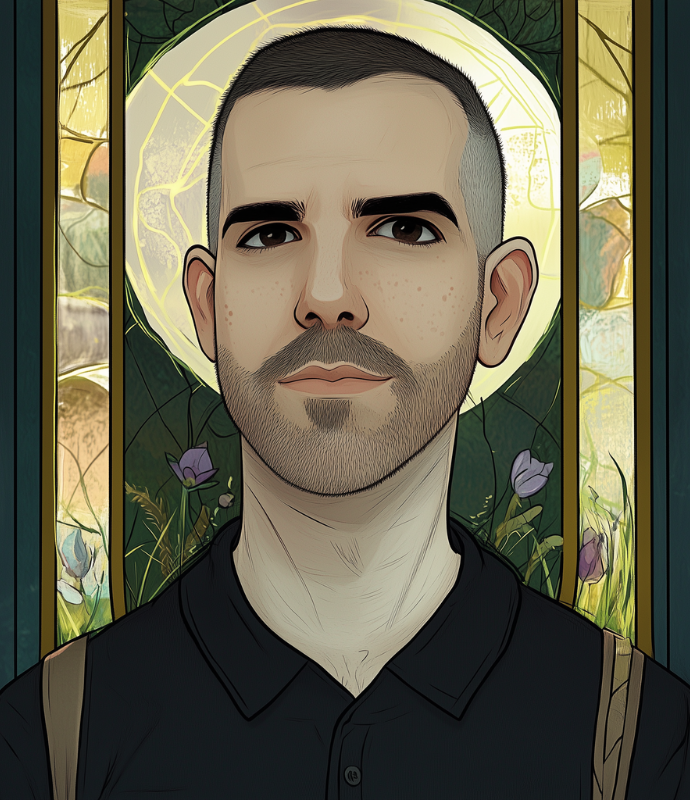
When we talk about Wicca, we think of Gerald Gardner of course, but also Scott Cunningham, who became a true modern reference, whose writings still resonate widely today despite his passing. A prolific author, he made the so-called solitary practice of Wicca accessible (and popular) for all those who wish to experience it personally, without belonging to a group or coven. Portrait.
1. His background and career
Scott Cunningham, a bestselling author on witchcraft and Wiccan spirituality, was born in Royal Oak, Michigan, on June 27, 1956. He was the son of Chester Cunningham, a prolific author, and his wife Rose. The Cunningham family moved to San Diego when Scott was four years old, where he grew up with his brother Greg and sister Christine. Cunningham’s interest in witchcraft and Wiccan spirituality appeared early, influenced by his grandmother’s folk magic and her practices of using herbs as remedies and talismans. During his high school years, Cunningham deepened his interest in witchcraft by joining a practicing Wiccan friend to study this art.
In the fall of 1974, Cunningham enrolled at San Diego State University to study creative writing. However, during the first two years of this program, Scott became a prolific technical writer, writing for specialized magazines and technical journals. His first book, Magical Herbalism, was published by Llewellyn Publications in 1982. Cunningham then published 22 books on herbalism, Wicca, and magical spirituality.
2. The publication of a bestseller

Scott Cunningham left an indelible mark on the world of esotericism and Wicca through his numerous publications, among which some stand out particularly for their impact and popularity. Wicca: A Guide for the Solitary Practitioner, published in 1988, is undoubtedly his most famous work, selling over a million copies. This book revolutionized the practice of Wicca by offering an accessible and comprehensive guide for those who wish to practice alone, without the need to belong to a coven or structured group. It demystified Wicca, making it more inclusive and adaptable to the individual needs of practitioners, which contributed to its wide adoption and popularity.
Another major work by Cunningham is The Complete Book of Incense, Oils & Brews. This book, published in 1989, is a comprehensive reference on the use of herbs, essential oils, and incense in magical rituals. It offers detailed recipes and clear instructions for creating magical preparations, and its practical and accessible approach has allowed many practitioners to integrate natural magic into their daily lives. The impact of this book is still felt today, as it remains a valuable resource for followers of natural magic and herbalism. Many magical recipes and blends are based on this work.
3. Themes dear to Cunningham
Scott Cunningham’s works are characterized by several recurring themes and key concepts that define his approach to Wicca and magic. One of the most striking themes is obviously the solitary practice of Wicca. Cunningham was one of the first authors to recognize and legitimize the individual practice of Wicca.
Herbalism is another central theme in Cunningham’s work. He often explored the use of plants, herbs, and flowers in magical and spiritual practices, emphasizing their power and importance. His books offer many recipes and techniques for using these natural resources, making herbalism an accessible practice integrated into the daily lives of practitioners.
Natural magic is also a key concept in Cunningham’s works. He highlighted the idea that magic is intrinsically linked to nature and that natural forces can be used to bring about positive changes in life. His writings encourage a deep connection with nature and the use of natural elements in magical rituals, reinforcing the idea that magic is an extension of the relationship between humans and nature.
4. An inclusive vision of magic
Scott Cunningham’s interest in solitary practice within the Wiccan faith was deeply influenced by his quest for a tradition that is inclusive and affirming for queer people. During the 1970s and 80s, Wiccan traditions were strongly focused on the sacred marriage between the Goddess and the God, representing a heterocentric duality that dominated rituals and teachings. This emphasis on the sacred masculine and feminine often left aside people whose identities and sexual orientations did not fit this traditional dichotomy. As an openly gay man, Cunningham felt this sense of exclusion and sought alternative ways to express his spirituality without feeling marginalized.
It is in this context that solitary practice became a liberating solution for him and many others. By writing Wicca: A Guide for the Solitary Practitioner, Cunningham also opened the door to a more flexible and inclusive form of Wiccan spirituality.
This approach was particularly significant for the queer community, offering a way to practice Wicca authentically and personally, without the constraints of rigid traditions. The model of solitary practice thus served as a foundation for many later movements seeking to integrate and celebrate sexual and gender diversity within Wiccan and pagan spirituality. By promoting individual empowerment and inclusion, Cunningham not only broadened access to Wicca but also laid the groundwork for a more open and welcoming spiritual tradition for all.
5. A life dedicated to Wicca
Outside of his interests in Wicca and magic, Scott Cunningham led a relatively simple and discreet personal life, which explains the limited information and photos of him. He was known for his gentle nature, humility, and sincere desire to help others find their spiritual path. He was also passionate about writing, reading, and nature, spending much time studying plants, herbs, and spiritual traditions from various cultures.

Scott lived much of his life in California, where he found a community of like-minded friends and colleagues. He was very involved in the local Wiccan community, participating in circles, rituals, and community events. His home was often a meeting place for spiritual discussions and idea exchanges.
Unfortunately, Scott Cunningham’s life was marked by health challenges. In the 1980s, he was diagnosed with inflammatory bowel disease, a chronic condition that affected his health and well-being. Despite this, he continued to write and teach, generously sharing his knowledge and experience with the world. His dedication to his practice and teaching never wavered, even in the face of illness.
Scott Cunningham passed away prematurely on March 28, 1993, at the age of 36, due to complications related to AIDS. His death was a great loss to the Wiccan and esoteric community, but his legacy lives on through his many writings and the lives he touched. His work continues to inspire and guide many practitioners of Wicca and natural magic, and he is often remembered with affection and respect for his invaluable contribution to these fields.