



Mabon is a sabbat that opens the door to nature, which will soon enter its dormant phase. Celebrated between September 20 and 23, at the autumn equinox, it heralds the cooler, wintry atmosphere of the final quarter of the year. The leaves fall, temperatures drop, and it is now time to give thanks for the harvests that will sustain us through the cold until the next harvests. An overview.
Mabon in Celtic Myths: A Divine Son Kidnapped and Found Again
The term Mabon comes directly from a figure in Brittonic Celtic mythology. In medieval Welsh legends, Mabon ap Modron (“Mabon son of Modron”) is a hero whose mysterious story can be summed up in a few lines, but whose symbolism is powerful. Son of the goddess Modron (whose name means “mother” in Welsh), Mabon embodies the archetype of the Divine Child, a symbol of youth and renewal. His name derives from the Brittonic Maponos, a Romano-Celtic god of youth associated with Apollo, and means “great son.” In fact, Mabon and Modron represent an ancient divine mother-and-son pair, the Welsh equivalent of the Gaulish goddess Matrona (the “Divine Mother”) and her divine son Maponos. This mythological lineage suggests a theme of divine youth emerging from the primordial Mother, a theme found elsewhere in the Celtic world, such as with the Irish god Óengus Mac Oc, “the Young Son.”

The main story featuring Mabon appears in the Welsh tale of Kulhwch and Olwen (around the 11th century). Mabon is described there as a member of King Arthur’s retinue, endowed with a singular destiny. A wondrous baby mysteriously kidnapped three nights after his birth, Mabon remains nowhere to be found for years. The hero Kulhwch, aided by King Arthur and his companions, sets out in search of him because only Mabon can help them hunt a legendary boar. They question the oldest creatures in the world—a blackbird, a stag, an eagle, and an owl—until they meet an ancient salmon who alone knows where Mabon is being held captive. Guided by this wise salmon, Arthur’s knights discover the young god imprisoned in a dark dungeon in Gloucester and finally free him. Released from the Otherworld, Mabon joins Arthur’s expedition and lends his aid, symbolizing the return of light after darkness.
This myth of a child stolen and returned to life resonates broadly. Mabon appears as a young solar god torn from his earth-mother and kept in the shadows for a time before being brought back into the world. Historians connect him with the Gaulish god Maponos, of whom he is the Brittonic counterpart. The story recalls other tales of deities associated with the cycle of the seasons: one thinks of Persephone, Demeter’s daughter, kidnapped by the god of the Underworld and then allowed to return to Earth for part of the year. This Greek story expressed the alternation between the sterile cold season and the return of fertile spring. Mabon, however, offers a Celtic variation on the theme of the luminous child who disappears and is then found again, probably without an explicit seasonal meaning originally, but which can be interpreted symbolically in a similar way. Notably, a later Welsh poem (The Book of Taliesin, 14th century) assigns Mabon the role of a psychopomp, a guide of souls between this world and the next. It says that Mabon “has access to both worlds, stands between shadow and light, between birth and death,” which perfectly suits the symbolism of the autumn equinox—a pivotal moment between brightness and darkness. Thus, although the ancient Celts did not necessarily associate Mabon with the equinox, the figure of Modron’s son, wavering between light and darkness, is rich in correspondences with the theme of autumnal balance.
The Autumn Equinox, Harvest Festival and Balance in Time
Long before the name Mabon was given to the autumn equinox, this period at the end of September was already marked by customs connected with agricultural harvests. The equinox does indeed mark the end of the main harvests in the Northern Hemisphere. Many traditional societies celebrated a harvest festival at this time, a collective thanksgiving after the hard work of summer. In Great Britain, it is known as Harvest Home, a rural festival documented at least since the 16th century. After the final grain harvest, one ritual involved making the “last sheaf” into the shape of a straw doll (called a corn doll or harvest doll) decorated with ribbons. This effigy, sometimes called the Cailleach (“old woman” in Gaelic), represented the spirit of the field and was kept until the following year. In some regions, it was dipped in water to ensure rain, or used during the following spring’s sowing as a token of fertility. These customs—songs, village processions, and communal meals—bear witness to the survival of very ancient agricultural rites honoring the fertility of the earth. Similar traditions can be found throughout Europe: in Scotland and Ireland (under the name Ingathering), in France in grape-harvest festivals, and farther afield in the harvest celebrations of the United States inherited from English settlers.

From a specifically Celtic perspective, historians note the lack of evidence that an autumn-equinox festival was formally celebrated by the ancient Celts. In Gaul and the pre-Christian British Isles, the ritual calendar was structured around four major seasonal festivals (Imbolc, Beltane, Lugnasad and Samhain) corresponding to the beginnings of each Celtic season, rather than to the solstices and equinoxes. Thus, Lugnasad (early August) marked the first harvest, that of the grains, while Samhain (early November) marked the end of the light season and the final harvest, notably the gathering of the last fruits of the earth and the beginning of livestock slaughter before winter. The September equinox, situated between these two festivals, naturally corresponded to the second harvest—that of autumn fruits, apples, and grapes—and to the filling of the barns. Although ancient Celtic annals do not mention it explicitly, it can be assumed that this crucial moment of the year gave rise, as elsewhere, to rural festivities once the work was complete. There is no doubt, however, that the equinox was a harvest festival: the end of the harvests was a time of grace and relief celebrated universally, because it meant that the bulk of the year’s work was finished and that the community could enjoy the fruits of the earth.


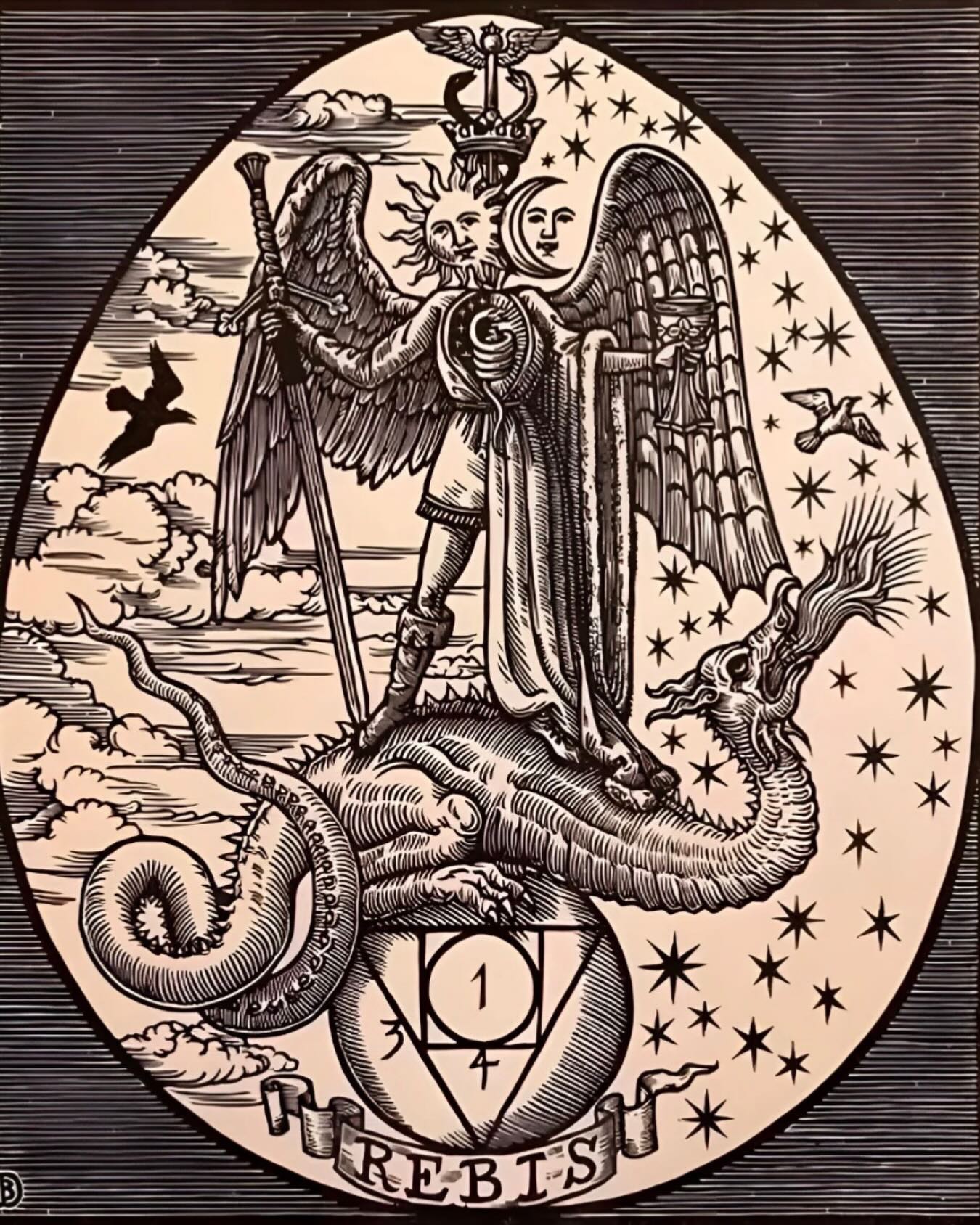
With Christianization, harvest traditions did not disappear but were incorporated and reinterpreted. During the Middle Ages, the Church placed saints’ feasts on the old seasonal markers. For the autumn equinox, it was the feast of Saint Michael the Archangel, celebrated on September 29, that served as a substitute from the year 1011 onward. The feast of Saint Michael, the victorious archangel who defeats the Dragon, was ideally timed to replace the pagan harvest festivities that were widespread in rural areas. Above all, it coincided with an important turning point in the agricultural year: at the end of September, rural leases and annual rents—in goods or livestock—were settled, so Saint Michael’s Day was the deadline when peasants “moved” or renewed their tenancy, hence the saying “On Saint Michael’s Day, everyone moves.” Beneath the guise of a religious festival, people therefore also celebrated the end of agricultural work and distributed the harvests. Notably, the archangel Michael, a luminous figure vanquishing darkness, has a solar and victorious symbolism that harmonized well with the spirit of the equinox and may recall Mabon’s own dimension of light. The old pagan foundation of gratitude for the fertility of the earth was thus absorbed but also perpetuated in Christian culture through harvest masses and blessings of the crops. Even today, churches in Europe celebrate a local Thanksgiving at the end of September, placing baskets of newly harvested fruit, wheat, and grapes on the altar—a living reminder of the pre-Christian agricultural heritage.
Mabon Symbolism: Balance, Abundance, and Preparation for Winter
The autumn equinox is naturally the festival of balance. At Mabon, day and night are exactly the same length, something that happens only twice a year. The sun enters the sign of Libra and, in fact, the notion of cosmic balance lies at the heart of this date. Late-September temperatures are moderate, neither sweltering nor freezing, while the fading light offers a golden softness: it is a seasonal in-between when everything seems suspended. However, unlike the spring equinox (Ostara), which opens onto the light and ascending season, the September equinox is the twilight of the year: from Mabon onward, the nights will become longer than the days, shifting us toward the dark side of the annual cycle. This transition gives the festival an ambivalent tone, a mixture of celebration and melancholy. On the one hand, Mabon is the festival of abundance: we give thanks to nature for its blessings and savor the harvests gathered after the work of summer. It is a time of gratitude and feasting, because we know that the hardest part is still to come—the cold months, when resources are scarce. On the other hand, it is a solemn festival: it marks the beginning of the dark season, and we must prepare for the approaching winter and its inevitable privations. In the agricultural societies of the past, the equinox was a moment of truth regarding survival through winter: at the end of the harvests, everyone could assess the available provisions until the following spring and realize whether they would be sufficient or not. People knew that an inadequate harvest could mean famine during the winter—hence the vital importance of thanksgiving and propitiatory rites offered to the earth at this time.

Mabon thus teaches the lesson of taking stock. It is the time to reap the fruits of everything that has been sown throughout the year, both literally and figuratively. Symbolically, at the equinox, it is too late to undertake new projects: we must work with what has grown, whether we like it or not. By analogy, tradition considers Mabon the ideal time to sort things out in our lives. We identify what has borne no fruit, abandon the “dead branches,” and focus on what is essential in order to approach winter in balance. This equinox period invites us to let go of what is sterile or superfluous—work, relationships, and unproductive habits—in order to preserve our energy for the passage through the dark season. It is a form of “autumn cleaning,” the seasonal counterpart to spring cleaning. In the past, this practical wisdom was accompanied by concrete actions: the last harvests were brought in, barns were sealed, meats were salted, and the community organized itself for mutual winter support. Spiritually, Mabon is also conducive to introspection: welcoming the darkness outside also means confronting our own inner shadows. Thus, the Mabon sabbat reminds us of the eternal cycle of life/death/rebirth. Nature appears to die, but this preparatory decline is necessary for future germination. The sunlight wanes and “sinks” into the womb of Mother Earth, just as, in the legend, the young Mabon symbolically returns to Modron’s embrace before being reborn later. This poetic correspondence—entirely reconstructed by modern interpretations—illustrates the power of myth: Mabon represents light captured in shadow which, after a period of hidden gestation, will return triumphant. He is, so to speak, the twilight and dawn of the Celtic cycle, a turning point where day and night converse as equals.
A Recent Sabbat: Mabon in the Neo-Pagan Revival
Although the autumn equinox was already rich in harvest traditions and symbols of balance, its name Mabon and its organization as a “sabbat” come from the modern neo-pagan movement. It was practitioners of Wicca and modern Druidism in the 20th century who incorporated the September equinox as a festival in its own right, renaming it Mabon. In the mid-20th century, Wicca’s pioneers, such as Gerald Gardner, restored the pagan annual cycle by including eight sabbats: the solstices and equinoxes supplemented the four major Celtic seasonal festivals. Originally, however, people simply spoke of the autumn equinox, with no traditional name associated with it, unlike Samhain, Beltane, or Yule, for example. In 1970, an American occultist, Aidan A. Kelly, proposed using the name Mabon for this sabbat. Seeking to romanticize this autumn observance somewhat, Kelly wanted to avoid an overly generic name and could not find a satisfactory Anglo-Saxon or Germanic equivalent (Bede the Venerable did mention a Haligmonath, or “Holy Month,” in September, but provided no details about any celebration). He therefore turned to Celtic mythology to find a more evocative name. He chose the Welsh hero Mabon ap Modron because of the parallels he perceived between his story and the autumnal theme. Kelly knew the Greek myth of Persephone, celebrated in the Eleusinian Mysteries held each year in September, near the equinox. Just as Persephone, kidnapped by Hades, symbolizes the earth becoming barren in winter before flowering again, the kidnapped and liberated Mabon evokes a cycle of the disappearance and return of light. Kelly saw in it a beautiful metaphor for the autumn equinox as Wiccans interpreted it: the gradual descent of the Sun God into shadow and his future rebirth. The name Mabon, with its Celtic resonance and connection to the theme of “the exiled child who returns,” therefore seemed perfectly suited. It gradually became established in English-language neo-pagan literature of the 1970s and ’80s, to the point that today “Mabon” is commonly used to refer to the September equinox in most pagan groups, particularly in North America. This adoption was not without debate—some purists pointed out that no historical Celtic festival bore this name and preferred Harvest Home or simply autumn equinox. But the modern Wheel of the Year sought consistency: six of the eight sabbats already bore traditional names, and it was tempting to give the two equinoxes mythological names as well, bringing them into harmony. Thus, Ostara for spring (the Germanic goddess of dawn) and Mabon for autumn completed the calendar. The term nevertheless flourished: it can be found in countless books, articles, and announcements of pagan rituals today, a sign that it has succeeded in speaking to the contemporary imagination.
In today’s neo-pagan spiritualities, Mabon is therefore celebrated around September 21–23, depending on the astronomical date of the equinox. The ways of celebrating it vary among traditions, but common themes of gratitude, sharing, and inner recentring can be found throughout. Wiccans view this sabbat as the second harvest festival (between Lugnasad and Samhain) and associate it with the last fruits of the earth, the grape harvest, and the warm colors of autumn. The Wiccan Mabon ritual consists of placing symbols of abundance on the altar—wheat sheaves, apples, corn, and squash—giving thanks to the Mother Goddess for nature’s gifts, and bidding farewell to the waning Sun God, sometimes depicted as a Dying King who nourishes the earth. Among neo-Druids, Alban Elfed (poetically “Light of the Water” in Welsh) is celebrated on the same date as a thanksgiving festival honoring Mother Earth by offering the produce of the harvests and sharing a communal feast. Some Druidic or Celtic-inspired groups take advantage of Mabon to make ritual foraging trips—the apple, a sacred fruit of the Celtic Otherworld, takes center stage during forest walks or tree-planting activities. Everywhere, the dominant idea is communion with nature at this moment of transition: walks through forests of russet foliage, final dances around the bonfire, blessings of grains and seeds, and, of course, convivial meals featuring bread, cider, new wine, and other autumnal flavors. Thus, even in a modern urban context, Mabon remains an invitation to slow down, admire the changing season, and strengthen the bonds of the human community, echoing the ancient harvest festivals that brought entire villages together after the work was done.
Thus, Mabon emerges as a festival at the crossroads of eras, a fine example of continuity and renewal in seasonal spirituality. Its celebratory essence draws from the most universal of human traditions: the harvest festival, that moment of joy, gratitude, and well-deserved rest when the earth has given its all and provisions are stored for winter. At the autumn equinox, a fleeting balance between day and night, Mabon tells us the eternal story of the cycle of light and darkness, of life withdrawing so that it may be reborn more fully.
Sources:
-
Anonymous (Middle Ages) – Kulhwch and Olwen, Welsh tale from the Mabinogion (edition translated by Pierre-Yves Lambert, 2021).
-
Jean-Paul Persigout – Dictionary of Celtic Mythology, Imago Publishing, 2009.
-
Françoise Le Roux & Christian-J. Guyonvarc’h – Celtic Festivals, Ouest-France Publishing, 1995.
-
Ronald Hutton – The Stations of the Sun: A History of the Ritual Year in Britain, Oxford University Press, 1996.
-
Sorita d’Este & David Rankine – The Isles of the Many Gods: An A-Z of the Pagan Gods & Goddesses of Ancient Britain, Avalonia, 2007.
-
Jason Mankey – The Triumph of Mabon, Patheos PanTheon article, 2014