























































































































As you may know, behind Aeternum lies a small business based in Brittany (specifically in the south of Finistère). It is well known that this region lives to the rhythm of legends, myths, and magical practices, some more or less known (Brocéliande, Merlin, the Fairy Viviane, the Alignments, and many others). Thus, to highlight our beautiful region, we will regularly publish lesser-known legends from Breton history.
Let’s discover together the legend of King Marc'h. Considered the Breton counterpart of Midas, he is also one of the protagonists in the legend of Tristan and Isolde.

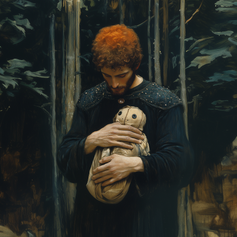
King Marc'h was a legendary and cruel ruler of Cornouaille, in Brittany. What distinguished him most was a very particular physical trait: he had horse ears. Naturally, Marc'h considered this a great shame and a secret to be kept at all costs. To hide this feature, he always wore a long cap or headdress.
The reason why the king had horse ears varies depending on the version of the legend. In some versions, it was a curse after the king chased a doe who was actually the incarnation of Epona, the goddess of fertility and... horses. In revenge, she thus gave the king these ears. In others, it was simply a mysterious birth trait.
This secret was known by only one person: his barber. The king took great care to ensure the barber never revealed this secret: he changed barbers regularly, and every barber who learned the secret was assassinated.
The barber, burdened by this heavy secret, suffered greatly. Unable to bear the weight any longer and fearing for his life, one day he decided to confide not to a person, but to Nature itself. He went to a secluded place, dug a hole in the ground, and whispered into the hole: “King Marc'h has horse ears.” After entrusting his secret to the earth, he covered the hole, relieved.

However, at that very spot, reeds began to grow. When the wind blew through them, they seemed to whisper: “King Marc'h has horse ears.” Soon, this murmur attracted a musician who made his instrument from these reeds. Every time he played, the truth sang into the ears of the listeners and soon became known to all.
The legend says that this revelation cost him his dignity, his throne, and even his life, which he lost after heavily abusing mead...