



Contents...
Neodruidism is a modern spiritual and religious movement (born in the 18th century) inspired by the traditions, mythology, and religious practices of ancient Celtic peoples, especially those associated with the druids, who were priests, teachers, and judges in Celtic societies before and during the Roman era. Unlike the ancient druids, about whom historical information is limited due to the Christianization of Europe on one hand, and because druidic knowledge was transmitted orally on the other, neodruidism is a reconstruction and adaptation that mixes elements of Celtic spirituality, pagan beliefs, and sometimes broader neopagan practices.
1. Introduction to neodruidism
Neodruidism represents a contemporary form of spirituality that freely draws on the traditions, myths, and symbols associated with the druids of ancient Celtic times. This movement, both religious and cultural, seeks to revive and adapt the practices of the ancient druids to the modern era, often blending them with elements of paganism, deep ecology, and mysticism.
1.1. Definition and origins

The term "neodruidism" refers to spiritual and religious movements that emerged mainly from the 18th century onward, aiming to revive or reinvent the druidic traditions of Antiquity. Druids were prominent members of Celtic societies in Europe before and during the Romanization period, serving as priests, judges, scholars, and advisors. Despite the limited direct sources on their exact practices, their reputation as scholars and keepers of knowledge fueled imagination and reverence in the following centuries.
1.2. Brief history of neodruidism
Neodruidism takes root in the 18th-century "romantic druidism," when British intellectuals and nationalists began celebrating the ancient druids as symbols of wisdom and natural resistance. The first neodruid lodge, the Ancient Order of Druids, was founded in 1781, marking the beginning of a renewed interest in druidism that would develop and diversify over the centuries.
In the 19th century, the druidic movement grew more complex, with the emergence of various societies and brotherhoods in Europe and North America. These groups focused on celebrating nature, Celtic spirituality, and the reconstruction of ancient British and Irish traditions.
The 20th century sees neo-Druidism evolve even further, incorporating modern ecological concerns and more structured spiritual practices. Organizations such as the Order of Bards, Ovates, and Druids (OBOD) and the ADF (Ár nDraíocht Féin) play a crucial role in formalizing neo-Druidic practice and spreading it internationally.
1.3. Gender equality
In neo-Druidism, equality between men and women is a fundamental principle, reflecting a worldview that values balance and harmony between genders. Unlike some spiritual traditions that may assign specific roles based on gender, neo-Druidism tends to promote inclusivity and parity among its members, regardless of their sex. Moreover, there are several consistent sources showing a number of women in power, especially in Ireland. When men are called druids, women are called bandrui (female druid), banbard (female bard) or other terms depending on their specialty and/or rank.
1.4. Differences between ancient druidism and neo-Druidism
1.4.1. Ancient druidism
Knowledge about ancient druidism is limited and mainly comes from Roman sources and a few medieval Irish accounts. Almost vanished, this movement survived mainly thanks to legends and fantastic stories. Ancient druids were central figures in Celtic society, performing religious, judicial, and educational functions. Their practices were probably varied, with an emphasis on oral transmission of knowledge, outdoor rituals, and polytheistic worship.

A druid before a Roman assembly. Source: Becedia
Another little-discussed aspect also concerns sacrifices. According to some excavations especially in France and Great Britain, there is a hypothesis that human sacrifices were practiced by the druids, probably criminals or various prisoners but not only... Sensitive souls, beware: giant wooden structures were used to hold several people who were then burned alive, to attract victory or healing. Sometimes, these were completely innocent people.
1.4.2. Neo-Druidism
Unlike its ancient roots, neo-Druidism is largely a modern creation, influenced by Romanticism, nationalism, and environmental movements. It is characterized by a wide variety of practices and beliefs, ranging from polytheism to pantheistic and animistic spirituality. Neo-Druids emphasize the celebration of the Earth, harmony with nature, and personal exploration of spirituality through rituals, seasonal festivals, and meditative practices.
1.5. Notable Members
These individuals helped shape modern druidic practice through their writings, teachings, and leadership within various organizations. Here are some notable personalities and famous figures associated with neodruidism:
-
Ross Nichols (1902-1975): Ross Nichols was an influential member of the Order of Druids and a close friend of Gerald Gardner, the founder of modern Wicca. Nichols founded the Order of Bards, Ovates, and Druids (OBOD) in 1964, which became one of the most important and widely recognized druid organizations in the world. His writings and vision greatly influenced the contemporary revival of druidism.
-
Isaac Bonewits (1949-2010): Isaac Bonewits was an American druid, writer, and magic theorist, known for founding Ár nDraíocht Féin (ADF), a neo-pagan druid order, in 1983. The ADF is distinguished by its scholarly approach and polytheistic belief system, and it remains an influential organization in the neodruidism landscape.
-
Philip Carr-Gomm: Philip Carr-Gomm is an author and spiritual leader who was chosen by Ross Nichols to lead the OBOD. Under his leadership, the OBOD experienced global expansion and developed a correspondence teaching system that allowed thousands of people to connect with druidism, regardless of their geographic location.
-
Emma Restall Orr (Bobcat): Emma Restall Orr, also known as Bobcat, is a British druidess and author who has been a leading figure in the contemporary druid movement. She co-founded the Druid Network, which has worked for the recognition of druidism as an official religion in the United Kingdom.
-
Iolo Morganwg (1747-1826): although belonging to a period prior to contemporary neodruidism, Iolo Morganwg had a lasting influence on the movement through the founding of the Gorsedd of the Bards of the Island of Britain in the 18th century. His ideas and ceremonial creations inspired many modern practices, despite controversies regarding the authenticity of some of his claims.
2. The Historical and Cultural Roots of Neodruidism
Neodruidism is deeply rooted in European history and culture, drawing inspiration and legitimacy from several key periods. These roots stretch back to Celtic Antiquity, pass through the Druidic Renaissance of the 18th century, and finally flourish with the romantic reinterpretation of the 19th century.
2.1. Celtic Antiquity and the Role of Druids
The history of the Celts, who are actually a diverse group of Indo-European tribes sharing similar linguistic, cultural, and religious traits, spans a vast region of ancient Europe. Their peak, from the 8th to the 1st century BCE, saw their influence extend from Ireland to... present-day Turkey. The druids, prominent members of Celtic society, played a structural and respected role as keepers of knowledge, priests, lawmakers, and royal advisors. Their spiritual and temporal authority was based on deep knowledge of oral tradition, nature, astronomy, mathematics, and law. They thus represented the backbone of modern society, ranging from justice to education and infrastructure. This power, considered threatening by the Roman Empire, led to their ban and soon their disappearance into almost total silence.
2.2. The influence of the 18th-century Druidic Renaissance
The Druidic Renaissance, which began in the 18th century, marks the first wave of modern reinterpretation of the druids and their culture. This period saw the emergence of druidic societies in Great Britain, notably with the creation of the Ancient Order of Druids in 1781. These societies mixed elements of Freemasonry, nationalism, and interest in classical Antiquity with a romantic admiration for the druids.
Note that 18th-century Romanticism (originating from Germany) does not have the meaning we might have today. It was an artistic, philosophical, and cultural movement that considered the bond between Man and Nature sacred. It arose as a reaction against the ideals of the Enlightenment, which favored reason, order, and classical structures. In contrast, Romanticism values emotion, individualism, and nature, emphasizing personal feelings, imagination, and the appreciation of natural beauty and the sublime. It is expressed through various art forms, including literature, painting, music, and philosophy.

Landscape, Thomas Colle. Source: Vikipedia
Thus, these societies organized assemblies, rituals, and literary contests, celebrating an idealized version of the Celtic past. However, this revival was less concerned with historical accuracy than with using druids as symbols of ancient purity and wisdom.
2.3. The Romantic reinterpretation of druidism in the 19th century
The 19th century saw druidism being "integrated" into the broader Romantic movement, which valued emotion, nature, and a return to pre-modern traditions. This period witnessed a flourishing interest in folklore, myths, and Celtic literature, fueled by the publication of texts such as Ossian by James Macpherson and the research work of George Petrie and other scholars. Druidism was reimagined as a spiritual system in harmony with Nature, endowed with deep wisdom and an intimate connection to the British landscape. This romantic vision deeply influenced the later development of neo-Druidism, giving it ecological and pantheistic themes that still prevail today.
3. Beliefs and practices of neo-Druidism
Neo-Druidism presents a rich range of spiritual beliefs and practices. This movement is marked by great diversity, reflecting the variety of personal interpretations and cultural influences among its followers. Here is a more detailed overview of these aspects.
3.1. Spirituality in neo-Druidism
3.1.1. Pantheism
Many neo-Druids adhere to pantheism, the belief that the divine is immanent in all aspects of nature. This perspective sees the natural world and the universe itself as a manifestation or incarnation of the sacred. Pantheism encourages a respectful and reverential relationship with the environment, emphasizing the fundamental unity of all existence.
3.1.2. Polytheism
Polytheism, the belief in multiple deities, is also widespread among neo-Druids. Inspired by Celtic mythology, practitioners may honor various Celtic gods and goddesses, each representing different aspects of life, nature, and the cosmos. This approach allows a personal and intimate relationship with the deities, seen as distinct beings with their own domains, stories, and lessons.
3.1.3. Animism
Animism, the belief that all elements of nature, including plants, stones, and even waterways, possess their own spirit or consciousness, is another important component of neo-Druidic spirituality. This perception strengthens the sense of interconnectedness and respect for all forms of life and emphasizes the importance of living in harmony with the earth.
3.2. Ceremonies and rituals
Neo-Druidism celebrates the richness of natural cycles and significant moments of life through a range of ceremonies and rituals. These practices are essential for marking the passage of time, honoring the Earth, and facilitating spiritual connection between individuals and the cosmos.
3.2.1. Equinoxes and solstices
At the heart of neo-Druidic celebrations are the rituals marking the equinoxes and solstices, key moments of the solar year that signal seasonal changes, and use well-known sabbats in Wicca. These celebrations include:
-
Samhain : commemorated at the end of October, this festival marks the start of the Celtic winter, a time to honor ancestors and departed loved ones.
-
Imbolc : celebrated at the beginning of February, Imbolc welcomes the return of light and preparation for spring's rebirth.
-
Beltane : at the beginning of May, Beltane celebrates fertility, fire, and the abundance of life, marking the start of summer.
-
Lughnasadh : celebrated at the beginning of August, this festival honors the start of the harvest season and is associated with Lugh, a solar deity.
3.2.2. Lunar cycle celebrations and seasonal festivals
Neo-Druids enrich their spiritual calendar with other significant events that reflect this sacred connection with Nature and Celtic tradition:
-
Full Moon and New Moon : the phases of the moon offer regular opportunities for rituals, used for reflection, meditation, and celebration of the feminine aspects of the divine.
-
Seasonal festivals : in addition to the main sabbats, neo-Druids may celebrate mid-seasons and other key moments that highlight the continuity of the natural cycle and the symbiosis between humans and nature.
-
Earth and community celebrations : days dedicated to healing the Earth, such as tree plantings or waterway cleanups, as well as festivals that strengthen community bonds and oral tradition, like storytelling vigils and poetry competitions.
3.2.3. Rites of passage
Neo-Druidism also offers frameworks to mark important life transitions, rooted in respect for nature and the individual:
-
Naming ceremonies : rituals to welcome new members into the community, often connected to nature and its cycles.
-
Druidic unions : known as handfasting , these ceremonies celebrate the union of partners through rituals filled with natural and Celtic symbolism.
-
Life passages : rituals to honor life transitions, such as reaching puberty, changing vocation, choosing a name, or passing to the beyond, allowing reflection on the continuity of life and the individual's place in the great cycle of existence.
3.3. Divination, meditation, and healing
3.3.1. Divination
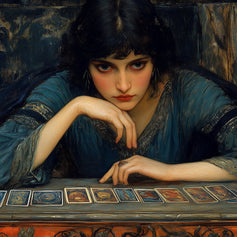
Within the neo-Druid community, divination is seen as a bridge between the material world and the spiritual realm, offering insights and guidance for personal and communal journeys. The use of Ogham , a system based on an ancient Celtic alphabet, allows practitioners to draw on ancestral wisdom by interpreting symbols engraved on sticks or stones. The tarot druidic, adapted to reflect Celtic themes and archetypes, and rune reading, a practice borrowed from Nordic traditions but integrated into some neo-druidic paths, also serve as valuable tools for reflection and decision-making. These divination methods are seen as ways to explore possibilities, reflect on deep questions, and find directions in life.

3.3.2. Meditation
Meditation, in the neo-druidic context, is a versatile practice that encompasses a variety of techniques aimed at deepening self-understanding and strengthening the connection with the natural world and the divine. Guided visualizations can transport the individual through mythical landscapes, facilitating encounters with deities, ancestors, or nature spirits, while shamanic journeys offer transformative experiences, allowing practitioners to traverse worlds and gain spiritual insights. Meditation in nature, whether in ancient forests, near waterways, or under majestic rock formations, allows neo-druids to feel an integral part of the Earth's ecosystem, fostering a sense of unity and harmony with all forms of life.
3.3.3. Healing
Healing is an essential aspect of neo-druidism, where health is viewed from a holistic perspective, encompassing the physical, emotional, mental, and spiritual dimensions of being (ancient druids, by the way, could perform surgery). Healing practices use the curative properties of plants, rooted in traditional knowledge of herbs and their medicinal uses. Sacred sites, often chosen for their particular energy and spiritual significance, serve as settings for healing and purification rituals. Additionally, energy techniques, such as working with the nwyfre (a Welsh word meaning "life" or "celestial energy"), are used to realign and balance the individual's vital energies, thus facilitating healing and overall well-being. These approaches reflect a deep reverence for nature and an understanding of the interconnectedness of all living beings, emphasizing healing not only of the individual but also of the community and the Earth itself.
3.4. Ritual Apparatus
In neo-druidism, ritual attire and symbolic objects play a crucial role as visual and energetic supports that enrich spiritual practice. They serve not only to define the sacred space and the time of the rite but also to strengthen the participants' connection with ancestral traditions, natural forces, and spiritual archetypes. Here is an overview of the most emblematic elements.

Birthday ceremony in Brittany. Source: Becedia
3.4.1. Ritual Attire
Robes are one of the most recognizable elements of ritual attire in neo-Druidism. Often white or green, they symbolize purity, growth, and deep connection with nature. White is associated with light, wisdom, and elevated spirituality, while green represents life, earth, and regeneration.
For outdoor ceremonies, especially during colder months, cloaks or coats may be worn over robes. They are sometimes decorated with Celtic or natural symbols, such as trees, spirals, or animal motifs, reinforcing the visual connection to Druidic cosmology.
Jewelry such as torcs (Celtic necklaces), brooches, and diadems, often made from metals like silver or bronze, are commonly worn during rites. These pieces may be adorned with gems, Celtic symbols, or ogham inscriptions, adding an extra dimension of meaning and personal power.
3.4.2. Symbolic objects
The staff, often made from sacred wood such as oak, ash, or willow, serves as a focal point for directing ritual energy. It can be used to trace the sacred circle, invoke the elements, or guide participants through the ceremonial process.
The sickle, symbolizing the harvest and the cycle of death and rebirth, is sometimes used in ceremonies related to the harvest or offerings. It recalls Druidism’s ties to agriculture and natural cycles.
The chalice, often used to hold water or consecrated wine during rituals, symbolizes the element of Water and the feminine aspect of the deity. The cup may be shared among participants as a sign of unity and common blessing.
The altar, often set up at the center of the ritual circle, serves as an anchor point for sacred objects and offerings. Stones or crystals may be placed there to represent the energies of the Earth or specific deities.
3.4.3. Menhirs and dolmens
These megalithic structures, some dating back several millennia, are often seen by neo-Druids as portals to the past, markers of sacred sites, and catalysts for meditation and spiritual connection.

Menhirs, or standing stones, are unique monoliths erected vertically in the ground. In neo-Druidism, they are often interpreted as symbols of resilience, strength, and connection between the sky and the earth. Neo-Druids may see menhirs as energetic anchors that facilitate spiritual grounding and meditation. Some also believe these stones marked places of power or portals to other dimensions or states of consciousness.
Dolmens, made of large flat stones placed on vertical stones, are generally associated with tombs or funerary monuments from the Neolithic era. For neo-druids, dolmens can symbolize passage, transformation, and rebirth. They are often considered places of reflection to honor ancestors and meditate on the cycles of life and death.
3.5. The grades
As I will explain in the next chapter, neo-druidism is divided into several branches, each with its own organizations. However, one could (and I use the conditional) start from the observation that there are grades common to all branches. Here is an overview.

Ceremony in the Brocéliande forest. Source: Encyclopedia of Brocéliande
3.5.1. The bards
This first grade often focuses on learning myths, history, and Celtic traditions, as well as developing creative skills such as poetry, music, and storytelling. Bards are encouraged to explore and express their creativity, serving as guardians of the stories and wisdom of their community.
3.5.2. The ovates
The ovate grade focuses on aspects such as divination, healing, and working with the energies of nature. Ovates study the medicinal properties of plants, spiritual healing techniques, and methods of divination. This grade highlights the deep connection with the natural world and the role of healer within the community.3.5.3. The druids
The grade of druid often represents the pinnacle of the spiritual journey in neo-druidism, emphasizing wisdom, spiritual leadership, and service to the community and the Earth. Druids engage in deeper philosophical studies and may take on roles as guides and mentors for other members.
4. The different branches of neo-druidism
Neo-druidism, in its diversity, is embodied through several branches and traditions, each of which has contributed to the richness and evolution of this contemporary spirituality. These organizations vary in terms of beliefs, practices, and goals, but all share a commitment to the revival and modern interpretation of ancient druidic traditions.
4.1. The Order of Druids, Bards, and Ovates (OBOD)
4.1.1. Origin and history of the OBOD

The Order of Druids, Bards, and Ovates (OBOD) was founded in 1964 by Ross Nichols, in close collaboration with other influential figures of the time, notably Gerald Gardner , pioneer of neo-paganism. OBOD is part of the druidic revival movement that began to emerge in the 18th century, with a renewed interest in the pre-Christian cultures and spiritualities of Europe. Nichols' goal was to create a spiritual path that, while inspired by ancient Celtic and druidic traditions, would be relevant and accessible in the contemporary context. Over the years, OBOD has evolved to become one of the most significant and influential voices within the global neo-druid community, with members and groups in many countries, thus contributing to the popularity and expansion of neo-druidism.
4.1.2. Philosophy and key practices
The philosophy of OBOD is rooted in the belief that spirituality must be alive, dynamic, and constantly evolving to meet the needs of its followers. That is why the order offers a flexible and deeply customizable learning path through its three grades: bardism, ovate practice, and druidism. This educational structure is designed to support the individual in their spiritual development, starting with exploring creativity and self-expression through bardism. The ovate grade focuses on healing practice and developing skills in divination and spiritual ecology, reflecting a deeper relationship with the natural world. The path is completed with druidism, which emphasizes acquiring wisdom, practicing enlightened leadership, and serving the community and the Earth. Together, these stages form a complete journey of personal discovery and outward contribution.
4.1.3. Roles in OBOD
Within OBOD, the roles of bards, ovates, and druids are not merely titles or ranks but represent phases of personal and spiritual growth. Bards, by focusing on history, mythology, and the arts, awaken the power of speech, poetry, and music as means of exploring and expressing consciousness. This path helps individuals rediscover their innate creativity and strengthen their connection to ancestral stories and teachings. Ovates, on the other hand, delve into the mysteries of nature, healing, and divinatory arts, cultivating an intimate and respectful understanding of life in all its forms. This approach encourages living in harmony with natural cycles and recognizing the interconnectedness of all existence. Druids, finally, engage in the quest for wisdom and the exercise of spiritual leadership, guided by principles of justice, balance, and selfless service. Their role is to inspire and support communities by promoting values of peace, environmental respect, and solidarity.
4.2. Ár nDraíocht Féin: A Druid Fellowship (ADF)
4.2.1. Foundation and evolution

The Ár nDraíocht Féin (ADF) represents a unique and dynamic branch of neo-Druidism, established in 1983 by Isaac Bonewits. This visionary and scholar sought to create a druidic path that would honor the Indo-European roots of Druidism while making it relevant and accessible to modern spiritual seekers. The founding of ADF marked a step toward a structured practice of Druidism, based on solid academic and historical research, while embracing the freedom of personal practice and ritual creativity. This innovative approach aimed to merge fidelity to historical sources with adaptability to contemporary contexts and needs, positioning ADF at the forefront of neo-Druidic practice. Over the years, ADF has experienced significant growth, establishing groves (local groups) and practices worldwide, demonstrating its commitment to an inclusive and diverse Druidic community.
4.2.2. Pantheon, rituals, and celebrations
At the heart of the spiritual practice of ADF lies a commitment to a rich and nuanced polytheism, embracing a wide range of deities from Celtic, Germanic, Slavic, Greek, Roman, and other Indo-European traditions. This approach allows ADF members to develop personal and communal relationships with a diverse pantheon, thus reflecting the complexity of the spiritual world and the richness of the traditions they honor. ADF rituals and celebrations follow the cycle of the eight traditional seasonal festivals, such as Samhain, Imbolc, Beltane, and Lughnasadh, as well as rites of passage and celebrations related to specific moments in life. These ritual practices are designed to align members with the cycles of nature, honor ancestors, and forge a deep connection with the deities and spirits of the land, thereby fostering a sense of belonging and communion within the web of life.
4.2.3. Organizational structure and druidic education
The ADF stands out for its well-defined organizational structure and its commitment to druidic education. Through its comprehensive study program, the ADF offers members structured learning paths covering a range of disciplines, including polytheistic theology, Indo-European history, ritual practices, and ecological conservation. This educational program is designed to equip members with the knowledge and skills necessary to practice authentic and informed druidism, while encouraging personal and spiritual development. The ADF's structure also encourages active participation and leadership within the community, offering opportunities for members to contribute to the organization's life through service roles, educational content creation, and ritual leadership. This commitment to education and community involvement reflects the ADF's vision of a living and evolving druidism, rooted in tradition while looking toward the future.
4.3. The Druidic Dawn
4.3.1. Presentation and missions
The Druidic Dawn positions itself as a beacon in the world of neo-druidism, offering a unique collaborative platform for druidism practitioners around the globe. Founded with the intention of creating a space for exchange and growth for practitioners of all traditions, the network is committed to promoting a holistic and evolving understanding of druidism. By bringing together a diverse community of druids, bards, ovates, researchers, and spiritualists, the Druidic Dawn transcends geographical and traditional boundaries, fostering an environment where the sharing of knowledge and experiences collectively enriches the spiritual journey of its members. The network's main goal is to facilitate access to a wide range of druidic resources, including academic studies, spiritual practice articles, meditation guides, and literary and artistic works inspired by druidism. This mission of inclusion and knowledge expansion aims to support the personal development of practitioners and encourage the application of druidic principles in daily life, thus contributing to the vitality and ongoing relevance of druidism in the contemporary world.
4.3.2. Synergy between academic research and spiritual practice
The Druidic Dawn stands out for its commitment to integrating academic rigor into Druid spiritual practice. Recognizing that the depth and authenticity of the Druid path are enriched by an enlightened understanding of its origins, historical developments, and cultural contexts, the network actively encourages interaction between researchers and practitioners. This synergy between academic study and spiritual practice allows members of the Druidic Dawn to engage in an ongoing dialogue that enriches both their theoretical understanding and lived experience of Druidry. By valuing the contributions of each member, whether archaeological discoveries, literary analyses, philosophical reflections, or accounts of meditative and ritual practices, the Druidic Dawn creates a space where ancient wisdom meets contemporary innovation. This holistic approach ensures that the network not only preserves Druidic traditions but also contributes to their dynamic evolution, adapting them to the needs and aspirations of today's practitioners. Ultimately, the Druidic Dawn offers a valuable resource for those seeking to deepen their Druid path through a harmonious fusion of knowledge and spirituality, reflecting the richness and diversity of modern neo-Druidism.
4.4. The British Druid Order (BDO)
4.4.1. History and founding principles of the BDO

Since its creation, the British Druid Order was driven by a clear vision: to restore and celebrate Druidry in its most authentic form, making it accessible and relevant for the 21st century. Inspired by the shamanic traditions that informed the spiritual practices of the ancient Celts, the BDO explores and revitalizes these ancient paths with deep respect for their historical and cultural context. The founders of the BDO were pioneers in recognizing Druidry as a living and evolving spiritual path, capable of inspiring positive changes in individuals' lives and in society.
4.4.2. The revival of Celtic culture and spirituality
At the heart of the BDO's mission lies the revival of Celtic culture and spirituality, an endeavor that embraces a variety of artistic and intellectual fields. The BDO's learning programs, for example, offer in-depth courses on diverse subjects, ranging from ancient divination and healing techniques to the study of Celtic mythology, as well as learning traditional music, poetry, and the art of storytelling. These activities do more than transmit knowledge; they invite members to fully live the Celtic values of honor, courage, community, and connection to the earth.
4.5. The Druid Network
4.5.1. Goals and services offered by The Druid Network
As a collaborative platform, The Druid Network offers a wide range of services designed to enrich the druidic practice of its members. This includes a virtual library containing articles, practical guides, and studies on theology, philosophy, and ecological practices related to druidry. In addition to providing educational resources, The Druid Network organizes discussion forums, facilitating dialogue and the exchange of ideas among members. These interactions allow not only the sharing of knowledge but also mutual support and inspiration, essential to spiritual life. The emphasis on the viability and relevance of druidry in the modern world highlights the network's commitment to addressing contemporary issues such as environmental sustainability, social justice, and community well-being through the lens of ancient druidic wisdom.
4.5.2. Legal recognition and implications
The official recognition of The Druid Network as a charitable religious organization in the United Kingdom in 2010 represents a significant milestone not only for the network itself but also for druidry in general. This legal recognition helped validate druidry as a legitimate spiritual tradition in the eyes of the public and institutions, thereby increasing its visibility and acceptance. The impact of this recognition goes beyond administrative aspects; it symbolizes an acknowledgment of the value and contribution of druidry to society. By being recognized as a charitable organization, The Druid Network also strengthened its ability to support projects and initiatives aligned with its values, such as nature conservation, spiritual education, and support for community members in need.
4.6. Nemetona
4.6.1. Meaning and Importance
Within neo-druidism, the invocation of Nemetona enriches spiritual practice by emphasizing the sanctification of space. Whether through the creation of domestic altars, the celebration of outdoor rituals in natural settings, or participation in ceremonies within druidic circles, the spirit of Nemetona is present, fostering a sense of protection, tranquility, and sacredness. This connection with Nemetona encourages neo-druids to recognize the presence of the divine in all aspects of their environment and to act as guardians of sacred spaces, both in the natural world and within their own inner selves.
4.6.2. Management of Independent Druidic Circles
Independent druidic circles, inspired by the spirit of Nemetona, play an essential role in the spiritual life of many neo-druids. These groups, formed around shared values and practices, offer flexible and adaptive frameworks to explore druidic spirituality. By emphasizing collaboration, fairness, and mutual respect, the circles facilitate a shared experience of the sacred, where each member can contribute to the group's dynamic and its collective spiritual growth.
The management of these circles is based on democratic and inclusive principles, reflecting the organic and interconnected structure of nature itself. Decisions are often made collectively, and responsibilities are shared, ensuring that every voice is heard and valued. This approach not only maintains harmony within the group but also fosters an environment where members can thrive individually and together in their spiritual quest.
5. Neo-Druidism and Contemporary Society
Neo-Druidism, with its roots deeply anchored in Celtic antiquity and its flourishing in modern times, has firmly integrated into the fabric of contemporary society. This spiritual and cultural movement offers a unique perspective on the relationship between humanity and nature, as well as on the search for meaning and connection in an increasingly globalized and technological world.
5.1. Environmental Movements
Neo-Druidism has distinguished itself as a natural ally of environmental and nature preservation movements, due to its intrinsic appreciation of the Earth and its life systems. Druidic teachings and practices encourage a harmonious relationship with the environment, recognizing the sacredness of nature and the interdependence of all forms of life.
Modern Druids actively participate in ecological initiatives, ranging from reforestation and protecting endangered species to promoting sustainable lifestyles and raising awareness about the climate emergency. Through these actions, neo-Druidism embodies an engaged spirituality, putting into practice its values of respect, balance, and reciprocity with nature.
5.2. Public perception and critiques
Although neo-Druidism has gained visibility and acceptance, its public perception remains mixed. For some, it offers a rich and fulfilling spiritual path, emphasizing the importance of ecological awareness and community. For others, its use of ancient traditions and ritual practices may seem enigmatic or out of step with secular values.
Also, the aspect of neo-Druidism borrows initiatory rites that can remind one of secret societies such as Freemasonry. This thus creates mistrust toward its members.
Finally, critiques of neo-Druidism sometimes focus on its historical authenticity and legitimacy as a spiritual tradition, since traces of ancient Druidism have almost entirely disappeared. However, many neo-Druids embrace an evolving approach to their practice, recognizing that it is inspired by the past but adapted to the needs and knowledge of the present.
6. The final word
Neo-Druidism, in its essence, represents a deep quest for connection: with nature, with ancestry, and with the spiritual dimensions of existence. Through its practices, celebrations, and diverse organizational structures, this contemporary movement weaves a bridge between the mythical past of the ancient Celts and the ecological and spiritual concerns of today’s world. By embracing both tradition and innovation, neo-Druidism offers a unique path of personal discovery and collective contribution to the well-being of the Earth and its inhabitants.
In a world often marked by alienation and fragmentation, neo-Druidism presents itself as a path toward reintegration, offering spaces for celebrating life in all its diversity, deep reflection on our place in the universe, and conscious action in favor of the Earth. By inviting a reconnection with the cycles of nature and profound spiritual wisdom, neo-Druidism embodies a worldview where spirituality and ecology meet, opening possibilities for healing and transformation both for individuals and society as a whole.
[bloctwist]