Contents...
Lithotherapy, a true millennial union between earth and spirit, transcends temporal boundaries to offer an alternative and holistic approach to healing. Rooted in the beliefs and practices of ancient civilizations such as Egypt, Greece, and China, lithotherapy has endured through the ages, evolving to meet humanity's changing needs.
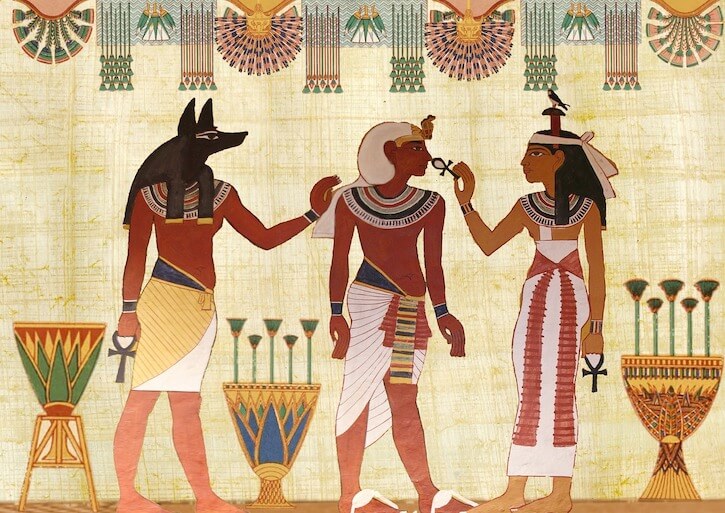
The origins of lithotherapy date back to ancient civilizations that attributed special powers to stones and crystals. The Egyptians, for example, used precious stones for ritual and medical purposes. The ancient Greeks also believed in the power of crystals, associating them with deities and healing virtues. In China, traditional medicine incorporated the use of minerals to balance the body's energies. Native Americans also adopted similar practices using stones for healing and spirituality.
1.2. Fundamental Principles
1.2.1. Vibrational Energy of Crystals
Lithotherapy is based on the premise that each crystal emits unique vibrations. These vibrations are linked to the chemical composition, crystalline structure, and color of the stone. According to lithotherapy practitioners, these vibrations can interact with the individual's energy field, restoring harmony and removing energy blockages. Some also believe that these vibrations can act on different levels, influencing the physical, emotional, and spiritual.
1.2.2. Energy Fields and Chakras
Lithotherapy views the human body as a set of interconnected energies. It relies on the concept of chakras, energy centers distributed along the spine, each associated with specific aspects of physical and mental health. Crystals are chosen based on their specific vibrational properties to realign, balance, or stimulate these energy centers, thus promoting overall well-being.
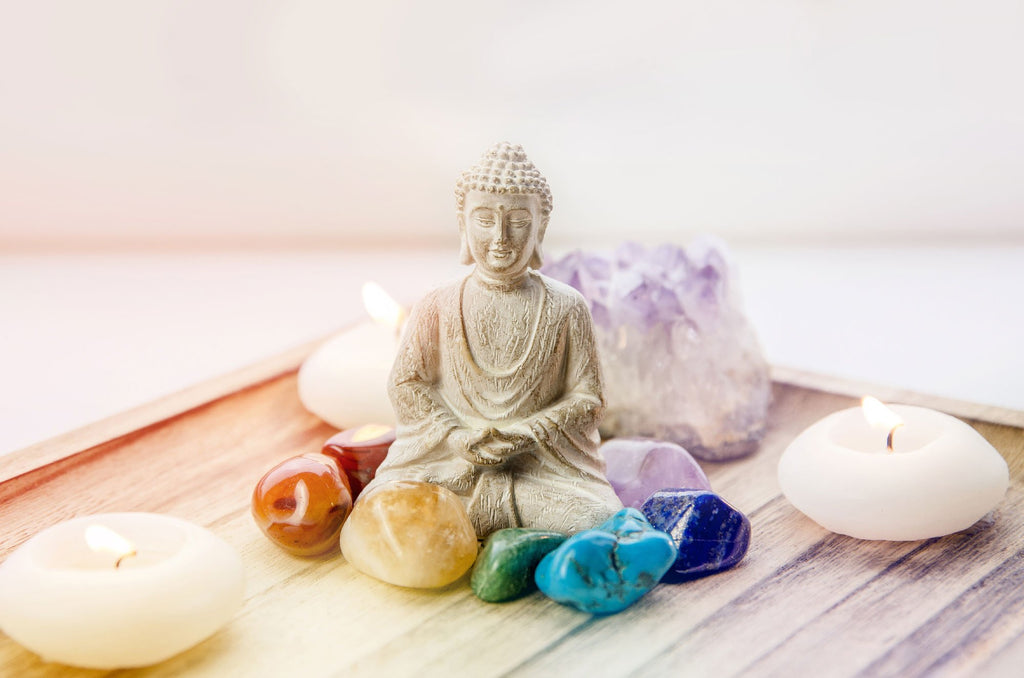
Practitioners of lithotherapy also believe in the ability of crystals to interact with the human body on a subtle energetic level. This can happen through direct contact with the skin, by placing crystals on specific points of the body, or by incorporating them into jewelry. Some also believe that meditating with crystals can intensify these interactions, creating an energetic dialogue between the practitioner and the stone.
1.2.3. Balance and personal resonance
A key principle of lithotherapy is the idea that each individual can feel a personal affinity with certain stones. This choice is not only based on physical or energetic characteristics but also on a personal resonance. Some practitioners recommend listening to one’s intuition and choosing crystals that evoke a deep connection, believing that this affinity enhances the beneficial effects.
1.3. Current evolution and popularity
1.3.1. Contemporary revival
Lithotherapy, although ancient in its origins, has experienced a significant revival today. Wellness movements, growing interest in alternative medicines, and the appeal of holistic approaches have helped bring lithotherapy back to the center of conversations about health and well-being. This resurgence has been fueled by a collective search for complementary methods to manage stress, improve quality of life, and promote balance.
1.3.2. Beyond esotericism
Lithotherapy has moved beyond esoteric circles to become a part of popular culture. Crystals and gemstones are now found in many spaces, from wellness shops to social media, and are worn in various forms, whether as jewelry or decorative elements. This increased presence has helped democratize lithotherapy, making it accessible to a wider audience.
1.3.3. Scientific validation
Although lithotherapy is often associated with spiritual concepts, scientific research is beginning to explore some aspects of this practice. Studies on crystal vibrations and their potential effects on the human body are emerging, although most current research remains preliminary. Note that to date there is no official validation of lithotherapy's effects on the human body.
Let us recall that lithotherapy should never replace a medical consultation or treatment.
2. The foundations of lithotherapy
2.1. Crystals and their properties
Crystals used in lithotherapy are classified according to their chemical composition and crystal structure. Different stones are reputed to have specific properties. For example, quartz crystals are known for their ability to amplify energy, while blue-colored stones, like sodalite, are often associated with communication and mental clarity.
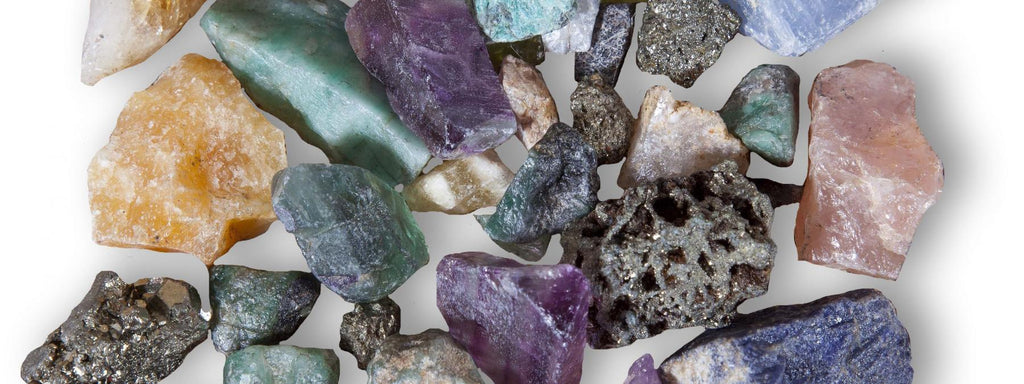
Crystal colors are often associated with specific properties in lithotherapy. Each color is believed to resonate with particular aspects of human energy. Additionally, the shape of crystals, whether raw or polished, and their types, such as point crystals or cluster crystals, are considered when choosing stones based on the specific needs of the practitioner or recipient.
Stone classification
| Stones | Chemical composition | Dominant color | Energetic properties |
| Agate | Variety of chalcedony | Multicolored | Stability, balance |
| Aquamarine | Beryl (beryllium aluminum cyclosilicate) | Blue-green to pale blue | Calm, communication |
| Amber | Fossilized resin | Yellow to orange | Positive energy, healing |
| Amazonite | Microcline feldspar | Turquoise green to light green | Calm, mental clarity |
| Amethyst | Silicon dioxide with traces of iron | Violet | Calm, meditation |
| Calcite | Calcium carbonate | Various colors | Energy, purification |
| Charoite | Complex silicate of sodium, potassium, calcium, barium | Violet to purple | Spiritual transformation |
| Chiastolite | Andalusite with carbon inclusions | Brown with black inclusions | Psychic protection |
| Chrysocolla | Copper and aluminum silicate | Green to blue-green | Communication, harmony |
| Chrysoprase | Chrysoprase silicate | Apple green to dark green | Prosperity, luck |
| Citrine | Silicon dioxide with traces of iron | Yellow to orange | Energy, abundance |
| Carnelian | Variety of red-orange chalcedony | Orange to red | Energy, creativity |
| Rock crystal | Silicon dioxide | Transparent | Clarification, amplification |
| Danburite | Calcium borosilicate | Colorless, pink, brown | Inner peace, spirituality |
| Eudialyte | Sodium, calcium, cerium, iron, manganese cyclosilicate | Red to brown | Unconditional love |
| Fluorite | Calcium fluoride | Variety of colors, including violet, green, blue, yellow | Mental clarity, concentration |
| Garnet | Group of silicate minerals | Red to brown, various colors | Energy, passion |
| Hematite | Iron oxide | Silver gray to black | Strength, energy |
| Howlite | Calcium and boron borate | White with gray veins | Calm, sleep |
| Jade | Nephrite or jadeite | Pale green to dark green | Harmony, luck |
| Dalmatian Jasper | Variety of jasper | Beige with black spots | Play, fun |
| Kunzite | Lithium, aluminum, and silicon silicate | Pale pink to violet | Unconditional love, calm |
| Labradorite | Oligoclase feldspar with labradorite inclusions | Gray with shimmering reflections | Energy balance, intuition |
| Lapis Lazuli | Sodium, aluminum silicate, sulfur and chlorine silicate with traces of calcite, sodalite, pyrite | Deep blue sprinkled with golden reflections | Wisdom, communication |
| Larimar | Pectolite | Light blue to blue-green | Spiritual communication |
| Malachite | Copper carbonate | Green with dark bands | Protection, transformation |
| Moldavite | Natural glass created by meteorite impact | Olive green to dark green | Transformation, evolution |
| Morganite | Beryl (beryllium aluminum cyclosilicate) | Pink to pale pink | Love, empathy |
| Obsidian | Glassy volcanic rock | Black | Protection, grounding |
| Tiger's Eye | Quartz, crocidolite (variety of asbestos) | Golden yellow to brown | Protection, confidence |
| Onyx | Chalcedony | Black | Emotional stability, inner strength |
| Peridot | Iron and magnesium silicate | Olive green to yellow-green | Personal growth, strength |
| Jasper stone | Variety of microcrystalline quartz | Various colors, often speckled | Stability, grounding |
| Lava stone | Volcanic rock | Black | Grounding, inner strength |
| Moonstone | Orthoclase feldspar with inclusions of lamellar feldspar | White, shades of blue | Intuition, femininity |
| Shungite stone | Amorphous carbon | Black, silver gray | Energy protection, purification |
| Sunstone | Variety of oligoclase or adularia with inclusions of hematite or goethite | Orange to brown with golden reflections | Joy, vitality |
| Pietersite | Crocidolite and quartz silicate | Blue, gold, red | Intuition, transformation |
| Prehnite | Aluminum and calcium phyllosilicate | Pale green to dark green | Inner peace |
| Pyrite | Iron sulfide | Golden to brass | Protection, physical energy |
| Clear Quartz | Silicon dioxide | Transparent | Amplification, clarity |
| Smoky Quartz | Silicon dioxide | Brown to black | Grounding, protection |
| Rose Quartz | Silicon dioxide with traces of titanium, iron, or manganese | Pale pink to dark pink | Love, emotional calm |
| Rhodochrosite | Manganese carbonate | Pink with white bands | Self-love, emotional balance |
| Rhodolite | Garnet | Violet to pink | Love, compassion |
| Rhodonite | Manganese silicate | Pink with black inclusions | Emotional balance, compassion |
| Sardonyx | Variety of agate | Black and white stripes | Courage, confidence |
| Serpentine | Group of minerals with various chemical compositions | Green to black | Emotional balance, regeneration |
| Sodalite | Aluminum, sodium, and chlorine silicate | Blue | Communication, mental clarity |
| Spinel | Magnesium and aluminum oxide | Red, black, blue, green | Energy, protection |
| Stromatolite | Rock structure | Brown with patterns | Transformation |
| Sugilite | Complex silicate of potassium, sodium, lithium, iron, manganese, aluminum | Violet to pink | Spirituality, Psychic protection |
| Turquoise | Hydrated copper and aluminum phosphates | Blue-green to green | Protection, Wisdom |
| Unakite | Potassium aluminosilicate, aluminum, and iron | Green with pink inclusions | Emotional balance, Growth |
2.2. Energies and vibrations
2.2.1. Concepts of Vital Energy
Lithotherapy is based on the concept of a vital energy flowing through the body, known by different names in various traditions, such as qi in Chinese medicine or prana in yogic philosophy. According to lithotherapy, crystals act as catalysts that influence this energy, promoting harmony and well-being.
2.2.2. Crystal vibrations
Each crystal emits specific vibrations due to its molecular structure. According to lithotherapy proponents, these vibrations can interact with the human energy field. Some crystals are known to calm, others to stimulate, thus creating a varied palette of energetic effects.
Lithotherapy offers a wide range of energetic effects attributed to different crystals. For example, amethyst is often associated with relaxation and meditation, while clear quartz is considered an energy amplifier.
3. Practical Uses of Crystals
The practice of crystal healing involves specific methods of selecting, preparing, and applying crystals. This section explores the different approaches used within crystal healing.
3.1. Methods of Stone Selection
3.1.1. Personal Choice and Affinity
In crystal healing, the choice of crystals often relies on a personal connection and intuitive affinity. Practitioners encourage individuals to be guided by their own feelings and to choose stones that naturally attract their attention. This approach recognizes individuals' ability to resonate with the crystals they need energetically.
3.1.2. Cleansing and Recharging
Before use, crystals are often cleansed to remove residual energies. Different methods can be employed, such as rinsing with clear water, passing through sage smoke, or exposure to moonlight or sunlight. Once cleansed, crystals are recharged by exposing them to positive energies, like natural light or quartz crystals.
For more information, see our dedicated practical guide.
3.2. Applications and Techniques of Crystal Healing
3.2.1. Meditation and Relaxation
Crystals are often used as meditation tools to promote relaxation and energy alignment. During meditation, practitioners may place appropriate crystals on or near the body to amplify the experience. Some crystals, such as amethyst, are particularly associated with meditation and creating a state of inner calm.
Also, some crystal healing practitioners incorporate crystals into physical and emotional treatments. This can include creating crystal grids to harmonize energy in a given space or using specific crystals during energy healing sessions. For example, black tourmaline is often used for its reputation for energy protection, while rose quartz is associated with emotional healing.
3.2.2. Chakras and Energy Balance
Lithotherapy explores the idea that crystals can influence the body's energy centers, called chakras. By placing specific crystals on or around the chakras, practitioners seek to restore energetic balance. For example, using a crystal associated with the heart chakra, such as malachite, might be favored to promote love and emotional harmony.
Chakras are energy centers that are part of the subtle system of the human body, according to certain spiritual traditions, notably those from Hinduism and Buddhism. The term "chakra" comes from Sanskrit, the ancient language of India, and means "wheel" or "disk." Chakras are often described as vortices or whirlpools of energy.
According to yogic philosophy and traditional Indian medicine, chakras are intersection points between energy channels, called nadis, which form a complex network throughout the body. It is believed there are thousands of chakras, but most teachings focus on seven main chakras aligned along the spine, from the base to the top of the head.
3.2.3. Home and passive power
Besides active use of stones, lithotherapy also involves placing stones in a living environment, such as the home or office. You can refer to our stone chart to select those that promote calm or creative stimulation. For better effect, it is recommended to choose medium to large stones or even geodes, which will also provide a unique decoration for your home.
4. The final word
By exploring the world of lithotherapy, we have delved into a universe where crystals become allies in the pursuit of physical, emotional, and spiritual well-being. Throughout this dossier, we have examined the foundations of lithotherapy, from its historical origin to its contemporary evolution, while highlighting the fundamental principles underlying this practice.
Lithotherapy fits into a holistic perspective, considering the human being as a complex set of interacting energies. Crystals, through their specific properties, are seen as catalysts capable of influencing vital energy and promoting harmony in various aspects of life.