



|
IN SUMMARY...
1. The Origin of the athamé |
The athamé is an essential tool for any magic practitioner who wants to create effective rituals. This unsharpened dagger is generally associated with the element of air or, in some traditions, with fire, thus representing intellect, will, and action. As a symbolic tool, the athamé is used to direct energy, draw magic circles, and serve as an extension of the practitioner's will.
1. The Origin of the athamé
The term "athamé" has somewhat unclear origins. Some authors suggest it may derive from the Arabic word al-dhamme, meaning "the sword." Others link the athamé to Latin or Greek terms, such as artavus, a small knife used by priests in ancient Rome. Whatever its origin, the athamé is an essential symbolic tool in many magical practices, notably in Wicca and ceremonial magic.

In antiquity, priests and magic practitioners already used ritual blades for various ceremonies, whether to symbolically cut bonds, direct energies, or perform symbolic sacrifices. These objects were often considered objects of power, imbued with symbolic and spiritual meanings.
Gnostic and Hermetic traditions, which influenced many later esoteric currents, regarded blades as symbols of discernment and separation, representing the ability to cut through truth and illusion. This symbolism has endured and evolved over the centuries, finding particular expression in modern magical practices such as Wicca and ceremonial magic.
2. Variants of the athamé
In Nordic and Celtic traditions, ritual blades, sometimes called seax or sax, were used for ceremonial and magical purposes. The seax, a knife or short sword with a straight blade, was commonly used by the Anglo-Saxons and Vikings. In a ritual context, these blades served to carve runes, invoke deities, or perform symbolic sacrifices. The runes, engraved or traced with these blades, were used for divination and runic magic, considered tools for communicating with divine forces.

The boline, another ritual knife with a curved blade, is often used alongside the athamé in Wicca traditions. Unlike the athamé, which is reserved for symbolic tasks, the boline is intended for practical uses, such as physically cutting herbs, cords, or other materials needed during rituals.
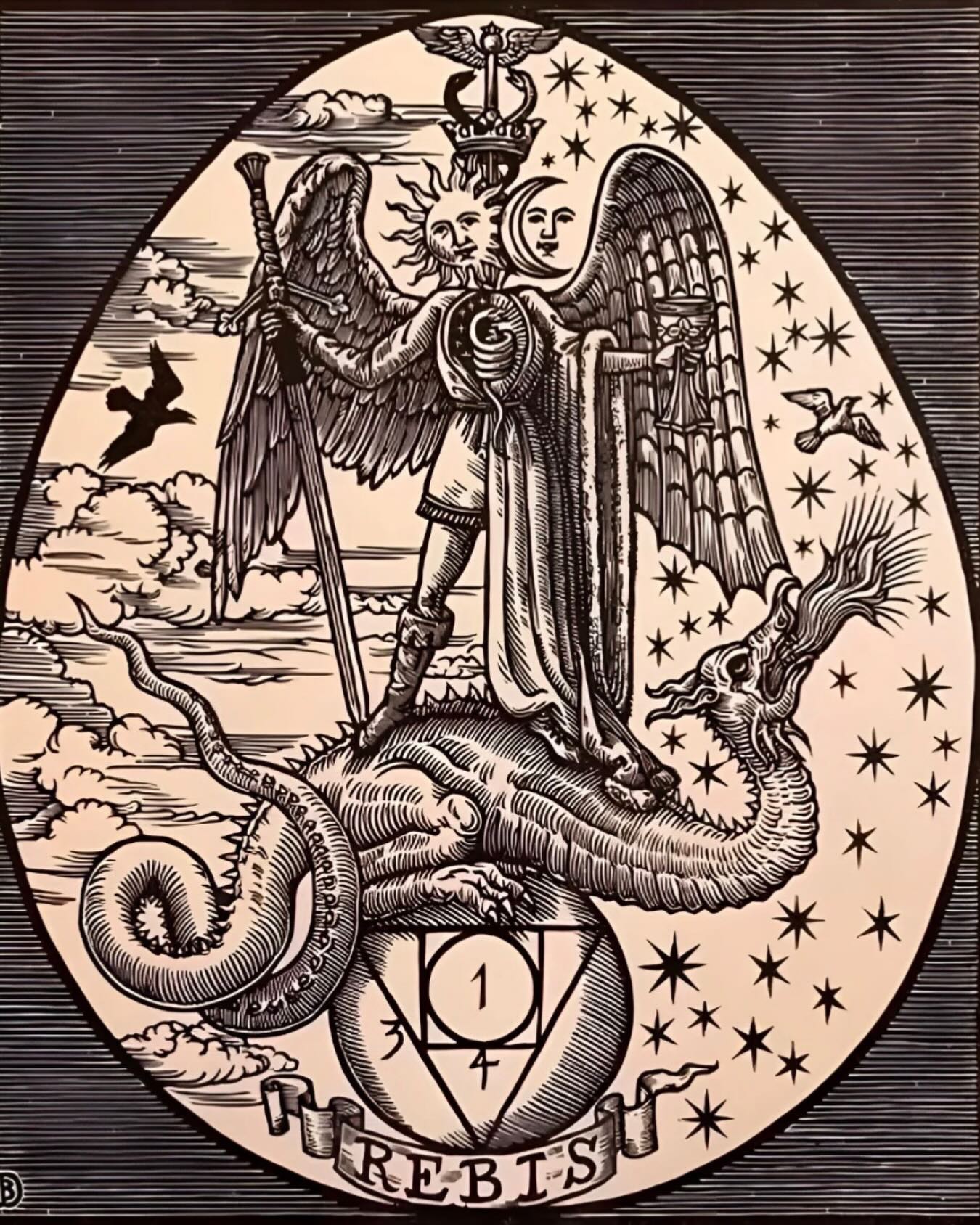
In draconic magic, a specific branch of magic focusing on working with draconic energies and entities, the athamé is replaced by the sword.
3. The Symbolism of the athamé
3.1. The athamé and the Air element
Traditionally, in Wicca and other esoteric practices, the athamé is associated with the Air element. This element symbolizes intellect, communication, rational thought, and truth. As an instrument linked to air, the athamé is used to draw symbols in the air, invoke air spirits, or direct energies precisely and purposefully.
3.2. The athamé and the Fire element
However, some traditions associate the athamé with the Fire element. This association stems from the sharp and penetrating nature of the tool, which can be seen as an extension of will, energy, and passion. Fire, in this context, represents transformation, purification, and the power of intention. Thus, the athamé, as an extension of the practitioner's will, serves to channel energy and perform intentional magical acts.
3.3. The athamé and intention
The athamé is often considered an extension of the practitioner's will. In rituals, it is used to draw magic circles, direct energy, and symbolically "cut" or "separate" the sacred from the profane. The act of directing the blade or tracing symbols with the athamé is an act of concentration and intention, symbolizing the practitioner's ability to direct and control energy. This tool is therefore not only a physical instrument but also a symbol of the practitioner's will, their ability to affect and change their reality.
4. The Materials of the athamé
The blade of the athamé is generally made of steel, although other metals like silver can be used. Steel is commonly chosen for its durability and ability to maintain a fine edge, symbolizing clarity of thought and intention. Steel, an alloy of iron, is also associated with strength, protection, and determination.
Silver, on the other hand, is sometimes chosen for its associations with the moon, intuition, and feminine energy. Silver is considered a purifying metal, capable of channeling and stabilizing subtle energies.
The handle of the athamé can be made from a variety of materials, each with its own symbolic meaning. Wood is a common choice, representing connection with nature and earth energy. Each type of wood has its own magical attributes; for example, oak wood is associated with strength and longevity, while willow wood is linked to flexibility and intuition.
5. The Uses of the athamé
5.1. Opening and closing a magic circle
The athamé is often used to open and close magic circles, which are sacred spaces created for rituals. When opening a circle, the practitioner uses the athamé to symbolically trace the circle in the air, marking the boundaries of the ritual space. This action aims to delineate a sacred space, separate from the outside world, where the practitioner can safely work with magical energies. By tracing the circle, the athamé acts as a protective tool, preventing negative influences from entering.

At the end of the ritual, the circle is "closed" ritually, often by retracing the circle in the opposite direction. This action symbolizes the return to the ordinary state, dissolving the sacred space and releasing the accumulated energy. The athamé is then used to thank and release the energies or entities invoked, thus closing the ritual cleanly and respectfully.
5.2. Directing energy
The athamé is also an essential tool for directing energy during rituals. During incantations or invocations, the practitioner can point the athamé toward a candle, a symbol, or even a specific direction to channel and focus the energy of their will. This act can serve various purposes, such as healing, protection, or sending positive energy to a person or situation.
The athamé is often considered an extension of the practitioner's arm, facilitating the transmission of energy from their body to the universe. As such, it is crucial for the precision and intentionality of magical actions, allowing energy to be directed with clarity and determination.
6. The Importance of Consecration
Before using an athamé for the first time, or after a period of non-use, it is common to purify it to eliminate any unwanted residual energy. Purification methods vary but may include passing the blade through incense smoke, soaking it in salt water, or exposing it to moonlight or sunlight. Each purification method has its own symbolism: incense represents air and spiritual purification, salt water the water element and the dissolution of negative energies, and moonlight or sunlight the blessing and renewal.
The consecration is an important ritual to charge the athamé with energy and assign it to the user. This process often involves passing the athamé through the elements (earth, air, fire, water) to bless and sanctify it. The blade may be passed through the flame of a candle (fire), sprinkled with ritual water (water), exposed to incense smoke (air), and touched by salt or earth. Each step of the consecration serves to harmonize the athamé with natural forces and prepare it for ritual use.
That concludes this note on the athamé; I hope its use is now clearer for you!
[bloctwist]