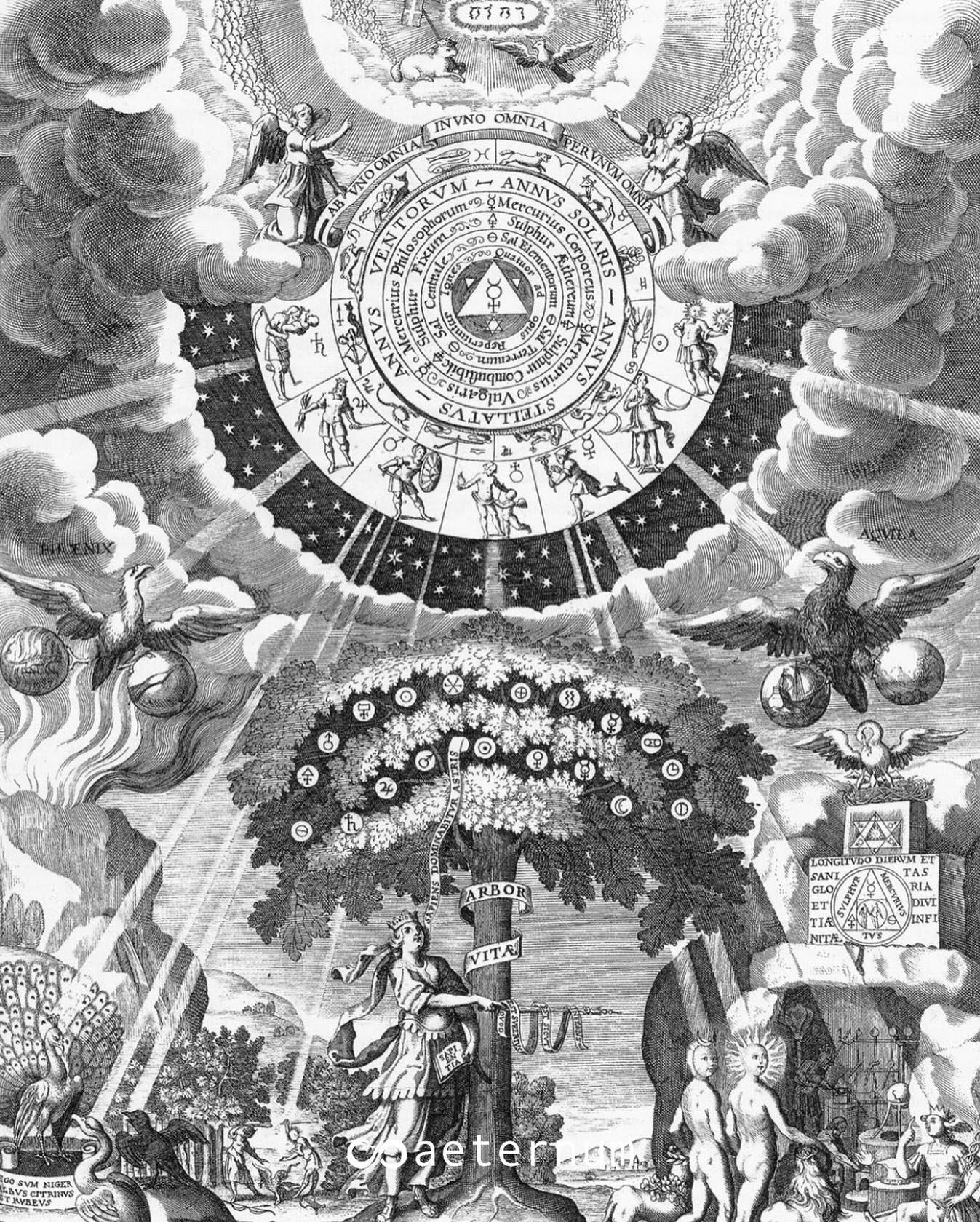


























































































































Have you ever felt a very particular feeling or vibration in a place? Or while walking down the street? A sensation of well-being but hard to describe? That probably means you found yourself at the crossing of telluric lines (from the Latin tellūris meaning Earth), energy currents that run through our planet, known for centuries since Antiquity but formalized since the 19th century. Thus, the city of Paris, Notre-Dame Cathedral, the Carnac Alignments, or the pyramids were built on these crossings, creating particularly vibrational places. We decode all of this.
1. The theory of telluric currents
The exploration of telluric lines is part of a long tradition of research into invisible earth currents, which dates back to the discovery of Earth's magnetic fields by William Gilbert in 1600. Gilbert, an English scientist, proposed that the Earth itself was a great magnet. However, the concept of telluric lines as we know it today took shape in the early 19th century by Sir Charles Fox, then with the work of Ernst Hartmann, a German doctor who formalized the Hartmann grid in the 1950s. According to Hartmann, the Earth is crossed by a network of electromagnetic radiations, some of which can have harmful effects on health.
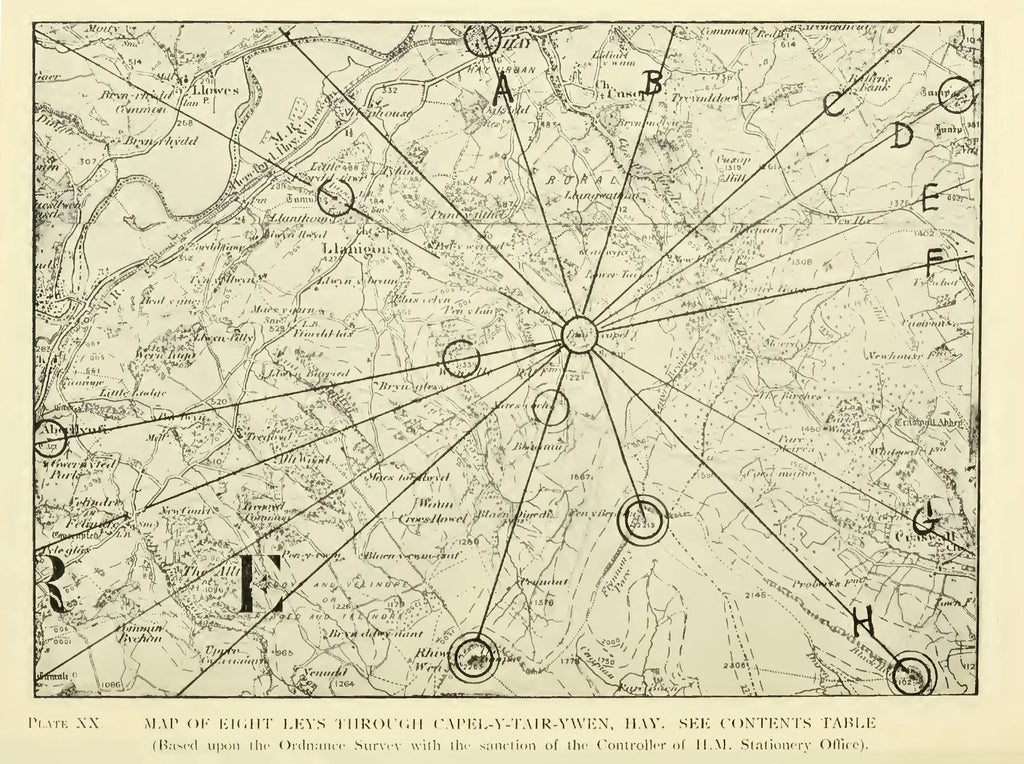
Telluric lines were later "popularized" by figures such as Alfred Watkins. In 1921, Watkins, an English antiquarian and photographer, proposed the idea that alignments of geographical places in straight lines, which he called ley lines, marked trade routes or sacred lines used by ancient British civilizations. Although different from the purely energetic concept of telluric lines, ley lines helped popularize the idea of geomagnetic forces connecting specific sites.
2. Telluric currents and geology
Telluric lines are often studied in relation to geological features such as faults, underground water sources, and mineral formations. Geologists have observed that these features can influence the Earth's electrical conductivity. For example, underground water, due to its ability to conduct electricity, can enhance the conductivity of surrounding areas, creating conditions favorable to the formation of stronger telluric currents. Similarly, tectonic fault zones are often associated with magnetic anomalies, which could interact with or influence the flow of telluric currents.
3. The vibrational energy of telluric currents
These currents are often seen as energy flows running through the Earth, similar to veins through which the planet's vital energy circulates. Their study and understanding have naturally gained importance in esoteric practices.
Of course, the presence of telluric lines and crossings represent places particularly favorable to arts using subtle energy, such as divination or meditation. It is known that places of worship like churches are built on telluric lines to enhance spirituality, like Notre-Dame Cathedral.
Telluric currents are frequently associated with geobiology, a discipline that studies the impact of geophysical characteristics of a place on the health of living beings. Geobiologists, as well as some architects, planners, and builders, take these currents into account when designing buildings and living spaces, seeking to align with or avoid these energies depending on their beneficial or harmful nature. The idea is that buildings harmoniously aligned with telluric currents promote the health, well-being, and prosperity of their occupants.
4. The Stonehenge case
Stonehenge, a prehistoric monument located on the Salisbury Plain in England, is often cited as a symbol concerning the Earth's energy currents. This set of standing stones, built between 3000 and 2000 BC, has long fascinated archaeologists, historians, esotericists, and geobiologists, each proposing different theories about its function and importance.
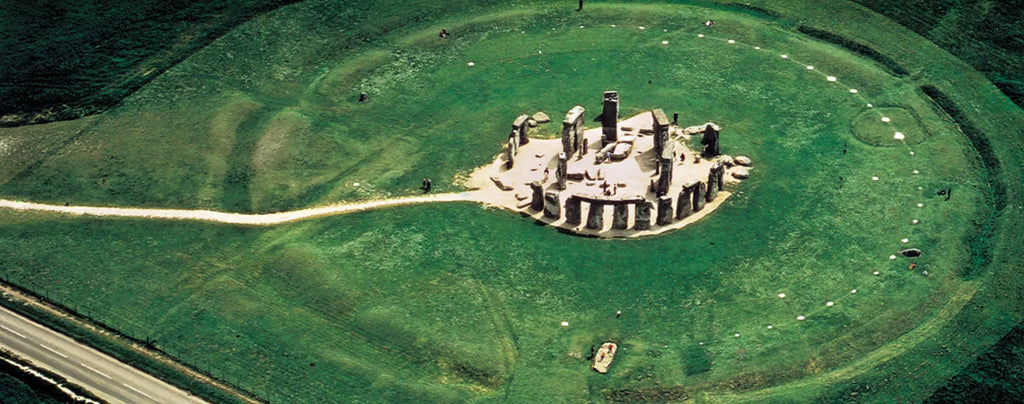
The site is recognized for its impressive astronomical alignments, notably with the summer and winter solstices. Some researchers suggest that these alignments are not only astronomical but also geomagnetic, implying that the site could be positioned on an important point of a network of telluric lines. These lines could channel earth energies, making the site suitable for rituals or spiritual practices.
5. Detecting telluric lines
5.1. By dowsing
Dowsing is one of the oldest and most used methods to detect telluric lines. It involves using dowsing rods or pendulums. The principle is that these tools, held by a person sensitive to energetic variations, will react in the presence of telluric lines by oscillating, turning, or suddenly stopping. Historically, dowsing has been used not only to find underground water but also to locate energy lines and geopathogenic points.
5.2. By electromagnetic measuring instruments
More modern instruments include magnetometers and devices measuring variations in the electromagnetic field. These devices can help map magnetic or electrical anomalies that could indicate the presence of telluric lines. Although these methods are more scientific, their effectiveness in detecting telluric lines remains a subject of debate among experts.
5.3. By Kirlian photography
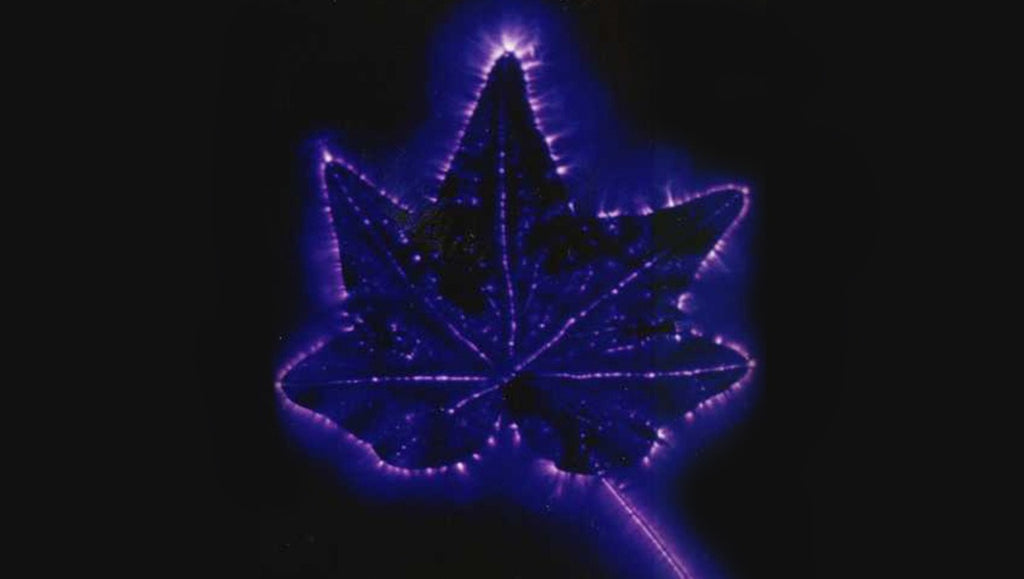
This technique, originally developed to document electric fields around objects, has been adapted by some to visualize energetic influences around living beings and, by extrapolation, to detect the effects of telluric lines on organisms.
5.4. By direct observation
Some traditions involve observing animal behaviors or plant growth patterns. It is said that certain trees, like oaks, thrive on telluric lines, while others, like birches, avoid them. Animals are also considered sensitive to these lines, some preferring to sleep on them, while others avoid them.
6. Telluric hotspots in France
It would be difficult to make a complete list but here are some places reputed to be on energy nodes:
-
Carnac, in Brittany, is famous for its alignments of menhirs, which are among the most impressive and largest sets of standing stones in the world. Some suggest these stones were placed according to telluric lines to mark particularly strong energy points.
-
Mont Saint-Michel, with its iconic abbey perched on a rocky islet in Normandy, is often cited in geobiology studies. It is believed that this site is at the crossing of several major telluric lines, which would contribute to its mystical atmosphere and spiritual appeal.
-
Chartres Cathedral, known for its Gothic architecture and remarkable stained glass windows, is also famous for its floor labyrinth, attracting those interested in meditation and spiritual energies. Dowsers and geobiologists often consider Chartres a powerful energy point, enriched by underlying telluric currents.
-
The village of Rennes-le-Chateau is surrounded by mysteries, notably due to legends related to hidden treasures and ancient secrets. Rennes-le-Château is also reputed to be a telluric hotspot, often visited by those interested in esotericism and historical mysteries.
-
Le Puy en Velay in Auvergne is famous for its chapels and statues dedicated to the Virgin Mary, built on volcanic peaks. These natural formations are considered by some as natural conductors of telluric energy, making the town an important spiritual center.
Thus ends our exploration of telluric lines. Take some time to feel the places where you are and let the energies speak to you!