













































































































































































































European occult traditions teach that alongside the realms of angels and demons there exists a third order of spiritual beings connected to the natural elements. These creatures, called elemental spirits (although this contemporary term is actually a mistake) or, more commonly, Elementals, are said to inhabit the four classical elements—Earth, Water, Air, and Fire—and to lack an immortal soul. Here is an explanation.
Nature and Origin of the Elementals
The Swiss physician and alchemist Paracelsus (16th century) was one of the first to describe them systematically. According to him, God populated each element with beings suited to it, spontaneously generated by the element itself. Paracelsus thus stated that Earth produces subterranean dwarfs, Water gives birth to nymphs, Air shelters spirits called elves, and Fire gives rise to salamanders. These entities are said to have an almost human appearance and a subtle material existence, composed of the purest parts of their element of origin. Possessing neither a rational soul nor a divine spark, they are mortal—their lives supposedly extend over several centuries, after which they die like animals.
Despite lacking an immortal soul, the Elementals are not regarded as fallen or diabolical beings. They are separate creatures, occupying an intermediate rank between humanity and the angelic realm. From an esoteric perspective, their existence bears witness to the fullness of Creation: “This immense space between Earth and Heaven has inhabitants far nobler than birds... the element of Fire, nobler than the other three, was not made to remain useless and empty.” In other words, every corner of the universe is alive, populated by invisible entities responsible for the harmony of the elements.


Several authors believe that primitive humanity knew and interacted with these nature spirits. The Abbé de Villars (author of The Comte de Gabalis, 1670) wrote that Adam, before his Fall, was the natural king of these beings and was familiar with them, but that original sin had veiled this knowledge from humanity. Likewise, Paracelsus maintained that Elementals might sometimes seek to form alliances with humans. His doctrine—later taken up in occult literature—states that if an elemental marries a man or woman, it then acquires the soul and immortality it lacked. This paradoxical idea, in which love between a human and an elemental being “redeems” the latter, appears in the works of several Hermetic authors. It is thus claimed that a nymph (undine) who becomes the wife of a sage gains an immortal soul, or that a gnome who marries a mortal woman ceases to be a perishable spirit. These allegorical tales illustrate the occult belief that the human spirit, endowed with the five elements (the four elements plus the spiritual Quintessence), possesses a divine spark capable of elevating purely elemental creatures to a higher plane.
The Spirits of the Four Elements and Their Correspondences
Classical esoteric tradition divides the Elementals into four categories, each linked to one of Empedocles’ four elements. Paracelsus established the names that became canonical:
-
Earth – Gnomes: spirits of Earth, presented as small subterranean beings and guardians of treasures hidden in mines and beneath mountains. They are said to be ingenious, friendly toward humans, and easy to command. “The earth is filled almost to its center with Gnomes, people of small stature, guardians of treasures... They are ingenious, friendly to humans, and easy to command.” Devoted servants of the “Children of the Sages,” they could provide the adept with the metallic and mineral wealth he needs. Their wives, the gnomides, are described as very graceful little creatures dressed in curious garments.
-
Water – Undines: spirits of Water inhabiting rivers, lakes, seas, and springs. Also human in appearance, they form a predominantly female people—sometimes referred to as nymphs or naiads. The Comte de Gabalis notes: “The seas and rivers are inhabited just as the air is; the ancient Sages called this kind of people Undines or Nymphs... There are few males, and the women are numerous; their beauty is extraordinary, and the daughters of men have nothing comparable to it.” These undines, whose faces possess supernatural beauty, are believed to enchant humans with their songs and dances. However, lacking immortal souls, they supposedly seek to obtain one through marriage to a mortal, according to Paracelsus’s teachings.
-
Air – Sylphs: spirits of Air, invisible and intangible like the wind. They are portrayed as winged beings with an ethereal humanoid appearance, mostly male. “The air is filled with an innumerable multitude of peoples [the Sylphs] of human form, somewhat proud in appearance but docile in reality: great lovers of the sciences, subtle, helpful to the wise, and enemies of fools and ignoramuses. Their wives and daughters are masculine beauties, such as Amazons are depicted...” Sylphs are therefore associated with intellect, esoteric knowledge, and subtle inspiration. Well disposed toward the sages they instruct in higher secrets, they instead despise ignorance and vulgarity. Their proud yet benevolent nature makes them favored interlocutors of mages and philosophers seeking truth.
-
Fire – Salamanders: spirits of Fire, also sometimes called vulcans or fiery spirits. They are said to inhabit the element of fire—both earthly flames and the more ethereal region of Fire. They are represented as bright lights or blazing silhouettes, sometimes likened to fire reptiles (hence the name salamander, by analogy with the mythical animal that survives flames). The Abbé de Villars describes them as “the flaming inhabitants of the region of fire, [who] serve philosophers.” Indeed, in Hermetic symbolism, salamanders embody the transformative power of fire and reveal to sages the mysteries of energy and metamorphosis. Less inclined to associate with humans, “they do not eagerly seek their company,” and their queens rarely reveal themselves to mortals. Nevertheless, their role is to animate celestial fire and exercise a purifying power; according to certain occult cosmologies, they invisibly fuel the sun, electrical storms, and volcanic fire.
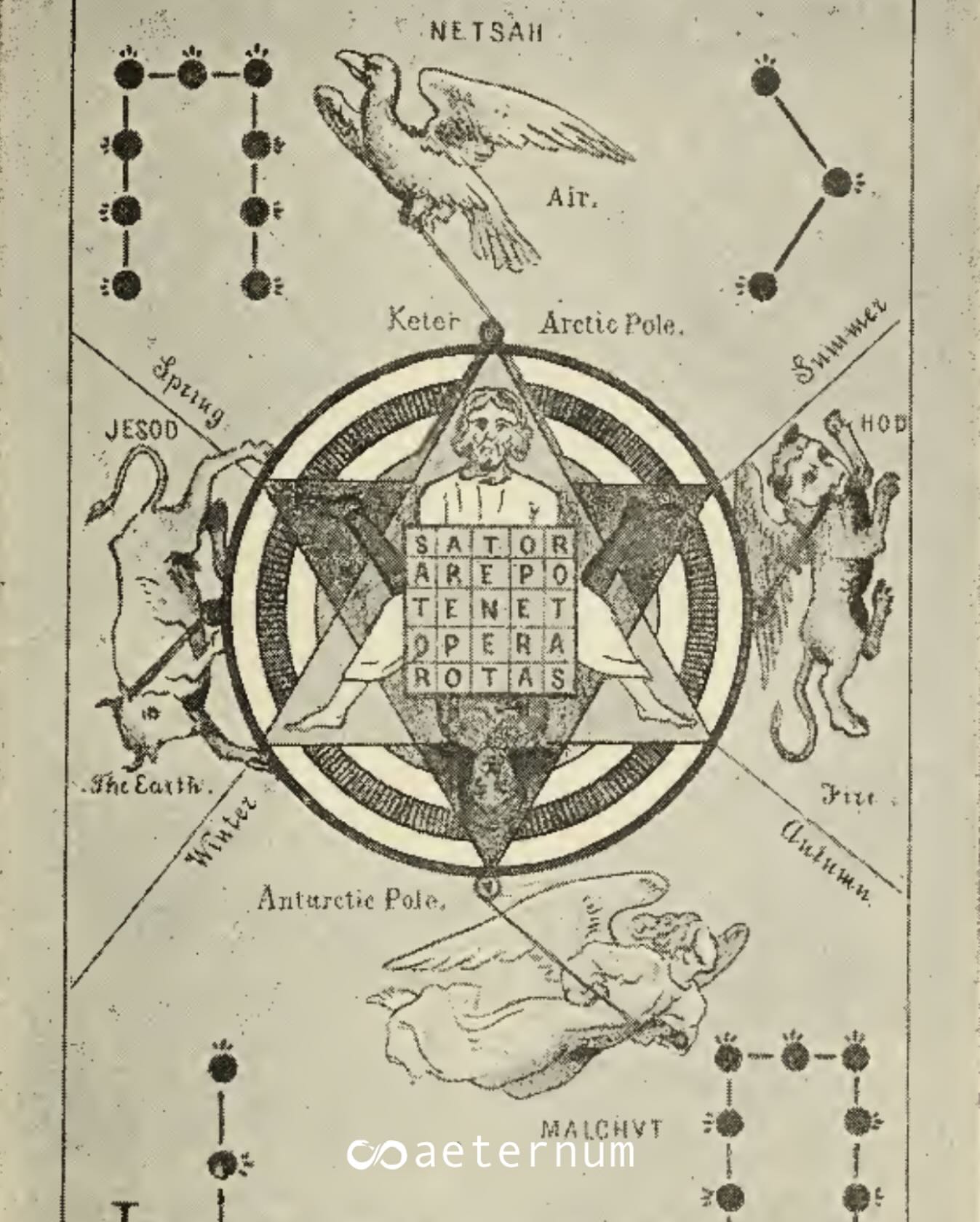
Each category of Elementals thus corresponds to one of the four Elements and shares its fundamental qualities. This correspondence also extends to the cardinal points, astrological signs, and human temperaments. Éliphas Lévi assigns the north and the sign of Taurus to the gnomes, the south and Leo to the salamanders, the east and the Eagle (an esoteric symbol of air) to the sylphs, and the west and Aquarius to the undines. Likewise, gnomes are commonly associated with the melancholic temperament (earth, dry and cold), undines with the phlegmatic temperament (water, cold and moist), sylphs with the sanguine temperament (air, warm and moist), and salamanders with the choleric temperament (fire, warm and dry). These correspondences illustrate the idea that the Elementals influence human moods and dispositions, each in its own way. The sylphs’ brisk air can inspire joy and imagination, while the gnomes’ earth imparts gravity and contemplation, the undines’ water brings calm or nostalgia, and the salamanders’ fire, ardor and passion.
Cosmological Role and Interaction with Humanity
In occult cosmology, the Elementals play an essential role as guardians and agents of the forces of nature. They invisibly preside over natural phenomena: sylphs are credited with the movement of winds and clouds, undines with the flow of waters and the generosity of rainfall, gnomes with soil fertility and the formation of crystals, and salamanders with the heat of telluric and celestial fires. Thus, ancient mages saw storms as the joint action of the sylphs of Air and the salamanders of Fire, or earthquakes as the work of irritated gnomes and subterranean spirits. Rather than mere metaphors, these correspondences reflect an animistic view of the universe in which humans can enter into dialogue with the living forces of creation.
The Elementals are neither fundamentally good nor intrinsically evil—they follow their own nature and may alternately help or challenge human beings. To the sage who approaches them with respect and purity, they are generally well disposed, even helpful. Numerous occult legends tell how an adept who has mastered the arcana of the corresponding element can obtain the cooperation of these spirits: gnomes will reveal hidden veins and buried treasures, undines will protect worthy sailors on the waters, sylphs will inspire poets and philosophers by breathing subtle ideas into them, and salamanders will fan the fire of his alchemical athanor or hearth. In The Comte de Gabalis, the master even claims that gnomes willingly provide gold and silver to the “Children of the Sages” in exchange for the glory of being commanded by them. These nature spirits seek the company of virtuous humans, whose divine spark they admire, and flee from or mock the “fools and ignoramuses” whose coarse aura repels them.
Conversely, the imprudent or impure person may attract the pranks, or even mild hostility, of the Elementals. Numerous accounts in the esoteric tradition hold them responsible for poltergeist phenomena or nighttime pranks: objects being moved, fleeting lights, laughter in the wind... Rather than genuinely malicious demons, these may sometimes be mischievous nature spirits amusing themselves at the expense of intruders. Allan Kardec, founder of Spiritism, classifies “will-o’-the-wisps, goblins, gnomes, and sprites” among the lower-order light spirits, describing them as “ignorant, crafty, thoughtless, and mocking,” always ready to cause minor annoyances to mystify gullible humans. This Spiritist view, rather disparaging, reflects the 19th-century moral perspective on these entities: yes, they exist, but in his eyes they are merely underdeveloped, mischievous spirits lacking spiritual depth. Occultists, for their part, generally adopt a more respectful and nuanced tone, seeing the Elementals as neutral forces of nature that should be tamed rather than ridiculed.
More profoundly, the interaction between humans and Elementals belongs within the framework of natural Magic and Hermetic philosophy. The mage who succeeds in communicating with the spirits of the elements is believed to reclaim some of the powers humanity possessed during the mythical Golden Age. To master the Elementals is, for him, to reconnect with the harmony of the world and restore the alliance broken since the Fall. Éliphas Lévi thus states that when the operator knows how to dominate the elements within himself, “the entire world will be at the service of the wise.” He allegorically describes the advanced adept as capable of walking through rain without getting wet, crossing fire without burning, braving a storm without his cloak being disturbed, and even seeing through earth as through crystal. Behind these images lies the ideal of the mage-king, sovereign through wisdom over elemental creatures: humanity reconciled with Nature to the point of freely commanding its spirits, fulfilling the ancient promise of a regenerated humanity in which “the elements obey” the righteous.
Ritual Approaches to Invocation and Communication
Ceremonial magic grimoires and occult treatises have developed over the centuries an entire set of methods for approaching, invoking, or conjuring the spirits of the elements. Although these methods vary according to period and school, they share certain constants. The process is always solemn and requires rigorous preparation by the mage, both materially and spiritually.
Before any attempt at evocation, the operator must purify himself and enter a state of harmonious receptivity. Tradition recommends purification rites (lustral baths, fasting, wearing white, etc...) and prayer or mental concentration in order to reach a high vibrational level. The aim is to remove every coarse or malign influence and attune oneself to the element being addressed. The masters also insist on prior moral mastery: “To tame and enslave elemental spirits, one must never surrender to the faults that characterize them,” warns Éliphas Lévi. A light and unstable character will be unable to control the restless sylphs of Air; a cold and apathetic nature will fail to command the undines of Water; blind anger will irritate the fiery salamanders of Fire; and a miserly, coarse spirit will become the plaything of the mischievous gnomes of Earth. Instead, the mage must cultivate within himself the qualities belonging to each element: be quick and mentally alert like the sylphs, adaptable and imaginative like the undines, energetic and strong-willed like the salamanders, and hardworking and persevering like the gnomes. This inner harmony of the four elements is the condition that enables the adept to impose his natural authority on the elementals—the human being, microcosm of the elements, then commands their obedience.
Meeting an elemental requires the creation of a protected ritual space. Grimoires recommend drawing the appropriate protective figures on the ground, generally the magic circle (a circumference at the center of which the mage stands), reinforced by symbols drawn at the cardinal points. Éliphas Lévi advises drawing the Star of Solomon and the perfectly regular sacred pentagram on the ground, using consecrated charcoal or pigments mixed with powdered lodestone. The circle and these geometric emblems form a vibrational barrier that prevents any malicious intrusion and channels the energy of the summoned element. At the threshold of this consecrated area, symbolic instruments associated with the four elements are also placed (a lamp or brazier for Fire, a bowl of lustral water for Water, smoking incense for Air, and salt or earth for Earth), creating an environment conducive to the spirit’s manifestation.
In the classical operation, the mage holds his pantacle or talisman (a sign of authority), along with the ritual weapons appropriate to each spirit: the sword to command the gnomes of Earth, the wand (sometimes forked, or a trident) for the salamanders of Fire, sacred pantacles (consecrated disks or pentagrams) for the sylphs of Air, and the libation cup for the undines of Water. Each of these weapons is associated with the virtues of the element it controls—for example, the steel sword, emerging from the mineral kingdom, represents coercive power over Earth; the fiery wand commands through light and heat; the pantacle engraved with airy signs (such as the symbol of the eagle or Aquarius) dominates the spirits of Air; and the cup filled with holy water or wine consecrates the alliance with the spirits of Water.
The evocation itself is performed through consecrated formulas, in a sacred language (Latin, Hebrew, etc.), which invoke the divine names associated with the elements and order the spirit to appear. Lévi gives a Conjuration of the Four in which the practitioner successively calls upon the great archangelic rulers of the elements—Michael (Fire), Raphael (Air), Gabriel (Water), and Anael (Earth)—as well as the mystical names of the living God in each element (Elohim, Tetragrammaton, etc...). He then adjures the spirit sought with imperative words: “Angel with dead eyes, obey, or dissolve with this holy water! Winged bull, work, or return to the earth... Enchained eagle, obey this sign, or withdraw... Moving serpent, crawl at my feet, or be tormented by the sacred fire...” These images of the bull, eagle, and flaming serpent are symbolic figures of each category of elemental, to be compelled through the invocation of higher powers. The tone is imperious: the mage, strengthened by his spiritual authority, orders the entity to manifest without malice and lend its assistance, under threat of being driven away and punished by the invoked divine forces.
In addition to words and symbols, occultists use various physical aids to facilitate communication with the invisible. These may include mirrors, crystals, or bowls of water for seeing the spirit, as well as objects imbued with the corresponding element to attract the entity. One method cited by the Kabbalists consists of preparing an elemental “magnet”: “to command sylphs, undines, and gnomes, one fills a hermetically sealed glass globe with air, flame, or water and exposes it to the sun for a month; each of these purified elements thereby becomes a magnet that attracts the spirits belonging to it.” This advice, drawn from ancient texts, suggests that the quintessence of an element concentrated in a receptacle can serve as a focal point for drawing the corresponding elemental intelligence to oneself. Likewise, grimoires instruct practitioners to go to natural “places of power” to contact spirits more easily: for example, undines may be evoked beside a spring or lake during the hour of Apollo (sunset over the water in the west), sylphs atop a windy hill at dawn, gnomes in a cave or stone circle at midnight, and salamanders before a blazing fire or volcano at midday. The material presence of the element in abundance strengthens the entity’s manifestation, providing a familiar environment in which it can condense.
Unlike infernal spirits, to whom bloody sacrifices were once offered (a practice condemned by occultists), Elementals require rather pure offerings connected to their element. Undines may be honored with a libation of spring water or wine poured into a stream, salamanders pleased by burning aromatic woods or fragrant incense in the sacred fire, gnomes attracted by burying shining stones, milk, or honey in the earth, and sylphs called by hanging light ribbons in the air or making silver bells chime in the wind. All these offerings are symbolic and bloodless, demonstrating the mage’s benevolence. Their purpose is to establish a relationship of mutual trust: the elemental feels welcomed and respected and, in return, is more willing to appear and cooperate.
Finally, throughout the ritual, the mage remains alert and watches for signs of manifestation. A chill in the air, a flame flickering unusually, a murmur or shimmer on the surface of the water, a stone moving by itself—all are subtle indications of the summoned spirit’s presence. If it appears visibly (sometimes in an idealized human form, or in the guise of a symbolic animal), the operator welcomes it calmly and respectfully, avoiding misplaced fear or arrogance. Communication may then be established through clairaudience (direct perception of the spirit’s voice), visions, or a medium (magic mirror, pendulum, automatic writing, etc.). The content of the exchange depends on the nature of the elemental: a sylph may reveal intellectual or cosmic secrets, an undine offer insights into feelings and the unconscious, a gnome provide practical advice about plants and minerals, and a salamander inspire courage or alchemical knowledge of fire.
When the operation is complete, it is essential to license the spirit courteously—that is, to dismiss it ritually and break the spell. The mage pronounces a dismissal formula, thanks the entity for its assistance, and orders it to return peacefully to its domain. He then closes the circle and performs a final purification of the place (sprinkling holy water, erasing the markings, extinguishing the candles in the reverse order of lighting, etc...). These precautions ensure that no residual influence remains after the elemental’s departure and that the elements’ original balance is restored.
Traditional Names and Hierarchies of the Elementals
Several esoteric authors have developed precise nomenclatures for designating the Elementals and their possible leaders. While Paracelsus was content with generic terms (gnomes, undines, sylphs, salamanders) and a few synonyms drawn from Antiquity (nymphs, elves, pygmies, vulcans,…), 19th-century occultists expanded this taxonomy. Éliphas Lévi, in his Ritual of High Magic (1856), assigns each elemental people a spiritual Sovereign or King whose secret name may be used in invocations. He states: “Their respective sovereigns are Gob for the gnomes, Djîn for the salamanders, Paralda for the sylphs, and Nicksa for the undines.” These names became classics of later Western occult literature. They appear in the teachings of the Hermetic Order of the Golden Dawn at the end of the 19th century, and later among occultists such as Aleister Crowley and Franz Bardon. Spellings may vary slightly—Ghob or Gob, Djin or Djinn, Nicksa or Niksa—but they refer to the same ruling entities. Each of these names is sometimes associated with a particular “royal” spirit: for example, Gob is master of the gnomes of the northern lands, Paralda rules the sylphs of the East from his airy palace, Nicksa (or Nicksaï) reigns over the undines of the West in his underwater kingdom, and Djîn (or Djinn, Jin) commands the salamanders of the South in the hearth of the world.
In addition to these sovereigns, tradition mentions other secondary categories of Elementals. It distinguishes specific feminine spirits, often given different names: gnomides for female gnomes, sylphides for female sylphs of Air, undines or nereids for water nymphs, and salamandrines (a rarer term) for female salamanders of Fire. Some popular or alchemical traditions have added their own terms: for example, earth spirits are sometimes called goblins or kobolds, water spirits are called undines, mermaids, or nixes, air spirits are confused with the fairies or elves of the clouds, and fire spirits are associated with will-o’-the-wisps or ethereal dragons. However, for the sake of clarity, esotericists generally prefer to remain with Paracelsus’s classical quartet, with each term designating the corresponding elemental kingdom.
The Elementals appear in turn as the children and guardians of Nature, potential allies of the seeker on the path to wisdom, and amplifying mirrors of human qualities and flaws alike. Those who, through knowledge and will, succeed in communicating with these elemental spirits thus claim to reconnect with primordial harmony and sacred respect for living Creation—realizing within themselves, in Lévi’s words, “the quaternary balance of the elements,” which marks the advent of the true mage.








Merci pour cet article
Super article
J’en avais entendu parler mais pas avec autant de details
Très bel article, j’avais déjà entendu parler des élémentals mais jamais avec autant d’explications. Merci pour ce travail.
Passionnant!