


















































































































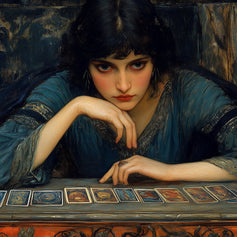




Samhain is an ancient Celtic festival marking the end of the harvest season and the beginning of the year's dark season. Celebrated around November 1, this celebration originating among the Gaelic peoples symbolized the transition from summer to winter and held a central place in the Celtic ritual calendar. Tradition holds that at Samhain, the boundary between the human world and the “Otherworld” opened, allowing supernatural forces to surge among the living. This liminal “end of the year” offered a distinctive atmosphere, conducive to legendary tales and community gatherings. Explanation.
Celtic Origins of Samhain
The term Samhain (spelled Samain in older sources) means “end of summer” in the Gaelic language. It refers both to the festival celebrated around November 1 and to the first month of the winter season in the Celtic calendar. This festival has its origins in Celtic prehistory: it was celebrated by the Gaels of Ireland and present-day Scotland, as well as by the Insular Celts of the Isle of Man, and has counterparts among the Continental Celts. Samhain was one of the four great festivals that structured the Celtic year, alongside Imbolc (February), Beltane (May), and Lughnasa (August). According to scholars, it marked the starting point of the Celtic annual cycle—a true symbolic “New Year” marking the transition between the old and new years. In medieval Ireland, texts commonly used the expression tánai na bliana (“the end of the year”) to refer to this period of Samhain, demonstrating its importance as a temporal turning point.
The Celtic peoples indeed divided the year into two contrasting seasons: the bright, warm season (spring and summer) and the dark, cold season (autumn and winter). The night before November 1, the eve of Samhain, therefore marked the close of the fair season and the beginning of winter. In the Brittonic Celtic languages, the meaning remains transparent: in Breton, November is called miz du (“black month”), and kala-goañv refers to the calends (beginning) of winter. Similarly, the Welsh celebrated Calan Gaeaf—literally the “winter calends”—on the same date, and this day was regarded as the end of the old year in their local traditions.
Although we have no pre-Christian Celtic texts that directly attest to it, archaeological and linguistic sources confirm Samhain’s historical depth. The Coligny calendar, a Gaulish calendar from the 2nd century discovered in Gaul, mentions a month called Samonios, closely linked to Samhain. This calendar even records a festival called Trinox Samoni, or “Three Nights of Samonios,” corresponding to the three nights marking the beginning of this winter period and the new annual cycle. Thus, among both the Gauls and the Gaels, the year seems to have begun around the start of November, confirming the antiquity of this seasonal milestone. Samhain’s origins can therefore be placed within the shared cultural heritage of the ancient Celts, for whom this autumnal transition was a major agricultural and spiritual landmark.
Rituals and Meanings in Ancient Ireland and the Celtic Countries
In pre-Christian Ireland, Samhain involved collective rituals and celebrations marking the end of the harvest period. Above all, it was a major agricultural and social festival: by this date, all fieldwork was expected to be finished and winter provisions secured. Communities slaughtered certain livestock, particularly cattle and pigs, preserving the meat by salting or smoking it for subsistence during the cold season. Herds that had grazed in the uplands during the summer were brought back down to farm enclosures at Samhain. This gathering of livestock was accompanied by abundant feasts, at which pork in particular was eaten—a meat closely associated with the festival. The texts indeed indicate that the boar held a central place in Samhain banquets: Celtic kings demanded tribute in pigs from their vassals on this occasion, and the ritual offering of a Samhain piglet (bamb samna in Old Irish) was expected at these communal feasts. The importance of the pig recalls the animal’s sacrificial role and its symbolic connection with the onset of winter in Celtic cosmology.


A notable element of Samhain celebrations was the lighting of ritual fires. Great bonfires (bone fires or “fires of bone”) were traditionally lit on sacred heights, around which families and clans gathered. In Ireland, Tlachtgha Hill (today Hill of Ward, in County Meath) was renowned for its Samhain fire, lit by druids, whose glow was then used to kindle other fires, particularly on the nearby Hill of Tara. This network of fires symbolized the unity of the kingdom and the protection of the community for the coming year. Comparable traditions existed throughout the Insular Celtic countries: in Wales, fires were also lit at Nos Calan Gaeaf, and people feared lingering outdoors once the flames had died down, lest the terrifying tailless black sow (yr Hwch Ddu Gwta) emerge, prowling to capture the last person returning home. In general, Samhain night was considered especially conducive to supernatural phenomena, and people feared the presence of spirits or malevolent entities roaming through the winter darkness.
Marking the end of one cycle and the beginning of another, this festival was a time “outside time,” a kind of interstice in which the veil separating the human world from the spirit world became thin. Legends relate that during the night of Samhain, the forces of the Otherworld—gods, fairies (aos sí), and the souls of the dead—could mingle freely with the living. It was therefore customary to take various ritual precautions: offerings of food and drink were left for the spirits to win their favor and appease them. In Irish homes, it was customary to set a table for deceased ancestors, reserving a place and a meal for these invisible visitors who had returned for one night. At the same time, popular festivities included disguises and masquerades: disguising oneself as a frightening creature or ghost made it possible to deceive wandering spirits, or at least laugh at their antics. What we now call mumming or guising—going from house to house in disguise in exchange for treats—was already practiced during Samhain vigils, and may have been inherited from ancient customs. Finally, Samhain was a privileged time for divination and predictions: various fortune-telling games were practiced in an attempt to learn the omens of the coming year, particularly by interpreting the shapes made by apple peels or observing the behavior of flames and embers in the household hearth. Far from being a purely sinister festival, Samhain thus combined the conviviality of the final autumn celebrations with an acute awareness of the mysteries of the unseen and of the cycle of life, death, and renewal.
Mythological and Medieval Representations
Medieval mythological tales from Ireland, written by monks from the 9th century onward, preserved many echoes of Samhain’s importance in ancient Celtic culture. These texts often place major events at the time of Samhain, emphasizing the sacred and critical nature of the date. According to the Ulster Cycle, the High King of Ireland convened a great triennial assembly at Tara at Samhain, during a solemn feast bringing together all the kingdom’s nobles and learned men. This Oenach (festive assembly) served to proclaim laws, renew regulations, and validate the country’s annals, showing that Samhain was seen as the appropriate time to reaffirm the social and legal order. That same night, according to legend, the forces of the Sídh nevertheless tested the authority of kings: it is said that on every Samhain eve for twenty-three years, the mysterious Aillen mac Midna—one of the Tuatha Dé Danann—emerged from the fairy hill to breathe magical fire and set Tara’s capital ablaze, until the young hero Fionn Mac Cumhaill finally managed to defeat him. This myth strikingly illustrates Samhain’s duality: a time of political assembly and the strengthening of laws, it was also a time of potential chaos when supernatural powers could overturn the established order.
Other mythical episodes emphasize the motif of Samhain as a point of transition between two worlds or two realms. Thus, according to the Book of Invasions (Lebor Gabála Érenn), the Fomorians—monstrous beings associated with darkness and disorder—demanded an annual tribute from the Irish at Samhain, eventually triggering the great Battle of Mag Tured. The Second Battle of Mag Tured, the legendary confrontation between the civilizing gods (the Tuatha Dé Danann) and the oppressive Fomorians, is indeed placed on November 1 in the texts, symbolizing the victory of light over chaotic forces at the threshold of winter. Similarly, an archaic king named Tigernmas is said to have died, along with hundreds of his subjects, while worshipping the idol of the god Cromm Cruach on a Samhain night, which was interpreted as a sign of divine disapproval of ancient bloodthirsty cults. The hero Cúchulainn, a central figure in the Ulster Cycle, in turn suffered a curse during a “year of weakness” that began at Samhain and ended exactly one year later, at the following Samhain, subsequently marking the tragic conclusion of his life. The recurrence of Samhain in these tales—as the setting for royal deaths, decisive battles, fantastic encounters, or disasters—clearly shows that medieval writers perceived this date as exceptional and conducive to upheavals of fate.
The ancient legal texts and instructional literature (the Irish Brehon Laws) also confirm Samhain’s special status in social organization. Samhain marked the due date for many annual obligations: like the calends among the Romans, it was the date on which rents and dues were settled, agricultural workers received their wages, and employment contracts expired and were renegotiated. Seasonal fairs were held at this time, facilitating trade and the renewal of agreements: Ireland had All Saints’ fairs (derived from Samhain), such as the Snap-Apple Fair of Killmallock, as well as the fairs of Drogheda and Ardagh, and in Scotland, the fair on Calton Hill. In Brittany, fairs called kalan-goañv (winter calends) are mentioned in Carhaix and Ploëzal as late as the 19th century, possibly preserving a very ancient tradition adapted to a Christian context. Some medieval Irish laws even explicitly regulated Samhain festivities: a legal text known as Dliged Ḟlatha mentions a lord’s right to receive hospitality from his vassals during the Samhain feast and imposed heavy fines if the banquet provided was not up to standard. This same text warns of dangers associated with behavior during these vigils, suggesting that tensions could run high during the festival—lighting a candle unexpectedly during the night of Samhain in a house where a lord was sleeping could be interpreted as an assassination attempt or an act of witchcraft, so charged was the atmosphere with fear and suspicion. These legal testimonies show that Samhain was a festival of social obligation, during which hierarchy and relationships of dependence were ritualized through the banquet, tribute, and hospitality, while remaining a distinct time when anxiety about the unknown could grip people’s minds.
Role in the Celtic Agricultural and Ritual Calendar
Samhain occupied a pivotal place in the agricultural calendar of Celtic societies. As the transition point between the bright and dark seasons, it served as a fundamental time marker for rural communities. Until the pre-industrial era, in Ireland as well as in Celtic cultural regions, November 1 remained an annual milestone for rural life. It marked the definitive end of outdoor work: the last grain and fruit harvests had to be brought in, hay stored, and autumn sowing completed around this date. Peat or firewood reserves for winter were also gathered during the days surrounding Samhain. Thus, the entire agricultural economy was organized around this seasonal shift: anything that could not be completed before Samhain was considered lost for the past year. Conversely, the time of Samhain opened the new cycle of winter and preparatory work (repairing tools, planning future crops, and so on), hence its character as an “agricultural new year.”
From a ritual perspective, Samhain formed part of the annual cycle as one of the four high points of Celtic religion and society. Together with Imbolc, Beltane, and Lughnasa, it formed the fourfold framework of the great seasonal festivals, linked to pastoral and agricultural cycles. Of these four festivals, Samhain and Beltane (on May 1, the beginning of the bright season) appear to have been the most crucial, as they divided the year into two contrasting halves. Beltane marked the turning out of livestock to pasture in spring, while Samhain corresponded to the return of livestock to shelter in autumn—these two moments ensuring the survival of the herds and thus the prosperity of the community. It is no coincidence that both festivals were associated with fire rituals: just as animals were driven between two purifying fires at Beltane, protective bonfires were lit at Samhain to begin winter under favorable auspices. Some theories even suggest that in Ireland, all domestic hearths had to be extinguished and relit from the sacred fire kindled at Samhain by the druids, symbolically renewing the flame of each household for the new year—a practice attested for the Feast of Saint John but hypothetical for Samhain.
In the Celtic calendar, Samhain also had a prophetic and divinatory dimension linked to the changing cycle. After assessing the year’s yields at the end of autumn, farmers looked toward the future at Samhain. Many practices involved attempting to predict the weather for the coming winter or year: the direction of the wind at midnight on Samhain night was observed, supposedly indicating the prevailing quadrant for the following months. The clarity or obscurity of the moon at Samhain was likewise considered a sign of mild or rainy weather in the weeks ahead. These divinatory practices testify to the anxiety caused by the onset of the cold season, a period of scarcity and vulnerability, and to the ritual desire to ward off uncertainty about the future at this pivotal moment of the year. As a calendar milestone, Samhain was therefore not merely a religious or social festival: it was a pivot around which agricultural labor, the redistribution of wealth (fairs and tributes), and renewed hope for a prosperous year were organized.
Continuity and Developments After Christianization
With the gradual Christianization of Celtic lands (from the 5th to the 8th century, depending on the region), the pagan festival of Samhain underwent transformations without disappearing entirely from popular practices. Aware of the deep roots of this autumn celebration, the Church eventually incorporated a major feast on the same date into its liturgical calendar: in 835, Pope Gregory IV officially set the feast of All Saints’ Day on November 1 for the Western Christian world. This choice was probably not accidental and may have been influenced by Irish or Welsh customs, where November 1 was already an important time of celebration. All Saints’ Day (the feast of all saints) was soon followed, from the 10th century onward, by the commemoration of all the faithful departed on November 2 (All Souls’ Day). This liturgical pairing of November 1 and 2 was superimposed on the old beliefs surrounding Samhain, partially redefining the meaning of the festival: henceforth, the beginning of November was devoted first to honoring the saints in Heaven and then the souls of the dead in Purgatory, within a Christian framework of prayer and remembrance.
Despite this Christianization of the calendar, many practices originating with Samhain continued, tolerated or reinterpreted by the local Church. In Ireland, Scotland, and Brittany, people continued for a long time to light fires on the eve of All Saints’ Day or on the day itself, although these bonfires were sometimes justified by Christian explanations (such as illuminating wandering souls or purifying the air of autumn epidemics). Until the 20th century, it was not unusual to see immense bonfires blaze on the hills during the night of October 31 to November 1. In Dublin, as late as 1970, the police had to intervene to extinguish numerous fires lit by local residents for Halloween. Similarly, the games and divination practices of All Saints’ Eve continued well into the modern era: in the 19th century, Irish and Scottish families played games such as bobbing for apples (catching floating apples with the mouth) on Halloween night or examined the shapes made by egg whites poured into water to predict marriages and future events. These festive-eve customs, clearly inherited from Samhain, were practiced in an increasingly Christian setting, but their purpose—to dispel uncertainty about the future and tame fears—remained similar to that of the old pagan rites.
In Brittany, where Celtic influence has long coexisted with fervent Catholicism, a phenomenon of cultural layering can be observed. November 1 and 2 (Kala-Goañv in Breton) formed a unified period of celebration, combining religious contemplation with reminiscences of ancient beliefs. All Souls’ Day (November 2) was marked by solemn practices—funeral vigils, prayers for the drowned, and processions to cemeteries—expressing a somber tone in traditional Brittany. By contrast, the night of October 31 retained a lighter, more playful character: families gathered around the fireplace, told stories, and played indoor games, perpetuating the memory of the Samhain vigils of old. Fear of spirits roaming in the darkness indeed encouraged people to stay at home that night, with the warmth of the hearth replacing the hilltop fires of the past. Thus, even transformed by Christianization, the All Saints’ period in Celtic countries continued to shelter, beneath the surface, the practices and spirit of Samhain: community, remembrance of the dead, entertainment, and protective rites endured in softened or syncretic forms. Until the 19th century in Ireland, people commonly called All Saints’ Eve Oíche Shamhna (“night of Samhain”), proof that the ancient festival remained alive in the popular consciousness despite its Christian veneer.
Modern Interpretations of Samhain
From a symbolic point of view, historians see Samhain as a rite of passage and inversion, comparable to other festivals marking the new year in various cultures. The notion of liminality (a threshold state) is used to characterize Samhain: like a night belonging neither to the old year nor to the new, Samhain created an in-between space conducive to questioning norms and communicating with the unseen. Stories of the doors of the sídhe (fairy forts) opening and beings invading the earthly world are interpreted seriously by anthropologists as the mythological translation of this temporal liminality. In other words, Samhain was a ritualized outlet where everything normally repressed—death, chaos, and spirits—could be evoked in a festive and controlled context, allowing people to start anew the following day.
It is also worth noting that Samhain has experienced renewed interest within current neo-pagan movements (such as Wicca and contemporary druidry), which seek to recreate or reinterpret the ancient Celtic festivals. These groups celebrate Samhain every October 31 as one of their eight major festivals.
From Samhain to Halloween: The Link with Anglo-Saxon Cultures
In conclusion, it is interesting to trace how Samhain gave rise to modern Halloween in Anglo-Saxon countries. The term Halloween is a contraction of All Hallows’ Eve, meaning “the eve of All Saints’ Day” in English. Although its name is purely Christian in origin, Halloween inherited many customs directly from Samhain, especially through Irish and Scottish folklore. For centuries, Gaelic communities continued to celebrate the night of October 31 with fires, costumes, and door-to-door visits, thereby perpetuating Oíche Shamhna under a Christian veneer. In the 19th century, during the great waves of Irish and Scottish emigration to North America, these traditions crossed the Atlantic. Most American Halloween customs—grinning lanterns, trick-or-treat, and macabre costumes—come directly from the popular practices of Gaelic immigrants. The famous Halloween lantern, the Jack-o’-lantern, was originally a hollowed-out turnip containing a candle, used to frighten passersby or drive away evil spirits during the night of Samhain. In rural Ireland, these “ghost turnips” were traditionally carved and placed near houses on October 31 to light the way for—or frighten—late travelers. It was only in the United States, where pumpkins were more abundant, that the pumpkin replaced the turnip, creating the orange emblem we know today.
Once established in North America, Halloween evolved through contact with urban culture and consumer society, becoming by the beginning of the 20th century a popular secular festival among children and adults alike. Costume parades, scary games, and the playful theme of fear developed, sometimes becoming disconnected from their Celtic roots. Nevertheless, Samhain’s heritage remains visible beneath the surface: the idea of a night when social roles are reversed (children rule the streets, monsters become familiar), when death is tamed through laughter and disguise, and when the community comes together around festive rituals. Ironically, after flourishing across the Atlantic, Halloween returned to Europe in the final decade of the 20th century, carried by cultural globalization. It had never entirely disappeared in Ireland and Great Britain and therefore gained renewed vigor, while in countries such as France, it was reintroduced as an imported commercial festival. Nevertheless, in Celtic regions, Halloween remains closely linked to Samhain in the popular consciousness: in Ireland, the term Samhain is still commonly used to refer to the Halloween season, and as late as the 1800s, English-speaking folklorists used the word Samhain to designate the entire body of Gaelic customs associated with All Saints’ Eve.
Halloween can be seen as the modern, secularized, and internationalized version of ancient Samhain. What began merely as a festival marking the turning point of the agricultural year in one corner of pre-Christian Europe became, over the centuries and through migration, a global cultural phenomenon. Yet despite these transformations, the deep connections remain visible: whether in the joy of children going door to door for treats (a distant echo of Samhain offerings), the glow of pumpkins illuminating the night (an embodiment of ancient Celtic fires and lanterns), or the enduring enthusiasm for ghost stories at the end of October, everything leads us back to Samhain’s legacy. Knowing the history and worship of Samhain thus helps restore Halloween’s full meaning, revealing beneath the smiling pumpkin mask the old Celtic soul that still burns within it.
Sources:
-
Daniel Giraudon – “Samhain, Halloween: The Night of Games and Spirits in Brittany and the Celtic Countries,” ArMen no. 174, 2009.
-
John Biggins – “Of Swine and Samain: Aspects of Early Irish Samain Lore and Law,” The Brehon Lawyer blog, October 31, 2021.
-
Encyclopædia Britannica, “Samhain” article (last updated September 12, 2025).
-
Wikipedia (English) – “Samhain” page (accessed September 2025).
-
Wikipedia (French) – “Coligny Calendar” page (accessed September 2025)
-
Lowri Jenkins – “Halloween Traditions” (blog of the National Museum Wales), October 27, 2020.
-
National Museum of Ireland – Ghost Turnip (folklore object record), accessed in 2025.
-
Françoise Le Roux & Christian-J. Guyonvarc’h – Celtic Festivals, Ouest-France Université, 1995 (indirect references).