
























































































































The magic wand is one of the oldest instruments in the history of occult and religious practices, but also one of the most misunderstood. Long before its modern association, it already served a specific purpose in the priestly, theurgical, and magical traditions of many civilizations.
Ancient Origins Linked to Gods and Priests
The use of the sacred rod dates back to extremely ancient times. In the Greek world, the wand already appeared as an attribute of gods associated with hidden knowledge, sacred speech, and occult arts. Hermes carried the caduceus, a staff capable of guiding the souls of the dead and conveying divine messages between worlds. Circe, in Homer’s Odyssey, used an enchanted rod to transform Odysseus’s companions, already presenting the wand as a tool for directly acting upon material reality. Among the Romans, the lituus of the augurs was used to ritually demarcate the sacred space in which omens would be interpreted. This curved staff established an invisible boundary between the ordinary world and the territory reserved for the gods. In the sanctuaries of Asia Minor and Egypt, certain priestesses entered trances while holding a consecrated wand used as a focus for concentration and oracular transmission. In the Persian world, Zoroastrian priests used the baresman, a bundle of plant rods serving as a link between the material world and the cosmic order. This idea of consecrated wood acting as a spiritual channel would later appear in nearly all European magical traditions. The wand thus became far more than a tool: it represented the spiritual authority of the person carrying it and their right to act upon invisible forces.
Moses, Aaron, and the Birth of the Western Sacred Rod
Biblical tradition shaped the Western conception of the magic wand. Moses’s staff becomes, in the sacred texts, a true instrument of divine power. It parts the waters of the Red Sea, brings water forth from the rock, and manifests the prophet’s spiritual authority in the face of Pharaoh’s earthly power. This staff goes far beyond the role of a simple walking aid, becoming a sacred scepter associated with divine justice and supernatural intervention. Aaron’s rod also holds major importance in the history of esotericism. According to the biblical account, it miraculously blossomed to designate the tribe chosen for the priesthood. Renaissance occultists would see in this image a symbol of regeneration, hidden fertility, and the awakening of dormant forces. This idea of wood capable of coming back to life would have a lasting influence on Western magical symbolism.


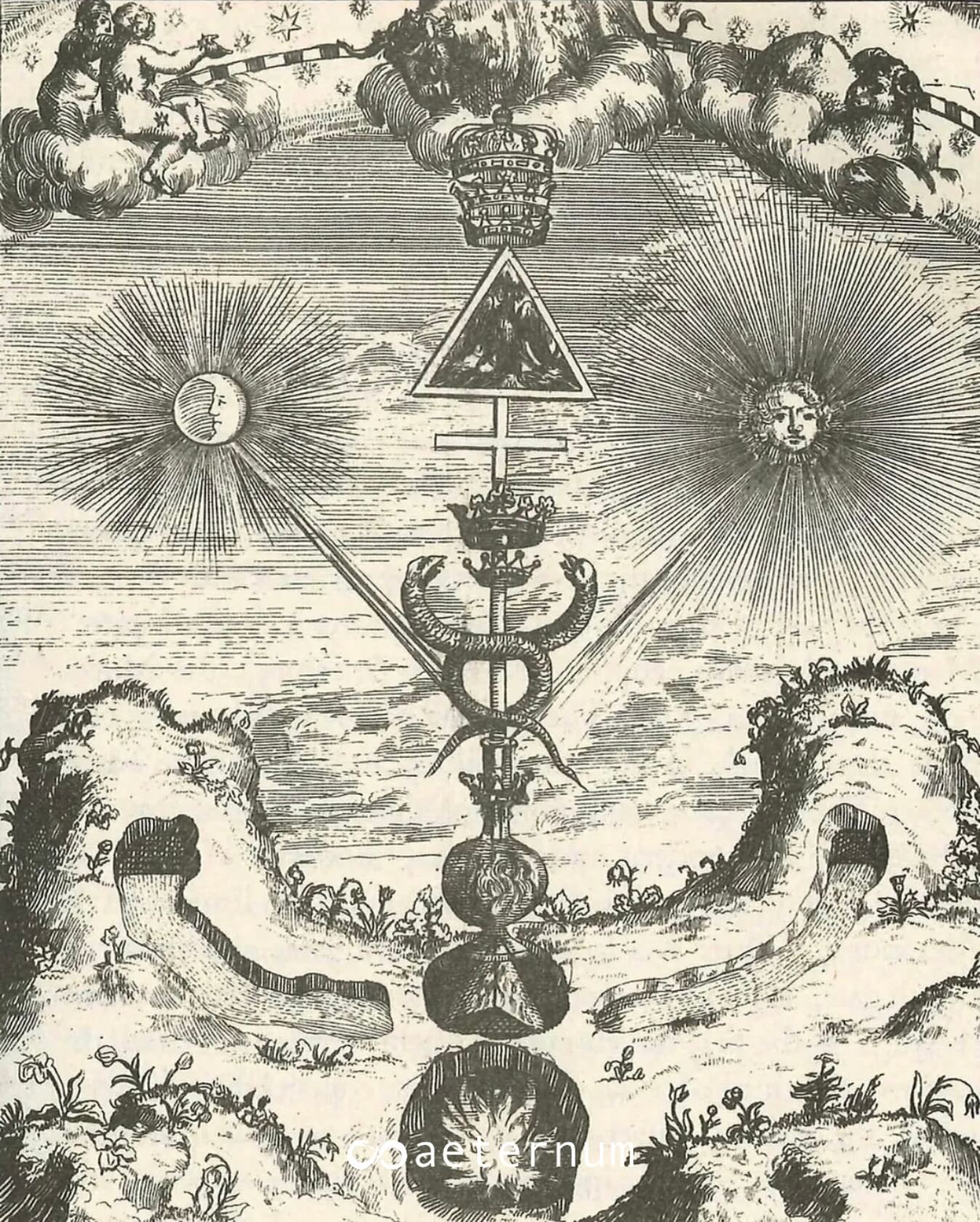
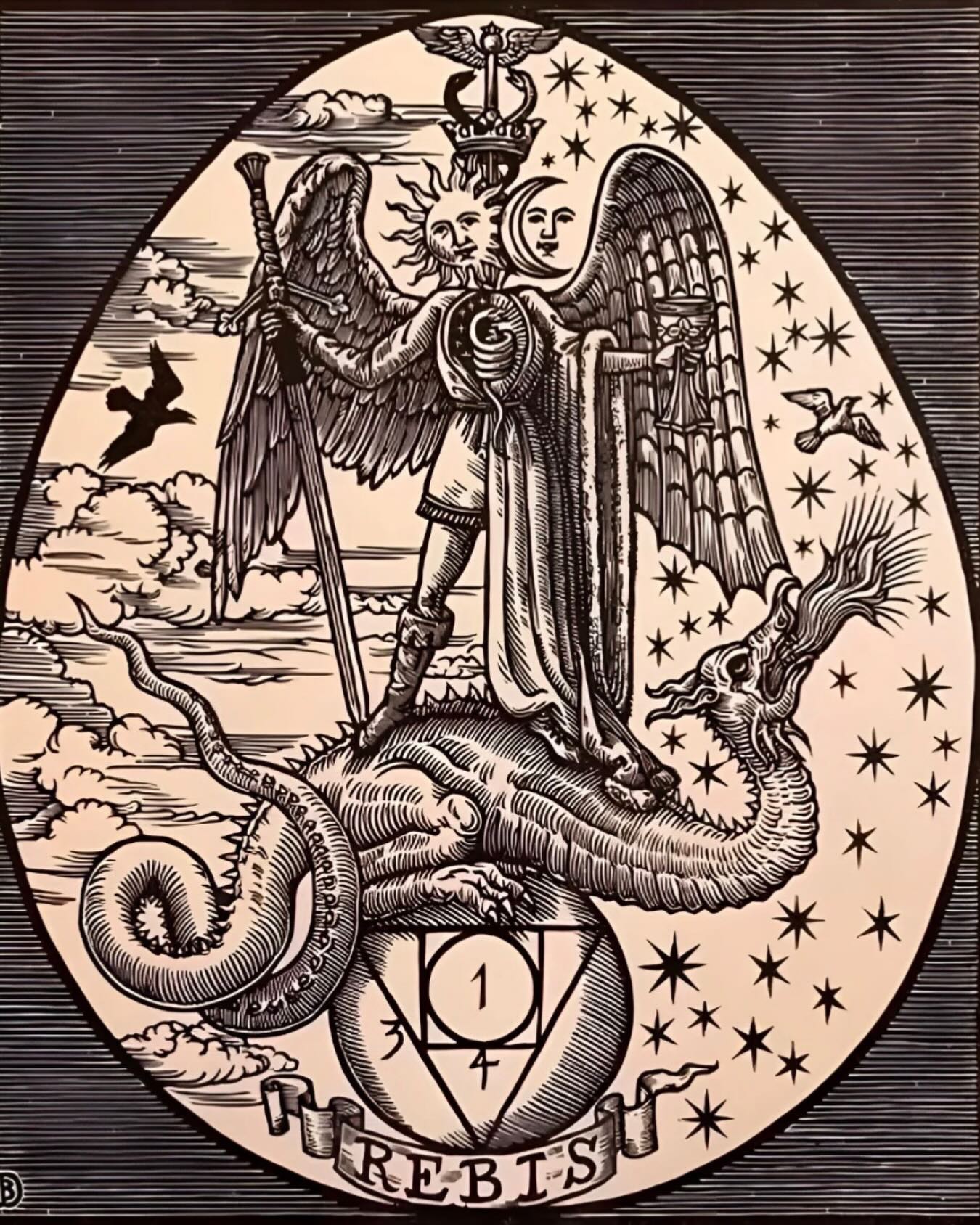
Alchemists and theurgists would later draw a connection between these biblical rods and Hermes’s caduceus. The two serpents coiled around the staff then became a symbol of balance between opposing forces: the fixed and the volatile, the Sun and the Moon, sulfur and mercury. At the center, the wand itself always remains—the axis of stability representing the mage’s will, capable of maintaining order amid opposing forces. In European Hermetic schools, this vision gradually transformed the wand into a true initiatory emblem. The practitioner holding the sacred rod no longer acts solely in their own name. They become the representative of a higher cosmic order, tasked with establishing harmony between the visible world and the invisible spheres.
The Magic Wand According to Papus, Éliphas Lévi, and Franz Bardon
The 19th century marked a major revival of French occultism. The authors of this period sought to reorganize ancient knowledge and give a coherent structure to the magical practices inherited from grimoires. This period saw the emergence of a more theoretical approach to the magic wand, now studied as a true instrument for concentrating subtle energies.
Papus described the magic wand as a fluidic condenser capable of gathering and directing the practitioner’s nervous force. According to him, this instrument serves to project the will toward a specific objective, such as consecrating a talisman, charging a pentacle, or acting upon certain invisible influences. The wand thus becomes an extension of the mage’s nervous and psychic system. Éliphas Lévi developed an even more philosophical vision of the instrument. In his works devoted to high magic, he explained that the wand represents the mage’s absolute will. He clearly distinguished the wand from the ritual sword. The sword serves to repel, dissolve, or separate hostile influences. The wand, by contrast, attracts, fixes, and directs the invisible currents linked to the astral light. For Lévi, a mage unable to master their own will cannot properly use occult forces. The wand therefore becomes the material symbol of inner discipline. It has no real effectiveness without the concentration, mental steadfastness, and spiritual authority of the person wielding it. This idea would have a lasting influence on all modern ceremonial magic. Franz Bardon likewise considered the wand the principal tool of ceremonial magic. In his writings, it serves to unite human consciousness with the macrocosm. The mage holding the wand at the center of the circle no longer acts as an ordinary individual: they become the active representative of the cosmic order in the material world, capable of governing elemental influences through the power of their will.
Ancient Grimoires and Rules of Construction
The Clavicles of Solomon, major texts of European ceremonial magic, describe precise protocols for making it. Each step carries symbolic value intended to purify the instrument and gradually connect it to the sacred forces invoked during the ceremonies.
The wood should generally come from a tree that has never borne fruit. Hazel remains the best-known wood in the Western tradition. The branch must be cut at a determined astrological moment, very often on Wednesday—the day of Mercury—at sunrise. Some manuscripts also require a particular lunar phase or a specific planetary position in order to attune the wand to celestial influences. Silence accompanies this operation. The practitioner must leave home without speaking, cut the branch with a single clean stroke, and return without speaking to anyone. This rule is intended to preserve the ritual purity of the operation and prevent any dissipation of the will. In some grimoires, a mistake during this stage even requires the entire process to be started over.
Many texts also require a period of purification before the wood is cut. Fasting, abstinence, ritual baths, prayers, and fumigations regularly appear in Solomonic traditions. These preparations remind us that traditional ceremonial magic relies as much on inner discipline as on the objects themselves. The wand becomes sacred only through the spiritual state of the person who makes it. Once the branch has been prepared, the mage engraves sacred characters, pentacles, or divine names upon it. Some traditions use ink mixed with a few drops of the practitioner’s blood in order to create a permanent bond between the instrument and its owner. The wand is then kept in a silk or wool cloth to prevent any dissipation of its ritual influence.
Different Types of Wood and Their Uses
In occult tradition, each type of wood possesses particular properties linked to its symbolism, planet, or spiritual nature. The choice of wood therefore never depends solely on aesthetic criteria. It determines the wand’s ritual function and the operations for which it will be used.
Hazel remains the classic wood for divinatory wands and the investigation of invisible realms. Since antiquity, it has been associated with hidden springs, revelations, and the Mercurial arts. Its flexibility and reputation in dowsing practices explain its constant presence in European grimoires.
Oak symbolizes strength, authority, and sovereignty. Oak wands appear in rituals of protection, justice, or spiritual dominion. Ash, meanwhile, holds an important place in Nordic traditions, where it represents the cosmic tree Yggdrasil. It supports work related to knowledge, sacred speech, and communication with invisible planes.
Yew, the tree of cemeteries and Saturn, remains associated with operations involving the dead, necromancy, and workings requiring great ritual mastery. Its dense wood and natural toxicity have given it a fearsome reputation in several ancient traditions. It appears in practices reserved for experienced occultists.
Apple corresponds to Venusian forces, love, and rites of reconciliation. Ebony, a dense and dark wood, appears in certain more demanding traditions where it is used to greatly amplify the practitioner’s will. Each type of wood thus becomes a way of directing the wand toward a particular area of magical practice.
The Thunderbolt Rod of the Red Dragon
Among the most famous wands in occult literature is the Thunderbolt Rod described in the Grand Grimoire, also known as the Red Dragon. This controversial work presents an instrument intended to command infernal powers and compel rebellious spirits. The description of this wand is among the best-known passages in all European magical literature.
The wand must be carved from a wild hazel branch forming a natural fork. The construction ritual involves complex operations combining sacrificial blood, solar and lunar metals, magnets, and consecrations. The entire objective is to transform a simple piece of wood into a true condenser of the invisible forces used during evocations. Two metal rings are placed at the center of the staff: one made of white metal, linked to the Moon, and the other made of yellow metal, associated with the Sun. Magnetized spheres complete the arrangement in order to create a balance between opposing forces. According to the grimoire’s logic, this structure makes it possible to stabilize and channel the spiritual influences summoned within the triangle of art.
The final consecration definitively transforms the profane object into a sacred tool. Fumigations with frankincense, salt water, prayers, and invocations bind the wand to the practitioner. From that moment onward, it becomes the mage’s personal scepter, kept away from prying eyes and handled only during important ritual operations.
In the traditions of high magic, the Thunderbolt Rod represents the ultimate culmination of the ceremonial wand. It no longer serves merely to trace circles or bless objects. It becomes the very emblem of magical authority, capable of imposing order upon invisible forces and materializing the practitioner’s spiritual sovereignty at the heart of the ritual.