



Founded by Alexander the Great in 331 BC, Alexandria quickly became a cosmopolitan melting pot of cultures and knowledge in Antiquity. Situated at the crossroads of the Greek, Egyptian, Jewish, and Eastern worlds, the city was a hub of esoteric knowledge, where sacred texts and traditions were exchanged. The intellectual capital of the Ptolemies, it was home to the famous Library and the Museum (Mouseion), institutions dedicated to collecting all the knowledge of the known world. Alexandria “embodied a new world of religious syncretism”, remaining a major center of commerce, technology, and scholarship.
A Cosmopolitan City at the Confluence of Esoteric Traditions
From the Hellenistic period onward, Alexandria stood out through the unprecedented meeting of the spiritual traditions of several civilizations. The first Ptolemies encouraged this convergence: according to historians, Ptolemy I and his son may even have promised to make public the esoteric texts of Egypt’s three peoples—the Egyptians, Greeks, and Jews. Thus, “[égyptien] Hermeticism was transmitted in Greek, just as the Hebrew Bible was translated into Greek (the Septuagint),” bearing witness to this dialogue among scholars from different cultures. Alexandria’s population included a large Hellenized Jewish community, responsible for the Septuagint in the 3rd century BC, the first major work to transmit Eastern religious knowledge into the Greek language and intellectual tradition. At the same time, the Egyptian priestly elite cooperated with Greek scholars: the priests of Thoth (god of knowledge) shared some of their traditions with Greek philosophers seeking ancient wisdom. This situation gave rise to a flourishing of cults and schools combining gods and doctrines. A genuine Greco-Egyptian religion centered on the figure of Thoth-Hermes emerged: under the first Ptolemies, “a Greek version of the Egyptian religion” arose, with its centers in Alexandria and Memphis, emphasizing the god Hermes Trismegistus (identified with Thoth) as the source of sacred knowledge. This syncretism also extended to Eastern influences: Babylonian astrology (known as Chaldean astrology) became integrated into Egyptian divinatory practices, while Persian sages (magi) and visiting Eastern thinkers further enriched the city’s intellectual landscape. Alexandria thus became a unique center where exchanges among Greek philosophers, Egyptian theologians, Jewish thinkers, and Eastern influences produced new forms of esoteric spirituality.
Hermes Trismegistus and Hermetic Wisdom
At the heart of this cultural ferment stood the legendary figure of Hermes Trismegistus, the imagined custodian of universal wisdom. Hermes, “thrice-great,” arose from the identification of the Greek god Hermes with the Egyptian god Thoth, both patrons of writing and secret knowledge. Under his name, occult texts were written in Greek in Alexandria, infused with Egyptian doctrine. Hermeticism—the body of teachings attributed to Hermes—perfectly illustrates the synthesis carried out in Alexandria: “Alexandrian Hermeticism is a mixture of Greek thought and authentic Egyptian religious traditions,” incorporating, for example, the Egyptian veneration of the creative Word, the magical power of sacred names, and the conception of a god who is both one and many-formed. These Hermetic treatises, later collected under the name Corpus Hermeticum, address philosophical themes (the nature of the divine, the creation of the cosmos, and the immortality of the soul) in a Platonic language tinged with Egyptian mythology. Jewish and Eastern motifs can also be discerned, demonstrating the cosmopolitan nature of their original setting. The Hermetic authors—anonymous philosophers of the 2nd and 3rd centuries—sought to reconcile Greek metaphysics (Platonism and Stoicism) with Egyptian theology. They thus created an esoteric “religion of the spirit” specific to Alexandria, centered on the salvific knowledge (gnosis) of the supreme God. This Hermetic religion presented itself as a distinct wisdom path, separate both from traditional paganism and from emerging Christianity. It had a lasting impact: for example, the Christian philosopher Clement of Alexandria reports that Egyptian priests attributed forty-two books to Hermes Trismegistus containing “the whole philosophy of the Egyptians,” covering astrology, sacred hieroglyphics, religious rites, and occult sciences. Alexandria therefore witnessed the birth and flourishing of Hermeticism, a major current of ancient esotericism, ensuring its transcription and transmission in Greek. From there, these writings would later spread as far as the Renaissance, but already in Antiquity they formed a respected corpus among learned pagans.
Neoplatonism and Theurgical Practices
Alexandria’s metropolis also encouraged the growth of philosophical movements imbued with spirituality, such as Neoplatonism in the 3rd century. Plotinus, the founder of this school, trained in Alexandria under Ammonius Saccas before teaching in Rome. Neoplatonism, a synthesis of Plato’s teachings and Eastern influences, sought the soul’s elevation toward the divine One through intellectual contemplation and moral purification. In Alexandria, this philosophy found fertile ground and embraced “different currents of spiritual thought,” assigning the Logos (the divine Word) a central role in creation and making Wisdom the highest of virtues. Alexandrian Neoplatonic thinkers—such as Hypatia in the 4th century—perpetuated the idea that philosophy was a path toward the sacred. Under the influence of Eastern esoteric traditions, some introduced theurgical practices: mystical rituals intended to invoke gods or angels in order to perfect the soul’s union with the divine. The philosopher Iamblichus, although active in Syria, illustrates this tendency and drew on Egyptian wisdom: responding to questions from his disciple Porphyry, Iamblichus claimed to rely “on the countless series of writings of the Ancients” in matters of theology, and stated that for purely philosophical questions, “he would turn to Egyptian Hermeticism, as Plato and Pythagoras had already done” before him. By claiming Hermes-Thoth as the sacred source of Platonic philosophy, the Neoplatonists acknowledged the authority of Egyptian occult traditions. In Alexandria, this convergence reached its peak: the local philosophical school incorporated the study of the Chaldean Oracles (oracular texts from the East) and Hermetic writings alongside Plato’s dialogues. Theurgy was practiced there, or at least debated, with the aim of concretely achieving the soul’s elevation through symbols, prayers, and secretly transmitted rites. Thus, far from being mere abstract speculation, Alexandrian Neoplatonism included a mystery-oriented dimension inherited from ancient religions. This philosophical-esoteric synthesis enjoyed great influence and shaped some of the last guardians of pagan knowledge in the face of Christianity’s rise.
The Library of Alexandria, Guardian of Occult Texts
A major instrument of Alexandria’s intellectual influence, the Great Library was founded under Ptolemy I and expanded by his successors. Housed in the Brucheion district and supplemented by the Serapeum (the temple of Serapis, containing a library annex), it is said to have gathered hundreds of thousands of volumes covering all disciplines, from mathematics to theology. The Ptolemies aspired to collect “the entirety of the knowledge of the ancient world.” This eclecticism included not only literary and scientific works, but also esoteric and religious writings. In ancient culture, the boundary between science and magic was porous. The Library therefore presumably held treatises on astrology, collections of alchemical recipes, works of Eastern mysticism, and compilations of myths and rituals. Indirect evidence is abundant: at the Temple of Horus in Edfu (Upper Egypt), a Ptolemaic “House of Life” left us a catalogue of its sacred books, including “cabinets containing excellent mysteries,” notably rituals to ward off the evil eye and “knowledge concerning the return of the stars.” This type of magical-religious manuscript in Egyptian was certainly translated or summarized in Greek to enrich the Alexandrian collections. Likewise, the first Greco-Egyptian astrology manuals (under the legendary names of Nechepso and Petosiris) appeared in Alexandria and must have been preserved there. Clement of Alexandria, in the 2nd century, describes a procession of Egyptian priests carrying forty-two sacred books attributed to Hermes—dealing, among other subjects, with astrology, sacred geography, liturgies, and medicine—emphasizing that these works contained “the whole philosophy of the Egyptians.” Such testimony suggests that the Library or the scholars of the Museum had access to these occult corpora. We also know that the astronomer Claudius Ptolemy (2nd century) lived in Alexandria and composed the Tetrabiblos there, a scholarly synthesis of the astrological knowledge of his time. Other esoteric texts circulated more discreetly: for example, the Greek magical papyri (PGM)—a collection of magical formulas and rituals compiled in Greco-Roman Egypt between the 2nd century BC and the 4th century AD—testify to a living occult tradition, partly originating in Egyptian temples but written in Greek, with borrowings from Greek mythology and even Jewish tradition. Although often regarded as “underground literature,” these papyri show that part of Alexandria’s educated class took an interest in the mysteries of magic and divine invocation. By bringing together scholars and texts from every horizon, the Library thus served as a sanctuary of occult knowledge: it preserved esoteric writings that might otherwise have been lost and enabled ancient traditions (Egyptian, Mesopotamian, etc...) to be transmitted to Greek scholars and then to future generations. Its spirit survived even after its disappearance: in the 4th century, monks buried codices at Nag Hammadi containing Gnostic gospels and Hermetic treatises, ultimate evidence of the effort to preserve this secret knowledge in Egypt.
Mystery Cults and Religious Syncretism in Alexandria
Alexandria’s religious plurality was also expressed through its temples and cults. The Lagid and later Roman dynasties encouraged syncretic cults combining Egyptian and Greek gods, the most famous being that of Serapis. This new god, created at the initiative of Ptolemy I, combined features of Osiris-Apis (Egyptian deities associated with the underworld and fertility) with aspects of Hellenic deities (such as Zeus or Hades). Serapis became Alexandria’s tutelary god, and his great temple, the Serapeum, was a major religious center. The stated aim was to “unify Greek religion and Egyptian religion” within the Lagid kingdom. Alongside Serapis, the Egyptian goddess Isis enjoyed extraordinary popularity. Worshiped in Egypt as a magician and divine mother, Isis was adopted first by the Greeks and then by the Romans, eventually becoming the central figure of one of the principal mystery cults of the Roman Empire. In Alexandria, Isis was honored in sumptuous temples (such as the Iseum), and her cult included secret initiations offering her followers the hope of personal protection and salvation. The Isiac mysteries, attested by Apuleius’s novel The Golden Ass (2nd century), offered a path of spiritual rebirth through symbolic revelation—a pattern comparable to that of Eleusis in Greece, but accessible to everyone: women, free men, and freedpeople alike. As Alexandria was a port open to the world, these cults spread widely: as early as the 1st century BC, sanctuaries of Isis could be found in Italy and as far as Gaul, while Serapis was worshiped at Delos, in Rome, and in Asia Minor. The mysterious character of these cults (initiation rites and secrets revealed only to initiates) contributed to their universal appeal. They enabled an intimate religious experience that crossed cultural boundaries, an important factor in a diverse empire. Through their success, Isis and Serapis became true bridges between East and West: “Isis, assimilated to numerous Greco-Roman goddesses, was honored as goddess of wisdom, of the Moon, patroness of sailors, etc., and above all as the sovereign of a highly popular mystery cult,” alongside Serapis, her consort. The Eastern cults of Mithras (of Persian origin) and Cybele (from Anatolia) were also present in Alexandria through merchant and military communities, contributing to the diversity of the local religious landscape.
Alchemy and Astrology in Ancient Alexandria
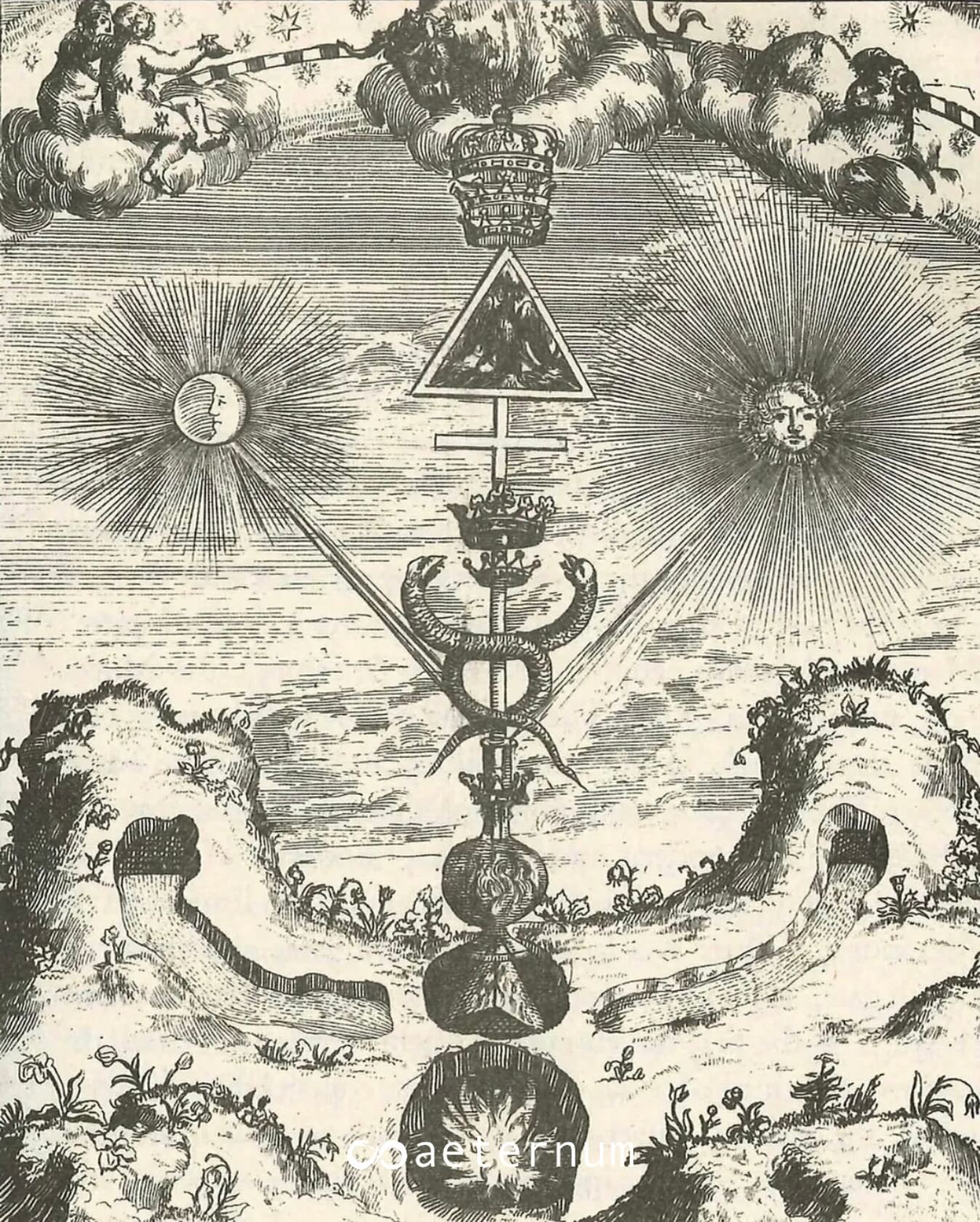
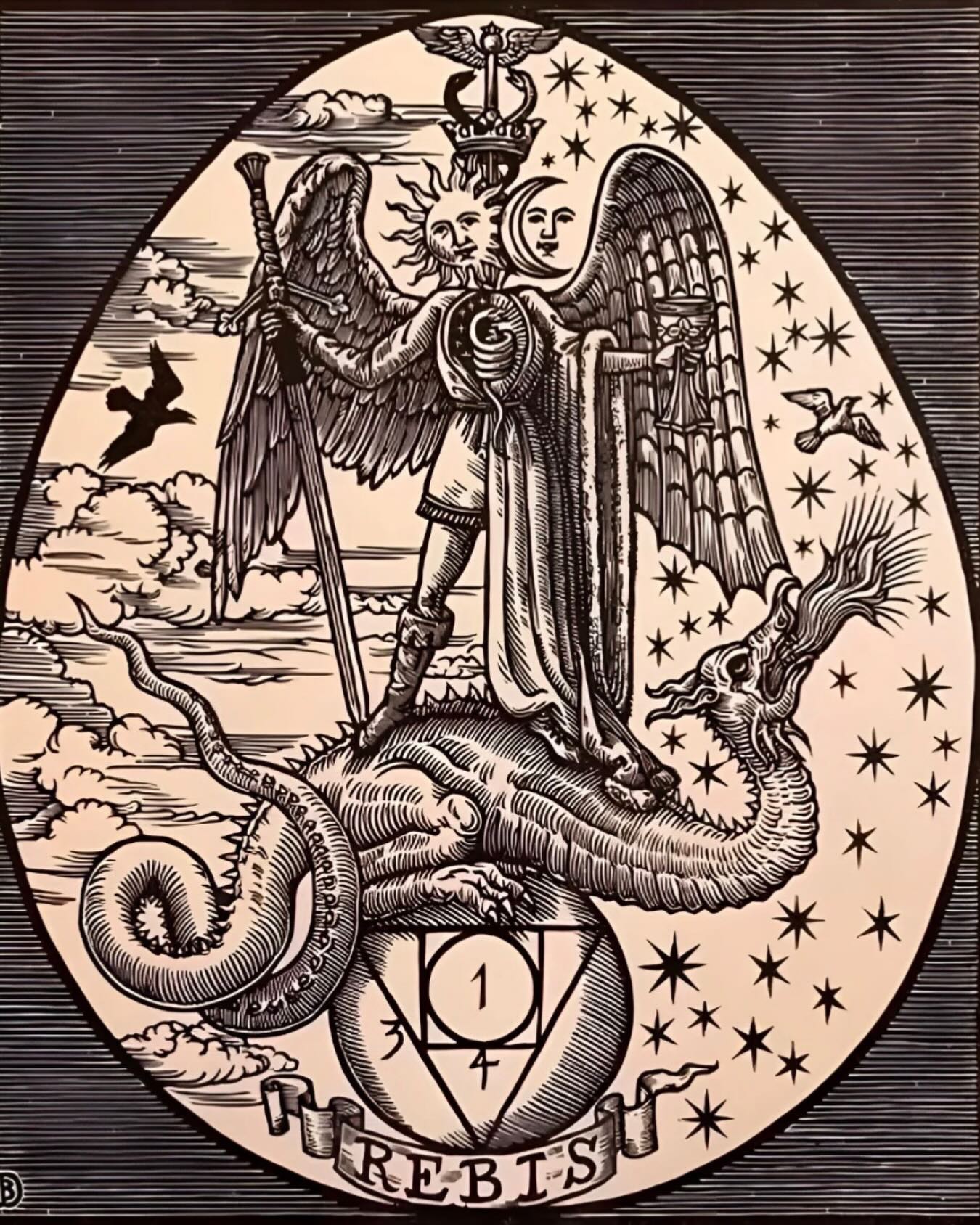
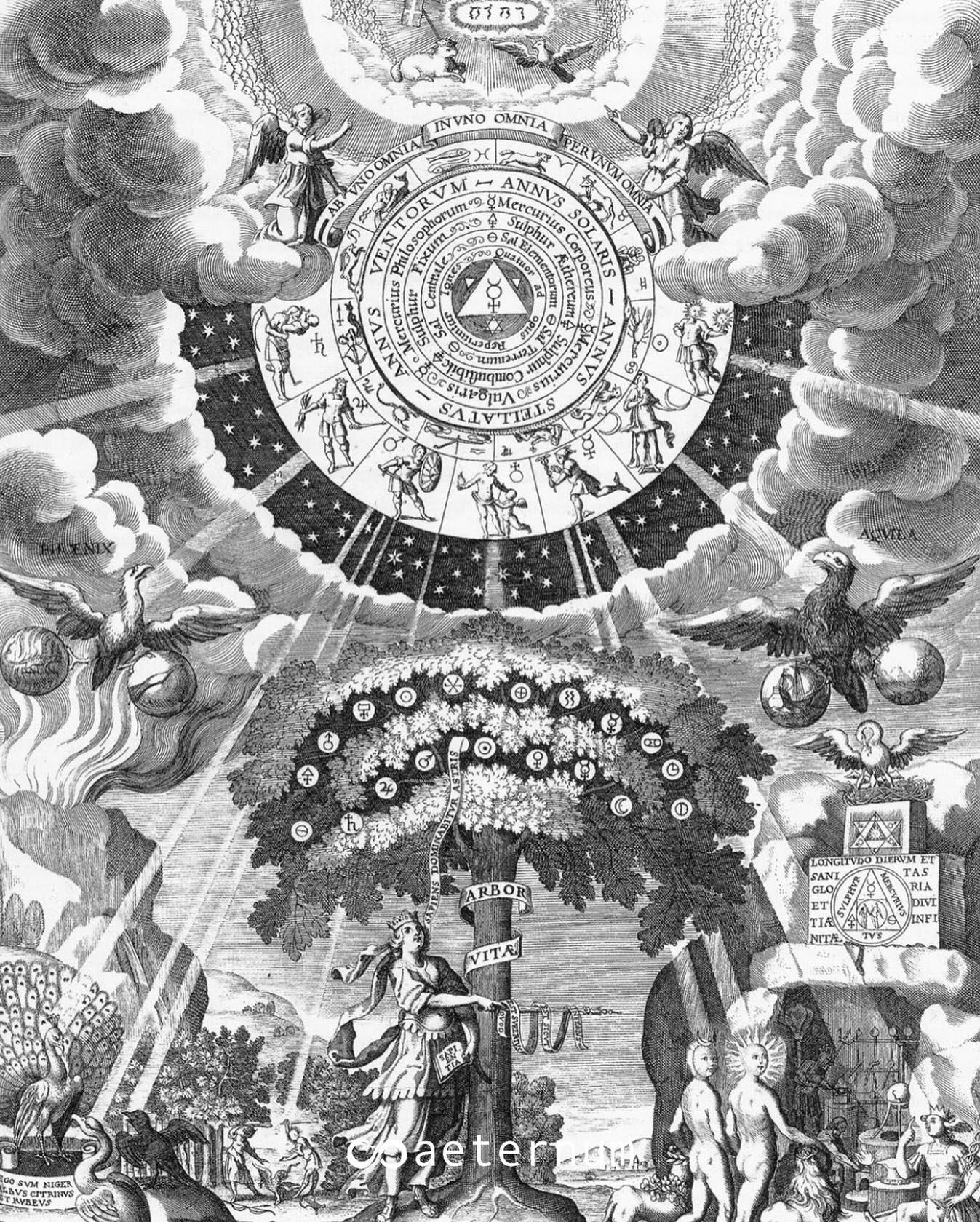
Alexandria was finally a cradle for the development of what would later be called the occult sciences, particularly alchemy and astrology, disciplines situated at the intersection of religion and proto-science. The Western alchemical tradition took root in Greco-Roman Egypt: “the city of Alexandria was a center of alchemical knowledge” from the Hellenistic period onward and retained this role throughout the Greek and Roman periods. The term “alchemy” itself is thought to derive from Khem, the Egyptian name for the “black land,” highlighting the Egyptian origins of this art of transmutation. Egyptian artisans excelled in metallurgy and dyeing, skills enriched by the Greek theory of the elements: from this encounter emerged Alexandrian alchemy, at once a practical furnace craft and a mystical quest for perfection. In the 1st century, authors writing under the pseudonyms of Democritus or Moses were already describing processes for dyeing metals, seeking to imitate divine creation. Later, toward the end of the 3rd century, Zosimos of Panopolis (an Egyptian from Upper Egypt writing in Greek) systematized alchemy in his writings. He reports that according to tradition, “the ancient gods of Egypt taught the art of dyeing (tinctures) to their priests, but that these secrets were later seized by demons and were transmitted only to initiates in exchange for offerings.” Zosimos criticized these obscure practices, but confirmed that the roots of alchemy lay in the rites of the Egyptian temples. In Alexandria, alchemists—often anonymous or legendary figures (Mary the Jewess, Cleopatra the Alchemist, etc.)—experimented on metals in the hope of understanding the mysteries of matter and spirit. Alchemy was far more than a primitive chemistry: it was an initiatory path in which the transformation of substances served as an allegory for the transformation of the soul. These alchemists also expressed themselves in Hermetic terms, invoking Hermes-Thoth and incorporating astrological symbols, demonstrating the interweaving of knowledge in Alexandria.
Likewise, Hellenistic astrology reached maturity in the Alexandrian milieu. Inherited from the Chaldeans (Babylonians), who had developed the art of horoscopes, astrology was introduced into Egypt during the Persian and then Greek periods. The Egyptians already possessed their own sacred astronomy (stellar calendars and decans used to measure time), but “natal astrology was of non-Egyptian origin, coming from Persia,” and was later integrated into local knowledge. Alexandria saw these traditions combine: Mesopotamian knowledge of the signs of the Zodiac and the planets fused with Greek ideas (such as Aristotelian theories of the elements) and certain Egyptian notions (such as the decans, star deities associated with each ten-day period) to give rise to what is known as Greco-Egyptian astrology. In the 2nd century, the scholar Claudius Ptolemy established the principles of this astrology in his Tetrabiblos, rationalizing teachings transmitted over the previous three centuries. He drew on a rich library of observations and doctrines accumulated in Alexandria. Astrology was then regarded as a serious science, intimately connected with astronomy and religion: celestial influences were believed to express divine will. In the Alexandrian context, astrology was often linked to other occult disciplines, particularly Hermeticism. Indeed, the technical Hermetic texts deal extensively with astrology, alchemy, magic, and medicine, demonstrating the unity of these disciplines in the eyes of the ancients. Hermes Trismegistus was considered the inventor of astrology as well as alchemy. Ancient astrological manuals were attributed to Hermes: Clement of Alexandria lists four astrological treatises among the forty-two Hermetic books (on the fixed stars, the planets, the phases of the sun and moon, etc...). Thus, in Alexandria, the study of the stars was integrated into religion and philosophy: the stars were regarded as animate powers, intermediaries between God and humanity, whose knowledge made it possible to decipher destiny. Horoscopes served both princes and private individuals, and renowned astrologers practiced at the courts of the Ptolemies and later the Eastern Roman emperors trained in Egypt. The combination of rigorous astronomical observation (illustrated by Ptolemy’s work in the Almagest) and divinatory interpretation of celestial configurations characterized Alexandrian astral science. This astrological knowledge, transmitted in part through works preserved in Alexandria, spread to other centers of the ancient world (Athens, Rome, Antioch) and later to the Arab-Muslim world, which inherited much of it from Alexandria’s final schools. In short, through its role as a catalyst, Alexandria shaped alchemy and astrology into coherent disciplines marked by cultural syncretism and ensured their survival far beyond Antiquity.
For nearly seven centuries, Alexandria was the beacon toward which the occult knowledge of Antiquity converged and from which it radiated. Its unique intellectual atmosphere—the result of the Ptolemies’ religious tolerance, the gathering of scholars from across the world, and the richness of its scholarly institutions—made it possible to preserve millennia-old traditions while innovating through the creation of new spiritual currents. Certainly, decline came at the end of Antiquity: the adoption of Christianity as the state religion led to the closure of pagan temples and distrust of ancient “magic.” However, occult knowledge did not disappear as a result: many of Alexandria’s Hermetic, astrological, and alchemical texts were recopied, translated (into Syriac and Arabic), and transmitted to later eras. Alexandria’s spirit thus survived in Baghdad’s House of Wisdom during the Middle Ages and in the humanist circles of the Renaissance that rediscovered Hermes Trismegistus.