















































































































































































































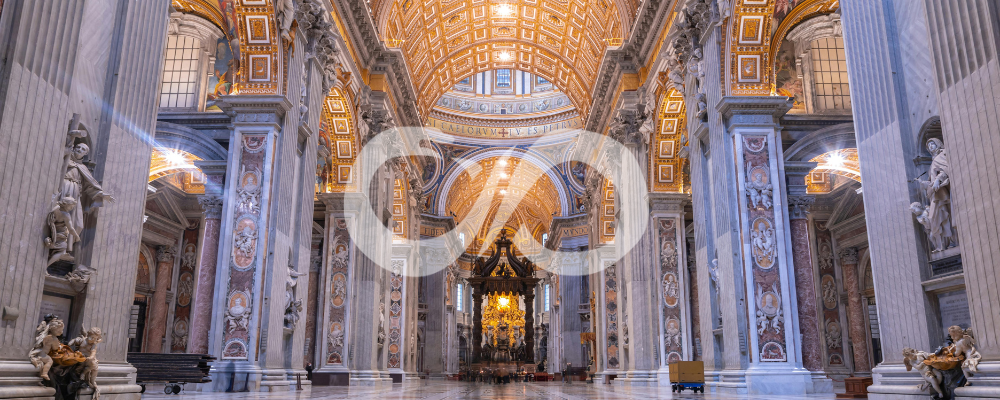
Religious buildings draw attention through their architecture, atmosphere, and history. Yet it is not always easy to understand exactly what the words used to describe these places refer to. During vacations (or not, for that matter), we enter a church, visit an abbey, and talk about a monastery or a cathedral without always knowing what distinguishes them. Here are the answers.
The church, a gathering place for the Christian people

The church is the place where the faithful of a neighborhood, village, or territory come to attend Mass, receive the sacraments, or pray together. It is not merely a building. It is a landmark in the lives of local residents. Baptisms, weddings, and funerals are celebrated there. It is where people hear the great Christian celebrations such as Christmas and Easter. It belongs to a parish, that is, a local community led by a priest. Inside, there is a nave, an altar, pews or chairs, statues, and sometimes stained-glass windows. This place does not house religious communities, but the faithful. The church is therefore an active, living place of worship, integrated into everyday life.
The monastery, a place of retreat for prayer and work
The monastery is an enclosed place. It houses men or women who have chosen to withdraw from ordinary life in order to devote themselves to God. These people are called monks or nuns. They live according to a rule, under the authority of a superior. They spend their days alternating between prayer, silence, reading, manual work, and shared meals. A monastery is not necessarily visible from the outside. It may be in the countryside or in the heart of a city, but it remains organized around enclosure. This does not mean that monks never speak to anyone. They have simply chosen a different way of life. People do not come there for a quick visit; they enter to live at a different pace. Some monasteries produce bread, jams, oils, and liturgical objects. They also welcome passing guests on retreats, seeking rest and silence. The monastery’s mission is neither to teach nor to administer a parish. It exists to enable its members to lead a life devoted to continuous prayer.

As a general rule, a monastery does not depend directly on the finances of the diocesan Church. It operates autonomously, according to the principles of the religious life it follows. The monastery’s livelihood therefore relies on several sources: manual work, welcoming guests (retreatants or visitors seeking silence), private donations, and sometimes bequests. This is also why, and partly thanks to Hildegard of Bingen, many monasteries sell their beer as a source of income.
The abbey, a monastery with broader authority

The abbey is a particular type of monastery. It functions like one, but it has greater recognition within the religious structure. It is led by an abbot or abbess, a superior elected or appointed to guide the community. This title gives the abbey an official status, older or more established than that of other monasteries. Historically, abbeys had land, income, and rights over certain surrounding parishes. Some even became major intellectual, artistic, or spiritual centers, such as Cluny Abbey or Mont Saint-Michel. Manuscripts were written there, ancient texts were copied, and pilgrims, kings, and scholars were welcomed. Even today, some abbeys continue to play this role of hospitality and transmission. Their architecture is therefore more developed. They include cloisters, dormitories, chapels, libraries, and sometimes even a church within their grounds that is open to the public. But their heart remains monastic. The abbey is neither a museum nor a religious tourist site. Above all, it is a home inhabited by a community that prays and works together.
The cathedral, the bishop’s seat in the diocese

The cathedral is not holier than another church, but it has a very specific function. It is in this building that the bishop, responsible for a diocese, resides; a diocese is a group of parishes united under the same spiritual authority. The cathedral is therefore the reference church for a larger territory. It contains the bishop’s chair, called the cathedra, from which the word cathedral derives. This seat is not merely symbolic. It signifies that the bishop exercises his authority there, celebrates the major liturgies there, ordains priests there, and teaches there. The cathedral is built to impress with its height, façade, and nave, and is richly decorated. It hosts major public ceremonies, processions, and important religious celebrations. It may also house art treasures, relics, and ancient tombs. But what makes it a cathedral is not its size, but the presence of the bishop and its role in the life of the diocese.
The chapel, a separate and more intimate place

The chapel does not have the dimensions of a parish church. Nor is it intended to accommodate an entire village. It serves a more specific purpose. It may be located in a hospital, school, castle, monastery, cemetery, or even a private home. It is consecrated and used for prayer, but it does not depend on a parish. It does not have a permanent parish priest. Mass is celebrated there depending on the circumstances. People go there for a moment of reflection, solitary prayer, or a small private celebration. The chapel is generally discreet, sometimes hidden, but retains the same sacred dignity as a church.
The basilica, an honorary title granted by the pope

A basilica is a church to which the pope has granted a special status. This title recognizes the historical, religious, or symbolic importance of the site. It is not a larger or richer building than another, but a sanctuary that plays an important role in the life of the Church. Some basilicas are known throughout the world, such as the Basilica of the Sacred Heart in Paris, the Basilica of Saint Mary Magdalene in Vézelay, or the Basilica of Notre-Dame de Fourvière in Lyon. Some churches become basilicas after existing for several centuries. The title grants certain liturgical privileges, but it does not change the site’s function. A basilica remains a church, but it carries special recognition connected to a pilgrimage, relics, or a historical event.
The calvary, an outdoor monument for prayer

A calvary is not a building, but an outdoor religious monument placed on high ground, at a crossroads, in a cemetery, or on the edge of a village, which you have certainly seen before. It always represents the scene of Christ’s crucifixion. It generally features a central cross, sometimes flanked by two others to evoke the thieves, and sometimes accompanied by statues such as the Virgin Mary or Saint John. The word comes from the Latin Calvarium, meaning “skull” or “place of the skull”: this is the name of the hill where, according to the Gospel, Jesus was crucified. The calvary recalls this scene. It invites prayer and meditation on suffering, death, and resurrection.
In some regions, particularly here in Brittany, calvaries are highly elaborate. They become genuine sculpted ensembles. People visit them during processions or pardons. They form part of the religious and emotional landscape of many rural areas, and some have become important landmarks.
By the way, why is “calvary” a word associated with suffering? Originally, the word Calvary (from the Latin Calvarium) referred to the precise place of the crucifixion, also called Golgotha. This place is associated with extreme pain, injustice, and torment. Very early on, in Christian liturgy, the word Calvary became synonymous with the Stations of the Cross, the painful journey Jesus followed until his execution. It is an intense, momentous experience carrying a powerful spiritual message, but also filled with tears, blows, falls, and solitude. Over time, the word left the strictly religious context. In everyday language, going through “a calvary” came to mean a painful, difficult, long, and unjust situation, like Christ’s torment. The suffering evoked by calvary became an image for all human suffering.

Par Olivier of Aeternum
Passionate about esoteric traditions and the history of the occult from the earliest civilizations to the 18th century, I share some articles on these topics. I am also co-creator of the online esoteric shop Aeternum.













Merci pour ces précisions