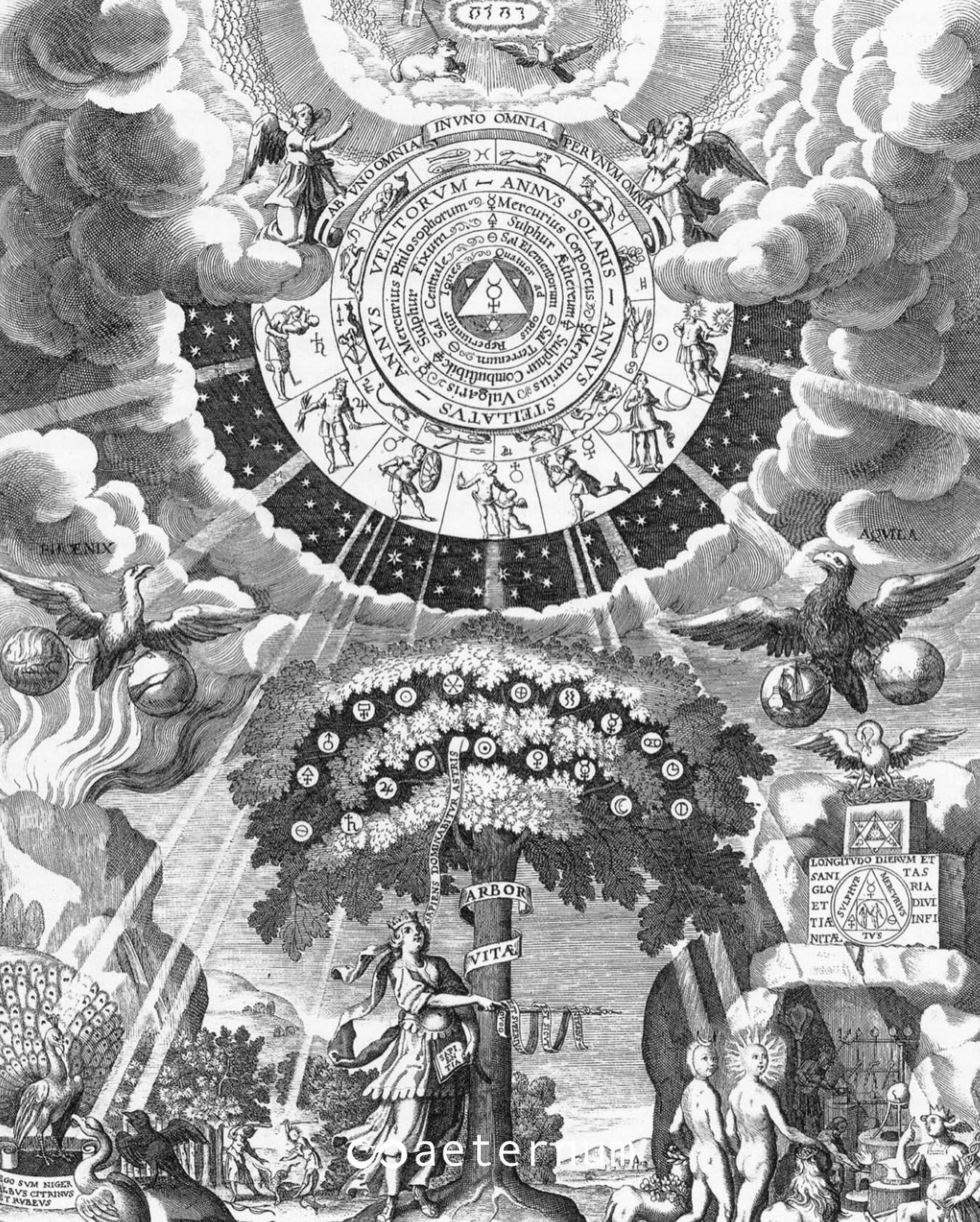











































































































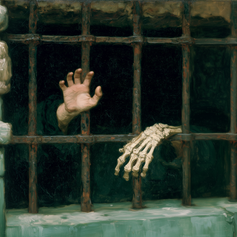



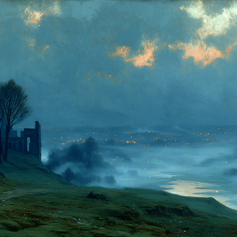







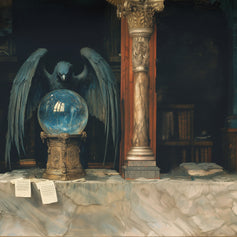
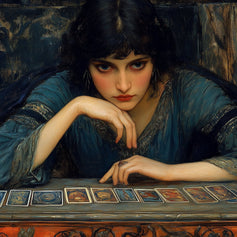
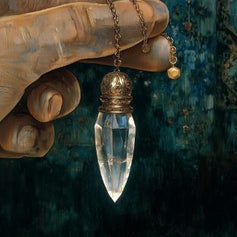
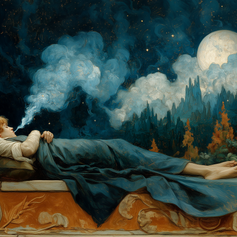

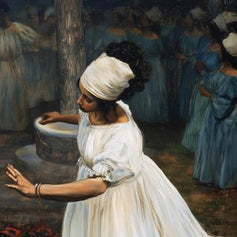
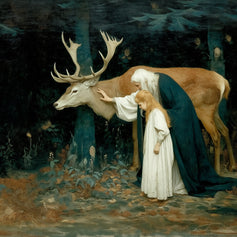


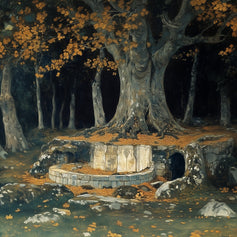




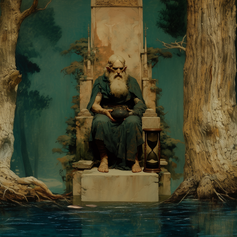





























Neptune is the modern planet of dissolving boundaries. It speaks of imagination, faith, compassion, and the power of collective images, but also of fog, idealization, and what eludes clear categories. Its symbol invites us both to listen to the invisible and to verify what we believe we see.
Discovered in the 19th century, Neptune does not belong to the corpus of ancient astrology. In a natal chart, its sign primarily describes generational sensitivity, its house shows where boundaries become more permeable, and its aspects specify which functions receive inspiration or confusion. A sound interpretation always begins with the traditional planets, houses, and rulers.
Neptune, a planet predicted through calculation
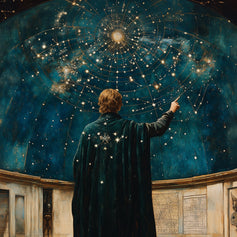
The irregularities observed in Uranus’s orbit led Urbain Le Verrier in France and John Couch Adams in England to independently calculate the position of an unknown planet. On the night of September 23–24, 1846, Johann Gottfried Galle and Heinrich Louis d’Arrest observed it at the Berlin Observatory, less than one degree from the position sent by Le Verrier.
The eighth planet from the Sun, Neptune is an ice giant that completes one revolution in approximately 165 Earth years. Its winds are among the fastest in the solar system, and Voyager 2 remains the only probe to have flown past it, in 1989. These astronomical facts do not mechanically produce its astrological meanings; those meanings developed after its discovery, within a specific cultural context.
Poseidon, Neptune, and the realm of the waters
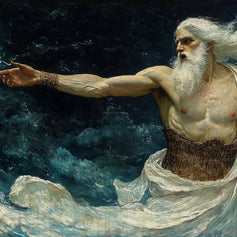
Neptune is the Roman name for the Greek god Poseidon, brother of Zeus and Hades. After the world was divided among the three brothers, Poseidon received the sea. Texts and cults also portray him as the god who shakes the earth and as the master of horses. His trident can stir up or calm the waters: his domain is not a vague gentleness, but an immense, mobile, and sometimes destructive power.
The planet’s name was adopted shortly after its discovery, following the mythological convention already in place. Modern astrology has emphasized the sea, the blurring of boundaries, and invisible depths. This symbolic development must be distinguished from ancient religion: Poseidon was neither a god of “spiritual vibration” nor the personification of a universal consciousness.
The meaning of Neptune in modern astrology
Neptune involves receptivity, imagination, dreams, compassion, devotion, art, and ideals that transcend individual interest. It may indicate an ability to enter an atmosphere, perceive what is not explicitly expressed, or give tangible form to an inner world.
The same permeability carries a risk: projection, escape, promises with no foothold in reality, confusion of roles, fascination with an image, or difficulty setting a boundary. Neptune attests neither to mediumistic gifts, nor sainthood, nor lying. Its position indicates a symbolic register whose quality depends on discernment, context, and the planets that give it form.
How to interpret Neptune in a natal chart
Neptune remains in a sign for about fourteen years. The sign therefore describes an imagination shared by a generation; the house and tight aspects individualize the interpretation further. Also examine the traditional ruler of the sign occupied by Neptune: its house, dignity, and aspects show how intuition or an ideal can become practicable.
| Step | What to examine | Useful question |
|---|---|---|
| Generational context | Sign, era, collective images and beliefs | What shared ideal does this generation receive, amplify, or challenge? |
| House | Occupied area | Where are boundaries more sensitive, inspiring, or difficult to maintain? |
| Traditional ruler | Planet ruling Neptune’s sign | What function can give the symbol a concrete direction? |
| Aspects | Connected planets, orb, repetitions | What receives the imagination, compassion, or blurring? |
| Angles and luminaries | Proximity to the angles, aspects to the Sun or Moon | Is the Neptunian motif central to the way one presents oneself or experiences feelings? |
Neptune in the twelve signs
These interpretations are primarily collective. The association between Neptune and Pisces is modern; Jupiter remains the traditional ruler of Pisces. Speaking of Neptune’s “domicile” therefore requires specifying the astrological framework being used.
| Sign | Generational imagination | Point of caution |
|---|---|---|
| Aries | An ideal of beginnings, courage, and inspired action. | Confusing impulse with a mission, or acting on behalf of a poorly defined cause. |
| Taurus | Sensitivity to matter, nature, resources, and tangible forms. | Idealizing security or allowing material values to become unclear. |
| Gemini | Verbal imagination, the circulation of narratives, and associative thinking. | Rumors, poorly verified information, or difficulty settling on a meaning. |
| Cancer | Collective memory, nostalgia, the ideal of home, and protection. | Family fusion, a reconstructed past, or uncertain emotional boundaries. |
| Leo | Spectacular creation, heroic myths, and the power of personal image. | Fascination with fame or confusion between role and identity. |
| Virgo | Ideal of service, care, method, and usefulness. | Self-sacrifice at work, guilt, or a method undermined by indecision. |
| Libra | Dream of harmony, shared aesthetics, and aspiration toward agreement. | Project perfection onto the other or avoid necessary disagreements. |
| Scorpio | Fascination with secrecy, intimacy, loss, and transformation. | Invisible control, dramatization, or confusion regarding shared resources. |
| Sagittarius | Faith, grand narratives, travel, and universal ideals. | Prophecy, inspired certainty, or flight toward an absolute truth. |
| Capricorn | Dreams of organization, myths of success, and the dissolution of former structures. | Opaque institutions or ambition presented as collective salvation. |
| Aquarius | Social utopias, communities, networks, and technological imaginaries. | The group’s abstract ideal or the dilution of responsibility. |
| Pisces | Great receptivity to images, compassion, the sacred, and creation. | Escapism, confusion, or limitless sacrifice. Neptune is said to be domiciled here only in modern astrology. |
Neptune in the twelve houses
| House | Porosity zone | Constructive interpretation |
|---|---|---|
| First House | Identity, body, presence | Develop a sensitive presence without letting others’ projections entirely define who you are. |
| Second House | Resources, values, income | Connect values to a concrete practice and keep clear accounts. |
| Third House | Speech, studies, surroundings | Put imagination at the service of the narrative while checking the facts. |
| Fourth House | Home, roots, memory | Embrace the depth of the past without idealizing or erasing family realities. |
| Fifth House | Creation, love, pleasure | Give inspiration a work of art and distinguish the loved one from the projected image. |
| Sixth House | Daily work, service, habits | Create simple routines that protect availability and prevent burnout. |
| Seventh House | Couple, contracts, adversaries | Maintain empathy without giving up explicit agreements and boundaries. |
| Eighth House | Shared assets, debts, losses | Clarify material commitments and expectations in intimacy. |
| Ninth House | Faith, studies, travel, law | Nurture spiritual or artistic openness through study, comparison, and discernment. |
| 10th House | Career, public image, vocation | Put the imagination at the service of a visible work without depending on an ideal image. |
| 11th House | Friends, groups, projects | Share a vision while defining each person’s responsibilities. |
| 12th House | Withdrawal, hidden trials, solitude | Make inner life a place of creation or contemplation rather than an escape. |
Neptune in aspect to the planets
Neptune makes the function it touches more permeable. The conjunction intensifies the fusion of symbols; squares and oppositions make projections or ambiguities harder to ignore; trines and sextiles facilitate inspiration without guaranteeing discernment.
| Planet | Focus | Possible expression |
|---|---|---|
| Sun | Identity and ideal | Imagination, generosity, and a sense of symbolism; possible difficulty defining one’s own direction. |
| Moon | Sensitivity and security | Great receptivity to atmospheres; risk of absorbing what belongs to others. |
| Mercury | Thought and image | Poetic language and intuition for nuances; imprecision or misunderstanding if facts are not verified. |
| Venus | Love and beauty | Aesthetic sense and devotion; idealization in relationships or an implicit promise. |
| Mars | Action and desire | Inspired action in service of a cause; diffuse energy or conflict avoided until exhaustion. |
| Jupiter | Faith and expansion | Broad vision and compassion; excessive belief or lack of moderation. |
| Saturn | Form and dissolution | Ability to build an inspired body of work; alternation between skepticism and surrendering boundaries. |
| Uranus | Invention and imagination | Original collective creations; possible fascination with utopia. |
| Pluto | Collective images and power | Profound transformation of beliefs; risk of propaganda or opaque fascination. |
The Neptune cycle and transits
Neptune takes approximately 165 years to travel through the zodiac: no human being experiences a complete return. Its squares and opposition mark long periods, but their timing depends on retrograde motion and the natal position. They do not automatically produce a mystical calling, disillusionment, or a crisis.
When a transit touches a personal planet or an angle, observe what becomes more inspiring, more uncertain, or harder to define. The best support does not consist of rationalizing everything or believing everything: it combines sensitivity and verification, rest and scheduling, generosity and explicit boundaries.
Modern correspondences of Neptune
| Correspondence | Common attribution | Historical status |
|---|---|---|
| Discovery | 1846, observed by Galle and d’Arrest based on Le Verrier’s calculations | Astronomical fact; Adams had independently calculated a position. |
| Zodiacal cycle | Approximately 165 years | Rounded astronomical figure. |
| Associated sign | Pisces | Modern domicile; Jupiter remains the traditional ruler of Pisces. |
| Symbolic qualities | Imagination, compassion, ideal, dissolution, confusion | Later modern development after 1846. |
| Mythical figure | Neptune / Poseidon | Origin of the name: sea, earthquakes, horses, and sovereign power. |
| Element, metal, day | Attributions vary by school | No canonical ancient system comparable to the seven planets. |
| Symbol | ♆ | Trident of the sea god. |
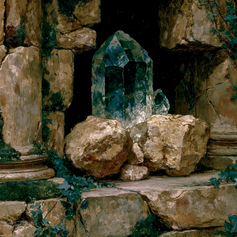
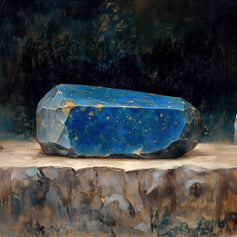
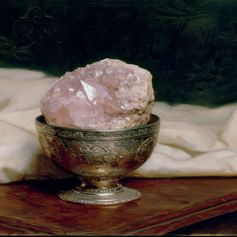
Associations with a specific color, crystal, chakra, photography, or chemical substances vary greatly among modern authors. They may support a personal practice, but should not be confused with a uniform ancient tradition.
Keep in mind
Sensitivity is no substitute for verification
Neptune does not diagnose addiction, mental disorders, or deception. Doubts concerning health, consent, money, or safety require facts, clear boundaries, and, when necessary, a qualified professional. Astrological interpretation does not replace these safeguards.
Sources and reference points
For astronomical data: NASA Science, “Neptune Facts”. For the history of its discovery: NASA History, “Astronomers Discover Neptune”. For Poseidon and ancient accounts: Theoi Project, “Poseidon”. For the traditional system of domiciles: Ptolemy, Tetrabiblos, Book I.
Continue reading: Saturn · Uranus · Pluto · Chiron · Astrology Guide · Astrology Books.