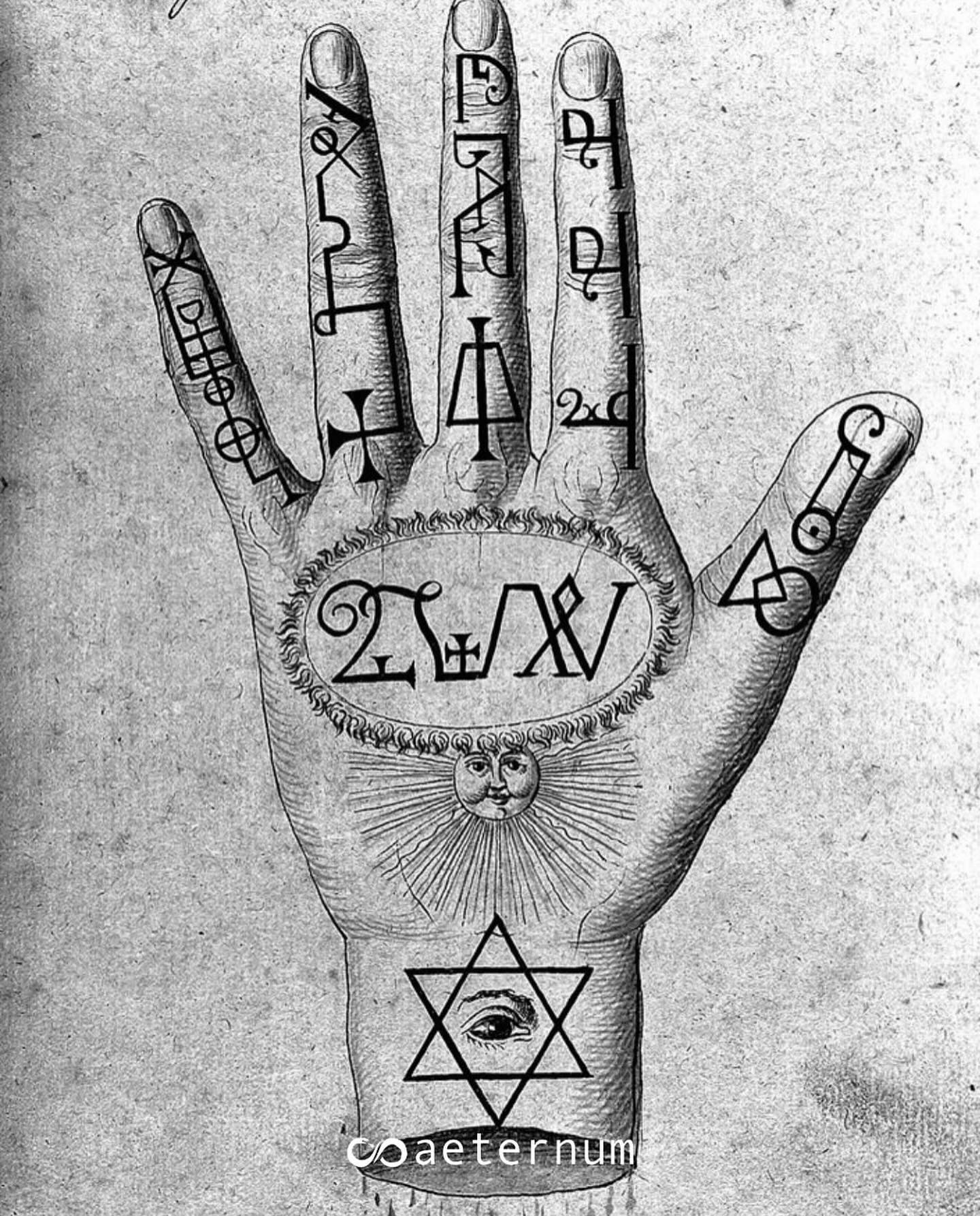





















































































































Agrippa's magical seal of Jupiter belongs to the series of seven planetary characters drawn from the numerical tables in Book II of the Occult Philosophy. It does not correspond to the astrological glyph ♃. The planet has a four-by-four table, followed by its own seal, an intelligence character, and a spirit character. This distinction is essential for understanding the construction of Renaissance planetary talismans.
| Source | Agrippa, De occulta philosophia, Book II, chap. XXII |
|---|---|
| Associated square | 4 × 4 |
| Magic constant | 34 |
| Total sum | 136 |
| Metal indicated by Agrippa | Silver |
How does Agrippa organize Jupiter?
Jupiter is the second planet in Agrippa's numerical series. The system juxtaposes the table, sacred names, intelligence, spirit, and graphic characters.
The planetary seal is Jupiter's sign within this structure. It must not be merged with the characters attributed to the intelligence or the spirit.
What is the connection with the 4 × 4 table?
Jupiter's magic square contains sixteen numbers. The sum of each row, column, and diagonal is 34, for a total of 136.
Agrippa derives Jupiter's character from this table. The seal therefore graphically translates a numerical order consecrated to the planet.
Why is ♃ a different symbol?
The glyph ♃ identifies Jupiter in astrology and alchemy. The magical seal is used for the talismanic creation described in occult literature.
Confusing the two would erase the logic specific to kameas and planetary characters.
What does the table promise in the text?
Agrippa associates a Jupiter table with money, gain, honors, counsel, friendship, and peace. In particular, he recommends engraving it on silver under an astrological configuration considered favorable.
This description belongs to the Renaissance magical theory of celestial influences and their fixation in matter.
Why is this seal still used?
Jupiter's reputation as a great benefic planet furthered the spread of its seal in later talismanic traditions.
Modern grimoires, hermetic orders, and contemporary planetary magic still reproduce the design transmitted by Agrippa.
Sources and historical background
Heinrich Cornelius Agrippa, De occulta philosophia, Book II, chap. XXII, Joseph H. Peterson's digital edition based on the early editions of the text.