





























































































































































The equilateral triangle has three sides of the same length and three sixty-degree angles. Euclid presents its construction in the first proposition of the Elements: two circles with the same radius determine its third vertex. Its simplicity makes it an important figure in ornament, architecture, and symbolic systems based on the number three. But the meaning of the triangle always depends on its cultural context: Christian Trinity, Islamic geometry, and Hindu yantras do not necessarily use the same interpretation.
| Sides | 3 equal sides |
|---|---|
| Angles | 60° each |
| Ancient construction | Euclid, Elements, Book I, Proposition 1 |
| Symmetry | Threefold rotation |
| Uses | Architecture, ornaments, religious diagrams |
How exactly do you construct an equilateral triangle?
Two circles are drawn with their centers at the endpoints of the same segment and their radius equal to the length of that segment. One of their intersection points is equidistant from both centers.
The triangle formed has three equal sides. The construction opens Euclid's Elements and shows how repeating a radius can give rise to a first regular figure.
Why does this shape evoke triads?
The triangle is the simplest three-sided polygon. It therefore lends itself to readings involving relationships among three terms, whether philosophical principles, religious elements, or qualities.
Yet the presence of three vertices does not define any universal triad. Each system chooses its own correspondences.
Why is it associated with the Trinity?
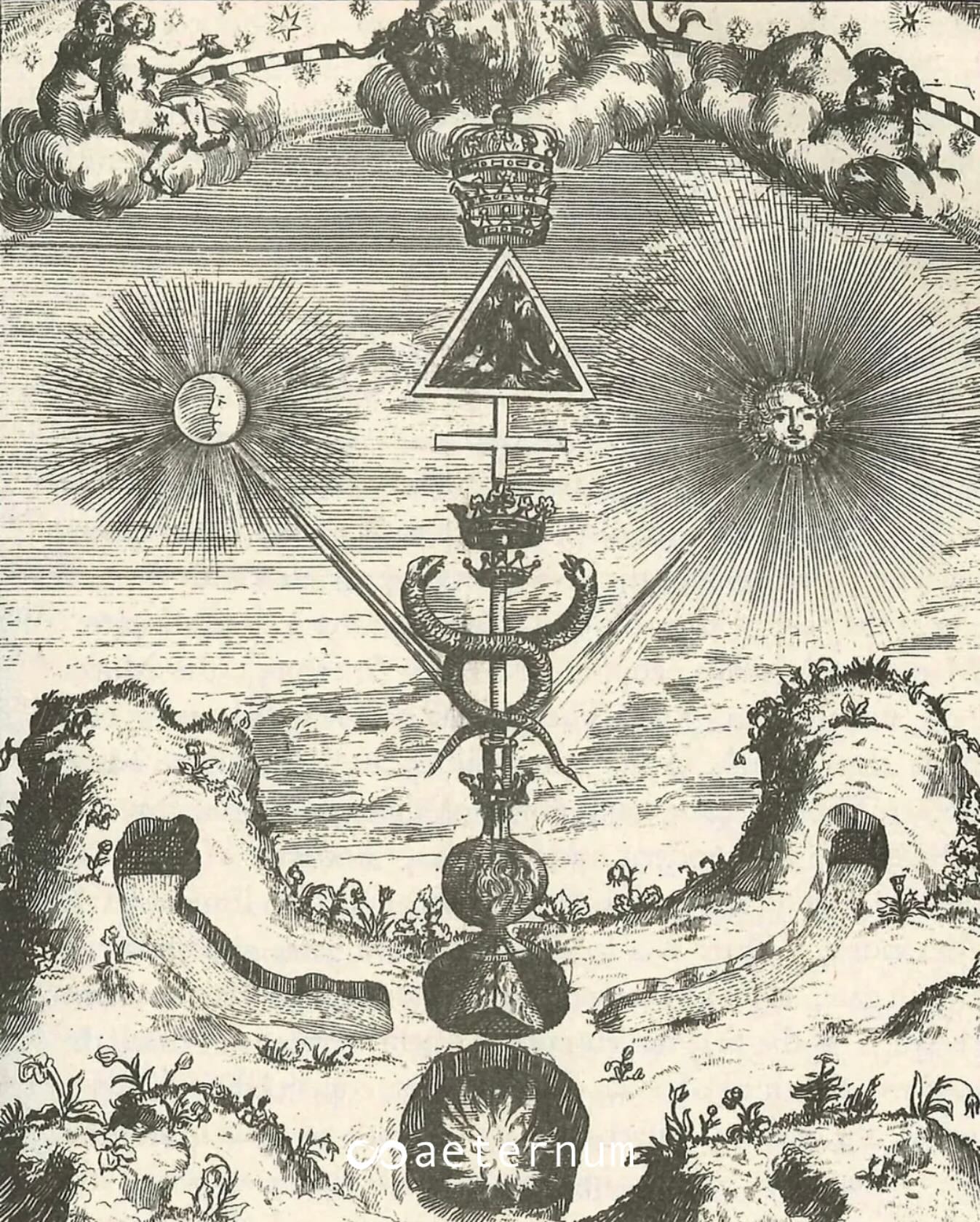
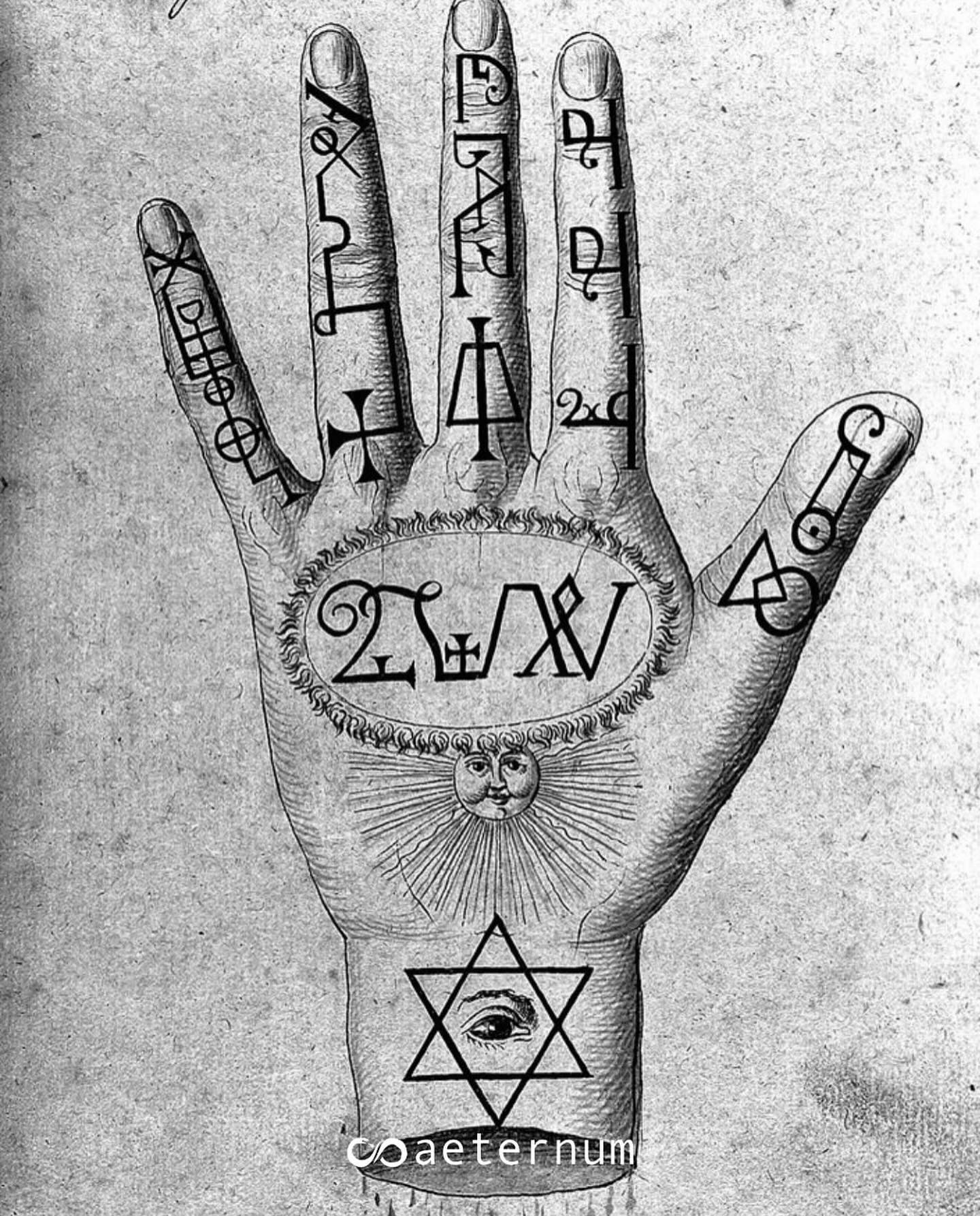
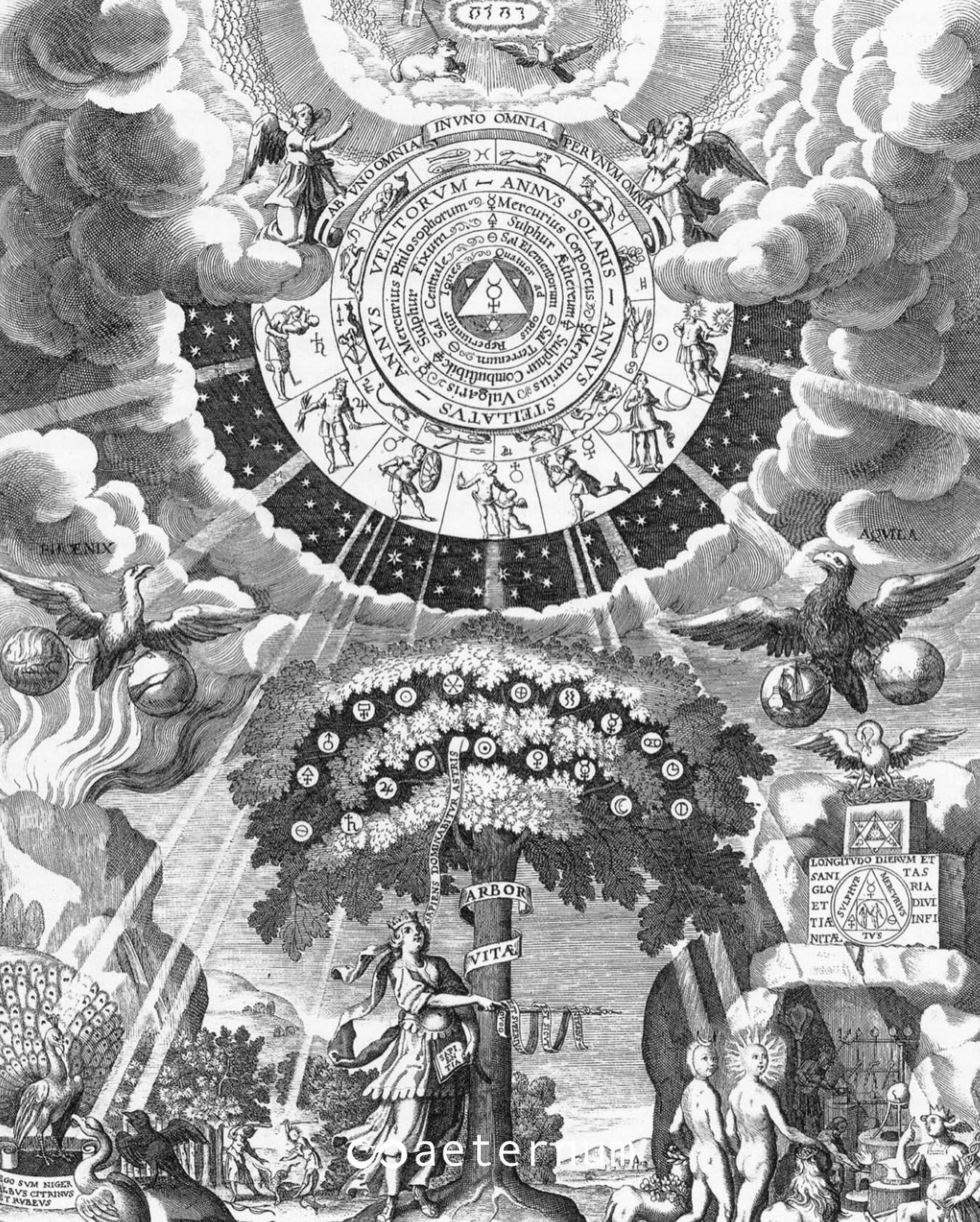
In Western Christian iconography, the triangle becomes a possible sign of the Father, the Son, and the Holy Spirit. The Eye of Providence appears notably inside a triangle in several religious compositions.
This interpretation belongs to Christian theology and cannot automatically be attributed to decorative triangles from antiquity.
What difference does the orientation of the triangle make in Hinduism?
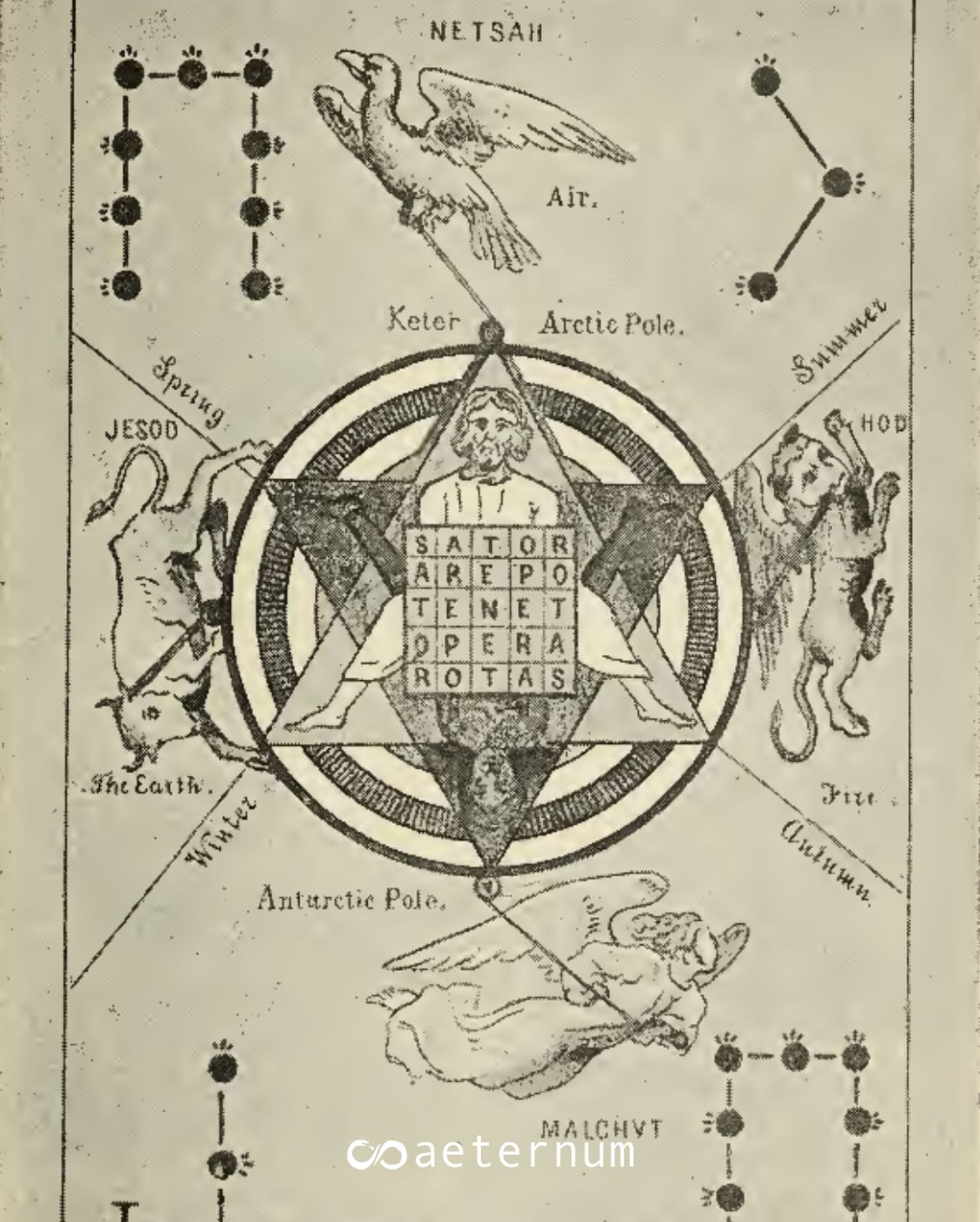
Several Hindu yantras combine upward- and downward-pointing triangles. The Śrī Yantra consists of interlaced triangles whose orientations are important in the Śrī Vidyā tradition.
Interpretations associated with Shiva and Shakti belong to this specific context; a triangle drawn in a Greek mosaic should not be interpreted using this terminology based on simple resemblance.
Why does the triangle lead to the regular solids?
The faces of three of Plato's five solids - the tetrahedron, octahedron, and icosahedron - are equilateral triangles. Their differences arise from the number of triangles meeting at each vertex.
The transition from the plane triangle to these solids is one of the major subjects of Greek geometry, later taken up by Renaissance Hermetic authors.
Sources and historical background
Euclid, Elements, Book I, Proposition 1 gives the original construction of the equilateral triangle. The Metropolitan Museum of Art documents the use of regular polygons in geometric arts.