






























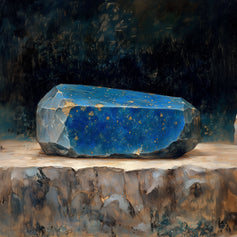
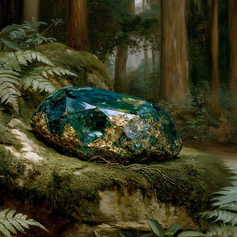
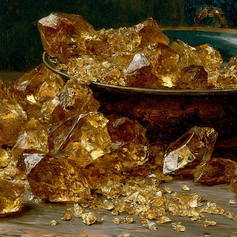
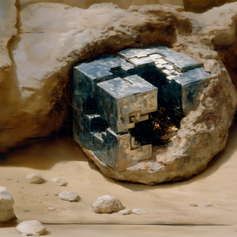











































































































































The magatama is a curved bead shaped like a comma, fang, or drop, documented in Japan since the later prehistoric period and especially common in Kofun-period tombs. Made of jade, agate, jasper, glass, or other precious materials, it served as an ornament, a mark of prestige, and a ritual object. The magatama also features in the story of the Three Imperial Treasures through the Yasakani no Magatama, a jewel passed down in the mythology of the Imperial House.
| Shape | Curved comma- or fang-shaped bead |
|---|---|
| Periods | Late Jōmon, Yayoi, and especially Kofun |
| Materials | Jade, agate, jasper, glass, stone |
| Context | Adornment, tomb, prestige, ritual |
| Imperial connection | Yasakani no Magatama, one of the Three Sacred Treasures |
How can you recognize a magatama?
The magatama has a wide, pierced head for suspension and a thinner, curved tip. The British Museum preserves several Japanese examples from the sixth century, described as curved or comma-shaped beads.
The shape is stable enough to be recognized immediately, even when the material changes.
How long have these beads been used?
The Metropolitan Museum records magatama dating from the end of the Jōmon period, followed by a notable presence in subsequent periods. Japanese and Korean discoveries also show ancient cultural exchange surrounding this type of jewelry.
The motif therefore cannot be reduced to a Shinto object from the historical period: its roots are clearly much older.
Why do they appear in royal tombs?
The curved beads appear in necklaces and ornaments worn by high-ranking figures. Their precious material and craftsmanship reinforce their prestige.
In tombs from the Kofun period, they accompany weapons, mirrors, and other objects associated with status.
What is the connection with Amaterasu and the imperial regalia?
Japanese mythological accounts associate a magatama-type jewel with the Three Imperial Regalia, along with the sword and mirror.
The Metropolitan Museum recalls that the mirror, sword, and jewel became the insignia of imperial authority passed by Amaterasu to her descendants.
The magatama thus joins the Yata no Kagami mirror within the same structure of sacred legitimacy.
What can be asserted about their protective value?
Researchers have likened magatama to fangs, claws, or embryonic forms. The British Museum mentions these interpretations without taking a definitive position.
Their presence in jewelry and funerary contexts supports speaking of symbolic value and prestige. Going further requires distinguishing modern hypotheses from attested functions.
Sources and historical context
The British Museum holds a Japanese magatama from the 6th century. The Metropolitan Museum of Art places these curved beads within ancient exchanges between Japan and Korea.










