




















































































































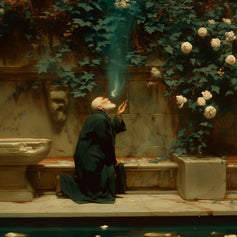
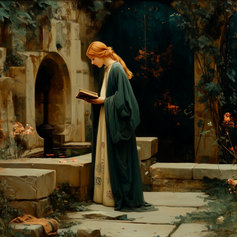


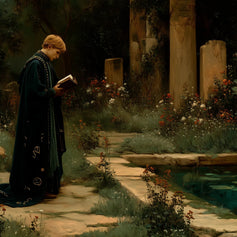



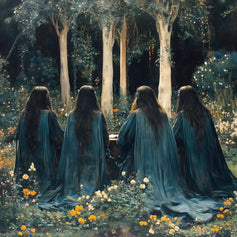









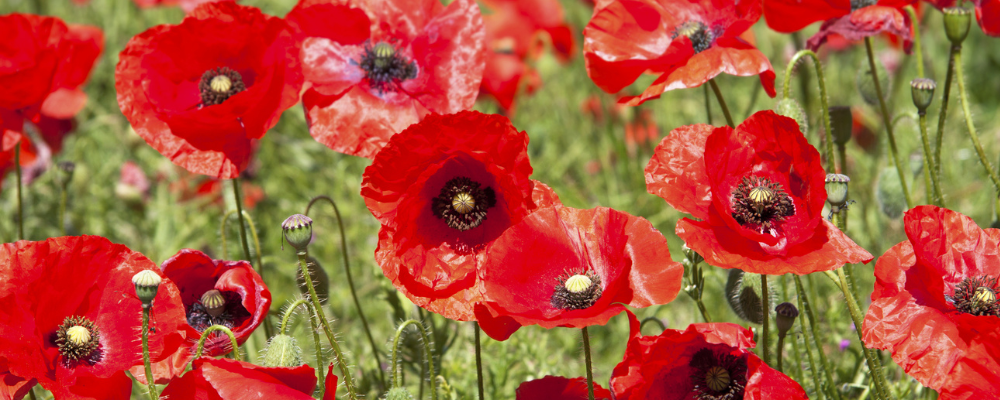
The poppy crowns the sleep of Hypnos, accompanies the harvests of Demeter, and inclines its capsule toward the realm of the dead. Its delicate flower falls quickly; the seed-filled head remains. Between oblivion and fertility, it provided Antiquity with an image of rest, dreams, and return, long before opium became a global commodity.
The word poppy encompasses several species. This entry focuses on Papaver somniferum, the opium poppy, while noting the iconographic shifts toward Papaver rhoeas, the corn poppy. The two flowers have neither the same chemistry nor the same history of use.
The latex of the unripe capsule contains opiate alkaloids. Its extraction, processing, and use are not matters for domestic practice. The grimoire works with the depicted flower, the represented capsule, and the texts that associated the poppy with sleep.
The brief flower and the crowned capsule
Papaver somniferum L. is an annual plant in the Papaveraceae family. Its glaucous leaves surround a stem bearing large white, pink, red, or purple flowers. After the petals fall, the rounded capsule remains crowned with a radiating disk.
Opium is the dried latex obtained by incising an unripe capsule. Kew distinguishes this exudate, a source of morphine and codeine, from the edible seeds contained in the mature capsule. Kew, Papaver somniferum.
The Latin name combines somnus, sleep, and ferre, to carry. Botany and the name converge in a single image: a flower that inclines the body and a substance capable of calming pain while also endangering life.
Demeter, Hypnos, and Thanatos
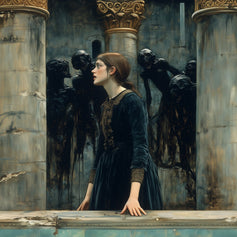
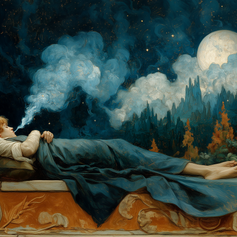
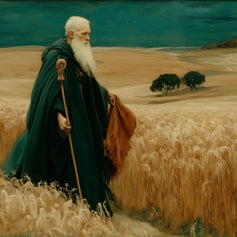
In Greco-Roman art, the poppy capsule mingles with the ears of Demeter or Ceres. It signifies the fertility of the field, the abundance of seeds, and the winter rest of the earth. Beside Hypnos and Thanatos, it evokes sleep and its proximity to death.
Archaeological study of the Poppy shows domestication in Neolithic Europe, probably initially linked to the nutritional qualities of its seeds. By the Late Bronze Age, the plant had acquired religious meanings in the Mediterranean world. Nencini, a critical history of the Poppy.
These sources invite us to abandon the repeated account of a Sumerian “plant of joy.” The real history is more interesting: a cultivated species gradually became food, medicine, symbol, and substance of power.
Sleep in medical herbals
Dioscorides describes several Poppies in De materia medica. He distinguishes the forms, seeds, and heads, then discusses their cooling, analgesic, and soporific effects. The text also warns of the danger associated with excess.
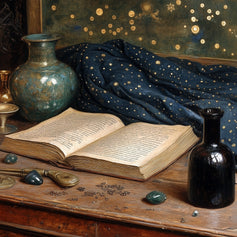
Copied and translated for more than fifteen centuries, this work transmitted the Poppy to medieval and Renaissance herbals. The plant moved from the medical garden to the practitioner's study, then into stories where sleep can open onto a dream or resemble death.
The cup of sleep has two edges. One promises rest and an end to pain; the other leads to dependence, respiratory arrest, and death.
Dreams, forgetfulness, and the memory of the dead
The European reception of the Poppy developed three magical themes: inducing sleep, causing forgetfulness, and accompanying the dead. Nighttime sleep, the dormancy of the field, and funerary silence echo one another in poetry and imagery.
After the First World War, the field poppy became an emblem of remembrance in several countries. This history mainly concerns Papaver rhoeas, which colonizes disturbed soils and blooms red. It should not be confused with the uses of opium.
In the grimoire, a drawn capsule can contain the names we refuse to forget. A paper flower that closes marks sleep; a flower that opens marks the return to wakefulness.
The paper door between wakefulness and sleep
Cut a Poppy flower from red or purple paper. Fold the petals toward the center before going to bed and write on the back a sentence you wish to leave at rest until morning.
Upon waking, open the petals and draw a capsule in the center. Write down a fragment of a dream without trying to make it prophetic. Repeat for seven nights to observe recurring patterns.
For remembrance of the dead, place a name and a date beneath the flower. No plant product is necessary. The gesture recalls the flower, sleep, and return without using latex, seed, or smoke.
Historical correspondences
| Reference | Correspondence |
|---|---|
| Botanical name | Papaver somniferum L. |
| Distinguish from | Papaver rhoeas, the Corn Poppy |
| Figures | Demeter or Ceres, Persephone, Hypnos, and Thanatos |
| Texts | De materia medica and European herbals |
| Magical correspondences | Sleep, dreams, oblivion, fertility, and remembrance of the dead |
| Safe support | Paper flower, capsule drawing, and dream journal |