















































































































































































































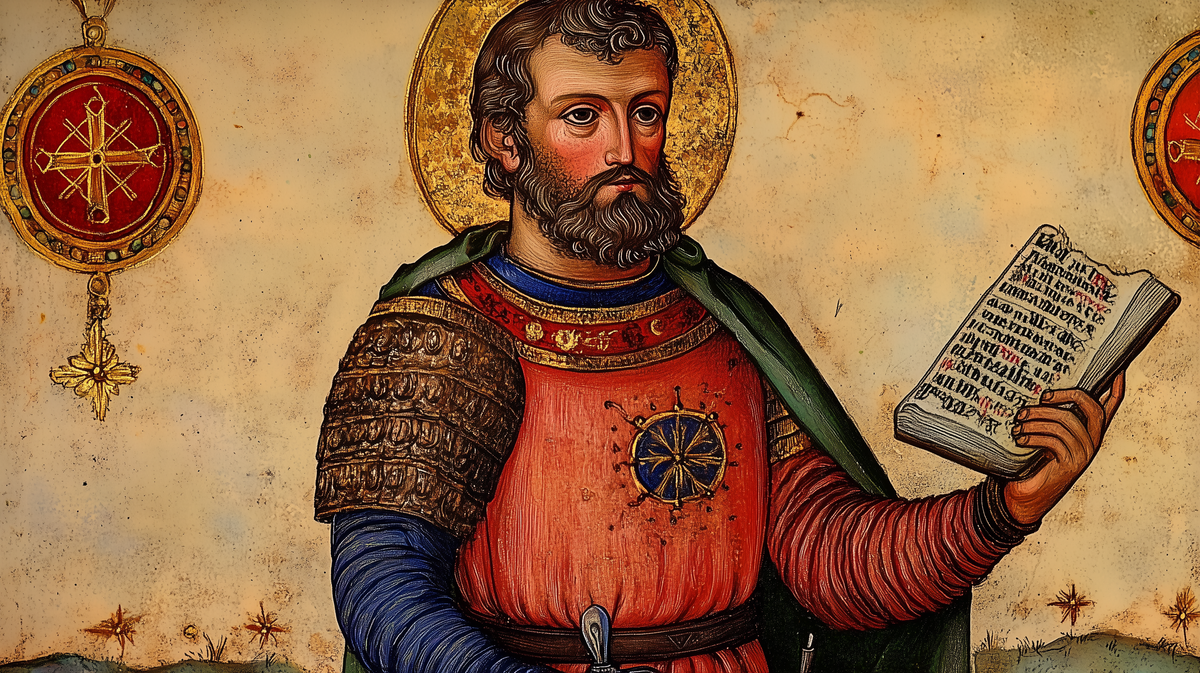
General Presentation of Apostle Bartholomew
Saint Bartholomew, also known as Nathanael, is one of the twelve apostles of Jesus Christ. Originally from Cana in Galilee, he was introduced to Jesus by Philip. At their first meeting, Jesus called him a "true son of Israel, a man without deceit," marking the beginning of his conversion and devotion to Christ. Few details about his life after Jesus' Ascension are mentioned in the Gospels, but Christian tradition reports that he preached the Gospel in several regions, including India, Arabia, and Armenia. It was in Armenia that he was reportedly martyred, flayed alive, and then beheaded for his faith.
Symbols and Appearances of Apostle Bartholomew
Saint Bartholomew is often depicted holding a knife, a reminder of his martyrdom where he was flayed alive. He is also frequently shown wearing his own skin, notably in artworks like the Sistine Chapel, illustrating the torment he endured for his faith. These representations evoke his role as the patron saint of butchers, tanners, and bookbinders, professions related to skin and leather.
Myths and Legends of Apostle Bartholomew
Saint Bartholomew is venerated for his faithfulness and courage in spreading the Christian faith. Tradition tells that he brought the Gospel to India, where he converted many people. In Armenia, he is said to have convinced King Polymius to convert to Christianity, which angered the pagan priests. They allegedly orchestrated his martyrdom by flaying him alive. His brutal death, though tragic, strengthened his image as the patron saint of professions related to skin and leather, and he is often invoked to ask for strength and perseverance in trials.










