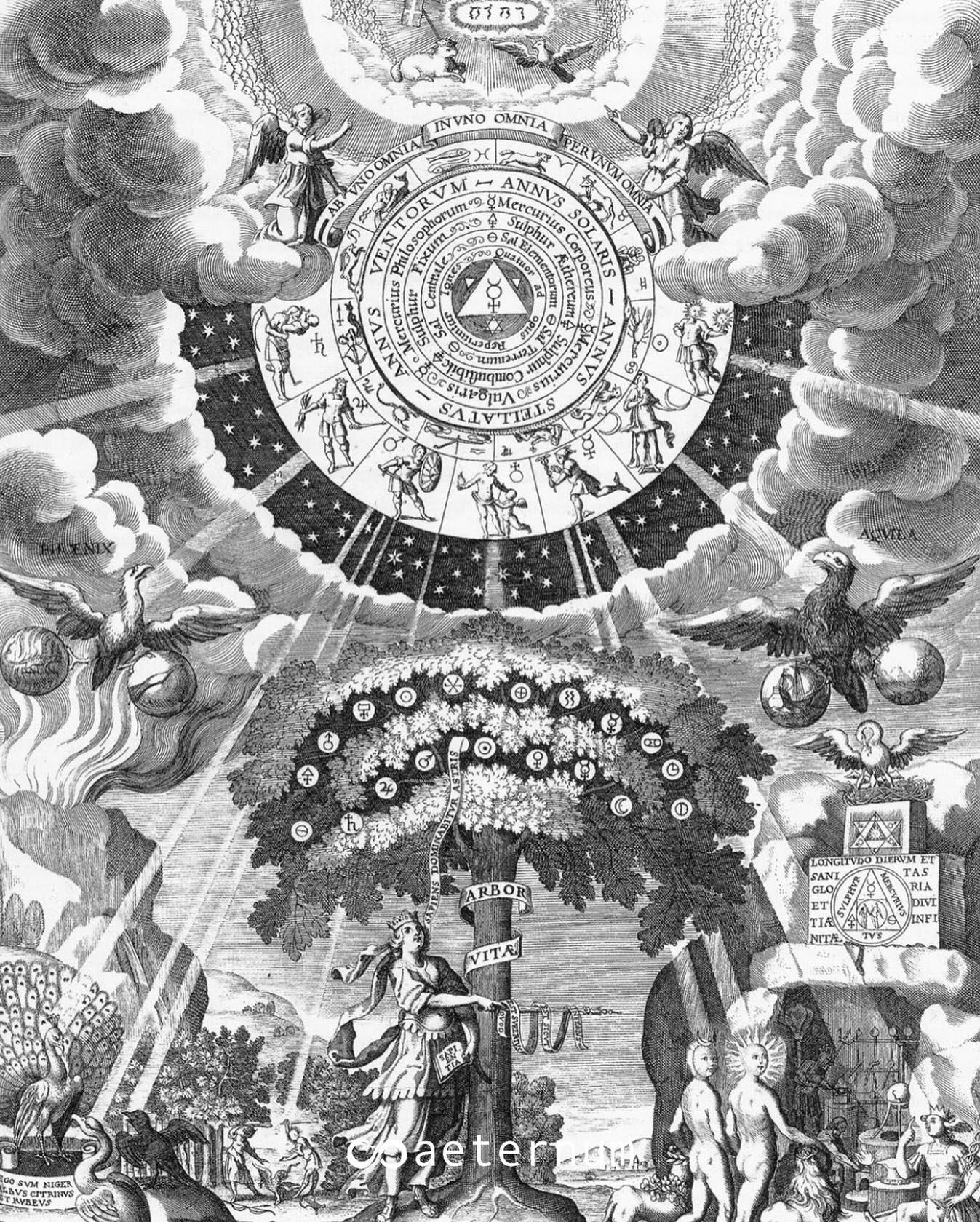




In Freemasonry, the first three degrees (Entered Apprentice, Fellow Craft, and Master Mason) are known as the symbolic or “Blue” degrees. The Scottish Rite refers to all the higher degrees offered beyond the Master Mason degree: additional stages that extend the inner journey through new narratives, more elaborate symbols, and deeper moral reflection. Progress is made through degrees, each representing a stage of work with its own coherence, words, gestures, and teachings. An introduction to the most influential rite in Freemasonry.
Historical Origins of the Scottish Rite (18th Century)
First Appearances of the “Scottish” Higher Degrees
The birth of Masonic Scottish Rite traditions dates back to the first half of the 18th century, several decades after the establishment of so-called modern Freemasonry. While the Grand Lodge of London (founded in 1717) practiced only the three symbolic degrees, additional degrees began to emerge in the 1730s and 1740s. These degrees beyond Master came to be generically called “Scottish,” a designation whose exact meaning is debated—it could equally evoke a geographical origin (real or mythical) in Scotland or a lofty Masonic status distinct from ordinary Master Masonry.
Historians have highlighted several significant facts marking the dawn of the Scottish Rite. In England, the title Scots Master Mason (Scottish Master) is mentioned as early as 1735 in Bath. In France, the first mention of the Scottish Master degree appears in 1737 in the journal of the lawyer Barbier. This degree—the oldest of the higher degrees—seems to have been introduced to France by exiled Scottish Jacobites (loyal to the Stuart dynasty) who came to settle in Saint-Germain-en-Laye near the deposed King James II. Indeed, many Scottish or Irish gentlemen who took refuge in France after the Glorious Revolution of 1688 were Freemasons, and they played a notable role in the emergence of higher degrees blending chivalric ideals with political allusions (such as the hope of restoring the Stuarts).
To understand the context of the first “Scottish degrees,” it is necessary to recall who the Stuarts were. This dynasty first ruled Scotland (from 1371), then England and Ireland when James VI of Scotland became James I of England in 1603. After the upheavals of the 17th century (civil wars, Cromwell’s Republic, the Restoration), James II ascended the throne in 1685. His overthrow during the Glorious Revolution (1688) in favor of Protestant sovereigns (William III and Mary II), followed by the Hanoverian succession in the 18th century, sparked a long movement of dynastic allegiance: Jacobitism.
The Jacobites (from the Latin Jacobus, James) initially supported James II, then his heirs in exile: James Francis Edward Stuart (known as the Old Pretender) and Charles Edward Stuart (the Young Pretender). Their motivations were multiple:
-
dynastic: hereditary continuity and rejection of a deposition deemed illegitimate;
-
religious: hope for a regime more favorable to Catholicism, particularly in Ireland and parts of Scotland;
-
political: a preference for a stronger monarchy in opposition to Parliament, contrary to the balance established in 1688;
-
identity-related: in Scotland, Highland clans and circles hostile to the 1707 Union saw the Stuart cause as a means of preserving institutions and traditions.
The the Stuart court in exile was welcomed in Saint-Germain-en-Laye. Around it gathered a community of Scots and Irish—officers, gentlemen, and intellectuals—in the service of France. Several attended French lodges. They brought with them a a chivalric imaginary (loyalty, honor, the struggle for a just order) and narratives that would fuel the emergence of high degrees in the mid-18th century.

It is in this atmosphere that the title “Scottish Master” emerged: initially, a rank superior to the Master’s degree, attested in England (1735) and France (1737). The term “Scottish” does not indicate merely a geographical origin; it also evokes a chivalric imaginary (loyalty, honor, the struggle for a just order) and narratives that would fuel the emergence of high degrees in the mid-18th century. a symbolic character shaped by chivalry, biblical references and, at times, allusions to the historical trials experienced by Stuart supporters.
An event often cited as triggering the “Scottish” movement is the famous Discourse of the Chevalier de Ramsay in 1736. Ramsay, a Scottish Freemason and Jacobite supporter, delivered a speech in Paris, published in 1738, that proposed a chivalric origin for Freemasonry by tracing the Order back to the Knights Crusader. Although historians qualify its immediate impact, the text had a lasting influence on the Masonic imagination: it paved the way for themes of chivalry and the Holy Land in rituals and launched the tradition of chivalric-style high degrees. Thus, from the 1740s onward, degrees such as Knight of the East (or of the Sword) began to appear, introducing motifs of biblical chivalry and the liberation of the Temple. Likewise, Elect degrees—focused on avenging Hiram’s murderers—and degrees of Architect or Intendant of the Buildings enriched Masonic legends beyond the third degree.
At the same time, the 1740s and 1750s saw the establishment of the first lodges or chapters of high degrees in France. In Bordeaux, the lodge La Parfaite Harmonie was founded in 1744–45 and operated as a Scottish Mother Lodge, conferring the newly created higher degrees; the merchant Étienne Morin was a member. In Paris, a first Scottish Lodge is documented in 1747, becoming in 1752 a Sovereign Council administering several sublime degrees. It is noteworthy that in 1743, the Grand Lodge of France, presided over by Louis de Bourbon-Condé, Count of Clermont, had formally condemned the degree of Scottish Master in its ordinances, a sign of the tension between “official” symbolic Masonry and these spontaneous innovations. Nevertheless, far from halting the movement, these prohibitions testify to the anarchic proliferation of high degrees throughout the country during the 1750s.
Proliferation during the Enlightenment and gradual structuring
Between 1750 and 1780, Masonic Scottishism experienced a meteoric, though disorderly, expansion in France and continental Europe. A multitude of new degrees and complete systems were created, driven by enthusiasm for esotericism, chivalry, and Templar mysteries. A whole constellation of “Scottish” rites with evocative titles thus began to flourish: Reformed Scottish Rite of Saint-Martin, Scottish Rite of Heredom (linked to the supposed Order of Heredom of Kilwinning), Primitive Scottish Rite, Rectified Scottish Rite, Scottish Rite of the Sublime Elect of Truth,... Each of these systems offered its own hierarchy of degrees (sometimes numbering as many as 20 or 25), with its own legends. For example, the Order of the Royal Secret (of which Étienne Morin was a major promoter) brought together, as early as the 1760s, a set of high degrees extending to the 25th degree (known as Prince of the Royal Secret). Meanwhile, in Germany, Baron von Hund launched the Strict Templar Observance around 1750, a form of Freemasonry composed of secret degrees that claimed to reconnect directly with the Order of the Knights Templar—this “Templar fable” would have a major impact and also influence France.
Within this profusion, two main doctrinal tendencies emerged: on the one hand, a mystical, illuminist, and chivalric current, strongly represented in the high degrees (knightly degrees, alchemy, and Christian theosophy); on the other, a rationalist and humanist current in keeping with the spirit of the Enlightenment. Far from being mutually exclusive, these two currents coexisted within Freemasonry during the 18th century. It is therefore unsurprising to see highly spiritual degrees coexist with others more deeply influenced by enlightened philosophy or universal symbolism. Moreover, the success of the high degrees can also be explained sociologically: in a still highly hierarchical Ancien Régime society, they offered aristocrats and notable figures noble Masonic titles and alluring esotericism, helping to attract them to lodges on a lasting basis.
Faced with the proliferation of Scottish rites, efforts to organize and synthesize them began to emerge in the second half of the 18th century. The Grand Lodge of France, although it had jurisdiction only over the symbolic degrees, sought to bring order to the “sublime degrees” beyond its control. Under the influence of enlightened Freemasons such as Jean-Baptiste Willermoz in Lyon and Jean-Jacques de Roëttiers de Montaleau in Paris, attempts were made to regroup and codify the high degrees into coherent systems. Two major endeavors illustrate this process of organization:
-
The Rectified Scottish Rite (R.E.R.): this rite was developed in France by Willermoz and his fellow Freemasons, based on the German Strict Observance of the Templar Order combined with the mystical teachings of Martinès de Pasqually. An initial Convent of the Gauls in Lyon in 1778 established the system’s broad principles, and the Universal Convent of Wilhelmsbad in 1782 confirmed the founding of the Rectified Scottish Rite by abandoning direct Templar lineage while retaining a symbolic Christian chivalry. The RER was thus definitively codified on the eve of the Revolution, with its own degrees and codes.
-
The French Rite (also known as the Modern Rite): in Paris, within the Grand Orient of France (G∴O∴D∴F∴, founded in 1773), the high-ranking Freemason Roëttiers de Montaleau undertook to synthesize the maelstrom of high degrees into a reduced system. In 1784–1786, the Grand General Chapter of France, which he led, merged with a competing group (the Chapter of Dr. Gerbier) and established a scale of only 4 Orders beyond the Master Mason degree. This French Rite of “4 orders + 1”—the last being the Order of the Rose Cross—aimed to concentrate the essence of the high degrees into a few powerful symbolic stages. Adopted by the Grand Orient, it was published in 1801 in the Regulator of the Freemason.
Despite these attempts at rationalization, not all Freemasons accepted the proposed solutions, and certain disputes over rites persisted. Ultimately, another system from across the Atlantic would soon prevail: the Ancient and Accepted Scottish Rite. Developed between the French West Indies and the United States, this rite resulted in a body of 33 degrees formalized in 1801 in Charleston, South Carolina, and introduced into France in 1804 by Brother Auguste de Grasse-Tilly. Under the First French Empire, French Freemasonry would thus have three major high-degree systems operating in parallel: the Rectified Scottish Rite (with 4 higher grades beyond the 3 symbolic degrees), the French Rite (4 orders beyond the 3 degrees), and the Ancient and Accepted Scottish Rite (33 degrees encompassing the 3 symbolic degrees). These three rites—later joined by the so-called Egyptian Rite of Memphis-Misraim (99 degrees) in 1881—remain today the principal paths of high-degree Freemasonry in France.
The Main Rites of Masonic Scottishism
The Ancient and Accepted Scottish Rite (A∴A∴S∴R∴)
The Ancient and Accepted Scottish Rite is undoubtedly the best-known of the high-degree rites, practiced today throughout the world. Its origins can be traced to the Order of the Royal Secret propagated by Étienne Morin. Commissioned in 1761 to bring the “Sublime Masonry of Perfection” to the colonies of the New World, Morin spread a system of high degrees in the Caribbean, initially structured into 25 degrees and known as the Rite of Perfection. With the help of Brother Henry A. Francken, he organized lodges and chapters of Perfection in Saint-Domingue and North America, conferring in particular the highest degree of Prince of the Royal Secret. This body of work was provided with Constitutions and Regulations (notably in 1762) and was later supplemented by the famous Grand Constitutions dated 1786 and attributed—probably only as a legend—to King Frederick II of Prussia.
After the American War of Independence, the bearers of this rite (known as Inspectors) multiplied, and the idea emerged of expanding the system. In Charleston, South Carolina, a group of high-ranking Masons led by John Mitchell and Frederick Dalcho decided around 1798–1801 to add eight degrees to the existing 25, creating a 33-degree order: the Ancient and Accepted Scottish Rite. On May 31, 1801, they founded the Supreme Council of the 33rd Degree for the United States of America, the first body of its kind, with Colonel Mitchell as Grand Commander. The A∴A∴S∴R∴ was born. Shortly afterward, in 1804, Auguste de Grasse-Tilly—who had taken part in the work of the new rite in Charleston—established a Supreme Council of France in Paris and officially introduced the Ancient and Accepted Scottish Rite into French Freemasonry. It would quickly flourish: in the 19th century, it became one of the major rites in Europe and Latin America, and in the 20th century, the most widely practiced Masonic rite in the world.

Thuileur of the Thirty-Three Degrees of the Ancient and Accepted Scottish Rite. Source
The Ancient and Accepted Scottish Rite comprises 33 degrees in total. The first three are the symbolic degrees (Entered Apprentice, Fellow Craft, Master Mason), generally administered by traditional obediences (Grand Lodges or Grand Orients) in blue lodges. Beyond these, degrees 4 to 33 constitute the high degrees specific to the Rite, organized into several successive bodies. Traditionally, these include: the Lodge of Perfection (degrees 4 to 14), the Rose Croix Chapter (degrees 15 to 18), the Kadosh Council or Areopagus (degrees 19 to 30), and the Consistory (31 and 32), with the 33rd degree conferred as a distinction as the supreme degree. In principle, each country has a sovereign Supreme Council to administer all the Rite’s high degrees, headed by a Sovereign Grand Commander. This final degree, known as Grand Inspector General, confers the honorary title of 33rd and final degree.
The A∴A∴S∴R∴ is a rite rich in symbolism, incorporating multiple spiritual and philosophical traditions inherited from the Enlightenment. It was conceived at the end of the 18th century to integrate the era’s great ideas for explaining the world and humanity: the emancipation of reason, the legacy of Hermeticism, the revival of the chivalric ideal, and the exaltation of universal tolerance. Each degree of the Rite develops a particular theme and a moral lesson. For example, the 12th degree (Grand Master Architect) addresses wisdom and universal architecture; the 18th degree (Rose-Croix Knight) offers profound spiritual reflection on fraternity and hope, inspired by esoteric Christianity; and the 30th degree (Kadosh Knight) stages the symbolic vengeance of the Templars and the ideal of justice in the face of tyranny. Other grades, such as Knight of the East and West (17th) or Prince of the Royal Secret (32nd), refer to biblical motifs (the return from exile, the rebuilding of the Temple) or esoteric themes (the final synthesis of the mysteries). The Ancient and Accepted Scottish Rite as a whole presents itself as a traditional, spiritualist, and universalist initiatory order, capable of “fitting” every era while transmitting an ancient symbolic heritage. Today, this Rite continues to be practiced on every continent, both in liberal Freemasonry and in so-called regular Masonry (under the title Ancient and Accepted Scottish Rite in English-speaking countries).
The Rectified Scottish Rite (R.E.R.)
The Rectified Scottish Rite—or more precisely, the Rectified Scottish Régime—is a high-degree Masonic system founded on explicitly Christian and chivalric principles. Its complex development took place in France during the 1770s under the impetus of the Lyonnais Jean-Baptiste Willermoz. A disciple of the theurgist Martinès de Pasqually and a member of the Strict Templar Observance, he sought to “rectify” (reform) the latter by incorporating a more refined spiritual dimension and removing the authority of illustrious fictional Unknown Superiors. After a preliminary convent in Lyon in 1778 (the Convent of Gauls) and several meetings in Germany, the General Convent of Wilhelmsbad in 1782 officially established the Rectified Scottish Régime. Presided over by Duke Ferdinand of Brunswick, this convent brought together delegates from across Masonic Europe. The participants decided, among other things, to abandon any claim to a direct historical lineage from the Order of the Temple (which characterized the Strict Observance), while retaining the Templar legend as a source of symbolic inspiration. They adopted revised rituals for the symbolic degrees and high degrees, also incorporating certain mystical elements from Martinès’s Order of Elus Coëns. The result was a coherent, deeply Christianized rite that would be practiced mainly in France, Switzerland, and later Belgium.
The R.E.R. originally comprises six grades in total, the last two of which belong to an internal Christian chivalric order. Grades 1 to 3 (Apprentice, Fellow Craft, Master) constitute the Rectified symbolic grades, with rituals very close to the French tradition of the 18th century. The 4th grade, specific to the R.E.R., is that of Scottish Master of Saint Andrew (also called Scottish Master or Green Scottish Master): it serves as a bridge between the symbolic lodge and the inner order. Beyond this, the Régime includes an Inner Order divided into two stages: first the grade of Novice Squire (5th), followed by that of Beneficent Knight of the Holy City (C.B.C.S., 6th grade). These two chivalric grades are conferred within Prefectures and Grand Priories, outside the blue lodges. Historically, the Rectified Scottish Régime also provided for two further secret degrees (known as Professed and Grand Professed, purely spiritual), but these were rarely practiced.
The Rectified Rite is distinguished by its explicitly Christian essence. From the outset, its rituals and obligations require members to “be faithful to the Christian religion” and to live according to the virtues of evangelical chivalry (charity, humility, and devotion). The R.E.R. represents, in a sense, the mystical and spiritualist branch of Enlightenment Freemasonry: it belongs to the 18th-century illuminist movement, which coexisted at the time with the more Voltairian rationalist movement. Symbolically, the first three Rectified degrees remain fairly close to “classical” Freemasonry, although enriched by certain distinctive features (an emphasis on the spiritual reintegration of fallen humanity, and the influence of the writings of Saint-Martin and Christian illuminism). Its distinctiveness emerges above all in the higher degrees: the Scottish Master of Saint Andrew prepares the candidate to enter the inner chivalry by binding him to the Order of Saint Andrew (the patron saint of the Scots) and endowing him with the rediscovered lost word. The Beneficent Knight of the Holy City is then invited to symbolically defend a “Holy City” (an image of the Heavenly Jerusalem) through his virtues and acts of charity. The choice of the term Beneficent indicates the importance of philanthropy and Christian morality in this rite. The Templar myth surfaces in the background (the C.B.C.S. consider themselves spiritual successors to the Knights Templar, engaged in an allegorical struggle against Evil), but it is not accompanied by any claim of genuine historical inheritance—on the contrary, the break with the actual Templar lineage was declared in 1782.
The Rite of Perfection and the Other Historical Scottish Rites
The Rite of Perfection (Order of the Royal Secret) deserves particular mention because it is the direct ancestor of the Ancient and Accepted Scottish Rite. As mentioned above, it was a 25-degree high-degree system gradually formed by Étienne Morin and his collaborators in the 1760s. Its summit, the 25th degree entitled Prince of the Royal Secret, crowned a sequence of degrees that included the Perfect Master, the Elect Master, the Knight of the East, the Rose Croix Knight, and the formidable Kadosh Knight. First disseminated in the Caribbean (Saint-Domingue, Jamaica), and then in North America (New York, Charleston), the Rite of Perfection was the first embodiment of a unified Scottish “high system.” Although it is no longer practiced as such today (apart from a few organizations known as Cernéennes that claim descent from Morin), its near-complete integration into the Ancient and Accepted Scottish Rite makes it an essential milestone in the history of Scottish Freemasonry.
Doctrine and Symbolic Dimensions of Scottish Freemasonry
Themes and Philosophy of the Higher Degrees
The Scottish high degrees differ from the basic symbolic degrees through their deeper treatment of initiatory themes and their broader historical and legendary framework. While the first three degrees focus on the construction (and loss) of Solomon’s Temple and on fundamental moral teachings, the degrees beyond Master explore new spiritual, philosophical, and esoteric horizons.
A notable characteristic of Scottish Masonry is the extensive introduction of the chivalric motif. Many high degrees make the initiate a knight entrusted with a symbolic mission. The Knight of the East (present in several rites, around the 15th degree) transforms the Mason into a defender of the Hebrew people freed from Babylon, fighting to rebuild the Temple. The Rose Cross Knight makes the Mason a spiritual pilgrim reflecting on the word of Christ and symbolic resurrection. The Kadosh Knight, meanwhile, elevates him to the rank of a mythical avenger of the Templars, embodying immanent justice against the arbitrariness of the powerful. These chivalric figures convey values of bravery, honor, and moral integrity, while placing Freemasonry within an imagined continuity with the chivalric orders of the past.
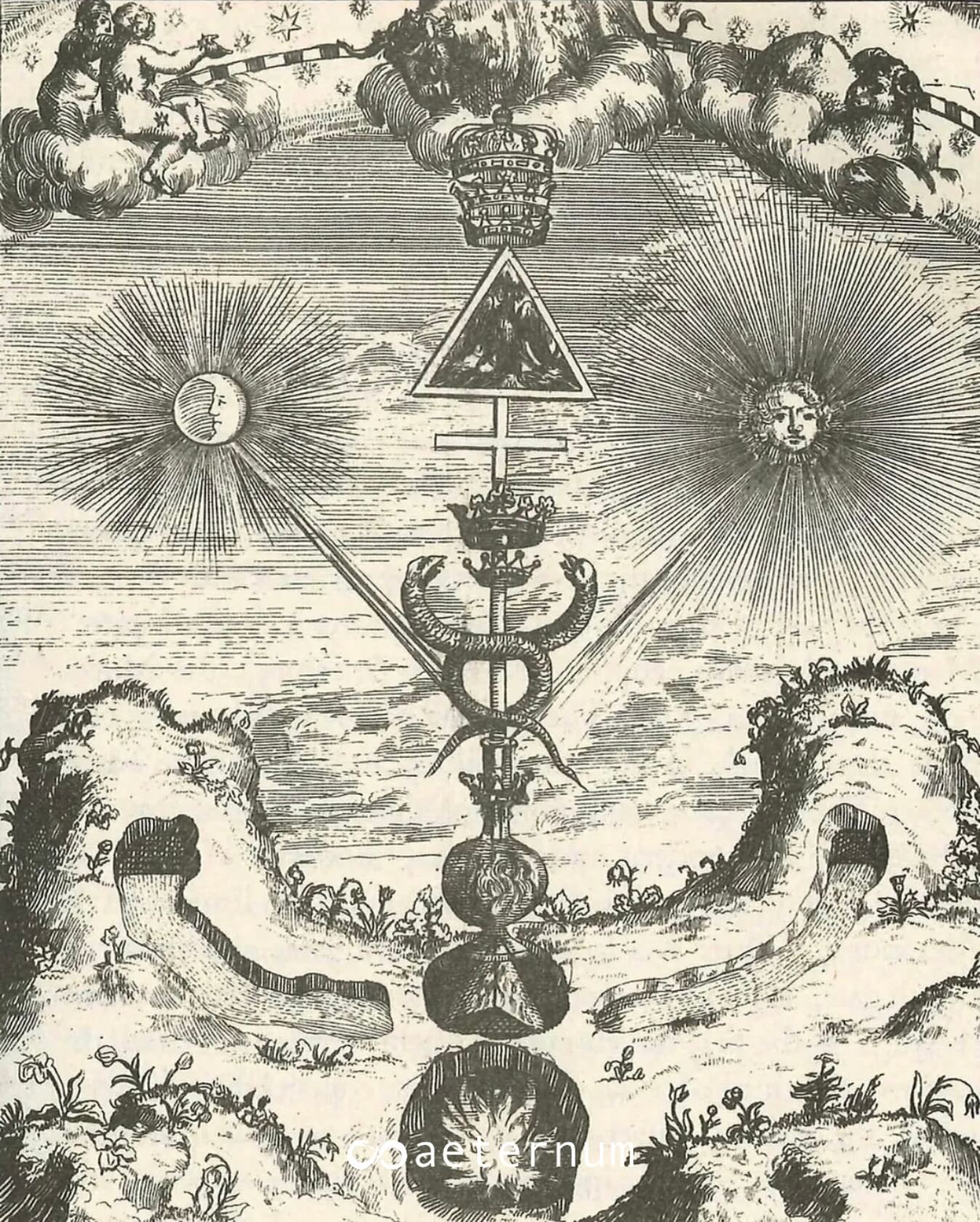
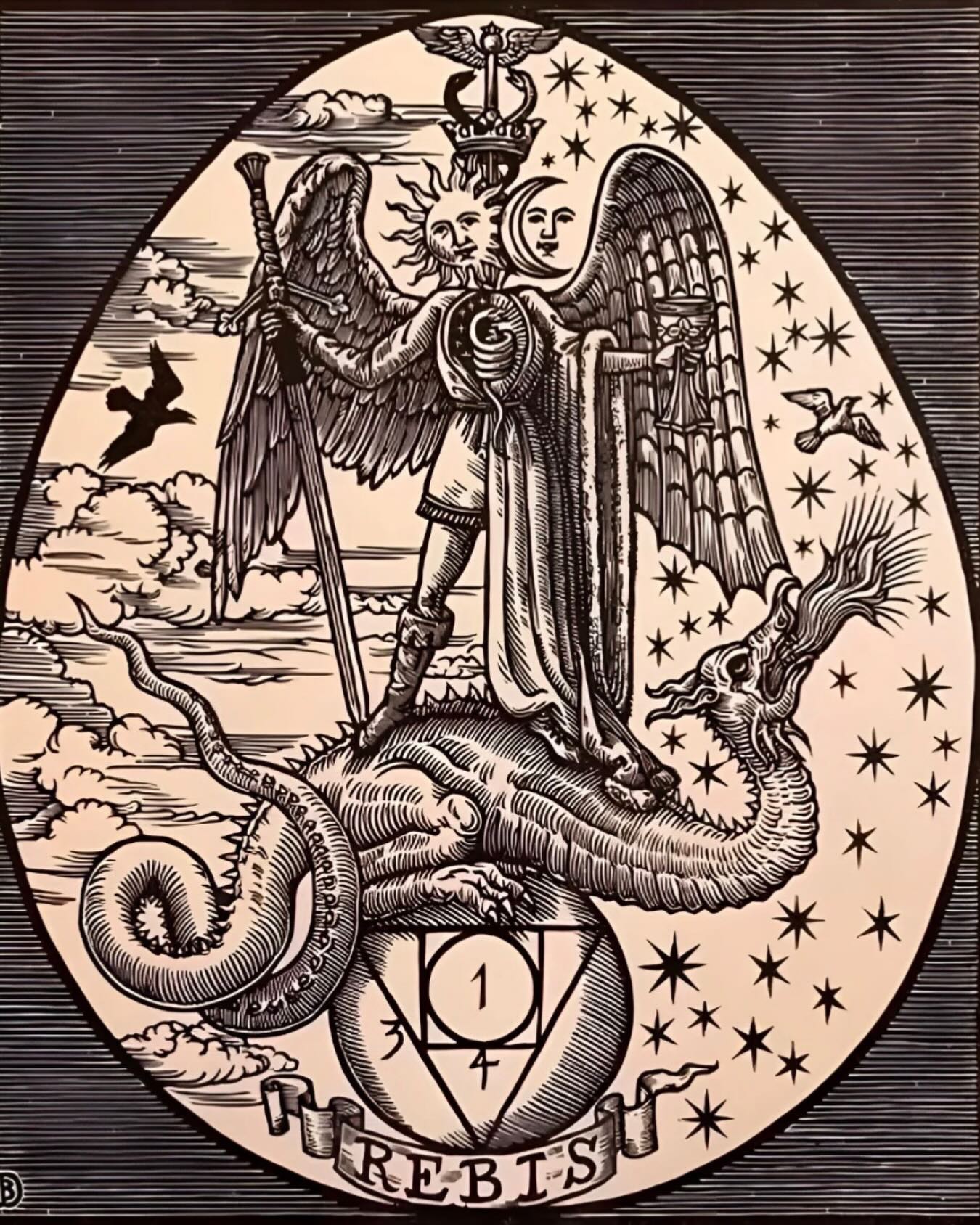
Alongside chivalry, the high degrees incorporate pronounced elements of religious and mystical spirituality. In the Rectified Scottish Rite, this dimension is explicitly Christian: the aim is the reintegration of humankind into God through inner purification, in accordance with the mystical theology of the 18th century. In the Ancient and Accepted Scottish Rite, spirituality is more ecumenical but very much present: the Rose Cross degree (18th) is its most famous example, conveying a message of faith, hope, and charity beneath a Christic allegorical veil (the rose blooming on the cross). Other degrees borrow edifying scenarios from biblical or apocryphal texts—the Prince of Jerusalem (16th) thus brings to life the story of Ezra and the rebuilding of the Temple, symbolizing renewed hope after the ordeal of exile. Biblical inspiration sometimes meets esoteric inspiration: the Knight of the Sun (an alchemical illuminist degree that emerged around 1750) offers teachings steeped in the vitalist ideas of Paracelsus, with a lodge tableau inspired by Basil Valentine’s Azoth. This syncretism is typical of Scottish Masonry: it readily incorporates elements of Hermeticism, Kabbalah, and alchemy into its rituals. Thus, references to alchemical symbols (sulfur, mercury, and salt), the science of numbers and sacred letters, and astrological arcana appear in certain degrees—all elements foreign to the blue degrees but valued during the Enlightenment in initiatory circles.
From a philosophical and moral perspective, the higher degrees deepen the Freemason’s ethical reflection and adapt it to the challenges of the era. Born in the midst of the Age of Enlightenment, they incorporate the ideals of moral progress and intellectual emancipation characteristic of this movement. Degrees such as Grand Scottish Knight of Saint Andrew and Grand Inquisitor Inspector emphasize self-knowledge, the pursuit of truth, and the struggle against ignorance and fanaticism. Others, such as Sovereign Prince Rose Croix, teach universal tolerance and fraternity transcending dogma. Overall, Scottish Masonry served as a vehicle for disseminating humanist concepts and Enlightenment values within Freemasonry (freedom of conscience, the perfectibility of humanity, and the primacy of reason enlightened by faith or wisdom). This coexists with the more occult aspect: thus, many higher degrees display a delicate balance between rationalism and occultism, reflecting the duality of 18th-century culture. The example of the Ancient and Accepted Scottish Rite is telling: it succeeded in integrating both the Hermetic tradition and the rationalist ideal, as evidenced by the succession of influences from the 12th, 18th, and 30th degrees already mentioned.
Finally, it is worth highlighting the internal initiatory dimension of the higher Scottish degrees. The higher one rises in the hierarchy of degrees, the more profound the teaching is presented as being, potentially accessible to a small circle of tested Masons. This gradation is intended less to create an esoteric elite than to provide a step-by-step educational path: each degree is supposed to bring a new “light” to the deserving initiate. In this sense, the higher degrees complete the formation of the Master Mason by broadening his intellectual and spiritual horizons. They invite the Freemason to pursue a continuous quest for self-improvement, symbolized by the ascending scale of degrees (sometimes represented in iconography by Jacob’s ladder or a mysterious ladder with several rungs). It should be noted, however, that this progression is not to be understood in terms of authority or superiority: in regular Freemasonry, a 33rd-degree Mason has no authority over a 3rd-degree Master Mason in a symbolic lodge. Scottish progression is above all inner and symbolic, with each degree being “higher” only because of the knowledge it imparts, not because of the power it delegates.
Doctrinal sources and influences of Scottish Masonry
The multiple inspirations of Scottish Masonry reflect the cultural eclecticism of the 18th century. Four main sources can be distinguished:
-
The medieval chivalric ideal: this is one of the most obvious sources. The Templar myth is omnipresent in the history of the high degrees. The famous Templar legend—according to which Freemasons are the heirs of the Knights Templar, dissolved in the 14th century—appeared as early as the 1750s in Germany and France. It provides a romantic framework for several rites (Strict Observance, Rectified, Kadosh of the R∴É∴A∴A∴), even though it is recognized as historical fiction. Beyond the Templars, Scottish Masonry draws from chivalry a symbolism of the struggle between Good and Evil, the quest for the lost (spiritual) Temple, and the restoration of a just order. Degrees such as Knight of the Sword, Knight of the Eagle, Knight of the Sun, and Knight of Saint Andrew portray the figure of the Masonic knight in various forms—at times a crusader, at times a Templar, at times a mystical knight. This chivalric imagery lends the high degrees prestige and verticality, while also serving as a vehicle for a demanding ethic (courage, loyalty, and a sense of sacrifice).
-
Judeo-Christian and biblical spirituality: many high degrees are rooted in episodes from the Old Testament or refer to Christian tradition. In addition to the examples already mentioned (the Degrees of the East and Rose Croix), one may cite the degree of Noachite (or Prussian Knight, the 21st of the R∴É∴A∴A∴), which evokes the legend of righteous Noah; that of Prince of Lebanon (22^e), which alludes to the cedar-wood workers sent by Hiram; or Scottish Knight of Saint Andrew in the R.E.R., which places the rite under the patronage of an apostle. The spiritual dimension is also expressed in the prayers, invocations, and beatitudes that punctuate high-degree rituals. In explicitly Christian rites (R.E.R., certain chapters of the French Rite), the doctrine resembles a Christian esotericism: the ultimate goal is union with God (the vision of the Holy City in the R.E.R., the recovered word in the Rose Croix signifying the divine Word). Even in the R∴É∴A∴A∴, which is open to all monotheistic religions, one can perceive the influence of Judeo-Christian theology (for example, the frequent use of the ternary 3-5-7 and the allusion to the New Jerusalem). This doctrinal source anchors Scottish Masonry in a moral and theological tradition: the aim is to elevate the Mason’s soul toward universal divine principles, beyond mere chivalric pageantry.
-
Hermetic and occult esotericism: alongside revealed religion, Scottish Rite Masonry draws on the esoteric currents and occult sciences of the Renaissance. As noted, the degree of Knight of the Sun is an example of an alchemical graft onto Freemasonry. Likewise, the degree of Unknown Philosopher (derived from the teachings of Louis-Claude de Saint-Martin, who was known as the “unknown philosopher”) appears in certain variants of Scottish rites, advocating a form of mystical theosophy. Kabbalah, popularized by authors such as Martinez de Pasqually and later Éliphas Lévi, also left its mark: the symbolism of the 10 sephiroth appears in the degree of Knight of the Royal Axe (or Prince of Lebanon) through the 10 columns of the structure, while the 22 Hebrew letters are evoked in the degree of Prince of the Tabernacle,... The higher degrees served as a refuge for esoteric notions that the more rational blue lodge did not incorporate. From its appearance around 1740, the degree of Scottish Master included a mysterious sacred word (Mahaban) and esoteric allegories about the lost word that were absent from the first three degrees. The influence of Rosicrucianism is evident in the degree of the Rose Cross (the name itself comes from the mythical brotherhood of the “Rosicrucians” of the 17th century). Thus, Scottish Rite Masonry brought together various occult currents—alchemists, Neoplatonists, Kabbalists, and mystics—that had existed on the margins of learned society since the Renaissance. This esoteric dimension gives the higher degrees additional symbolic depth, but can also make them appear more “obscure” to the uninitiated, since their references are numerous and sometimes cryptic.
-
Moral philosophy and the Enlightenment: finally, the context of the 18th century imbued Scottish Masonry with a certain rationalism and philosophical ideals. The rituals of the high degrees contain explicit references to the cardinal virtues (prudence, temperance, fortitude, justice), the duties of man and citizen, and even natural rights. The Philosophical Scottish Rite (as its name indicates) emphasized the pursuit of wisdom and the moral perfection of man. In general, the high degrees claim to lead the Mason toward a higher wisdom, a Masonic gnosis encompassing universal morality. The aim is to complete the inner edifice sketched out in the blue lodge: if the Master Mason has received the light, the high initiate must learn to radiate it fully throughout the world. This philosophy of progressive illumination accords with the spirit of the Enlightenment, which valued the idea of the progress of the human spirit. Moreover, the R∴E∴A∴A∴, founded in 1801, would later describe itself as a “progressive” order in which one rises through degrees of knowledge and merit. This may be seen as the influence of post-independence American Freemasonry (Charleston), tinged with democratic ideals: at the 30th degree, Kadosh, emphasis is placed on the struggle against tyranny and obscurantism, echoing the emerging republican values. In short, the philosophy of the high degrees oscillates between a quest for esoteric truth and an ethical commitment to society: the “Masonic Knights” are invited to work both toward their spiritual perfection and the happiness of humanity, embodying the dual injunction to improve oneself in order to improve the world.
Organization of Scottish Masonry and Its Role in Global Freemasonry
Blue Lodges and High Degrees: A Structured Complementarity
In the overall structure of Freemasonry, the high degrees of Scottish Masonry complement, without replacing, the three fundamental degrees. The symbolic lodge (known as the blue lodge) remains the foundation of the Order: it is where profanes are initiated and Master Masons are trained. No one may access the high degrees without first having attained Masonic Mastery in a regular symbolic obedience. Scottish systems therefore present themselves as optional post-Mastery paths, offered to those who wish to pursue the initiatory journey further.

Historically, this relationship sometimes proved delicate. In the 18th century, the high degrees initially developed autonomously, through chapters or councils that were often independent of the symbolic Grand Lodges. This led to jurisdictional conflicts, as the Grand Lodges viewed with suspicion the existence of “Scottish lodges” beyond their control. For example, the Grande Loge de France under the Comte de Clermont had no authority over the Scottish Mother Lodges that conferred higher degrees. To remedy this duality, a compromise solution emerged: entrusting the management of the symbolic degrees to the Grand Lodges and that of the high degrees to specific bodies created for this purpose, while ensuring the complementarity of the two levels. This was the model that prevailed in the 19th century with the establishment of the Supreme Councils of the Ancient and Accepted Scottish Rite.
In a typical Ancient and Accepted Scottish Rite, the blue lodges (1st to 3rd degrees) are placed under the authority of a national Grand Lodge or Grand Orient, while degrees 4 through 33 fall under the jurisdiction of a Supreme Council of the 33rd degree. This Supreme Council is an autonomous body composed of high dignitaries (33rd degree) and headed by a Sovereign Grand Commander. It issues charters to establish high-degree bodies (chapters, aeropagi, consistories) and ensures the orthodoxy of the higher rituals. This layered model has the advantage of clarifying responsibilities: the Grand Lodge deals with “symbolic Masonry,” while the Supreme Council handles “Scottish Masonry” beyond it. The two structures are equal in dignity and collaborate for the good of the Order, often being linked by treaties.
In France, this relationship took various forms depending on the period. In the 19th century, two distinct but complementary grand bodies coexisted: the Grand Orient de France (which mainly practiced the French Rite in symbolic lodges and administered its associated high-degree chapters) and the Grande Loge de France (reconstituted in 1894 under the impetus of the Supreme Council of the A∴A∴S∴R∴, to manage the blue lodges working the Ancient and Accepted Scottish Rite). This is what historian Charles Porset summarized by noting that, at the end of the 19th century, French Freemasonry was structured around two grand bodies and two different rites—one oriented toward the French Rite/Grand Orient, the other toward the Scottish Rite/Grande Loge linked to the Supreme Council. Even today, the French Masonic landscape reflects this plurality: the GODF continues to confer the degrees of its French Rite through a Grand General Chapter, while the AASR is practiced in several grand bodies (GLDF, GLNF, etc.), each with its own high-degree bodies.
In addition to the Supreme Councils, Scottish Freemasonry has its own internal structures depending on the rites: the Rectified Scottish Rite has national Grand Priories to administer the Knights Beneficent of the Holy City, distinct from the Grand Lodges that manage the rectified blue lodges. Similarly, the Rite of Misraïm and Memphis, which has an Egyptian character, has had its own specific Hierophanies. These high-degree bodies are often less visible to the general public, but they constitute the administrative network of High Freemasonry. They organize convents (assemblies) of high-degree members, maintain the consistency of the rituals, and oversee the regular transmission of the degrees. Often led by councils of Sovereign Grand Inspectors or equivalent bodies, they may bring together Masons from various symbolic obediences, thereby creating a cross-cutting link beyond the divisions between blue lodges.
A crucial aspect to understand is that Scottish Freemasonry does not seek to establish a hierarchy of people above Master Masons, but rather a hierarchy of knowledge and symbolic degrees. In practice, a Worshipful Master presiding over a blue lodge remains sovereign in his lodge, even in the presence of visitors who hold high degrees. Conversely, at a high-degree meeting, brothers are regarded according to the highest degree they have attained. Thus, the same individual may wear different “hats” depending on whether they are in a symbolic lodge or a Scottish chapter. Together, these form a coherent structure in which the blue lodge is the indispensable foundation, while the Scottish degrees constitute the superstructure that completes the initiatory work. This complementarity is often symbolized by the image of two columns or two wings of the same building: symbolic Freemasonry on one side and high-degree Freemasonry on the other, working together to build the ideal Temple.
The Scottish Rite in the international context and comparisons
Although the Scottish Rite is highly developed in continental Europe and Latin America, it should be considered in relation to the forms of “high-level Freemasonry” practiced in English-speaking countries. In Great Britain and within the tradition of the United Grand Lodge of England (UGLE), the attitude toward higher degrees was historically different. From the Act of Union of 1813 between the two English Grand Lodges onward, it was declared that “pure and ancient Masonry consists of three degrees and no more, namely those of Entered Apprentice, Fellow Craft and Master Mason, including the Royal Arch.” Thus, the only “extension” officially recognized as an integral part of Freemasonry was the Royal Arch, regarded in England as the culmination of the third degree rather than as a separate higher degree. With the exception of the Royal Arch, the other degrees beyond Master Mason were relegated to the status of Side Degrees, meaning independent, optional orders with no organic connection to the symbolic lodges.
As a result, in the English-speaking world there was no unified and centralized development of the Scottish Rite comparable to that of France. Instead, a range of distinct concordant orders emerged, each administering its own degrees and recruiting from among Master Masons or Royal Arch members. In England, a Freemason can join the Mark Masons (Mark Master Masons), the Order of the Knights Templar (Knights Templar, distinct from the Scottish Kadosh), the Order of the Red Cross of Constantine, the Royal Arch (Royal Arch) already mentioned, the Ancient and Accepted Rite (the local name for the Ancient and Accepted Scottish Rite, reserved for Christians and limited to 33 members at each higher degree, making it quite elitist), the Royal Order of Scotland (the Heredom of Kilwinning, imported from Scotland), or the Allied Masonic Degrees. Each of these systems has its own historical legitimacy and symbols. It is not unusual for an English or American Mason to participate in several of these orders simultaneously, creating a customized path through the higher degrees. This approach differs from the continental concept of the Scottish Rite, in which a brother often follows primarily a single complete rite.
However, the Ancient and Accepted Scottish Rite also spread to Anglo-Saxon countries, particularly the United States, where it became established at the beginning of the 19th century. In the USA, the Scottish Rite is now one of the two major high-degree systems, the other being the York Rite (which brings together the Royal Arch, the Cryptic Masons, and the Knights Templar, along with a few related degrees, into a coherent path). The American Scottish Rite is divided into two jurisdictions (Northern and Southern) and initiated hundreds of thousands of members during the 20th century, helping to popularize Scottish Freemasonry across the Atlantic. Nevertheless, one major difference is that these high degrees remain conditional on being a Master in a blue lodge under a State Grand Lodge. Thus, even in the United States, where the Scottish Rite is powerful, it does not claim to be self-sufficient: it is intended for Masons who are already “Blue Lodge Masons” and works in harmony with the Grand Lodges.
The particular case of the Scandinavian countries, with the Swedish Rite (or Rite of Sweden, created in the 18th century), may also be mentioned. This rite, practiced in the Grand Lodges of Sweden, Norway, and Denmark, as well as in a few lodges in Germany, is a system of 10 degrees (or 11, counting an administrative degree) that is purely Christian in character and directly inspired by the Strict Observance Templar Rite. In spirit, it is very close to the Rectified Scottish Rite, but is structurally integrated into the obedience (a Swedish Freemason normally progresses from the 1st to the 10th degree within his Grand Lodge, without a separate organization). The Swedish Rite demonstrates that forms of High Masonry exist outside the Latin sphere that share similarities with Scottish Freemasonry—notably its chivalric and mystical elitism—while retaining their autonomy.
Thus, since its emergence more than two and a half centuries ago, Scottish Freemasonry has continued to intrigue, inspire passion, and evolve. Born from innovations sometimes described as “heterodox” by the Grand Lodges of the time, it succeeded in forming lasting rites that are now an integral part of the universal Masonic edifice. Whether through the lens of the Ancient and Accepted Scottish Rite—an initiatory encyclopedia in 33 degrees—or through the more intimate, chivalric, and mystical path of the Rectified Scottish Rite, or again through the study of the countless grades that are now historical, the Freemason discovers in High Masonry a vast field for symbolic exploration. Scottish Freemasonry has brought Freemasonry a profusion of myths, elaborate rituals, sumptuous jewels and regalia, as well as metaphysical reflections and esoteric teachings that enrich the initiatory journey.