



Cornelius Agrippa, his full name Henri-Cornelius Agrippa of Nettesheim was one of the figures who left an indelible mark on esotericism and occultism. Born in Germany in the 15th century, he spent most of his life in France, where he taught his knowledge at universities and in scholarly circles. An introduction.
A Youth Immersed in Knowledge
Heinrich Cornelius Agrippa was born in 1486 in Cologne, a city that was, at the time, a true cultural and intellectual crossroads of the Holy Roman Empire. This Rhenish metropolis, rich in libraries and universities, provided Agrippa with fertile ground for his early education. From a very young age, he showed a keen interest in classical disciplines, immersing himself in the writings of Greece and Rome, which formed the foundation of his humanist education.
At the age of fifteen, Agrippa entered the University of Cologne, an institution dominated by scholastic teachings but also influenced by the first winds of humanism beginning to blow across Europe. There, he immersed himself in the study of law, theology, and philosophy, while also taking an interest in the occult sciences, which were gaining popularity. It was during these university years that he began to seriously explore Hermeticism, a school of thought that sought to reconcile mystical knowledge with Christian doctrines, drawing on figures such as Hermes Trismegistus.
Agrippa was a polyglot who spoke German, French, Italian, Spanish, English, Latin, Greek, and Hebrew. His skills extended across an impressive range of disciplines, including astrology, magic, classical literature, medicine, law, theology, philosophy, military art, and poliorcetics (the art and techniques of besieging cities). He was also an expert in explosives, Christian Kabbalah, exegesis (the in-depth study of texts), diplomacy, cryptography, espionage, and pedagogy.
A distinguished career among the powerful
After completing his studies at the University of Cologne, Agrippa embarked on a military career, serving in the army of Emperor Maximilian I. This allowed him to travel throughout Europe, where he continued studying and gathering various forms of esoteric and philosophical knowledge. His ability to move between the military and academic worlds from a young age demonstrates his versatility and adaptability. He thus wrote one of his first works, On the Nobility and Preeminence of the Feminine Sex, which formalizes the full divine power of sacred femininity.
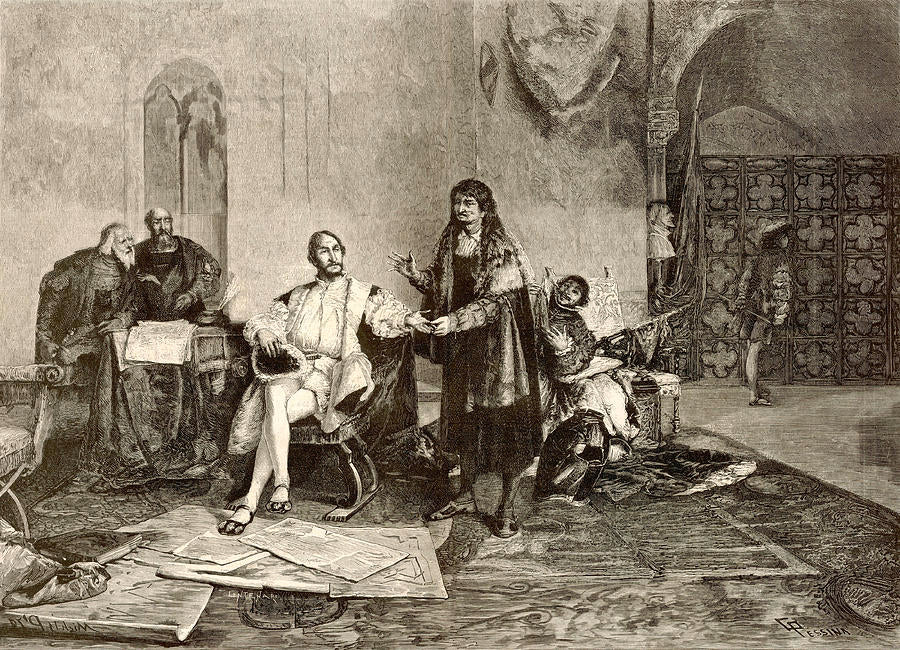
Agrippa subsequently entered the service of several European noble courts. He was notably summoned to Metz, where he served as an adviser and lecturer in occult sciences and philosophy. His diplomatic skills also earned him special assignments, such as being sent by Margaret of Austria, the regent of the Netherlands, to help negotiate political and intellectual matters.
In addition to his military and diplomatic roles, Agrippa pursued a career as a teacher and researcher. From 1509 onward, he held academic positions at the University of Dole in France (founded by a papal bull issued by Martin V, it was primarily focused on teaching law and enjoyed a certain reputation for the quality of its legal instruction). He taught theology despite the controversies that some of his ideas aroused among his peers and ecclesiastical authorities. His teaching in Dole was interrupted by opposition from local theologians, and Agrippa's teachings were deemed controversial, forcing him to leave the city.
Indeed, his intellectual approach, which sought to reconcile various forms of esoteric knowledge with Christian teachings, and which included in particular theOccultism, the Kabbalah, magic, and astrology were often viewed with suspicion by the Catholic Church because they could be interpreted as forms of defiance against the Christian worldview.
As an aside, Agrippa entered the University of Dole in June 1509 and was expelled in March 1509. This is not a typo, but that period was governed by the Easter calendar rather than the Gregorian calendar used today, meaning that the year began at Easter.
Avant-garde and highly critical works
De Occulta Philosophia
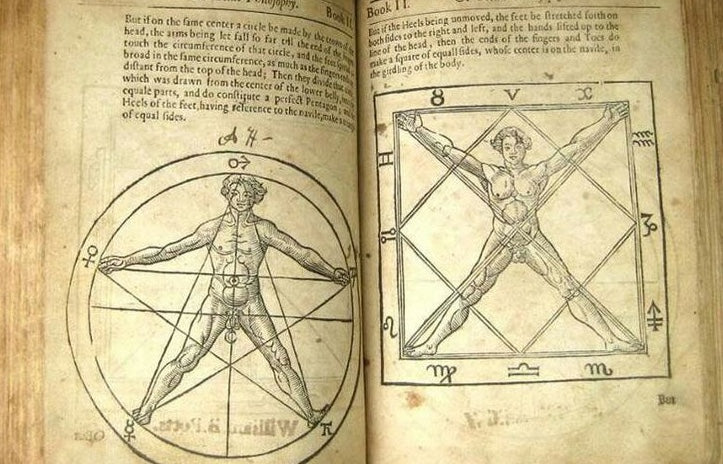
De Occulta Philosophia Libri Tres, often abbreviated as De Occulta Philosophia, is Cornelius Agrippa’s most famous work. Comprising three books, this vast encyclopedia of magic and occultism was written at the beginning of the 16th century but published in its complete form only in 1533. It is structured as follows:
-
Natural Magic: this book deals with magic that interacts with the natural world, exploring the properties of plants, stones, animals, and other natural elements. Agrippa discusses how natural forces can be used to produce magical effects through symbols and correspondences.
-
Celestial Magic: the second book focuses on astrology and the influence of celestial bodies on the earthly world. Agrippa examines how astrological configurations influence individuals and how these forces can be manipulated through talismanic magic.
-
Ceremonial Magic: the final book addresses the highest form of magic, involving rituals, invocations, and the manipulation of spiritual and divine forces, particularly through the use of sacred names and angelic hierarchies.
The work seeks to establish a synthesis between magical practice and Christian theology, arguing that true magic, founded on wisdom and an understanding of the laws of nature, is not only lawful but also a manifestation of divine piety. De Occulta Philosophia had a considerable influence on the development of Western esotericism, inspiring numerous occult thinkers and practitioners in the following centuries.
It should be noted, however, that a few years later he added a note that partially called his own magical certainties into question (particularly certain occult figures such as Hermes Trismegistus or demonology, for example) while confirming that natural magic is indeed real.
De nobilitate et praecellentia foeminei sexus
Published in 1529, De nobilitate et praecellentia foeminei sexus (On the Nobility and Preeminence of the Female Sex) is a work in which Heinrich Cornelius Agrippa develops a groundbreaking argument concerning the value and role of women in society. This treatise can be considered one of the first feminist writings in modern history.
Agrippa defends the idea that women are not inferior to men but, on the contrary, possess intellectual and moral qualities that might even make them superior. He uses a variety of cultural, historical, and philosophical references to support his views, citing examples of famous women from history, mythological figures, and female saints to show their ability to equal or surpass men in many fields.
The work challenges the gender stereotypes of the time and critiques the social and religious foundations that kept women in a subordinate position. Agrippa argues for a reevaluation of traditional gender roles, proposing a worldview in which women would be free to exercise all virtues and intellectual abilities on an equal footing with men.
De incertitudine et vanitate scientiarum
De incertitudine et vanitate scientiarum (On the Uncertainty and Vanity of the Sciences), published in 1530, is another major work by Agrippa in which he expresses his growing skepticism toward the knowledge and academic disciplines of his time (which, at the time, were largely controlled by the Catholic Church).
In this book, Agrippa examines and critiques the various branches of science, medicine, law, philosophy, and even theology. He argues that much of what is taught as absolute truth in academic institutions is in fact uncertain, prone to error, or fundamentally futile. The text is structured as a series of chapters, each devoted to criticizing a specific discipline and revealing the limitations and contradictions of established knowledge.
Agrippa uses a blend of classical scholarship, philosophical analysis, and irony to demonstrate that supposed knowledge often merely conceals ignorance or serves the interests of those in power. He advocates a humbler, more inquisitive approach to learning, suggesting that acknowledging our ignorance is the first step toward true wisdom.
The Celestial Alphabet or Agrippa's Cipher
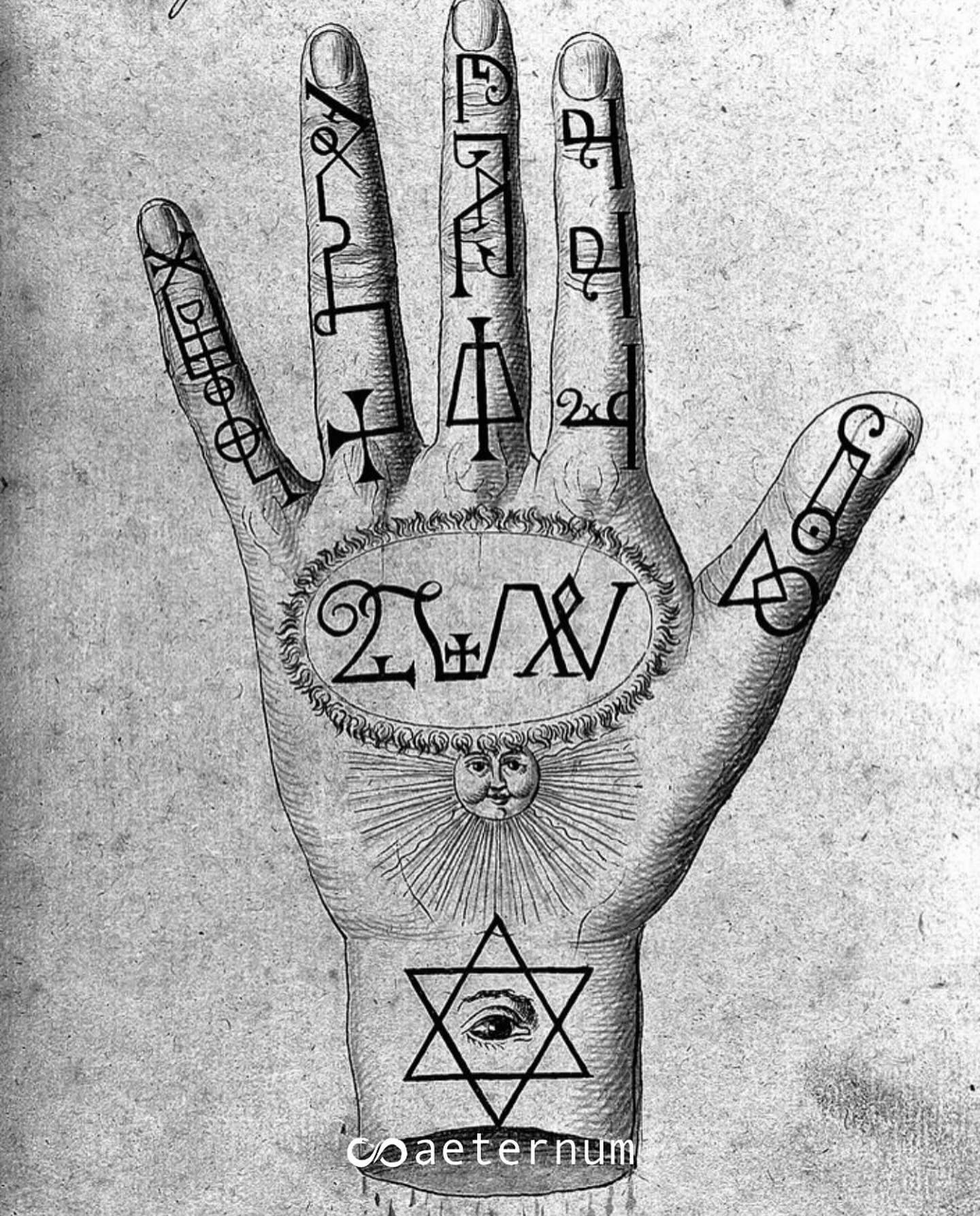
In De Occulta Philosophia, Agrippa explores the concept of sacred languages such as Hebrew and discusses the various ways in which words and names can be used to influence spiritual and physical realities. Thus, the Celestial Alphabet (or Celestial) consists of characters based on the shapes of constellations, which can be used to transcribe texts in angelic languages or for magical inscriptions. Although it is presented in this work, there is no formal evidence that Agrippa was its creator.
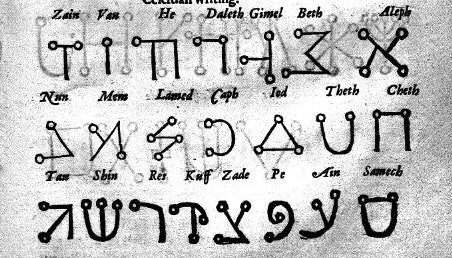
This alphabet consists of 22 characters (without vowels) and is presented as a means of communicating with divine beings such as angels.
Agrippa's planetary squares
Agrippa's magic squares are among the most intriguing aspects of his writings. This will certainly bring back memories of school, but these squares were actually used long before Cornelius Agrippa was born; he adapted and popularized them in the occult sciences.
These squares are arrays of numbers arranged so that the sum of each column, row, and main diagonal is the same, creating a numerical harmony considered magical or mystical.
He assigns each magic square to one of the seven classical planets of astrology, giving them specific attributes and powers according to the associated planet:
| Saturn | 3x3 square, magic total of 15 |
| Jupiter | 4x4 square, magic total of 34 |
| Mars | 5x5 square, magic total of 65 |
| Sun | 6x6 square, magic total of 111 |
| Venus | 7x7 square, magic total of 175 |
| Mercury | 8x8 square, magic total of 260 |
| Moon | 9x9 square, magic total of 369 |
Magic squares are engraved on talismans or amulets, with each square invoking the corresponding astrological influences, such as protection, healing, or the enhancement of certain abilities or circumstances. The idea is that the square, through its order and numerical perfection, attracts and channels the celestial energies of the planet with which it is associated.
Agrippa and other occultists of the time saw magic squares as a manifestation of divine order and the structure of the universe. They symbolize the harmony and balance of cosmic forces.
You now know everything about this important figure in esotericism and occultism, whose influence still resonates today.