Sage smoke has traveled through the centuries, carried by hands seeking to cleanse the air, soothe the atmosphere, or prepare a space for an important moment. Today, this small roll of dried herbs still holds a special place in purification rituals. Its use is not based on a passing trend: it is part of a continuing tradition shaped by memory, simple gestures, and a genuine effect on the atmosphere of a place.


1. Why use sage for purification?

White sage (Salvia apiana) has long been recognized in several traditions. Indigenous peoples of the Americas used it in their fumigation ceremonies, but it can also be found in other cultural contexts, some more distant than others. This plant releases smoke with a dry, powerful fragrance that rises in slow wisps. It seems to “cleanse” the space, not by perfuming it like incense, but by removing a kind of invisible veil. Some modern studies have highlighted an effect on air quality linked to the release of compounds with antiseptic properties. This does not replace ventilation, but it contributes to a sense of clarity in the room. It is no coincidence that sage is used during times of transition, after an argument, when moving house, or to accompany an inner transformation.
2. How do you purify a place with sage?
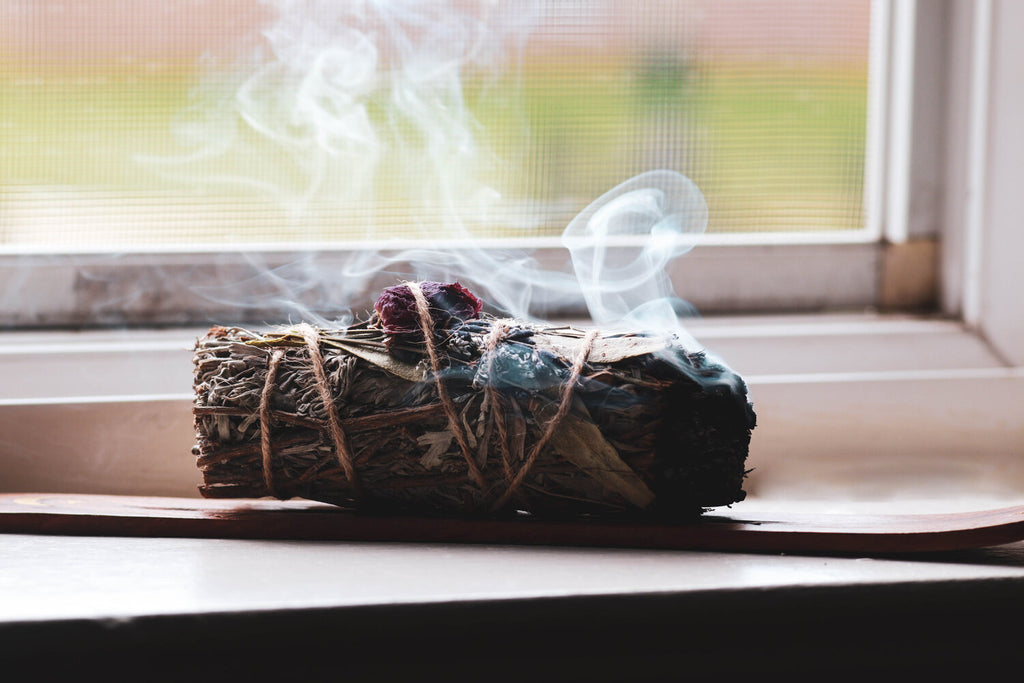
First and foremost, the gesture and the intention behind it should both be clear. There is no point in burning a sage stick in a hurry. Take the time to open the windows so that the air can circulate freely. This allows the smoke to disperse without saturating the space and, above all, lets out whatever needs to leave. It is best to prepare a small bowl or container made of terracotta, metal, or stone, stable enough to hold the stick while it is burning or between passes. This support prevents burns on furniture or fabrics and allows you to set the stick down without extinguishing it abruptly.
Light the bundle with a match. The flame may flare for a few seconds, but it should not last. Gently blow on it until only a glowing ember remains. This ember produces the thick, distinctive smoke with its herbal fragrance. White sage can generate a considerable amount of smoke: there is no need to be alarmed, but it should not be overused either. A slow, measured pass is enough to achieve the desired effect. Smoke that becomes too dense in an enclosed space can be suffocating, especially if the windows are not open.
It is recommended that you keep animals away during fumigation. Their sense of smell is much more developed, and sage smoke can bother them, even causing them to flee or become unnecessarily stressed. This does not mean banishing them from the space, but rather giving them a quiet place while the ritual takes place. You can hold the stick horizontally, a few centimeters above the container, and move slowly through each room. Let the smoke follow the walls, enter the corners, and drift around objects. Every space has areas where energy accumulates, often in corners or near openings. You can linger wherever the atmosphere feels stagnant. The important thing is to remain attentive to what you feel. The gesture does not need to be spectacular or solemn. It should be meaningful.
You do not have to remain silent, but a certain calm makes the ritual feel more authentic. You can speak softly, recite a phrase you like, thank the space, or ask for it to be lightened. The effect does not depend on a set formula, but on your sincerity. Once the fumigation is complete, place the stick in its container and check that the ember goes out on its own. If it continues to glow, smother it in sand or gently press the tip into the soil. Never leave the burning stick unattended. You can always relight it later, during another purification ritual.
3. What happens after fumigation?
Once you have moved through the room, place the still-smoking stick in its holder and let it go out gently. You may feel an immediate sense of calm, but sometimes the change is subtler. The air seems clearer, the silence more settled. Some people sleep better, others feel lighter, while others find that their thoughts become more focused. This is not merely a matter of suggestion, but reflects an ancient connection between plants, human memory, and ritualized gestures. Using sage means continuing a practice passed down through generations and reclaiming a simple power: the ability to influence your living space with respect and discernment.