
































































































|
IN SUMMARY...
1. The Lupercalia and the Festa Candelarum |
Here in Brittany, everything related to the pancake naturally holds a very special importance. That is why, after exploring the origins of Epiphany, we naturally looked into the (pagan, then Christian) origins of Candlemas, which follows the Imbolc sabbat. Presentation.
1. The Lupercalia and the Festa Candelarum
To trace the origins of Candlemas, one must dive into Roman traditions marked by purification rites and fertility celebrations, responding to the natural cycle of the seasons. Among these traditions, the Lupercalia and the Festa Candelarum are particularly important.
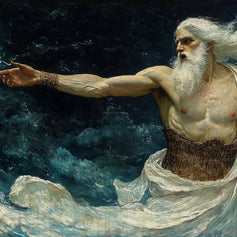
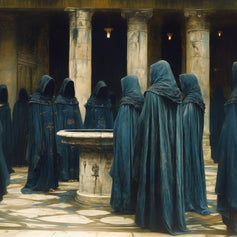
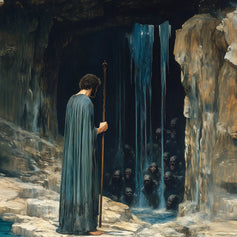
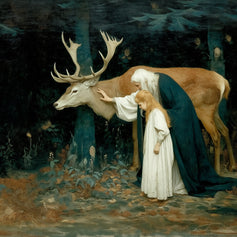
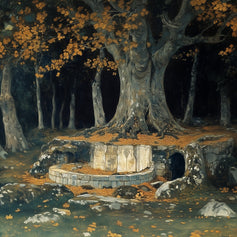
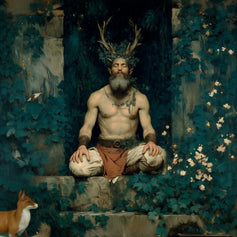
The Lupercalia, held in mid-February, was a Roman festival honoring Faunus, the god of herds and forests, also known as Pan in Greek mythology. This celebration centered around Lupercus (an aspect of Faunus), protector of herds and shepherds. The priests, called Luperci, took part in rituals in a sacred cave, the place where the she-wolf is said to have nursed Romulus and Remus, the mythical founders of Rome.

Source: Herodote
A brief aside for better understanding: according to Roman mythology, Romulus and Remus were the sons of the god Mars and Rhea Silvia, a vestal virgin who had taken a vow of chastity. At their birth, their uncle Amulius, usurper of the throne of Alba Longa, ordered them to be abandoned in the Tiber to eliminate any threat to his power.
The river's waters are said to have carried the twins to the foot of the Palatine Hill, where a she-wolf, drawn by their cries, found and took them in. She fed them with her milk and protected them in a cave, the Lupercal. Later, a shepherd named Faustulus discovered the children and raised them as his own sons.
Romulus, after killing his brother Remus in a quarrel, became the first king of the city he named Rome. The Lupercal cave, where the she-wolf cared for the twins, thus became a sacred place.
Alongside the Lupercalia, the Festa Candelarum highlighted another symbolic dimension, that of light. Dedicated to Proserpina, the goddess of rebirth and spring, and to Ceres, goddess of agriculture, this event celebrated the return of light in the seasonal cycle. The Romans, in a metaphorical gesture, organized torchlight processions that illuminated streets and countryside. These torches symbolized the hope for a fertile season, the end of winter’s darkness, and the arrival of spring renewal.
2. The Celtic influences of Imbolc
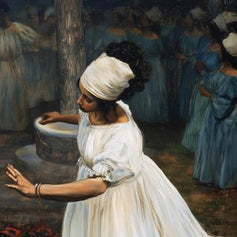
Imbolc, celebrated around February 1st, marked a pivotal moment of the year for the Celts, the transition between winter and spring. This festival was dedicated to the goddess Brigid, a tutelary figure associated with light, purification, and fertility. Brigid, revered as a guardian of homes and springs, also embodied poetic inspiration and artisanal skills.

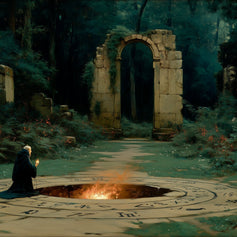
Imbolc celebrations included land purification rituals, considered essential to ensure the fertility of fields and herds. These practices, often accompanied by torchlight processions, aimed to invoke light and dispel winter darkness. Fires and flames, omnipresent in the ceremonies, were seen as tangible manifestations of renewal and Brigid’s power. Domestic hearths were purified and renewed in honor of the goddess, thus emphasizing the interconnection between nature’s cycles and daily life cycles.
To learn more, you can consult our article dedicated to Imbolc.
3. The Christianization of pagan festivals
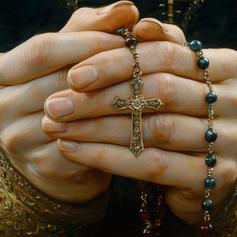
The transformation of pagan festivals into Christian celebrations was a strategic process led by the Church to integrate populations still attached to their beliefs. Among these transformations, Candlemas played a representative role.
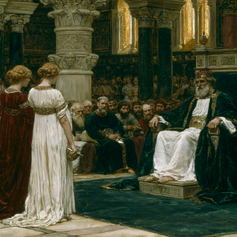
The institutionalization of the Presentation of Jesus at the Temple on February 2nd was one of the ways to "assimilate" pagan traditions while anchoring them in a biblical narrative. This event, recounted in the Gospel of Luke, symbolizes Christ’s entry into the community of believers and the divine light illuminating the world. By adopting the theme of light, so important in preexisting rituals, the Church was able to create continuity with the old celebrations. Candlelight processions, once intended to invoke protection and fertility, were thus reinterpreted as a celebration of Christ’s light. These luminous processions crossing villages and churches helped maintain a tangible link with popular practices while reinforcing their Christian spiritual dimension.

Source: Vatican News
Another aspect of this Christianization is found in the blessing of candles, a tradition directly inspired by ancient uses related to torches and flames. These blessed candles, kept in homes, were seen as symbols of protection against trials and evil forces. This act of sanctification allowed the Church to perpetuate the use of candles while integrating it into a theology centered on Christ, the light of the world. It is also this tradition that gave the name to the Candlemas festival (from the Latin word candelarum, meaning "candles").
4. The symbolism of pancakes
The tradition of pancakes, now inseparable from Candlemas, draws its origin from ancient agricultural and ritual practices. The circular shape and golden color of pancakes recall the solar disc, a universal symbol of light and renewal. In these cultures, pancakes represented a tribute to the sun, seen as the source of life and fertility.

Beyond their symbolic aspect, making pancakes also took part in rituals aimed at ensuring prosperity. Flour, milk, and eggs were considered sacred gifts from the earth. Transforming them into circular dishes was both a practical and symbolic offering intended to invoke the abundance of the coming harvests. Although associated in France with Brittany, the pancake actually has equivalents worldwide (the tagenites among the Greeks, the alita dolcia among the Romans, the chapati among the Indians, etc).
A historical anecdote tells that a pope helped strengthen the link between pancakes and Candlemas. Although exact details vary, mention is made of Pope Gelasius I (492-496), who is said to have distributed cakes to pilgrims arriving in Rome to celebrate the Presentation of Jesus at the Temple.