






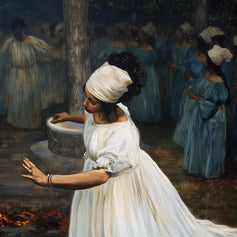

















































































































Candomblé is an Afro-Brazilian religion that finds its origins in the spiritual traditions of African peoples brought to Brazil during the period of slavery. This syncretic religious system combines elements from several African cultures, mainly those of the Yorubas, Bantus, and Fons, and also incorporates elements of Catholicism and other local beliefs. The term "Candomblé" itself derives from the Bantu word kandombele, which means "dancing with the spirits," as dance and music hold a very important place in it.
1. At the origins of Candomblé
1.1. A birth in Africa
The Yorubas, Bantus, and Fons, mainly from regions corresponding today to Nigeria, Benin, Togo, and Angola, brought with them a rich diversity of spiritual traditions. The Yorubas, for example, are famous for their complex religious system centered on the Orixás, deities personifying the forces of nature and ancestors. The Bantus, originating from Angola and Congo, introduced practices related to ancestral spirits and nature, while the Fons contributed with their beliefs about the Voduns, spiritual entities similar to the Orixás.
1.2. Then a forced adaptation
The transatlantic slave trade, which lasted from the 16th to the 19th century, brought millions of Africans to Brazil, which was then a Portuguese colony. Forcibly removed from their homelands, these slaves were spread across the Brazilian territory, notably in the regions of Bahia, Rio de Janeiro, and Pernambuco. Despite the brutal conditions of slavery and the fragmentation of their communities, Africans preserved and transmitted their religious beliefs, languages, and cultural traditions. These spiritual practices, initially distinct, began to merge due to the mixing of populations and the need to adapt to a new social and religious context.
This process of syncretism gave rise to unique practices, where the Orixás were often associated with Catholic saints to mask African practices under a Christian facade. For example, Oxalá, the supreme god of certain African pantheons, was associated with Jesus Christ, while Iemanjá, the goddess of the sea, was identified with the Virgin Mary.
The repression of African religions by colonial authorities and the Catholic Church was a constant throughout the colonial period and even after Brazil's independence. Candomblé practices were often criminalized, and its followers persecuted, imprisoned, or forced underground. The terreiros, places of worship for Candomblé, often operated in secret to avoid reprisals. Despite this, these communities managed to preserve and transmit their traditions, creating networks of solidarity and cultural resistance.
1.3. Official recognition

It was only in the 20th century that Candomblé began to be recognized and respected as a legitimate part of Brazilian cultural heritage. From the 1930s, Brazilian intellectuals and artists started to value Afro-Brazilian cultures, contributing to a revival of interest in Candomblé. The end of the colonial period and the rise of civil rights movements also played a crucial role in this recognition. Today, Candomblé is not only a respected religion but also a symbol of resistance and identity for many Afro-Brazilians. The terreiros have become important cultural centers, hosting religious ceremonies, festivals, and educational events.
2. The beliefs and practices of Candomblé
Candomblé is based on a rich and complex cosmology, centered on the belief in deities called Orixás and on the concept of Axé, a sacred energy essential to the balance of the cosmos. These fundamental principles guide the spiritual life of followers, their rituals, and their interactions with the spiritual world.
2.1. LThe Orixás
The Orixás are divine entities representing the forces of nature, human qualities, and ancestors. Each Orixá is associated with natural elements (such as rivers, mountains, fire), colors, animals, and specific days of the week. Believers worship the Orixás to obtain their protection, guidance, and blessing in various aspects of daily life.

Ceremonies honoring the Orixás are marked by offerings (seeds, food, drinks, symbolic objects), specific dances, and songs. Each Orixá has its preferences regarding offerings and music. The ritual dances, often accompanied by percussion, are expressions of devotion and connection with the deities. The songs tell the stories of the Orixás, praising their qualities and exploits.
| Obatalá | The father of the Orixás, associated with creation and purity. He is often depicted in white and symbolizes wisdom, peace, and serenity. |
| Iemanjá | Goddess of the sea and salt waters, considered the mother of the Orixás. She protects fishermen and symbolizes motherhood and fertility. |
| Ogum | God of war, iron, and metal tools. He is the patron of warriors and artisans, representing strength and courage. |
| Xangô | God of justice, thunder, and lightning. He is associated with fire and power and is considered a fair and impartial judge. |
| Oxum | Goddess of love, beauty, and fresh waters. She symbolizes sensuality, wealth, and grace. |
| Oxóssi | God of hunting and abundance. He is often depicted with a bow and arrows and is linked to the forest and nature. |
| Obaluaiê | Orixá of diseases and healing. He is associated with the earth and ancestors and is revered for his healing powers. |
| Iansã or Oyá | Goddess of winds, storms, and lightning. She is a powerful warrior and is often associated with the dead and transformation. |
| Nanã | Goddess of mud and stagnant waters, she is associated with wisdom and antiquity. She is considered a benevolent but strict motherly figure. |
| Exu | Messenger of the Orixás and guardian of paths. Exu is a trickster, associated with crossroads and communication. He is also linked to protection and opening new paths. |
| Oxumaré | Orixá of movement and transformations, often represented by a rainbow. He is associated with life cycles and changes. |
| Logun Edé | Young and handsome Orixá, son of Oxum and Oxóssi. He embodies beauty, the art of fishing, and hunting. |
| Ibeji | The divine twins, symbols of childhood and duality. They are associated with joy, protection of children, and luck. |
| Obá | Goddess of war and fertility, often depicted with a gesture of sacrifice. She is a figure of devotion and loyalty. |
| Ewá | Goddess of beauty and divination, often associated with waters and changing colors. She symbolizes mystery and spirituality. |
| Ossain | Orixá of medicinal plants and nature, protector of the secrets of medicine and herbal magic. |
| Orunmila or Ifá | Orixá of divination and wisdom. He is the holder of oracle knowledge and is revered for his enlightened advice. |
2.2. The Axé Energy
Axé is a fundamental sacred energy in Candomblé and other Afro-Brazilian religions. It is considered an omnipresent life force that permeates everything that exists, from living beings to inanimate objects, as well as natural elements. This divine energy, originating from the Orixás, is essential for maintaining balance, health, prosperity, and protection, both individually and collectively. Axé flows through the cosmos and individuals, influencing the quality of life and the harmony of human and spiritual relationships.
In Candomblé, Axé can be accumulated, transmitted, and strengthened through various ritual practices. Ceremonies, offerings, sacrifices, chants, and dances are all ways to generate and cultivate this energy. Places of worship, called terreiros, sacred objects like bead necklaces and statues of the Orixás, as well as initiated individuals, are all considered reservoirs of Axé. Purification rituals, such as ritual baths, play a crucial role in removing negative influences, thereby helping to maintain a strong and positive Axé.
Axé is also linked to purification and protection. A strong Axé is necessary to guard against illness, misfortune, and negative spiritual influences. The priests and priestesses, the Babalorixás and Iyalorixás, are responsible for managing and distributing this energy within the community. They are trained to channel Axé effectively, thus ensuring collective and individual well-being. Initiates learn to handle this energy through their training and devotional practices.
2.4. Candomblé Celebrations
2.4.1. Iemanjá Festival (February 2)

Mainly celebrated on February 2nd, the festival of Iemanjá is one of the most iconic celebrations of Candomblé. Iemanjá, the goddess of the sea and saltwater, is revered as the mother of the Orixás and a powerful protector. On this occasion, followers usually gather on the beaches to offer gifts, such as flowers, jewelry, and perfumes, which they place in the sea. These offerings are made to thank Iemanjá, ask for her protection, and express wishes for the coming year. The festival is marked by dances, songs, and rituals, often followed by moments of community celebration. It is a significant event, attracting not only Candomblé practitioners but also many curious visitors and tourists.
2.4.2. Ogum Festival (April 23)

Ogum, god of war, iron, and metal tools, is celebrated on April 23, which corresponds to the feast of Saint George in the Catholic calendar. Ogum is revered for his strength and courage, and festivities in his honor include animal sacrifices, food offerings, and warrior dances. The faithful invoke Ogum for protection, courage, and success in their endeavors. The festival is especially popular among those who work with iron tools, such as blacksmiths, mechanics, and soldiers.
2.4.3. Exu Festival (June 13)
Exu is the Orixá of paths, communication, and transitions. His festival is often celebrated on June 13, coinciding with the feast of Saint Anthony. Exu is a complex and ambivalent figure, both messenger of the Orixás and guardian of crossroads. Celebrations in his honor include offerings of alcohol, tobacco, and spicy food. The rituals can be livelier and less formal than those for other Orixás, reflecting Exu's playful and dynamic nature. This festival is an opportunity for followers to ask for protection and the opening of new paths in their lives.
2.4.4. Xangô Festival (June 29)
Xangô is the Orixá of justice, fire, and lightning. Xangô's festival is celebrated around June 29, coinciding with the Catholic feast of Saint Peter, with whom Xangô is often associated. The celebrations include food offerings, dances, and songs dedicated to Xangô, as well as theatrical performances of his legendary exploits. Followers seek his blessing for matters of justice and truth. The rituals of this festival also highlight Xangô's power and authority, reflecting his role as judge and protector.
2.4.5. Oxum Festival (December 8)
Oxum is the goddess of love, beauty, and fresh waters. Her festival is celebrated on December 8, in association with the Immaculate Conception of the Virgin Mary. Rituals include offerings of honey, fruit, and jewelry, symbolizing the wealth and sweetness associated with Oxum. Women, in particular, actively participate in the celebrations, seeking Oxum's blessing for love, fertility, and prosperity. The dances and songs of the festival express the grace and beauty characteristic of this Orixá.
2.4.6. Oxalá Festival (December 25)

Oxalá is considered the father of the Orixás and is associated with the creation of the world and humanity. The festival in his honor, often celebrated on December 25, symbolically coincides with Christmas, highlighting the syncretism between Candomblé and Catholicism. The festivities in honor of Oxalá are marked by the color white, a symbol of purity and peace. The faithful dress in white, offer sacrifices and food offerings, and participate in purification rituals. The festival is also an occasion to reflect on the values of peace and harmony, seeking to promote these qualities in daily life.
3. The organization of Candomblé
3.1. The Babalorixá and the Iyalorixá

Candomblé is structured around specific roles, with a well-defined hierarchy. The Babalorixá (male priests) and Iyalorixá (female priestesses) are the spiritual leaders of the terreiros. They possess deep knowledge of rituals, myths, and religious practices. They guide ceremonies, interpret divine signs, and advise the faithful.
3.2. The Filhos de Santo
The initiates, called filhos de santo or iabás, also play a crucial role in rituals and ceremonies. They go through an initiation process that includes intensive training and rites of passage to establish a personal connection with a protective Orixá.
3.3. The Ogãs
The Ogãs are men designated to fulfill various assistance roles in ceremonies and the daily management of the terreiro. They are not possessed by the Orixás and do not participate in ritual possession dances. There are three types depending on the assigned roles.
| Jeji Ogã | In charge of playing sacred musical instruments, such as atabaque drums, during ceremonies. Music is an essential component of rituals, as it accompanies chants and guides the movements of the initiates. |
| Axogun | Responsible for ritual sacrifices. This role requires in-depth knowledge of sacrificial rites, appropriate animals, and sacred techniques to offer them to the Orixás. |
| Alabê | Leader of the musicians, he supervises the correct execution of rhythms and chants specific to each Orixá. |
3.4. The Ekedes
The Ekedes are women who play a supportive and service role during ceremonies. Like the Ogãs, they are not possessed by the Orixás. They hold an important place in the organization of rituals and in caring for initiates possessed by the Orixás. Their responsibilities may include caring for possessed initiates, preparing offerings, and assisting the Babalorixás and Iyalorixás.
3.4. The Abiãs
The Abiãs are members of the Candomblé community who have not yet been initiated as Filhos de Santo but actively participate in the activities and ceremonies of the terreiro. The term "Abiã" comes from Yoruba and means "those who are under care" or "the novices." They represent the first step in formal commitment within the Candomblé religion and constitute an important group for the continuation of religious traditions.
The status of Abiã is generally temporary, preparing the individual for a possible initiation as a Filho de Santo. During this period, the Abiãs are observed and evaluated by the Babalorixás, Iyalorixás, and other experienced community members. They may be called upon to demonstrate devotion, respect, and commitment to the religion and the terreiro community.
3.5. The organization of temples (terreiros)

The places of worship in Candomblé, called terreiros, are sacred spaces where religious ceremonies, initiations, and other community activities take place. Each terreiro is led by a Babalorixá or an Iyalorixá (priestess). This role is central, as these individuals possess deep knowledge of rituals, myths, and sacred practices. They are responsible for the spiritual and administrative leadership of the terreiro and for training new initiates.
4. Possession by the Orixás
Far from a negative preconception, possession by the Orixás is a central aspect of Candomblé, a profound spiritual experience where the deities temporarily enter the body of an initiate to communicate with the community. This phenomenon is considered a blessing and a direct manifestation of the divine in the human world.
4.1. The nature of possession
Possession in Candomblé is a sacred act where an Orixá descends into the body of an initiate during ritual ceremonies. This experience is marked by a series of physical and behavioral signs, indicating that the spirit of the Orixá has taken control. The possessed initiates display movements, gestures, and expressions characteristic of the specific Orixá, allowing the community to recognize the divine presence.
4.2. The possession process
The possession process is initiated by specific rituals that include sacred chants, dances, and drum rhythms (atabaques). Each Orixá has its own associated chants and rhythms, designed to invoke its presence. The initiates, dressed in ritual clothing and often adorned with the symbolic colors of the Orixá, begin to dance in a trance state induced by the music and prayers.
Possession is preceded by ritual preparations, such as purification baths and the application of certain substances on the bodies of the initiates, which prepare them to welcome the Orixá. When the Orixá descends, the initiate enters a deep trance state, where he or she loses awareness of their surroundings and their own ego. At this moment, the Orixá uses the initiate's body to communicate and interact with the participants in the ceremony.
4.3. The meaning of possession
Possession by the Orixás serves several important functions in the religion of Candomblé. First, it is a form of direct communication with the divine. The Orixás, through the possessed initiates, offer advice, blessings, and warnings to the community. They can also answer the questions of the faithful and provide guidance on important aspects of their daily lives.
Next, possession is a tangible manifestation of Axé, the sacred energy that flows throughout Candomblé. It strengthens the faith of the participants and solidifies their connection with the spiritual world. For initiates, being possessed by an Orixá is a transformative experience that reinforces their role within the community and their personal relationship with their protective Orixá.
5. The importance of songs and dances
5.1. The songs
The songs, called orikis, are sung prayers that honor the Orixás. Each Orixá has its own repertoire of songs that tell its myths, praise its qualities, and ask for its blessing. The orikis are passed down from generation to generation, thus preserving the stories and oral traditions of Candomblé.
These songs are performed in the Yoruba language or other traditional African languages, reflecting the cultural roots of the religion. The lyrics of the orikis are often rich in poetry and symbolism, evoking the attributes and powers of the Orixás. The songs are accompanied by percussion, mainly atabaque drums, which set the rhythm of the ceremonies and help participants enter a state of spiritual receptivity.
Songs are not only means of artistic expression; they are also considered powerful prayers that can invoke the Orixás and channel Axé, the sacred energy. The singers, often experienced initiates, play a crucial role in guiding the rituals and supporting the spiritual atmosphere of the ceremonies.
5.2. The dances
Dances in Candomblé are bodily manifestations of devotion and the presence of the Orixás. Each Orixá has a specific dance that imitates their mythological actions or attributes. For example, the dance for Ogum, the god of war, is energetic and mimics combat movements, while the dance for Oxum, goddess of love and beauty, is more graceful and fluid, reflecting her gentle nature.

The dances are performed by initiates, often in a trance or possession state, meaning that the Orixá is perceived as present through the dancer's movements. These dances are therefore seen as acts of direct communication with the deities, allowing participants to physically and emotionally feel the presence of the Orixás. The movements and gestures of the dances are highly codified and symbolic, expressing aspects of the personality and stories of the Orixás.
6. Salvador, the capital of Candomblé
Bahia, a state located on the northeast coast of Brazil, is widely recognized as the capital of Candomblé. This region, and especially its capital Salvador, is the historical and cultural heart of this Afro-Brazilian religion. Bahia hosts a large concentration of terreiros, or worship temples, and a rich diversity of traditions and practices associated with Candomblé. It is important to know that Salvador de Bahia was one of the main ports of arrival for enslaved Africans.

Today, Bahia is a vibrant center of Candomblé religious life. The terreiros, scattered throughout the region, are places of worship, community gathering, and knowledge transmission. Salvador, often nicknamed the "Black Rome" due to its large Afro-descendant population, is famous for its spectacular religious festivals and public ceremonies. Festivals honoring the Orixás, such as the Iemanjá festival and the Santa Bárbara festival (associated with Iansã), attract thousands of devotees and tourists each year.
Bahia is also a center for research and education on Candomblé. The universities and research institutes in the region conduct in-depth studies on the cultural, social, and religious aspects of this practice. Furthermore, Bahia is home to many respected Babalorixás and Iyalorixás, who play a crucial role in preserving and teaching the traditions of Candomblé. It is therefore a pilgrimage site for all its followers today.