















































































































































































































|
CONTENTS...
1. Origins of the term and its early meanings |
Initially referring to a simple percussion instrument, macumba evolved into a generic term for rites originating in Africa, caught between syncretism and rumors of black magic. Yet behind this vague label lie rich traditions pushed to the margins of society, each carrying a spiritual and cultural heritage.
1. Origins of the term and its early meanings
The word macumba comes from Africa, where it did not initially have the mystical connotation attributed to it today. According to several linguistic sources, macumba may have originated in a Bantu language of Angola, Kimbundu, in which ma'kôba refers to an African percussion instrument similar to the reco-reco. In other words, originally, macumba was a musical instrument - a type of wooden rattle or scraper - used during rituals. In colonial and postcolonial Brazil, the term was therefore applied to this instrument imported by African slaves, and by extension, the macumbeiro was the musician who played it.

Traditional macumba. Source: Wikipedia
However, the meaning of the word did not remain limited to the instrument for long. From the late 19th century and into the early 20th century, macumba broadened in meaning to refer more generally to Afro-Brazilian religious practices. Some researchers also suggest another possible etymology, this time from Kikongo, a language of the Congo: the term kumba, meaning “sorcerer” or referring to magical practices. Linguist Antenor Nascentes, for his part, proposed an origin in dikumba (“padlock” in Kimbundu), in reference to secret “closing of the body” ceremonies. In any case, these different hypotheses reflect a reality: around the turn of the 20th century, “macumba” came to designate not only an instrument, but also a set of rituals and spiritual practices. This was a notable semantic shift: people began associating the name of the instrument with the ceremonies in which it was played, and then with the religions in general.
2. A generic term for Afro-Brazilian religions
In Brazil, macumba quickly became a generic term encompassing various Afro-Brazilian religions, particularly in the Rio de Janeiro region. For many Brazilians, especially non-initiates, the word came to mean “everything related to Afro religions,” without distinguishing between specific traditions. Thus, it was not uncommon to say that someone “practices macumba” to mean that they practiced some kind of Afro-Brazilian religion. Similarly, people spoke in the plural of “macumbas” to refer to these Afro religions originating in West Africa or Angola and their regional variations.

Altar in Umbanda. Source: Flickr
In reality, macumba is not a single formal religion, but an umbrella term applied to several distinct Afro-Brazilian traditions. These include candomblé, umbanda, quimbanda, and batuque, each of which has its own rites and deities. For example, candomblé, a religion centered on orixás of Yoruba origin, is practiced in Bahia, while in Recife a similar religion is called Xangô, and in Rio Grande do Sul the worship of the orixás is called batuque. The term macumba, meanwhile, was particularly popular in Rio de Janeiro as a designation for all these practices. From the beginning of the 20th century, people referred to the “macumbas cariocas” (that is, from Rio) when speaking of local Afro-Brazilian religions. These Rio macumbas were syncretic religions combining several influences: Bantu heritage from Angola, such as the cabula religion; worship of Yoruba orixás brought by enslaved people from Nigeria and Benin; Indigenous Amerindian practices, such as pajelança; as well as elements borrowed from popular Catholicism and European spiritism. In this sense, “macumba” served as an umbrella term for a mixture of Afro-Brazilian rites with multiple roots, particularly as they existed in Rio at the beginning of the 20th century.

Altar in Quimbanda
This evolution was noted by observers at the time. Folklorist Luís da Câmara Cascudo observed that around 1900, Cariocas, or residents of Rio, still generally used the word “candomblé” to refer to these Afro-Brazilian religions, as was done in Bahia. But later, “the generic term ‘macumba’ became established,” before itself eventually being replaced by other names such as “kiumbanda” (quimbanda). Indeed, beginning in the 1930s, the religion known as Umbanda became institutionalized in Rio de Janeiro, gradually distinguishing itself from the vague term macumba. Umbanda offered a more organized and respectable framework for these practices, while the word macumba continued to be used vaguely for “traditional” or non-Christianized rituals. Quimbanda, for its part, came to refer more specifically to rites oriented toward spiritual magic, associated with the worship of Exu spirits, in contrast to Umbanda’s more “luminous” rites. These terminological developments show that the landscape of Afro-Brazilian religions gradually became clearer, even though in everyday speech, macumba remained a convenient catch-all.
3. A controversial and often derogatory word
Although the term macumba was widely used, it is nevertheless controversial, imprecise, and burdened with a negative connotation. In the mouths of many Brazilians, “macumba” is used almost as a synonym for witchcraft or black magic. Historically, it has been associated with ideas of charlatanism or malicious occult practices. For example, from the 1920s onward, Christian churches in Brazil - particularly the Catholic Church and, later, certain evangelical movements - launched virulent campaigns against macumba, describing it as a “profane” and demonic religion contrary to God’s laws. This discourse entrenched the idea that macumba was synonymous with “voodoo” or “devil worship” in the eyes of part of the population, reinforcing prejudice.

Ritual offering to Exu
The media and popular culture also perpetuated this controversial image. In the mid-20th century, for example, the word appeared in derogatory expressions such as “chuta que é macumba!” (“kick it, it’s macumba!”), a phrase uttered mockingly when someone saw an offering on a street corner. This seemingly harmless injunction actually encouraged the desecration of an Afro-Brazilian ritual - a clearly intolerant gesture from a religious perspective. Today, such attitudes are also punishable under Brazilian law, as they are considered racism or religious intolerance; legislation enacted in 1997 punishes offenses against African-origin religions in the same way as racial discrimination.
Why did macumba become such a negatively charged word? Much of the answer lies in structural racism in Brazil. As anthropologist and babalorixá Rodney William points out, everything associated with Black culture in Brazil was long devalued or stigmatized. Afro-Brazilian religions were not exempt from this phenomenon: in the imagination of colonial and later modern society, candomblé and umbanda were relegated to the status of “savage practices” or “superstitions of backward people.” Capoeira was called a “thug’s pastime,” samba was called “ruffians’ music,” and macumba was called “ignorant, ill-intentioned witchcraft.” This systematic discrediting was part of a broader process of demonizing African culture. For example, the spiritual entity Exu, a messenger deity in candomblé, was caricatured as the devil through a Christian lens, which in reality reflected the demonization of Black people themselves, Rodney William explains. In other words, treating these religions as “macumba” in a contemptuous tone reflects a legacy of racial and cultural prejudice.
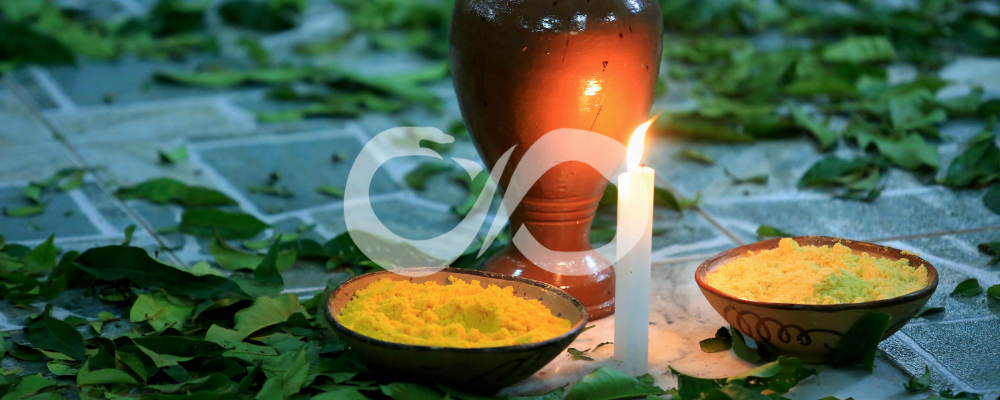
Moreover, the term’s vagueness encouraged misuse. Since macumba refers to neither an established church nor a specific doctrine, it was used indiscriminately to refer to anything and everything - from an authentic sacred ritual to commercial superstition. For example, some writers called charlatans who profited from people’s credulity by promising spells and miracles in exchange for money macumbeiros. At the same time, ordinary people called it “macumba” when ritual offerings were left at a crossroads at night, with the intention of casting a spell or warding off evil. These offerings, called despachos when placed outside the temple, are typically dedicated to Exu and consist of lit candles, cachaça, chili peppers, and farofa, or cassava flour, all arranged in a bowl or on a plate in the street. In the eyes of the general public, scenes of this kind fueled the reputation for “black magic” surrounding macumba. Yet it should be noted that such magical practices represent only a small aspect of Afro-Brazilian religions and are even discouraged by most candomblé or umbanda priests. Reducing macumba to these occult acts means failing to recognize the richness and spirituality of these religions.
4. Changing perceptions and reclamation of the term
Over time, perceptions of macumba have evolved and become more nuanced. On the one hand, the term remained derogatory in everyday language throughout much of the 20th century, conveying mystery and fear. In Brazilian literature, for example, references to macumba ceremonies appear sometimes in an exoticizing manner and sometimes critically. In his famous novel Macunaíma (1928), writer Mário de Andrade describes a “macumba for Exu” in Rio at the home of the celebrated Tia Ciata, an Afro-Brazilian priestess and cook, in the presence of various artists and poets of the period. This literary account shows that by the late 1920s, the intellectual elite was interested in these rituals called macumba. Similarly, in the 1930s and 1940s, the word appeared in the titles of songs recorded in Rio: people danced to macumba points such as “Macumba (Ponto de Ogum)” and “Macumba de Oxóssi,” popularized by samba musicians of the time. These historical examples attest that the term macumba was commonly used to refer to Afro-Brazilian ritual songs and gatherings - especially in Rio de Janeiro, the birthplace of Umbanda. In other words, in the context of the 1930s, speaking of macumba was not necessarily an insult: it could simply refer to Afro-Brazilian ceremonies in general, known to everyone, if only by reputation.
Nevertheless, this relative normalization coexisted with contempt and persecution. During the first half of the 20th century, Afro-Brazilian religions - often broadly labeled macumba - were subjected to police repression and public ridicule. Authorities frequently seized ritual objects, such as atabaques, statues, and charms, during raids on terreiros, displaying these “macumba objects” as trophies to discourage practices deemed superstitious. The stigmatization was so severe that many followers performed their rituals in secret to avoid arrest or ridicule.
Beginning in the 1970s, and especially toward the end of the 20th century, however, a movement of recognition and identity-based pride surrounding Afro-Brazilian religions emerged. Despite its negative baggage, the word macumba began to be reclaimed by some practitioners as part of a process of reappropriation. “Macumbeiro” - once an insult - became a nickname proudly claimed by some initiates, much like formerly derogatory terms such as “negro” or “Black” were positively reclaimed by people of African descent. As Rodney William explains, only a member of these religious communities can use the word positively: “there was an unspoken rule: only a macumbeiro could call another macumbeiro macumbeiro.” Among initiates, using this term was a way of asserting solidarity and a shared identity. By embracing this once-insulting label, practitioners seek to reverse the stigma and affirm their “territory of resistance.” Today, it is not uncommon to hear phrases such as “com orgulho, sou macumbeiro” (“I am a macumbeiro and proud of it”) in practitioner circles. This reversal of meaning forms part of the broader struggle against racism and for the appreciation of Afro-Brazilian heritage.
Even so, this rehabilitation of the word remains internal to the communities concerned. Anthropologists and religious leaders generally advise non-practitioners to avoid using the term macumba to refer to these religions because of its still-vivid derogatory history. It is more correct and respectful to name each religion by its proper name: say candomblé religion, Umbanda ritual, and so on, just as one would distinguish between Catholicism, Protestantism, Islam, and other religions. “People should refer to candomblé, umbanda, and the other Afro religions in the same way they speak about other religions: with respect,” Rodney William insists. Although the word macumba has been partly “re-signified” positively by initiates themselves, its use by an outsider can still be perceived as a reductive generalization or a sign of disrespect.
Thus, the history of macumba is the history of a word that grew at the meeting point of two worlds, expanding beyond its original meaning to encompass an entire mosaic of Afro-Brazilian religions. Between stigmatization and reclamation, it bears witness to the prejudice and resilience of Afro-descendant communities. Understanding its true scope first means learning to distinguish each tradition by its name, with the respect and curiosity they deserve. This is why it is so meaningful to call candomblé, umbanda, or quimbanda by their true identities, and to let macumba return to its musical roots: a distant echo that still resonates through Brazil’s drums.

Par Olivier of Aeternum
Passionate about esoteric traditions and the history of the occult from the earliest civilizations to the 18th century, I share some articles on these topics. I am also co-creator of the online esoteric shop Aeternum.













