Following Ostara, the Beltane (or Beltaine) sabbat is the celebration of light, warmth, and the sun, celebrated on May 1. It heralds the arrival of the summer season and confirms the awakening of Nature already celebrated at Ostara. It is also the celebration of fertility, creation, and therefore vitality and sexuality. Here is a complete guide to the Beltane sabbat. Let's get started!
The Meanings of Beltane
May 1
Beltane is one of the four major festivals in the Celtic calendar, marking a crucial point in the cycle of the seasons. This celebration, deeply rooted in ancient European paganism, takes place every year at dawn on May 1. The name "Beltane" comes from Bel, referring to Belenus, a Celtic solar deity, and tane or teine, meaning "fire" in Gaelic. Together, they evoke the "fire of Bel," that is, the sun and fire in this celebration.
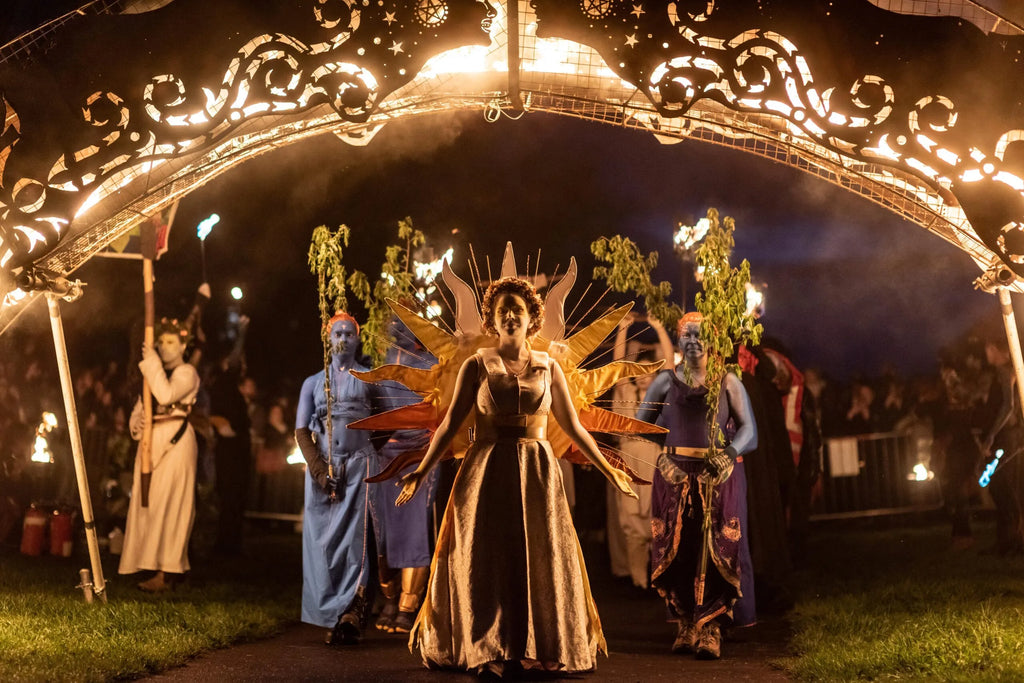
Beltane is also known by several other names. In Irish, this festival is called Lá Bealtaine or Cétshamhain (meaning "first of summer"), and in Scottish, it is translated as Latha Bealltainn. It is also commonly called May Day in English (the May 1 holiday, not to be confused with the emergency call mayday).
The Festival of Fertility
Historically, Beltane has its roots in ancient Irish and Scottish traditions, where it was celebrated enthusiastically to mark the beginning of summer. It symbolized the point at which the transhumant society led its herds to summer pastures, a key moment for the agricultural community. This festival was considered a time outside of time, when the veil between the world of the living and that of spirits grew thinner, similar to Samhain, which marks the beginning of winter.
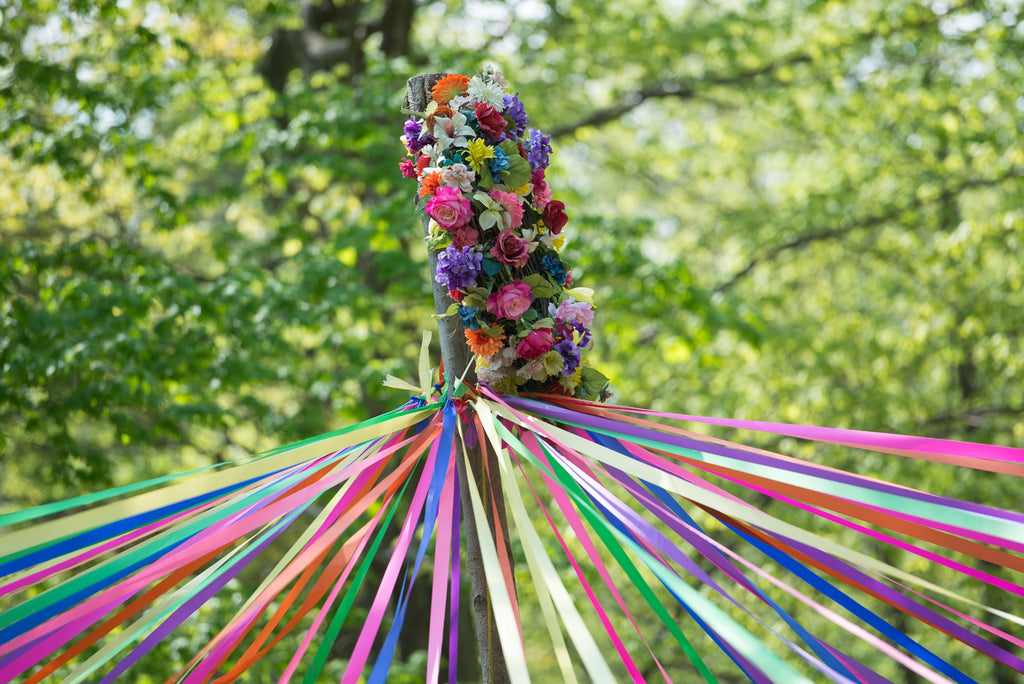
Beyond its practical aspects, Beltane is rich in symbolism. It is a celebration of fertility, not only in terms of procreation but also of creativity and growth. Fertility rites, which play a prominent role, often involve phallic symbols such as the maypole, around which villagers dance while interweaving ribbons, thereby representing the union of the masculine and feminine.
The Celebration of Light
In the Celtic calendar, Beltane represents the peak of light and warmth before the arrival of summer. It is directly opposite Samhain on the Wheel of the Year, marking the other half of the transition from the dark season to the light season. This passage from darkness to light is celebrated with joy, in the hope of an abundant and prosperous season. The Celts, connected to the cycles of nature, saw Beltane as an essential period of transition, directly influencing the survival and well-being of the community.
This festival is therefore a key moment for strengthening community bonds, revitalizing ancient traditions, and celebrating life. With its dancing fires and joyful celebrations, Beltane remains a powerful expression of the connection between people, nature, and the divine, retaining its importance even in modern societies seeking to reconnect with natural cycles.
The deities honored
According to historical accounts, the deities celebrated during Beltane may vary. Between the spring equinox and Beltane, the fertility goddess Eostre (who gave her name to Ostara) is often honored. Flora, the Roman goddess of spring, is another frequently celebrated figure.
As for the god, however, it is unanimously the celebration of Belenus, a sun god and protector from the Celtic pantheon.
Fairies, often mentioned during Beltane, are a recurring theme, with offerings made to these magical spirits in the hope of preventing them from stealing the animals' dairy products.
Beltane babies
A Beltane baby is a child born on Beltane, May 1. Beltane babies are often said to be healthy and lucky, and some are even believed to be able to see fairies.
It is also said that children born in May are destined to be both beautiful and pleasant to be around.
The origins of Beltane
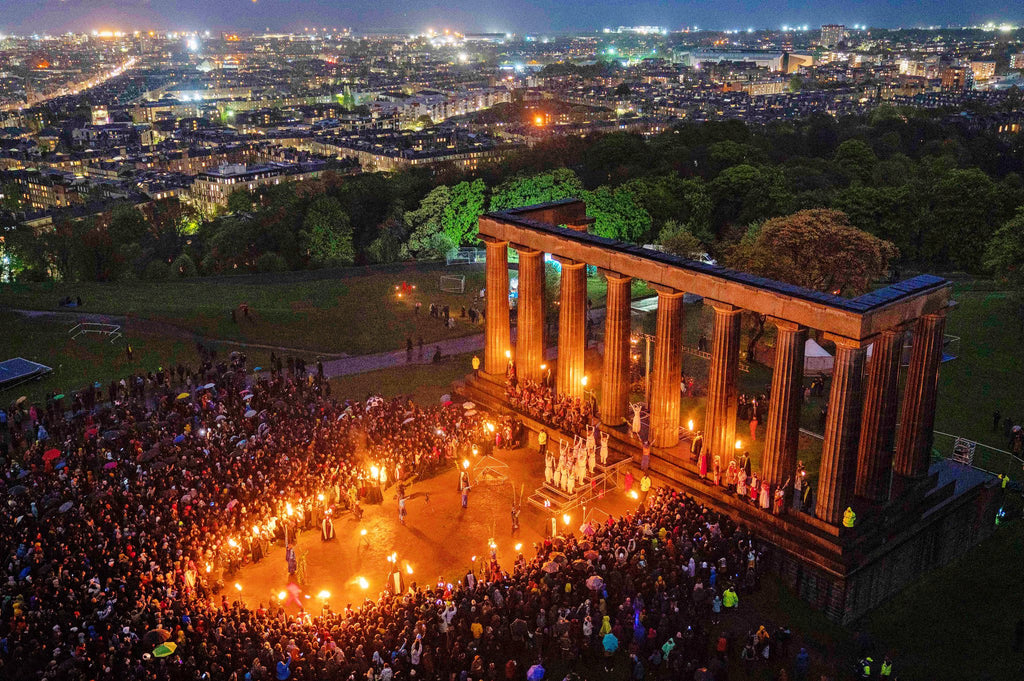
Although Beltane is an ancient pagan festival incorporated into the more modern Wheel of the Year, it has the distinction of still being celebrated in a relatively unchanged form today (unlike Samhain/Halloween), mainly in its lands of origin, particularly in Scotland with the Beltane Fire Festival or in Brittany.
A pagan tradition
Originally, Beltane was celebrated on May 1 by lighting large bonfires, known as Bel Fires, in honor of the sun god Belenus. These fires were intended to protect communities and their livestock from supernatural forces.
His origins lie primarily in the region of Gaul (which today encompasses France, Belgium, Switzerland, and parts of Italy and the Netherlands), although his worship also spread to other regions of Celtic Europe, such as the British Isles.
Belenus is often associated with the sun and light, and is considered the protector of health and well-being. His name is sometimes translated as "the Shining One" or "the Radiant One," reflecting his role as a sun god. Festivities in his honor include bonfires and celebrations of light, particularly around Beltane, when the Celts celebrated the return of summer.
Beltane Locations
In general, Beltane is celebrated in several geographic areas:
-
Scotland: this is one of the most iconic places for celebrating Beltane, particularly with the famous Beltane Fire Festival in Edinburgh, a modern event that revives and adapts traditional elements of the festival.
-
Ireland: in Ireland, Beltane, or Bealtaine in Irish, was traditionally marked by lighting fires and various rituals for protection and fertility. Today, it is still celebrated through cultural practices and community gatherings.
-
Isle of Man: Manx culture, also of Celtic origin, has its own traditions for celebrating this time of year, with customs similar to those of Ireland and Scotland.
-
Brittany: Brittany, with its deep Celtic roots, also celebrates Beltane, often through festivals and cultural events that highlight Celtic music, dance, and traditions.
-
Cornwall (England): in Cornwall, where Celtic identity is strong, Beltane is marked by festivities that include traditional fires and dances.
-
Galicia and Asturias (Spain): these regions of northern Spain, with their Celtic heritage, also observe similar festivities, although perhaps in forms less directly linked to Beltane but sharing common themes of celebrating spring.
-
North America: in the United States and Canada, Neo-Pagan and Wiccan communities celebrate Beltane through festivals, gatherings, and rituals that recreate ancient traditions adapted to a modern context.
-
Australia and New Zealand: in the Southern Hemisphere, Beltane is celebrated by similar communities, although the dates may be adjusted to match the local seasons, thus celebrating Beltane around late October or early November.
The Evolution of the Celebration
With the arrival of Christianity in the British Isles, Beltane, like many other pagan festivals, was adapted to new religious contexts. The festival was transformed to coincide with the Feast of Saint John (June 24), another key moment in the agricultural calendar. Despite this Christianization, many pagan elements of Beltane survived and continued to be practiced alongside it, often under the guise of community festivals and gatherings.
Over the centuries, Beltane celebrations have fluctuated in popularity. During the Victorian era, for example, there was a renewed interest in folk traditions, which allowed aspects of Beltane to resurface, such as dances around the maypole, decorated with ribbons for the occasion.
As the British and Irish empires expanded, Beltane traditions were carried around the world, blending with local cultures and forming new traditions. For example, in the United States, Scottish and Irish immigrants introduced Highland games and other Beltane practices, which were incorporated into May Day celebrations.
Furthermore, with the rise of neo-pagan movements in the 20th century, particularly Wicca, Beltane was rediscovered and revitalized. These movements adopted and adapted the ancient Beltane traditions to align them with their spiritual beliefs and practices, emphasizing themes of fertility, rebirth, and the union of masculine and feminine energies.
From this guide
Put it into practice
A selection of products to support your reading and practice.


3. The celebration of Beltane
The Beltane festival is expressed through a variety of rites, symbols, and celebrations that enrich its spiritual and communal character. These practices are also ritual acts filled with symbolism and intention.
April 30 or May 1?
Beltane, like other seasonal festivals, has a period of celebration that extends beyond a single day, recalling the traditions of Yule or Christmas, when festivities begin on the eve. April 30, often called Beltane Eve, marks the beginning of the Beltane celebrations and can be compared to Christmas Eve in terms of anticipation and preparations.
This evening is considered a time to begin the Beltane festivities. Traditionally, this is when the Beltane fires are lit.
Likewise, Beltane Eve is an opportunity for communities to prepare spiritually and physically for the following day's activities. This may include preparing decorations such as ribbons for the maypole, making flower crowns, and preparing special dishes to be shared the next day.
In addition, this evening is also a time for divinatory and magical practices, when people seek to obtain visions or guidance for the coming year.
The ceremonial fires
Beltane traditionally begins at sunrise on May 1 and marks the opening of the summer season. Celebrations often begin with the lighting of the Beltane fires, a central element of the festival. These fires, believed to have the power to purify and protect, are where people gather to jump over the flames. This is an act of purification and a wish for personal fertility, happiness, and protection. In addition, livestock were traditionally driven through the smoke of the fires to protect them from disease before being led to the summer pastures.
Druids gathered wood from nine types of sacred trees to build the ceremonial fires:
-
Oak is considered the king of trees because of its imposing size and longevity. It symbolizes strength, stability, and sovereignty.
-
Willow is linked to magic, the moon, and water, symbolizing flexibility and intuition.
-
Ash is known for its links to magic and protection, often associated with the sea and healing.
-
Birch, often the first tree to regrow in a clearing, is a symbol of rebirth and purification.
-
Alder is associated with aquatic environments and is often used for construction in wet areas. It represents guidance and protection.
-
Elder is traditionally considered a protective tree with medicinal properties, linked to magic and folklore.
-
Holly, with its evergreen, thorny leaves, is a symbol of strength and protection, used to repel evil spirits.
-
Yew is often associated with immortality and death, reflecting the cycles of life, rebirth, and eternity.
-
Rowan is believed to repel evil forces through the power of its berries and branches.
The ashes from the fires were believed to have purifying properties and were often scattered across the fields to promote the fertility of the land. People, along with their animals, passed between the fires to purify themselves and protect against illness and evil spirits.
Beltane Dew
The Beltane Dew rite is a traditional practice that is an integral part of Beltane celebrations, marking the arrival of spring. This custom draws its essence from the morning dew of May 1, imbued with magical and purifying qualities.
According to tradition, very early on Beltane morning, people go outside to collect the dew deposited on the grass and flowers. This dew is believed to promote beauty and youth. Young women in particular commonly apply this dew to their faces and skin in the hope of keeping their complexion fresh and radiant for the year ahead. This act also symbolizes purification and renewal, recurring themes of the festival.
Beltane Dew is also considered a way to connect deeply with the vitality and regeneration that nature displays at this time of year.
In addition to applications for beauty and youth, certain rituals involving the Beltane Dew may include its use to bless fields, gardens, and even livestock, thereby strengthening the fertility and growth encouraged by the season.
Beltane symbols
Fire
As mentioned earlier, fire is a central element of Beltane, symbolizing the light and warmth of the returning sun, which comes to bless the earth with its fertility. It also represents passion and creative energy. It takes the form of a large outdoor bonfire, the epicenter of the celebration, or candles if Beltane is celebrated indoors.
The Maypole
Another powerful symbol is the Maypole, usually erected in the center of the village. The pole, which represents a symbolic phallic form, is decorated with ribbons, flowers, and greenery, representing fertility and creative nature. Participants dance around the pole, braiding the ribbons into complex patterns to symbolize the interweaving of masculine and feminine energies, as well as the union of earth and sky.
Flowers
Flower crowns, bouquets, and greenery scattered and worn during Beltane symbolize the beauty and rebirth of nature. Specific flowers, such as marjoram, lily of the valley, and rose, are chosen for their meanings related to love and fertility.
Meals
Cakes, particularly lemon or vanilla cakes, are appreciated for their sweetness and festive appearance. Traditional breads such as oat bread and bannock, a type of Scottish flatbread, are also popular at Beltane picnics, adding a traditional touch to shared meals.
Recognized as symbols of fertility and renewal, eggs are essential during Beltane. They are often incorporated into various dishes, such as quiches and omelets, or simply decorated to embellish festive tables.
Lamb, particularly tender and in season in spring, is a meat commonly served during Beltane. It is appreciated for its delicate flavor and symbolic association with youth and rebirth.
Fresh green vegetables, such as spinach, arugula, and lettuce, are harvested in spring and often used in light salads. These refreshing dishes are perfect for Beltane meals, celebrating the greenery and freshness of the season.
The arrival of the first berries of the season, such as strawberries, is always eagerly awaited. These fruits are eaten fresh or used in desserts, bringing a touch of natural sweetness to celebrations. You can also prepare them as tarts.
Specific drinks such as May wine, prepared with elderflowers, cider, and herbal infusions such as chamomile and mint are popular for their relaxing properties and deep connection with the earth.
Activities suited to Beltane
Beyond the festivities specific to Beltane, this period is ideal for engaging in activities that strengthen our connection with nature.
Starting planting or gardening projects during Beltane is particularly symbolic. Whether for flowers or vegetables, these activities embody the themes of fertility and growth, offering a tangible way to grow closer to the earth.
Furthermore, taking advantage of this period to go hiking allows you to reconnect with a natural environment awakening to life. It is also the perfect time to observe seasonal changes and, why not, gather wildflowers or herbs.
Preparing meals with fresh, seasonal ingredients is another wonderful way to celebrate Beltane. Using products such as fresh dairy products, spring greens, and the first berries adds a festive and delicious touch to this culinary experience.
Finally, each sabbat, and Beltane in particular, offers a favorable time for reflection. It is an ideal period for meditating on personal growth and planning future projects. Beltane invites you to set new intentions or revitalize and deepen those already in place, thereby enriching your personal and spiritual journey.
Beltane correspondences
| Stones | Emerald, Aventurine |
| Planets | Venus (because of its association with love, fertility, and growth) |
| Day | Friday (a day associated with Venus) |
| Deities | Belenos, Flora, Pan, Cernunnos |
| Creatures | Fairy (a being often associated with magic, nature, and fertility) |
| Plants | Lily of the valley (a plant associated with love and purity), Hawthorn (a plant associated with fertility and protection) |
| Signs | Taurus (because of its association with fertility, growth, and sensuality) |
| Direction | East (associated with sunrise, rebirth, and growth) |
| Element | Fire |
Other articles about Beltane?
Learn more by reading our other articles about the Beltane sabbat:
- How do you create a sacred fire for Beltane?
- Which incense should be used to honor Beltane/Beltaine?
- What foods and drinks should be associated with Beltane?
- Which herbs and flowers should be favored for Beltane?
- How do you celebrate Beltane when you are alone?
- What love or union ritual should be performed at Beltane?
- When and how should Beltane be celebrated?
- What magical symbols should be used at Beltane?
- How do you prepare an altar for Beltane?
- What rituals should be performed on Beltane evening?

Par Olivier of Aeternum
Passionate about esoteric traditions and the history of the occult from the earliest civilizations to the 18th century, I share some articles on these topics. I am also co-creator of the online esoteric shop Aeternum.