















































































































































































































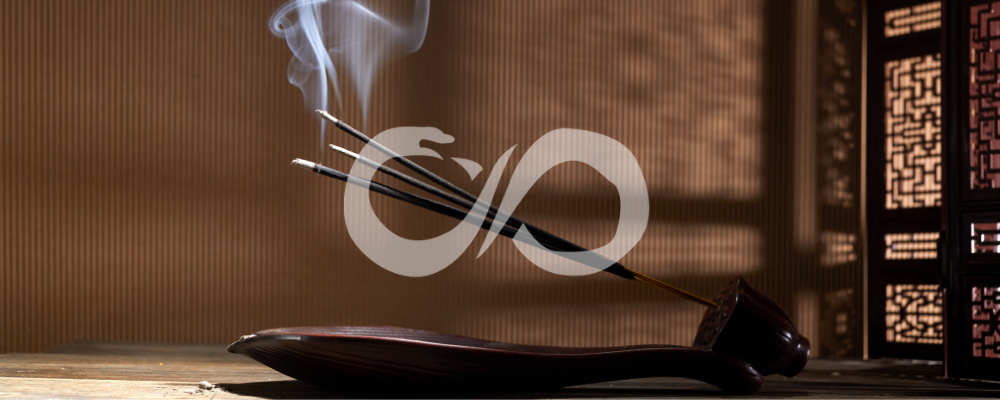
Choosing incense becomes much simpler once you stop looking for the “best” incense in general. A discreet Japanese stick, frankincense resin on charcoal, a scented cone, and a Nepalese rope incense do not involve the same gesture, equipment, or context. The right choice depends first on what you want to do, how you like to work, and the place where you will burn the incense.
To choose the right incense, start by defining its intended use, then choose the appropriate format, fragrance, and holder. Prayer does not necessarily call for the same product as planetary work, a divination session, or simply a moment of calm. At Aeternum, incense is therefore classified by form, origin, and intended use, allowing you to start either from your ritual or from your fragrance preference.
This guide brings together the main information you need to find your way through our Incense & Fumigation collection: sticks, cones, resins, powders, ropes, Japanese incense, Indian incense, Tibetan incense, religious incense, planetary incense, and ritual incense.
Which incense should you choose for your intended use?
The intended use is the best starting point. The same fragrance may appear in several formats, and the same format may serve very different practices. Before looking at the product name, ask yourself when it will be used: opening a ritual, prayer, meditation, divination, home fumigation, seasonal celebration, or simply creating an atmosphere.
| Use | Interesting formats | Aeternum Categories | Practical guide |
|---|---|---|---|
| Meditation and contemplation | Japanese stick, mild Indian stick, short rope. | Japanese incense, Indian incense. | Choose a diffusion method that you can forget about once it is set up, without creating an overpowering scent. |
| Prayer and devotion | Resin, monastic incense, stick, or religious blend. | Religious incense, Monastic incense. | Choose the tradition or devotional figure to which your practice is connected. |
| Ritual purification of a place | Resin, ritual blend, stick, or herbal smudging. | Ritual incense, White sage. | The fragrance accompanies the words and gestures. Denser smoke does not mean more effective work. |
| Planetary work | Blend dedicated to a planet or resin selected within the system being followed. | Planetary incense. | Start with the planet and the ritual, not just the fragrance. |
| Divination | Stick with measured diffusion, a small amount of resin, or Japanese incense. | All incense. | Choose a fragrance that marks the opening of the session without dominating your attention. |
| Atmosphere and relaxation | Stick, cone, heated brick, or cord. | Stress-relief selection, Incense bricks. | Put the olfactory pleasure before ritual correspondences. |
| Sabbat or seasonal celebration | Seasonal blend, resin, aromatic wood, or spices. | Incense by type. | Connect the fragrance to the ritual actually practiced, rather than to a list of isolated correspondences. |
What is the difference between sticks, cones, resins, powders, and cords?
The format changes the experience as much as the fragrance. It determines how to light the incense, the support required, the amount of smoke, how easy it is to control the dosage, and how much time you spend preparing your session.
Incense sticks for simplicity
Incense sticks are the most accessible format. Place the stick in a compatible incense holder, light the tip, let it catch for a few seconds, then blow out the flame. The ember will then continue the combustion.
There are, however, several types of sticks. Many Indian incense sticks are made around a thin bamboo stick, while many Japanese incense sticks have no wooden core. This difference affects the fineness of the smoke and how the fragrance develops. There is therefore no “standard stick” that describes all incense.
To begin, a stick is very suitable for a meditation session, a prayer, or preparing a tarot reading. A Nippon Kodo Morning Star Myrrh, for example, offers a compact Japanese approach, while Satya Karma belongs to a different Indian aromatic tradition.
Cones for more concentrated diffusion
Cone incense is compact and generally develops its fragrance over a shorter period than a long stick. Its wider base contains more combustible material as the burning progresses, which can produce more noticeable smoke.
This is precisely why the cone should not be considered the best choice for a small room. A narrow, poorly ventilated room can instead become uncomfortable. Choose the cone for its aromatic character and format, then adjust the duration and ventilation to the space.
Backflow cones, or backflow cones, have a channel designed to guide some of the smoke downward in a specific burner. Their appeal lies as much in the visual effect as in the fragrance. A classic cone does not produce the same result in a waterfall burner.
For a warm, spicy scent, the HEM Sandalwood & Cinnamon cones offer a simple example of this format.
Resins for ritual work and modulation
The incense resins hold a major place in religious and magical history: olibanum, myrrh, benzoin, copal, storax, and other aromatic gums or exudates. They require more preparation than sticks.
When using incense on charcoal, light a tablet designed for incense, let it reach its heated state, then place a very small amount of resin on it. You can then add more or stop. This gradual dosing is one of resin’s major advantages: you do not have to burn a fixed amount.
For example, Frankincense Magia Vera lets you work directly with olibanum. For this format, have incense charcoal and a suitable incense burner ready.
Powder incense for blends and precise uses
The powder incense category includes ground preparations that may contain wood, resins, herbs, and spices. Their behavior depends heavily on their composition and instructions for use. Some are burned on charcoal, while others are designed for indirect heating or a particular method.
The powder allows for precise dosing and lends itself to blends, but requires more attention than a stick. For a first purchase, choose a product whose use is clearly indicated rather than a blend whose combustion method you do not know.
Cord incense for a distinct Himalayan tradition
The cord or string incense is associated with Nepal and the Tibetan region. Aromatic materials ground into powder are enclosed in thin paper and then twisted. This form should not be treated as a simple substitute for Indian sticks: its history, combustion, and blends are its own.
Aeternum offers several themed cord incense products, such as the 1st chakra — grounding, the 3rd chakra — willpower, and the 6th chakra — intuition. If you choose them for their correspondence, keep in mind that this interpretation belongs to the range and system to which it is connected.
Papers and bricks for other practices
Paper incense uses an impregnated or prepared support that is burned according to its instructions. It takes up little space and provides an experience different from that of a stick or resin.
Aromafume bricks work with a diffuser designed to heat them. They are not used like a cone placed on a dish. This type of product appeals to people looking for diffusion different from direct combustion.
| Format | Preparation | Dosage | Equipment | Ideal for |
|---|---|---|---|---|
| Stick | Very simple. | One whole unit or early extinguishing if the product allows it. | Suitable incense holder. | Daily use, meditation, prayer, divination. |
| Cone | Simple. | One complete cone for most uses. | Heat-resistant support; a specific burner for backflow. | More concentrated fragrance, short session, visual backflow effect. |
| Resin | More technical. | Highly adjustable, grain by grain. | Charcoal and an incense burner, or a heating system intended for resin. | Ritual, prayer, ceremonial fumigation. |
| Powder | Varies depending on the formula. | Highly adjustable. | According to the instructions: charcoal or a specific burner. | Blends, ritualized work, precise dosing. |
| String | Simple with a suitable support. | A cord or portion depending on the intended use. | Stable, heat-resistant support. | Himalayan practices, ambiance, meditation. |
| Paper | Simple but specific to the product. | The intended sheet or portion. | Suitable heat-resistant support. | Occasional, compact diffusion. |
| Heated brick | Use its diffuser. | One brick. | Compatible diffuser. | Aromatic diffusion without the same use as a stick or cone. |
Should you choose Indian, Japanese, or Tibetan incense?
Origin is not merely an aesthetic argument. It provides insight into different manufacturing traditions, materials, forms, and olfactory preferences. These categories remain broad: two houses from the same country may offer very different products.
Indian incense
Indian incense offers a very broad palette: sandalwood, nag champa, flowers, resins, spices, and devotional blends. Many Indian sticks use a bamboo stick covered with aromatic paste, although not all products are made in exactly the same way.
Satya incense belongs to this highly recognizable world. If you like rich, enveloping, and complex fragrances, this family is a good starting point.
Japanese incense
Japanese incense is frequently offered in the form of thin sticks without a bamboo core. The fragrance may then seem more direct and less influenced by the smell of the wooden support. Japanese ranges explore sandalwood, agarwood, resins, flowers, and more contemporary accords.
They are well suited to people who want a distinct olfactory presence during reading, meditation, or prayer. Morning Star Myrrh illustrates this approach in a short, accessible format.
Tibetan and Nepalese incense
Tibetan incense and Nepalese rope incense draw on different traditions and recipes. Blends may use woods, spices, roots, and plants in highly aromatic compositions. Their more rustic form does not indicate inferior quality; it reflects a different way of making and using incense.
If you enjoy botanical, spicy, or earthy fragrances, these categories are worth exploring separately rather than comparing them only with the gentle fragrance of a Japanese stick.
From this guide
Put it into practice
A selection of products to support your reading and practice.


How to choose between frankincense, myrrh, sandalwood, patchouli, and other materials?
The names of materials provide an olfactory and historical reference, but not a universal promise. “Frankincense” does not always mean the same aromatic profile, depending on the Boswellia species, origin, and preparation. An incense called “sandalwood” may be a sandalwood-scented blend rather than a stick made solely from sandalwood.
Frankincense or olibanum
Frankincense, also called frankincense, refers to resins from Boswellia. Its history is connected with religious fumigations, offerings, and the trade of aromatic materials around the Red Sea, the Arabian Peninsula, and the Mediterranean. Its fragrance is generally resinous, bright, and slightly citrusy or balsamic, depending on the product.
It is an excellent choice for prayer, consecration, and rituals in which you wish to work with an identifiable material. Find it as Frankincense Magia Vera resin or as part of blends.
Myrrh
Myrrh comes from Commiphora resins. Its fragrance tends toward warm, dry, bitter, and balsamic notes. It has an ancient religious and medicinal history distinct from that of frankincense, although the two appear together in some texts and blends.
If you would like to discover it without charcoal, a Japanese stick such as Morning Star Myrrh offers a fragrant interpretation of this material. For work directly based on the resin, choose a product that clearly indicates its composition.
Sandalwood
Sandalwood has a woody, creamy, and gentle fragrance that serves as a base for many types of incense. It works well during meditation or when combined with spices. The Sandalwood & Cinnamon cones show how a woody note can be enhanced by a warm, spicy ingredient.
Patchouli, cinnamon, vanilla, and floral notes
Patchouli gives earthy, dark notes; cinnamon brings spicy warmth; vanilla creates a softer, more gourmand atmosphere; rose, jasmine, and lavender direct the fragrance toward very different floral families.
For use as an ambient fragrance, first choose what you enjoy smelling. An Herbio Vanilla incense does not need to be justified by a magical correspondence to have a place in a quiet moment. A fragrance you enjoy naturally creates a personal reference point in your practice.
| Family | Examples | Common olfactory impression | Possible use |
|---|---|---|---|
| Resinous | Frankincense, myrrh, benzoin, copal. | Balsamic, dry, citrusy, amber-like, or warm, depending on the resin. | Prayer, consecration, ritual, ceremonial fumigation. |
| Woody | Sandalwood, cedar, agarwood. | Woody, creamy, dry, or dark. | Meditation, contemplation, atmosphere. |
| Spicy | Cinnamon, clove, ginger. | Warm, lively, stimulating. | Atmosphere, seasonal blends, or rituals. |
| Floral | Rose, jasmine, lavender. | Soft, powdery, green, or heady, depending on the flower. | Relaxation, devotion, symbolic work related to flowers. |
| Earthy | Patchouli, vetiver, and certain root blends. | Dense, humid, dark, or woody. | Grounding, deep atmosphere, earth rituals. |
| Gourmand | Vanilla, amber, and sweet accords. | Soft, warm, enveloping. | Olfactory comfort and atmosphere. |
How do you choose ritual incense without getting lost in correspondences?
Ritual incense derives its coherence from the system in which you use it. Planetary, saintly, seasonal, or magical correspondences should not be mixed as though they belonged to a universal dictionary.
For planetary work, start, for example, with our planetary incense collection. The product is then chosen according to the planet invoked and the framework of the work. For Christian or folk devotion, religious incense lets you search for a figure or intention corresponding to that practice.
Monastic incense has a different aesthetic, while ritual incense is prepared around stated intentions. Read the blend’s product description before deciding that the name alone is sufficient.
If you build a practice yourself using raw materials, reduce the number of ingredients. Two resins you know are easier to understand than a blend of ten products chosen solely because each has an appealing correspondence.
Which incense holder or burner should you choose?
The holder is not merely a decorative accessory. It must hold the incense, collect its ashes, and protect the surface beneath it. A poor holder can turn a very simple stick into a stability or heat problem.
| Incense | Holder | To check before lighting |
|---|---|---|
| Stick with a stem | Incense holder with a suitable hole and ash collection. | The diameter of the hole, the angle of the stick, and the length of the tray. |
| Japanese stick without a stem | Compatible thin holder or Japanese incense holder. | The diameter of the stick, often thinner than an Indian model. |
| Classic cone | Bowl or burner designed for cones. | Heat resistance and stability. |
| Backflow cone | Compatible backflow burner. | Alignment of the cone’s channel with the burner’s flue. |
| Resin on charcoal | Incense burner resistant to high heat. | Stability, ventilation, and an insulating layer if specified by the manufacturer. |
| Powder | According to the instructions: charcoal, burner, or another system. | Do not improvise a support if the heating method is not specified. |
| String | Heat-resistant support from which it cannot fall. | Length, support, and complete ash collection. |
You can browse our incense burners and incense holders according to the format selected. For resins, a small cast-iron cauldron such as the Triskell Small Cauldron may be suitable for certain workings when the instructions and setup allow for the intended use.
How much incense should you burn?
The right quantity is the amount that allows you to perform your action without saturating the room. There is no connection between the density of the smoke and the “power” of a working.
With a stick, you can choose a short variety or a model whose instructions allow it to be extinguished before it has finished burning. With a resin, start with one or two small grains: wait until you sense how they develop before adding more. With a powder, sprinkle a pinch according to the instructions rather than using an entire layer.
Cones are more difficult to adjust once lit. If you find their diffusion too dense, the right approach is to choose a different format for the next session, rather than placing the cone in a smaller room in the hope of concentrating its effect.
In a long ritual, the fragrance may only be needed at the beginning. You can light the incense, recite the dedication, let it burn during the intended part, and then continue without smoke. The continuity of the work comes from your rite, not from the obligation to keep an ember burning throughout the entire session.
Six examples for quickly choosing the right incense
You want to meditate for twenty minutes in an office
Choisissez une diffusion mesurée, facile à installer et qui ne demande pas de charbon. Un bâton japonais convient bien. Installez un support compatible, aérez et commencez avec une senteur que vous appréciez déjà. Le Morning Star Myrrhe représente une option simple.
Choose a measured diffusion method that is easy to set up and does not require charcoal. A Japanese stick works well. Set up a compatible holder, ventilate the room, and begin with a scent you already enjoy. Morning Star Myrrh is a simple option.
If the fragrance takes up too much of your attention, switch to a milder scent or move the holder farther away, while maintaining safe supervision. Meditation does not require incense to be placed right in front of you.
You are preparing a prayer or consecration
An identifiable resin such as frankincense is suitable when you want to give the fragrance a ceremonial role. Choose Frankincense, charcoal from the Burning Charcoal collection, and a compatible censer.
Start with very little resin. The fragrance can accompany the opening and prayer without filling the room.
You want to prepare a tarot deck or oracle deck
The best incense is the one that becomes an opening signal without causing distraction. A sandalwood or myrrh stick, or a Japanese fragrance, works well. You can also burn nothing and reserve incense for certain sessions.
The procedure can remain consistent: light it, formulate the question, lay out the spread, then begin once everything is in order. For the reading itself, see our Tarot Guide.
You are practicing planetary work
You simply want a warm atmosphere
You can ignore correspondences. Choose a fragrance you enjoy: vanilla, sandalwood, cinnamon, floral notes, or resin. Herbio Vanilla or Sandalwood & Cinnamon cones suit two very different atmospheres.
In that case, olfactory pleasure is a perfectly valid criterion. An esoteric shop does not require every incense to have a magical purpose.
You want to prepare your home for a new cycle
First, choose the sequence: cleaning, opening the rite, brief fumigation, spoken words, and closing. A ritual resin or stick can accompany this moment. If you prefer sage, our practical sage guide explains how to use the bundle.
For a more comprehensive method, see How to properly purify your home?. You can combine incense, spoken words, a bell, salt, or water according to your practice.
How can you recognize incense suited to your practice?
Start by reading the product page. The name, format, manufacturer, and usage instructions should be clear. A poetic name does not replace the composition when it is available.
Then consider whether the format is compatible with your equipment. Resin is not a complete purchase if you have neither charcoal nor an incense burner. A backflow cone requires a backflow burner. A Japanese stick may require a finer hole than an incense holder designed for Indian sticks.
Olfactory quality is personal. A highly regarded incense may not appeal to you. Start with families you know, then explore related materials. If you like myrrh in Japanese incense sticks, you can then compare a raw resin or a monastic blend containing myrrh.
Finally, avoid exaggerated claims. A product that advertises a prosperity ritual may provide suitable support for that intention; it does not guarantee financial results or automatically transform a situation.
How can you burn incense without turning the ritual into a hazard?
Burning incense remains a source of heat. Use a stable, heat-resistant holder away from curtains, paper, clothing, and other combustible materials. Never leave sticks, cones, resin on charcoal, or burners unattended. Fire services also recommend putting everything out before leaving the room or going to sleep.
Keep matches, lighters, charcoal, and incense out of the reach of children and animals. A covered incense burner is not necessarily cool: wait until it has cooled completely before moving or storing it.
Ventilate. Incense smoke results from combustion and adds particles to indoor air. A small or poorly ventilated room calls for less material, a more discreet format, or a session without combustion. Do not use incense as a way to disinfect the air or to permanently mask an odor whose cause needs to be addressed.
If anyone present coughs, experiences irritation, or cannot tolerate the fragrance, stop burning the incense and air out the room. The ritual can continue without incense.
How should incense be stored?
Keep products dry and protected from high heat and direct sunlight. Moisture can affect the burning of sticks, powders, and cords; highly volatile fragrances can also change over time.
Keep the original packaging whenever possible. It helps you identify the name, brand, and any instructions. For several resins, separate jars prevent mixing and make it possible to compare their fragrances. For sticks, a long box or the manufacturer's packaging helps prevent breakage.
There is no need to transfer every product into an airtight container. Some boxes are specifically designed for the product they contain. If you use another container, make sure it is clean, completely dry, and labeled.
Do not store charcoal with food products, and keep it in its packaging in a dry place. Resins, powders, and ritual blends should not be confused with cooking spices.
Frequently asked questions about choosing incense
Which incense should you choose when you are just starting out?
A stick is the simplest choice: little equipment, easy lighting, and a very wide range. Then choose a familiar scent such as sandalwood, vanilla, or a subtle Japanese blend.
Which incense is best suited to meditation?
There is no single answer. Sandalwood, certain Japanese incense sticks, and woody compositions are appreciated in this context, but the right fragrance is ultimately the one that does not distract you.
Which incense should you use to purify a home?
A resin, a ritual blend, a stick, or a botanical fumigation can accompany a symbolic purification. The choice depends mainly on your tradition and your home. The guide dedicated to cleansing your home explores several methods.
Are olibanum and frankincense the same thing?
The English term frankincense corresponds to olibanum, that is, aromatic resins from different Boswellia species. The fragrance varies depending on the origin and the product.
What is the difference between Japanese and Indian incense?
Many Japanese sticks are thin and have no bamboo core, whereas many Indian sticks use a stick covered with aromatic paste. The traditions, materials, and olfactory styles also differ. These are broad categories, not absolute rules.
Is a cone better suited to a small room?
Not necessarily. A cone can produce fairly concentrated smoke. In a small room, use it only with suitable ventilation and if its intensity suits you.
Do you need charcoal for all resins?
Charcoal is the classic method for many resins, but some burners use indirect heating. Always follow the instructions for the product and burner.
Can you mix several resins?
Yes, when you understand how they behave and your practice calls for it. Start with two materials and small quantities. You will better understand the olfactory role of each one.
Can you burn incense every day?
Nothing requires daily burning. If you enjoy this ritual, limit the quantity, ventilate, and adapt your practice to the people present. You can also alternate with smoke-free days.
Is expensive incense necessarily better?
No. The price may reflect a rare ingredient, specialized manufacturing, a brand, or packaging. Quality is also judged by your appreciation of the fragrance, the clarity of the composition, and its suitability for the rite.
How do you choose between resin and a stick?
Choose sticks for simplicity and resin for control over dosage and a ceremonial character. Resin requires more equipment and attention.
Which Aeternum collection should you look at first?
If you are not yet sure which format to choose, start with Incense & Fumigations or All Incense. If you already know your practice, go directly to the religious, planetary, or ritual categories.
Building a coherent incense collection
You do not need twenty fragrances to get started. A small, well-understood selection already covers many uses. A gentle stick for meditation, a resin such as frankincense for ritual preparations, and a fragrance chosen purely for pleasure offer three very different experiences.
Then add formats that suit your practice. If you use planetary hours, explore planetary incense. If your work is based on prayer, browse religious incense and monastic incense. If you enjoy comparing manufacturing styles, move from Indian incense to Japanese incense, then to Tibetan incense.
The best choice is still the one whose purpose, instructions for use, and fragrance you know. Incense then becomes a genuine practice tool rather than a product chosen at random from dozens of names.
Sources and further reading
Household safety. London Fire Brigade, How to use candles and incense safely, recommendations on heat-resistant holders, supervision, and keeping combustible materials at a safe distance.
Indoor air and combustion. United States Environmental Protection Agency, resources dedicated to fine particles and combustion sources in indoor air.
Aeternum Catalogue. The categories, formats, and product examples mentioned in this guide correspond to the references and collections available in the shop at the time of its update.

Par Olivier of Aeternum
Passionate about esoteric traditions and the history of the occult from the earliest civilizations to the 18th century, I share some articles on these topics. I am also co-creator of the online esoteric shop Aeternum.













