















































































































































































































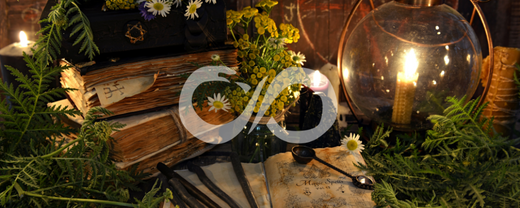
Wicca arouses as much fascination as misunderstanding. Although this modern spirituality, inspired by ancient pagan traditions, has grown in popularity over the past few decades, it is still regularly associated with misconceptions and stereotypes (one need only read the misleading headlines of certain major media outlets on the subject). Wicca is thus sometimes (wrongly) associated with images of malevolent witchcraft, secret rites, and dark beliefs. But what is the reality? Let us demystify this spirituality by answering the 12 most frequently asked questions which, in fact, have nothing to do with what Wicca truly represents.
1. Is Wicca synonymous with black magic?
Wicca is often confused with malevolent witchcraft and black magic because of stereotypes perpetuated by popular culture, particularly through films and stories about witch hunts. However, Wicca promotes values of respect and harmony with nature and with all living beings. Moreover, magic itself is completely neutral by nature, and it is how it is used that makes it benevolent or otherwise. In general, the magic practiced in Wicca is closer to white magic or green magic, and is used for positive purposes such as healing, protection, or personal growth. One of the fundamental ethical principles of Wiccans is summed up in a sentence: "If it harms no one, do what you will".
2. Do Wiccans worship the devil?
A common misconception is that Wiccans worship the devil, because witchcraft has historically been associated with Satanism, particularly by Abrahamic religions. However, Wicca has no connection with the devil. For one thing, the devil is a theological figure belonging to Christian, Islamic, and Jewish traditions. Wicca, on the other hand, primarily venerates a God and a Goddess, that is, the masculine and feminine energy of the universe, and the concepts of hell and heaven do not exist. These deities represent nature and balance, and are in no way associated with evil or demonic forces.
3. Do Wiccans believe in one god?
Unlike monotheistic religions, Wicca is a polytheistic religion. Wiccans honor a God and a Goddess (who may take different forms and names), embodying the masculine and feminine energies in nature. These deities are not perceived rigidly, but rather as symbols of the creative forces of life. Some Wiccans may also work with pantheons of deities from different traditions (Celtic, Egyptian, Greek, etc.). This diversity allows each person to interpret divine concepts according to their own beliefs, making Wicca all the more personal.
4. Is Wicca a modern or ancient religion?
Although Wiccan spiritual practices draw inspiration from pagan traditions and pre-Christian cultures, modern Wicca was codified in the 20th century, notably through the work of figures such as Gerald Gardner, who is often considered the father of contemporary Wicca. This does not mean that Wicca is an artificial or recent creation, but rather that it brings ancient elements together within a spiritual framework adapted to modern times. Thus, it draws on ancestral knowledge while adapting to current sensibilities and spiritual needs.
5. Do Wiccans practice animal sacrifice?
No, Wicca values respect for all forms of life and prohibits all forms of violence or mistreatment, including toward animals. This misconception stems from collective fear surrounding occult practices, fueled by popular stories and historical rumors. In reality, Wiccans advocate a harmonious relationship with nature, respecting the cycles of life, death, and rebirth. Wiccan rites often involve symbolic offerings such as flowers, fruit, or herbs, but never blood sacrifices.
6. Can Wicca be practiced alone, or do you have to be part of a coven?
Wicca is a flexible spiritual path that can be practiced individually or in a group. While some people choose to join covens, groups of practitioners who meet to celebrate rituals together, others prefer to practice alone as "solitaries". Solitaries often adapt their rituals and practices to their own spiritual needs and may feel more connected to their own energies without the involvement of a group. This flexibility makes Wicca an accessible religion for everyone, regardless of their preferred way of practicing. Moreover, this solitary practice was the subject of a study by author Scott Cunningham.
7. Does Wicca impose strict beliefs?
Wicca does not follow rigid dogmas like some other religions. Instead, it encourages practitioners to explore and develop their own spirituality. Wiccans are free to adopt beliefs that resonate with them, as long as they are in harmony with the basic ethical principles of Wicca, particularly respect for nature and others. This means that Wicca allows great autonomy in spiritual exploration, attracting people from diverse cultures and belief systems who are seeking a personal and adaptable path.
8. Do Wiccans have to follow a moral code?
Yes, Wiccans follow the Rede, a central ethical principle that states: "If it harms no one, do what you will". This principle emphasizes personal responsibility and respect for others. Wicca also teaches that every action, whether positive or negative, returns to the person who initiated it through the principle of the law of threefold return. This law suggests that everything a person sends into the universe - whether positive or negative energy - will return to them threefold. This encourages people to act with kindness and caution in magical practice and everyday life.
9. Is Wicca a closed religion reserved for a few initiates?
Unlike certain religions or traditions considered closed and reserved for a restricted group of initiates, Wicca is an open religion. Although some covens may have initiatory rituals reserved for their members, Wicca as a spirituality is accessible to anyone who wishes to explore it. Numerous resources are available - books, online courses, and forums - for those who want to learn more. Wiccans generally encourage spiritual autonomy and the sharing of knowledge, making this spiritual path open and welcoming.
10. Is Wicca a passing trend?
Although Wicca has grown in popularity over the past few decades, partly thanks to works of fiction and greater visibility in alternative culture, it is not simply a passing trend. Wicca represents a genuine spiritual path for many people. It offers a balanced and respectful approach to life, nature, and spirituality, making it a lasting choice for those seeking a deeper connection with the universe.
11. Is Wicca a cult?
Contrary to what some poorly researched articles claim, Wicca is not a cult, because it has neither a centralized charismatic leader nor mechanisms for controlling the thoughts or actions of its members. Wicca does not seek to isolate its practitioners from the rest of society, and there is no obligation to remain in a coven or adhere to specific practices. Each practitioner is free to follow their own path and to join or leave a coven as they wish. Wicca emphasizes spiritual autonomy and respect for diversity of belief, which fundamentally distinguishes it from cult movements.
12. Is Wicca connected to Satanism?
Wicca has no connection with Satanism. In fact, this confusion stems from a lack of understanding of Wicca and its symbolism. It is a pagan spirituality that primarily venerates the forces of nature, symbolized by a God and a Goddess. Moreover, Wicca is guided by ethical principles that promote kindness and respect for life, whereas Satanism, in some of its branches, has very different values and beliefs.

Par Olivier of Aeternum
Passionate about esoteric traditions and the history of the occult from the earliest civilizations to the 18th century, I share some articles on these topics. I am also co-creator of the online esoteric shop Aeternum.













