















































































































































































































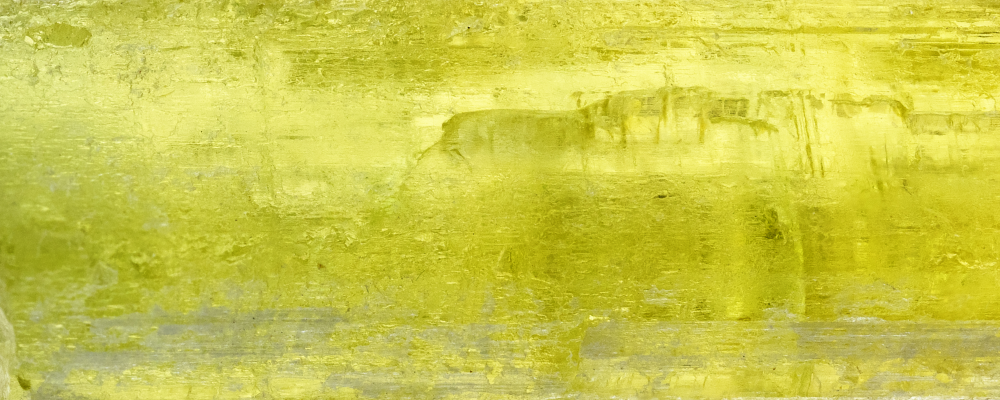
Heliodor is the “gift of the Sun”: a yellow to golden Beryl whose name appeared in the early 20th century. Its color naturally evokes the solar star; its mineral family also connects it to Taurus and Venus in Isidore Kozminsky’s system. It supports visibility, honor, success, and generosity that nourishes its own radiance.
The Sun does not promise empty fame. It calls for an assured place, a work put on display, and an authority that illuminates. Venus reminds us that this visibility must retain value, appeal, and a fair exchange.
To place this stone among related minerals, compare it with Beryl, Aquamarine, and Emerald.
Iron-Colored Yellow Beryl
Heliodor is a yellow, golden, or yellow-green variety of Beryl. Iron contributes to its color. Its structure and hardness, close to 7.5 to 8, are those of the family that also includes Emerald and Aquamarine.
The GIA presents Heliodor among the Beryls colored by Iron. The Gemmological Association of Great Britain distinguishes the golden yellow of Gold Beryl from the yellow with a greenish tint commonly called Heliodor.
The Gift of the Sun from Namibia
The name combines the Greek words helios, “sun,” and doron, “gift.” It was given to yellow Beryls discovered in the early 20th century in the Rössing region of Namibia.
The Smithsonian National Museum of Natural History houses a 216-carat Brazilian Heliodor and recalls this solar etymology. The name gives the stone a clear, modern image.
From Venusian Taurus to the modern Sun
In The Magic and Science of Jewels and Stones, published in 1922, Isidore Kozminsky does not discuss Heliodor separately. He places the entire Beryl family under Taurus, an earth sign ruled by Venus.
The name and color make it possible to add the Sun in a modern reading. This dual lineage gives rise to a magic of radiance that retains its value: making oneself visible, receiving an honor, presenting one’s work, and sharing a success without dissipating one’s strength.
The Sun receives what is offered to it in broad daylight. Heliodor reminds us that a hidden talent cannot be recognized. Showing it requires form, timing, and the ability to sustain one’s own light.
Sun, Venus, Fire, and Earth
The Sun governs visibility, authority, honor, and success. Venus carries value, beauty, and favorable reception. Fire provides momentum; Taurus’s Earth transforms that momentum into lasting work.
Sunday is suitable for presentations, requests for recognition, and works to be shown. Friday supports their value and favorable reception. Gold, yellow, copper, bay leaves, and sunflowers extend its correspondences.
Visibility, honor, and success
To present a project, place the Heliodor near its completed version and write the sentence that expresses its value. Remove the excuses that diminish the work before it is even received.
For authority, write down what you direct, what you protect, and the rule that also applies to you. The Sun illuminates; it does not exempt you from responsibility.
For success, name the expected fruit and the share that will be returned: give thanks, pass it on, pay, or support. The solar gift circulates without erasing the value of the work.
The gift returned to the Sun
On a Sunday morning, place the stone near an object that represents your work. Light a yellow candle and write down what you are ready to show the world.
Say: “I give shape to my light; I receive the place it deserves.” Present, publish, or send your work that same day, then perform an act of gratitude after receiving the first response.
Correspondences and references
| Reference | Correspondence |
|---|---|
| Nature | Yellow to golden variety of Beryl |
| Name | “Gift of the Sun” in Greek |
| Family sign | Taurus for Beryl according to Isidore Kozminsky |
| Planets | Sun and Venus |
| Elements | Fire and Earth |
| Days | Sunday and Friday |
| Areas | Visibility, honor, success, authority, and generosity |
| Ritual gesture | Show a work and return a share of its fruit |










