















































































































































































































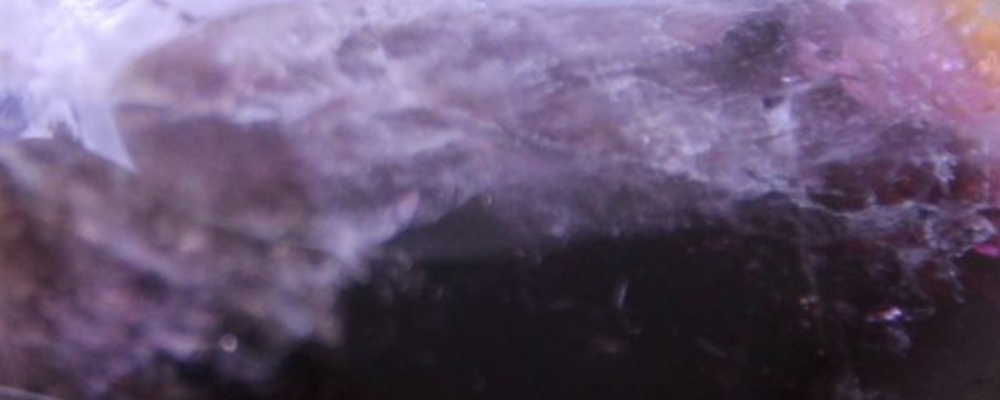
Cacoxenite radiates in yellow, brown, or golden needles, but its name means “bad host.” Ancient metallurgists had noticed that the phosphorus it introduced into iron ore harmed the resulting metal. Its beauty therefore carries a precise lesson: a subtle element can alter the entire result.
This industrial history underpins a modern correspondence with Mars for iron, Saturn for hindrance, the Sun for the golden sprays, Earth for the ore, and Fire for metallurgical transformation.
To place this stone among related minerals, compare it with Astrophyllite, Creedite, and Phosphosiderite.
A hydrated iron phosphate
Cacoxenite is a hydrated iron- and aluminum-rich phosphate. The Handbook of Mineralogy describes it as belonging to the hexagonal system, with low hardness and yellow, orange, or reddish-brown colors.
It occurs as a secondary mineral in iron ores, gossans, and phosphate-bearing pegmatites. Its complex formula contains a significant amount of structural water.
Needles, sprays, and spheres
Its fine crystals come together in radiating sprays, crusts, and small spherical aggregates. The Mindat entry presents this morphology and its associations with Goethite, Quartz, Strengite, and Wavellite.
The golden inclusions visible in some Quartz and Amethysts are sold under the name Cacoxenite, but visual observation does not always confirm their identity. The spectra compiled by the RRUFF project demonstrate the role of instrumental methods in this distinction.
Why the “bad host”?
The name comes from Greek words meaning “bad” and “host.” It was chosen because the phosphorus associated with Cacoxenite reduced the quality of the iron produced from the ore.
The stone therefore does not carry a malevolent omen. It refers to a component that becomes troublesome in a specific operation, despite its remarkable appearance.
The wrong host is not always bad in itself. It becomes unsuitable within a particular composition, place, or moment. Understanding this makes it possible to correct the whole without condemning each part.
Mars, Saturn, Sun, and Fire
Mars governs iron and technical action. Saturn represents obstruction and the quality threshold. The Sun receives the golden needles and the visibility of the detail. Earth corresponds to the ore; Fire to the process that reveals the incompatibility.
Tuesday is suitable for correcting an active flaw, Saturday for establishing a threshold, and Sunday for bringing a detail to light.
Subtle flaw and overall result
Cacoxenite accompanies projects whose outcome depends on a small element: a clause, recurring cost, ingredient, delay, role conflict, or missing data. It encourages the search for the detail capable of degrading the whole.
It also helps reposition an ill-suited element in a context where it regains a function, instead of treating it as an absolute fault.
The Rite of the Hidden Host
Place the Cacoxenite in its box. Draw a circle to represent your project, then write around it the elements that make up its composition. Mark with a yellow dot the one whose effect remains uncertain and write down the test capable of verifying it.
Say: “I find the element that changes the whole, measure its effect, and give it its proper place.” Perform the test before adding new means.
Correspondences and references
| Reference | Correspondence |
|---|---|
| Nature | Hydrated phosphate rich in iron and aluminum |
| Celestial bodies | Mars, Saturn, and Sun |
| Elements | Earth and Fire |
| Days | Tuesday, Saturday, and Sunday |
| Ritual colors | Golden yellow, brown, dark red |
| Areas | Diagnosis, quality, compatibility, correction |
| Supports | Circle, yellow dot, box |
| Gesture | Testing the detail that changes the whole |










