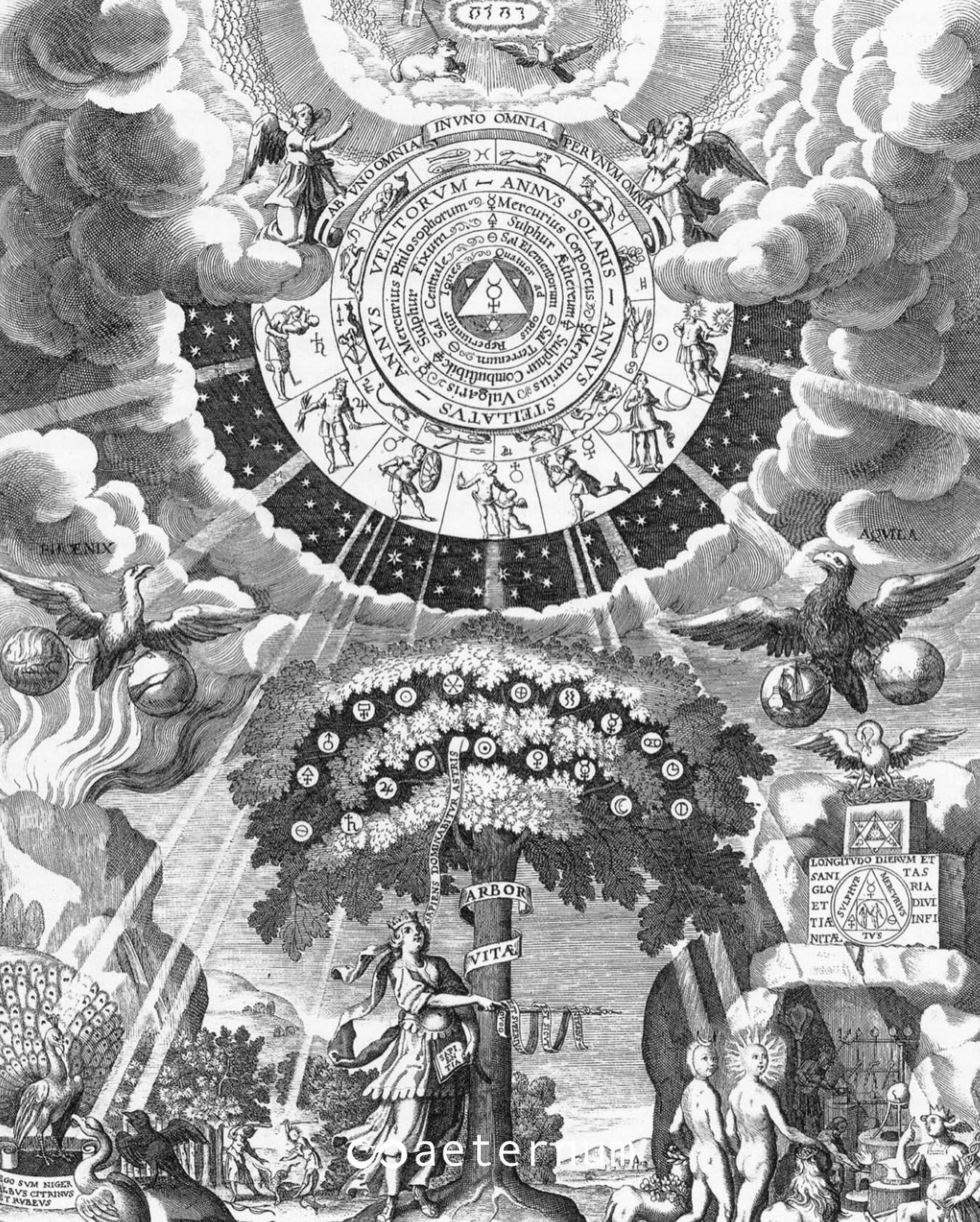











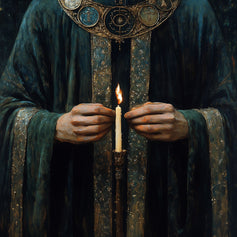
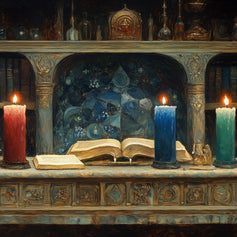
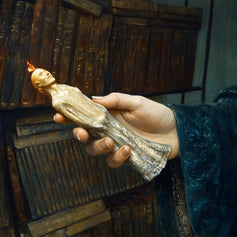














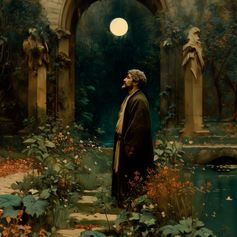
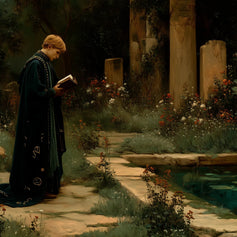
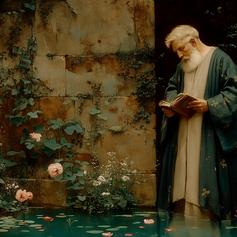
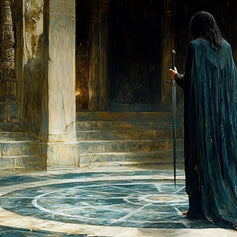



Litha celebrates the summer solstice, when light reigns longer than on any other day of the year in the Northern Hemisphere. The Sun then reaches the highest point of its apparent path, the land is clothed in full greenery, and the season is already turning toward the slow shortening of the days. This union of power and reversal gives the sabbat its character: to honor what shines, consecrate what has ripened, and protect what must still bear fruit.
The contemporary celebration brings together several legacies. Its name comes from the Anglo-Saxon calendar transmitted by Bede, its fire connects with European midsummer and Saint John’s customs, while its wreaths, plants, and waters draw on rural practices that have remained alive from northern to southern Europe. Litha thus forms a solar threshold whose ancient gestures speak of health, fertility, protection, and destiny.
In the Wheel of the Year, Litha follows Beltane and precedes Lughnasadh. The desire awakened in May becomes an active force, then that force receives direction before the first harvests. The items in the Litha collection accompany this solar work: ritual light, consecration, protection, and fulfillment.
The Sun at the Height of the Year
The summer solstice occurs around June 20 or 21 in the Northern Hemisphere. It corresponds to a precise astronomical moment: Earth’s axis then tilts this hemisphere as far as possible toward the Sun. Daylight reaches its maximum duration, nighttime its minimum, and the Sun rises to its greatest height of the year at noon. The calendar date varies slightly from year to year and according to time zone. Royal Observatory Greenwich, “Summer Solstice”.
The word solstice comes from the Latin solstitium, formed from the Sun and the idea of stopping. For a few days, the points where the Sun rises and sets appear almost motionless on the horizon before reversing course. This apparent suspension explains the moment’s ritual power: time seems to hold its breath at the height of the light.
In ancient Europe, midsummer did not always correspond to the beginning of the season. Agricultural calendars already placed the start of summer around May; the end of June therefore marked its radiant center. The English Midsummer, the Swedish Midsommar, and other names from northern Europe preserve this way of counting.
In Wicca, the summer solstice belongs to the four solar sabbats, also called minor sabbats in the traditional terminology of this movement. Its place answers that of the winter solstice: Yule welcomes the return of the light, while Litha receives its fullness and the first movement of retreat.
The summit already contains the return. Litha reveals a law of the cycle: every power reaches a point at which it must change form. The Sun triumphs, and then the days begin to shorten. The festival therefore honors fulfillment as much as right measure.
From the Anglo-Saxon month to the name Litha
The earliest attestation of the word is found in Bede the Venerable, an eighth-century Northumbrian monk and scholar. In chapter 15 of his De temporum ratione, he records the ancient names of the English months. June was called Ærra Liða, “Litha before,” and July Æfterra Liða, “Litha after.” In years that included an additional lunar month, a third Litha could be inserted between the two.
Bede associates this name with mild, navigable weather, when calm breezes made it possible to travel across a peaceful sea. His testimony initially concerns two months placed on either side of midsummer. The word therefore has an ancient history, while its use as the proper name of the solar sabbat belongs to contemporary paganism. Bede, The Reckoning of Time, translated and annotated by Faith Wallis.
The earliest Wiccan authors mainly spoke of the summer solstice or Midsummer. The name Litha spread during the second half of the 20th century, when the eight festivals received standardized names within the Wheel of the Year. Historian Ronald Hutton traces this modern construction, arising from the encounter between Wiccan sabbats, ancient calendars, and European seasonal festivals. Ronald Hutton, “Modern Pagan Festivals”.
Litha and Midsummer overlap today without being perfectly synonymous. Midsummer refers to a broad group of European celebrations associated with the solstice and Saint John's Day. Litha refers to the sabbat that organizes these traditions within the Wheel of the Year. This distinction makes the celebration richer: it welcomes ancient customs without stripping them of their place, era, or name.
Midsummer and Saint John's fires
From Portugal to the Baltic countries, from France to the British Isles and Scandinavia, the night of June 23–24 has carried communal fires. The Christian calendar dedicates it to the birth of Saint John the Baptist, set six months before Christmas. Its proximity to the solstice brought together the saint's feast, the solar climax, and seasonal customs centered on the flame.
Medieval accounts describe bonfires, torches carried through the fields, and flaming wheels sent rolling down slopes. A thirteenth-century author distinguishes bone fire, wood fire, and fire combining both materials. The burning wheel gave the Sun a visible form; its descent reproduced the movement of the heavenly body after the solstice. The Metropolitan Museum of Art, “Midsomer Magick”.
Fire also served as protection. People kept watch around it, passed through its smoke, carried a glowing ember back to the hearth, or scattered the ashes across the land. Jumping over the flames acquired meanings of health, good fortune, union, and vitality. Each region gave the gesture its own character, but the structure remained the same: bring the community together, drive away misfortune, and carry the fire's strength toward the home and crops.
Christian symbolism offered a new interpretation of the sun's decline. In the Gospel according to John, the Baptist says of Christ: “He must increase, but I must decrease.” Saint John's feast falls near the time when the days begin to shorten; Christmas comes near the time when they begin to lengthen again. The liturgical calendar and the solar cycle thus interacted for centuries.
The present-day Saint John's fires, Latvian Jāņi, Lithuanian Joninės, Finnish Juhannus, and Scandinavian Sankt Hans extend this shared horizon. Their continuity gives Litha a strong ritual language: light is shared, fire protects, and the community keeps watch together at the heart of the shortest night.
Plants, flowers, and solstitial water
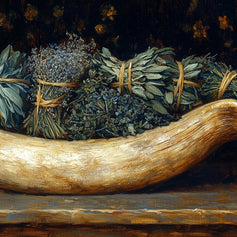
Plants gathered around St. John’s Day hold a major place in midsummer customs. Their growth coincides with full light, which gave them increased virtue for protecting the home, healing the body, or learning the future. Bouquets were hung on doors, kept in the household, and could be added to the fire at the end of their use.
In English, millepertuis is called St John’s wort, St. John’s herb. Its yellow flowers, dotted with dark glands, bloom around the festival. Mugwort, fern, vervain, and other local plants also went into the bouquets, with uses that varied by region. Stories attributed to the invisible fern seed the power to make one invisible or reveal treasures—an image perfectly suited to a night when nature seemed to disclose its secrets.
In the Nordic countries, flowers take the form of wreaths, garlands, and greenery-covered poles. In Sweden, the midsummer pole becomes the center of communal dances. A romantic custom invites people to pick seven or nine different flowers in silence, then place them under their pillow in order to dream of their future spouse. Skansen, “About the Midsummer Tradition”.
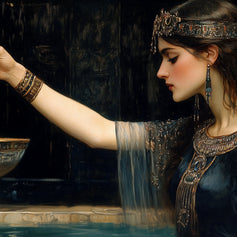
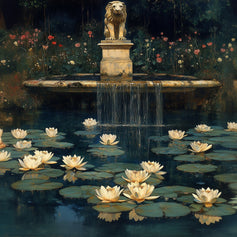
Water accompanies the flame. Dew gathered at dawn, springs visited during the night, and ritual baths served health, beauty, purification, and fertility. Fire carries solar strength; water receives this force, soothes it, and conveys it toward the body or the earth. Litha thus gains a balance that the image of the Sun alone cannot fully express.
Wreaths, protective bouquets, and love divination remain very present in Swedish celebrations. The modern Midsommar festival shows how a set of seasonal gestures can remain alive without being frozen in the past. Sweden.se, “Swedish Midsummer”.
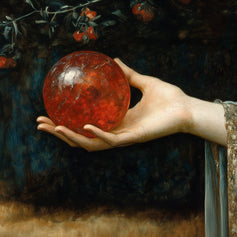
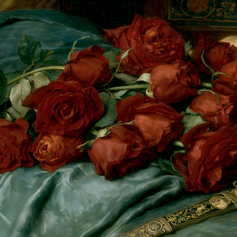
A Litha herb receives a precise intention. St. John’s wort accompanies light and protection, mugwort watchfulness and dreams, the rose fulfilled love, and oak strength and continuity. A simple bouquet made from identified plants carries more meaning than an arbitrary arrangement.
The Spiritual and Magical Meaning of Litha
Litha first represents visible fulfillment. A project launched at Ostara and set in motion at Beltane can now reveal its form, strengths, and limits. The sabbat invites us to acknowledge what is working, give thanks for the help received, and devote our full presence to the work undertaken. The solstice light reveals both success and the adjustments needed.
The solar turning then teaches moderation. Permanent growth would exhaust everything; the cycle imposes a culmination, followed by transformation. A Litha rite can therefore consecrate a victory, strengthen a protection, or support the will, but it can also remove the excess, pride, and dispersion that accompany misdirected power.
Litha’s solar magic concerns clarity, authority, courage, vitality, honor, and reputation. It suits workings that require showing oneself, defending a work, taking responsibility for a decision, or making an action fruitful. Sunday and the planetary hour of the Sun form complementary ritual correspondences; our planetary hours calculator makes it possible to identify this hour according to the place and date.
Litha’s fire purifies through intensification: it illuminates, consumes, and strengthens. Solstitial water acts through receptivity: it gathers, refreshes, and conveys. Plants provide material for the work, while the crown brings scattered forces together in a circle. These four gestures are enough to build a coherent celebration.
In protection work, Litha strengthens boundaries before the harvest season. In prosperity work, the festival requires promises to become concrete results. In love work, it celebrates chosen and mutual union. In self-knowledge work, it places the person under a clear light so they can recognize their power without letting it blind them.
How to Celebrate Litha Today
Choosing the Solar Moment
The celebration may take place at sunrise, solar noon, or sunset. Dawn is suitable for opening a cycle, noon for consecration and radiance, and evening for fire, gratitude, and the transition toward the waning half of the year. The exact astronomical date provides the central reference point, while Saint John’s Eve offers a connection to the European folk calendar.
Setting Up an Altar in Full Light
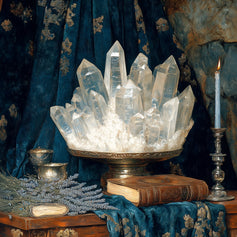
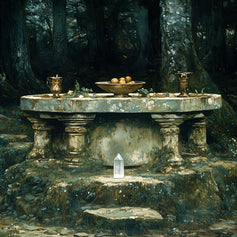
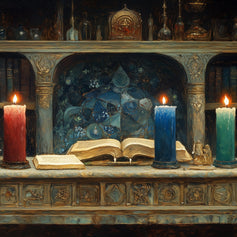
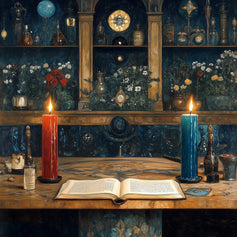
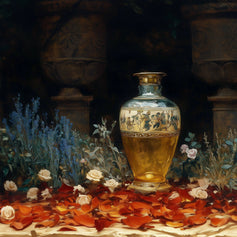
Arrange a yellow, golden, or white candle, a bowl of clear water, a few seasonal flowers, and a symbol of the Sun. A fallen oak branch, a small round loaf, honey, or summer fruit can complete the arrangement. Each element has a function: the flame illuminates, the water receives, the plant protects, and the food gives thanks.
Consecrating What Has Grown
Write down the name of a work, commitment, or quality that has taken shape since spring. Place the paper before the light and name the result already achieved aloud. Then ask for the strength needed to carry this work through to its harvest. This practice keeps Litha in its proper movement: celebrating the peak without confusing the stage with definitive completion.
Making a Crown or Bouquet
Choose local plants that you have identified with complete certainty and gather them sparingly. Weave a crown for unity, arrange a bouquet for household protection, or place seven flowers near the bed for dreamwork. The handmade gesture gives form to the intention and connects the rite to the actual season.
Working with Fire and Water
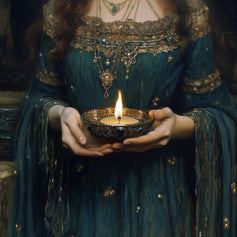
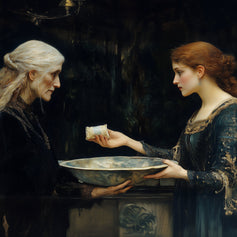
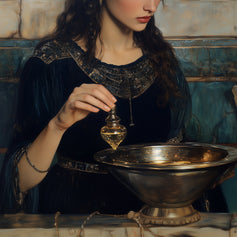
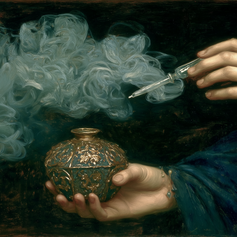
Light a candle, then hold your hands at a distance from its warmth before placing them over the bowl of water. State a request for clarity, courage, or protection. The water can then be used to mark the outer threshold, water a plant, or wash a ritual object suitable for contact with moisture. A large communal fire requires an authorized space, a designated person in charge, and extinguishing equipment immediately available.
Sharing the Light
Finish with a simple meal of bread, honey, fruit, culinary herbs, and fresh water. Offer a symbolic portion to the earth in a biodegradable form that is safe for animals. A word of gratitude addressed to loved ones, ancestors, or honored powers grounds the celebration in a real connection rather than solitary contemplation.
Litha Sabbat Correspondences
The following correspondences bring together the astronomical core of the solstice, European midsummer customs, and the ritual practices of the contemporary Wheel of the Year.
| Correspondence | Litha Association |
|---|---|
| Date | Summer solstice, around June 20 or 21 in the Northern Hemisphere; Midsummer celebrations on June 23 and 24 |
| Place in the Wheel | Between Beltane and Lughnasadh; solar sabbat or minor sabbat in traditional Wiccan terminology |
| Names | Litha in contemporary paganism; summer solstice; Midsummer; St. John's celebrations according to the region |
| Celestial Bodies | The Sun in first place; the Sun's entry into Cancer according to the tropical zodiac |
| Day and Hour | Sunday and the planetary hour of the Sun for contemporary solar workings |
| Elements | Fire as the central force; water as a complementary power of receptivity, freshness, and fertility |
| Direction | South in the modern ritual correspondence associated with the Sun and Fire |
| Colors | Gold, solar yellow, luminous white, fire red, and the green of summer vegetation |
| Plants | St. John's wort, mugwort, fern, vervain, rose, and oak; local flowers for crowns and bouquets |
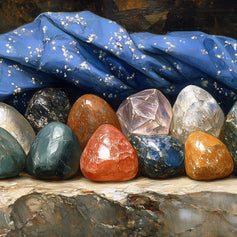
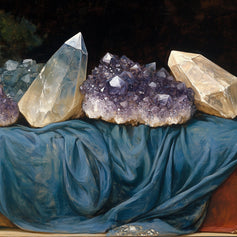
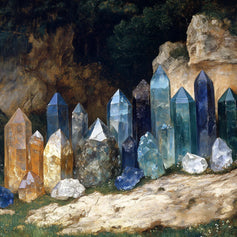
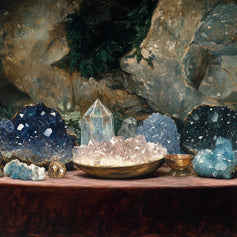
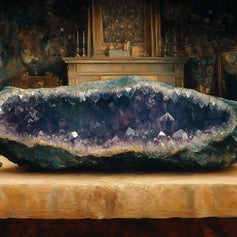
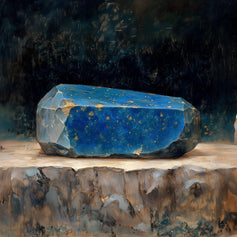
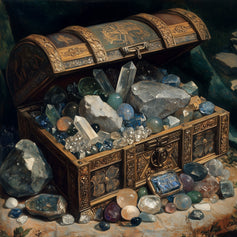
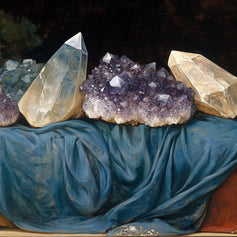
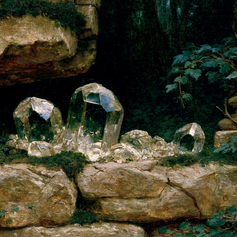
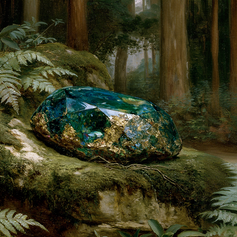
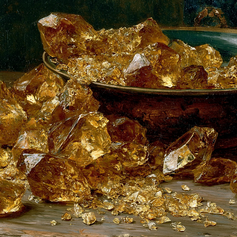
| Stones | Amber, citrine, tiger's eye, heliolite, and rock crystal in contemporary esoteric correspondences |
| Symbols | Solar disk and wheel, fire, leafy crown, flower-decorated pole, spring water, dew, and St. John's herbs |
| Honored Figures | The Sun as a central power; John the Baptist in Christian celebrations on June 24; solar deities chosen according to the tradition followed |
| Magical Areas | Vitality, radiance, courage, success, protection, fertility, mutual love, authority, and gratitude |
| Offerings | Round bread, honey, summer fruit, seasonal flowers, culinary herbs, and fresh water |
Precautions
A Safe Solar Celebration
Never look directly at the Sun, and limit exposure during the hottest hours. Keep all flames on a stable surface, away from dry plants, fabrics, children, and animals; never leave a candle unattended. Outdoor fires must comply with local regulations and restrictions related to fire risk. Do not burn, ingest, or apply any plant to the skin without certain identification and verification of its contraindications. St. John's wort has numerous drug interactions in particular and may increase the skin's sensitivity to the Sun.
Sources and reference texts
Royal Observatory Greenwich, “Summer Solstice” ; Bede, The Reckoning of Time, translated and commented on by Faith Wallis ; Ronald Hutton, “Modern Pagan Festivals”, 2008 ; The Metropolitan Museum of Art, “Midsomer Magick” ; National Trust, “History of Summer Solstice Traditions” ; Sweden.se, “Swedish Midsummer” ; Skansen, “About the Midsummer Tradition”.