






























































































































|
IN SUMMARY...
1. From Dionysus to Leonardo da Vinci |
Amethyst is one of the most widespread and recognizable stones, whether you are interested in esotericism or not. It is found in jewelry, decorative objects, and spiritual practices, associated here and there with serenity and intuition. But do you really know it well? Answers.
1. From Dionysus to Leonardo da Vinci
In Greek mythology, a legend tells that Dionysus, the god of wine, was chasing a nymph named Amethystos who wished to remain chaste. To protect her, the goddess Artemis transformed her into a statue of white quartz. Filled with remorse, Dionysus poured wine over the statue, thus giving it its characteristic purple hue. This story is the origin of the belief that Amethyst protects against drunkenness.

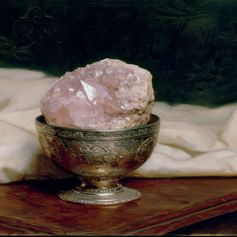
The Romans, sharing this belief, used Amethyst cups to drink wine, so they would be preserved from drunkenness. These cups were decorated with figures of Bacchus, the Roman god of wine.
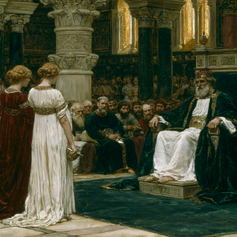
In the Middle Ages, Amethyst symbolized royalty and spirituality. It adorned crowns and royal jewelry and was also used in religious ornaments. Bishops wore rings set with amethyst to represent their spiritual authority and commitment to the Church.
Leonardo da Vinci, the famous Renaissance artist and inventor, attributed to Amethyst the power to dispel negative thoughts and sharpen intelligence. He used this stone to stimulate his creativity and mental clarity.
2. The Stone of Dreams
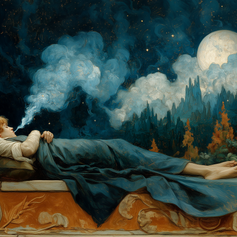
When placed under the pillow or worn during sleep, Amethyst acts on the dream sphere by intensifying dreams and promoting their clarity. Dreams become more detailed and memorable, which can facilitate their interpretation upon waking. Its reputation as a catalyst for prophetic dreams comes from its association with intuition and subtle perception, qualities that some esoteric traditions have attributed to it for centuries.


But its action is not limited to amplifying dreams. It is also used to ward off nightmares by establishing a form of energetic protection that prevents negative influences from interfering with sleep. Unlike other protective stones that create a barrier against malevolent entities, Amethyst mainly acts on the source of dream disturbances by dissipating tensions and anxieties accumulated during the day. Its soothing influence thus contributes to more peaceful nights, where the subconscious can express itself freely without being disturbed by oppressive visions.
3. Prejudices and Warnings
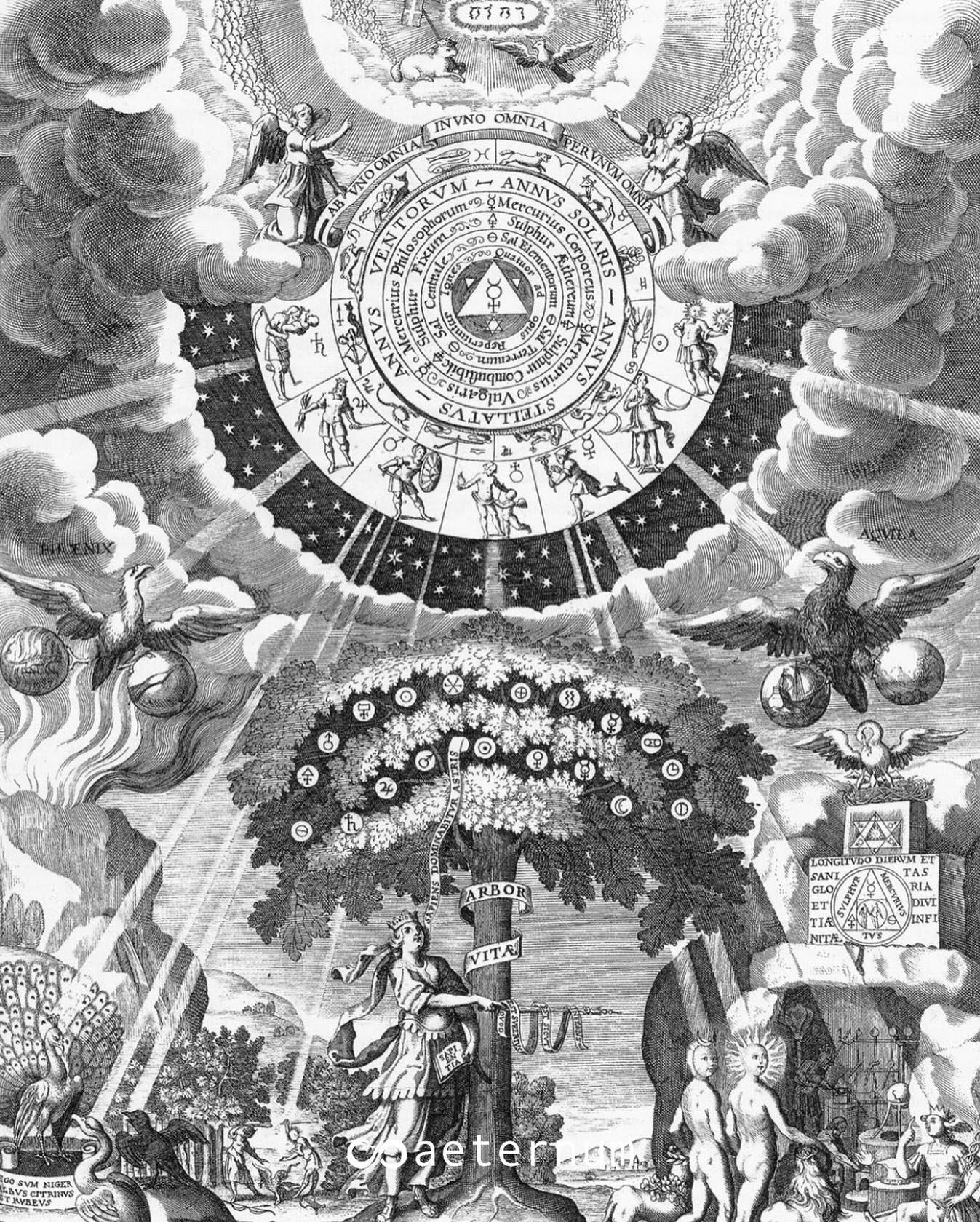
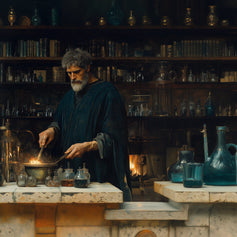
In the Middle Ages, a time when any non-religious practice aroused suspicion, Amethyst was sometimes associated with witchcraft. Its use by alchemists and healers attracted suspicion, leading to bans or warnings about its use.
Some writings of the time claimed that improper use could cause energetic imbalances or attract negative influences. They also warned against excessive dependence on this stone in spiritual practices, suggesting it could disrupt rather than harmonize the mind.
This only lasted for a time, and then Amethyst was adopted to adorn episcopal rings.
4. Why is Amethyst so Popular?
Amethyst is so widespread for several reasons, both cultural, geological, and technical.
Historically and culturally, it has always been appreciated for its color, which was once associated with royalty and spiritual power as we have seen.
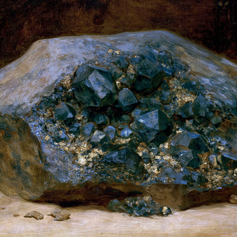
From a geological point of view, it is a variety of Quartz, a very abundant mineral on Earth. Unlike other stones that require rare geological conditions to form, Amethyst is found on all continents, with particularly large deposits in Brazil, Uruguay, and Africa.

Finally, its current popularity is due to its relatively affordable price. Unlike rarer stones, Amethyst is widely available and its extraction remains relatively simple.
5. French Amethyst Exists
In France, the main Amethyst deposits are located in Auvergne, notably in the Livradois massif. This region hosts the largest Amethyst deposit in Europe, with veins extending over several kilometers. Among notable sites is the Pégut Mine, located in Champagnat-le-Jeune. Since 2006, this mine, covering nearly 2 hectares, has been exploited artisanally, allowing visitors to discover Amethyst veins deep in the forest.

Source: Maison des Minéraux
In Crozon, Brittany, Amethyst is notably present at Cap de la Chèvre, more precisely at the Porz Kregwenn site. In the 1970s, a natural landslide of the Armorican sandstone cliff revealed Amethyst veins. However, mineral collecting is prohibited there to preserve the site. The Porz Kregwenn deposit is recognized for its scientific and educational interest, presenting small veins of Amethyst Quartz visible in the cliffs.