










































































































































































































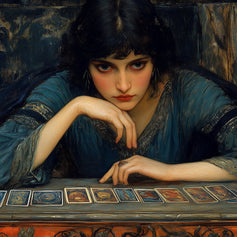




Since almost the dawn of time, magnetism has fascinated people as an invisible force linking the material and spiritual worlds. First observed through lodestone, which can attract iron, this phenomenon gave rise to myths and sacred practices. From priests of antiquity to healers in our countryside, this energy has been credited with strange powers—sometimes to heal, sometimes to enchant. But what is it really? And where does it come from? Here are the answers.
Magnetic Stones and Invisible Power
The earliest accounts of magnetism in the Western world date back to Greco-Roman antiquity. The Greeks discovered unusual stones in Asia Minor—magnetite—capable of attracting iron. A legendary account reported by Pliny the Elder tells of a young shepherd named Magnes, whose hobnailed sandals and iron staff were drawn toward an invisible rock: he is said to have discovered the first lodestone. This “magnes”—named after the region of Magnesia—gave the phenomenon its name. Ancient thinkers saw more than a mineral curiosity in it. The philosopher Thales of Miletus, in the 6th century BC, claimed that the magnet was endowed with a soul because it could move inanimate objects. In this way, he attributed a living and spiritual dimension to this stone, which seemed to act according to its own will.
This sense of wonder at the magnet’s powers can be seen in the many names and symbols associated with it. The Greeks nicknamed it the “stone of Hercules,” referring to the hero renowned for his strength, so impressed were they by the magnet’s attractive force. Indeed, an entire mythology surrounds the magnet: it was said that magnetic islands existed which could draw iron-laden ships toward them, or that men could be pinned to the ground by their iron-shod shoes when the soil was rich in magnetite. Serious authors of antiquity, such as Plutarch and Ptolemy, also circulated strange recipes involving magnets: rubbing a magnet with garlic was believed to make it lose its power, while soaking it in goat’s blood was thought to restore it immediately. These beliefs, reported centuries later by scholars, show how deeply the stone’s magnetism fed the imagination and mysterious practices from antiquity onward.

Magnetite
Alongside the legends, the magnet was credited with very practical virtues, particularly therapeutic ones. Ancient physicians used the magnetic stone to relieve certain ailments. Aristotle himself mentions the magnet’s analgesic and healing effects, claiming that it could not only soothe pain but also draw iron fragments, such as arrowheads, out of wounds. Likewise, the healing god Asclepius (Aesculapius) was associated with these beneficial properties of the stone of Hercules. In ancient Egypt, magnetite was used as a protective amulet, with priests viewing it as a talisman that captured beneficial forces and warded off malign influences.
This dual role of the magnet—as both magical and curative—is reflected in numerous historical anecdotes. Queen Cleopatra VII, the last pharaoh of Egypt, was reputed to be interested in the occult sciences of her time. Tradition holds that she wore a magnetic jewel on her forehead to preserve her beauty and prevent wrinkles, convinced that the stone could help maintain the youthfulness of her skin. Better still, it is said that she slept on a bed inlaid with lodestones in order to immerse her body in this beneficial magnetic influence. Likewise, Hippocrates—the father of Greek medicine—is said to have used magnetite to treat certain disorders, such as infertility, demonstrating that the idea of healing magnetism was already present among the scholars of antiquity.
Thus, in the Western ancient world, the magnet appeared as a point of contact between the visible and the invisible. At times a tool of myth—guiding sailors and protecting against occult forces—and at times a remedy, it symbolized a universal energy of attraction and harmony. What the Greeks vaguely sensed—a single force capable of acting at a distance, healing the body, and influencing the soul—would endure through the ages and grow richer through esoteric traditions.
The Rediscovery of Magnetism during the Renaissance
After the Middle Ages, which chiefly remembered the magnet for its usefulness in the compass and navigation, the Renaissance saw renewed interest in magnetism as an occult force. Sixteenth-century Hermetic thinkers and alchemists incorporated the magnet and its strange power into their vision of the cosmos. Among them, the Swiss physician and philosopher Paracelsus (1493–1541) played a major role. Convinced that human beings are microcosms reflecting the macrocosm, Paracelsus described nature as permeated by an invisible universal fluid linking the stars, the Earth, and living beings. He explicitly called this energy magnetism. According to him, every human being is infused with a magnetic fluid that emanates from the cosmos and circulates through the body, creating polarities like those of a magnet. The human body would therefore possess a positive pole, connected to celestial influences, and a negative pole, rooted in the earthly elements; health would result from the balance of these forces. Paracelsus stated: “Man is endowed with this particular fluid emanating from the macrocosm... an energy designated by the term magnetism.” He even considered explaining certain curses or enchantments through this magnetic action: a sorcerer’s will could influence a victim’s “spiritual body” from a distance, just as one would magnetize an object, producing real effects without physical contact. For him, this invisible bond between beings belonged to the same natural science that physicians must not overlook, because understanding magnetism meant understanding one of the keys to life.
During the Renaissance, magnetism thus became a bridge between emerging science and ancient magic. Scholars explored its physical manifestations while retaining a mystical perspective. In 1600, the English physician William Gilbert rigorously studied magnets and proposed that the Earth itself was a gigantic magnet. But he went further, speculating that this “magnetic breath” might explain the movements of the planets better than gravity. In his work De Magnete, Gilbert spoke of “magnetic spirits” emanating from the sun and stars, animating the cosmos like a living organism. This almost animistic conception of cosmic magnetism sparked passionate debate. The Church, wary of the idea, feared that the laws of nature might be confused with pagan souls. In 1667, the German Jesuit scholar Athanasius Kircher published The Magnetic Kingdom of Nature, offering a Christian interpretation of the phenomenon. He accepted the idea of a magnetic movement in the heavens linking the stars, but refused to grant the Earth a “magnetic soul” in order to preserve orthodoxy. Kircher nevertheless celebrated magnetism as a symbol of universal harmony: the frontispiece of his book depicts a great magnetic chain of beings, held at one end by God in the clouds, with its lower end touching the Earth. The links of this chain are not hooked together but held by their own attractive force, illustrating the idea that divine will magnetizes the world to ensure its cohesion. This powerful image of the “magnetic chain” reflected the mentality of the time: magnetism was perceived as the secret glue of the universe, the subtle fluid through which the Creator linked every thing within the great hierarchy of Creation.
Alongside these cosmic speculations, magnetism remained a practical tool for healing and mystery. In the 17th century, the Flemish physician Jan Baptista van Helmont revived Paracelsus’s legacy. In 1621, he published a treatise on cura magnetica—the “magnetic healing of wounds”—in which he defended the effectiveness of treating a wound from a distance by applying an ointment to the weapon that had caused it rather than to the wound itself. According to him, this famous sympathetic balm worked through magnetic action: the wound and the weapon remained connected by an invisible fluid. Van Helmont shocked the Inquisition by suggesting that even the relics of saints might heal not through divine miracles but through a natural magnetic influence they exerted on the faithful. His writings, marked by criticism of Jesuit scholastics, led to his pursuit for twenty years by ecclesiastical courts. This clearly shows how magnetism, as a “natural” force with extraordinary effects, challenged the boundaries between science, faith, and magic. On the eve of the Enlightenment, the idea that an invisible fluid coursed through the world and the human body was both exhilarating to innovators and unsettling to religious authorities. This magnetic fluid, people were beginning to suspect, might be life’s very energy, a key to nature’s secrets—a perspective that opened the way to discoveries as well as controversy.
Mesmer and “Animal Magnetism” in the Age of Enlightenment
In the 18th century, magnetism left esoteric circles and became a genuine social craze, embodied by the charismatic Franz-Anton Mesmer. A physician of Viennese origin who settled in Paris, Mesmer drew on earlier ideas—the fluids of Paracelsus and Van Helmont’s experiments—to develop his own theory, which he called animal magnetism, as opposed to the purely mineral magnetism of the lodestone. According to Mesmer, a universal magnetic fluid permeated the air, the stars, and living beings, and imbalances in this fluid caused illness in the human body. The healer’s role was therefore to restore the harmonious circulation of this vital fluid through the patient’s body. Mesmer maintained that certain individuals—including himself—possessed a powerful natural magnetic force and could, through willpower alone and the laying on of hands, direct this fluid into others to heal them.

Franz-Anton Mesmer
From the 1770s to the 1780s, Mesmer put his ideas into practice in Paris and sparked extraordinary enthusiasm. In luxurious salons, he organized group sessions around a strange device: the famous Mesmer tub. It was a large circular tub filled with water mixed with iron filings, connected to curved iron rods that patients seated around it held or applied to diseased parts of their bodies. Mesmer claimed to “magnetize” the tub by infusing it with his personal fluid, transforming the water and metal into reservoirs of magnetism. To the sound of a glass harmonica, a musical instrument producing captivating vibrations, the therapist moved among the patients, making magnetic passes—broad hand movements a few centimeters from their bodies—to distribute the fluid and dissolve energetic blockages. The effects soon appeared: many patients entered a magnetic crisis, a kind of convulsive trance accompanied by sweating, laughter, or cathartic tears. Mesmer saw these crises as proof that the fluid was realigning vital forces and expelling disease. Accounts describe spectacular cures of paralysis, hysterical blindness, and chronic pain, attributed to the action of this healing magnetism.

Mesmer’s magnetic tub (engraving, 1780)
Mesmer’s social success was so great that people flocked to his sessions as though they were theatrical performances. Members of the aristocracy and high society took part in the tub ritual, delighted to experience something on the boundary between science and wonder. For many, Mesmer had restored the prestige of a natural magic they believed forgotten. He described his system in scholarly terms, seeking to persuade people that this magnetic fluid was ultimately a subtle physical force, analogous to electricity or gravity, which science would eventually measure. In private, however, the entire city whispered about the doctor’s wizardly appearance, his piercing gaze, and the almost incantatory passes of his hands. Mesmer himself, draped in the success of his practice, seemed to oscillate between the role of enlightened physician and wonder-worker. He advised his patients to enter a receptive state, almost one of faith, in order to absorb the fluid more effectively—a practice closer to spiritual healing than to conventional medical treatment.
 SSEDS" style="float: none;">
Animal magnetism. Source: SSEDS
His students and successors would deepen magnetism’s mystical dimension even further. In 1784, the Marquis de Puységur, one of his disciples, discovered by chance that magnetizing a young peasant could plunge him into a state of lucid somnambulism. The patient Victor, apparently asleep, began to speak and answer questions, displaying strange insights into his own illness—as though he could see inside himself. This “magnetic sleep,” without convulsions, in which the subject acted like a medium, opened up new possibilities. Puységur and other magnetizers explored this trance phenomenon, which was thought to provide access to the patient’s mind and perhaps to hidden knowledge. It soon became apparent that magnetism was not only useful for healing the body: it could also awaken unexplained psychic abilities, such as clairvoyance or mind-reading. By the end of the 18th century, animal magnetism had thus become a bridge to the study of the soul and the paranormal.
Of course, this rise of magnetism did not go unchallenged. University physicians and advocates of the triumphant Enlightenment reason viewed these experiments unfavorably, as they combined theatrical crises, mysticism, and a complete lack of tangible evidence. At the command of King Louis XVI, a royal commission—including Benjamin Franklin and Antoine Lavoisier—investigated Mesmer’s practices. Their report, published in 1784, concluded that the observed effects were real but were caused by imagination and the power of suggestion rather than by any novel fluid. Stung, Mesmer left France soon afterward. It made little difference: animal magnetism had taken root in popular and scholarly culture, and a host of magnetizers continued his work throughout Europe. In France, at the turn of the 19th century, followers such as Baron Du Potet, Dr. Deleuze, and Abbé Faria carried on and transformed Mesmer’s legacy. Magnetic fluid entered medical and occult literature, at times praised for its wonders and at times mocked. Whatever the case, it became impossible to ignore this strange force, which inflamed passions and seemed to defy conventional explanations.
Magnetism, Magic, and Esotericism
The 19th century in France was a pivotal period in which magnetism stood at the crossroads of the emerging science of the psyche, unconventional medicine, and magical tradition. While the first hypnotists—James Braid would rename the practice “hypnosis” around 1843—sought to provide a rational explanation for magnetic sleep, a powerful esoteric current seized upon magnetism and incorporated it into a broader vision of occultism. This was the era when magnetism openly flirted with spirituality: the aim was no longer merely to heal bodies but also to initiate souls and explore invisible worlds.

Book Dogma and Ritual of High Magic, Éliphas Lévi
In 1853, a French esotericist, Éliphas Lévi, published his work Dogma and Ritual of High Magic. Familiar with magnetic ideas, Lévi identified Mesmer’s magnetic fluid with the “Astral Light,” the ever-present occult energy he regarded as the great universal magical agent. According to him, the astral light was a subtle ether that stored all images and influences, and through which both ceremonial magic and magnetic phenomena operated. He wrote evocatively: “The world is magnetized by the light of the sun, and we are magnetized by the astral light of the world. ... We have within us three centers of fluid attraction: the brain, the heart, and the genital organ... it is through these organs that we communicate with the universal fluid transmitted into us by the nervous system.” As can be seen, Lévi’s discourse blended the vocabulary of magnetism with that of Kabbalistic magic. In his writing, magnetism was nothing less than a primordial cosmic force that the mage could harness and direct through willpower to produce what were once called miracles. Other occultists, such as Baron du Potet, who headed the Revue du Magnétisme, and later Papus, extended this idea by making magnetism the cornerstone of a rediscovered “sacred science.” Magnetism thereby became an initiatory tool: the aim was not only to heal but to elevate the magnetized person toward higher planes of consciousness.
This identification of magnetism with ancient magic did not please everyone. Religious institutions, particularly the Catholic Church, were alarmed. Nineteenth-century Catholic authors wrote virulent pamphlets against magnetism and the emerging spiritualist movement. For an apologist such as Roger Gougenot des Mousseaux, the magnetic fluid was merely a new form of the occult: “Magnetism is the modern form of magic. The immediate cause of table-turning and mediumistic phenomena, it enables the magnetized person to acquire extraordinary powers,” he protested, concluding that such powers necessarily implied demonic intervention. This extreme view—seeing every magnetizer as an unwitting sorcerer—illustrates the enduring fear of magnetism. It is true that some demonstrations of the period blurred the boundary between science and the supernatural. For example, during table-turning sessions, precursors to spiritualism around 1850, many people observed that the presence of a magnetized medium greatly facilitated unexplained movements and communications with the dead. People even spoke of “odic force” or “psychic fluid” to describe this bewildering energy produced by magnetizers and mediums. In the eyes of believers, this force could just as well be a divine gift, if viewed as a means of relieving and enlightening the soul, as a diabolical temptation, if feared as a way to summon harmful spirits. In any case, magnetism became firmly established in the cultural landscape: it was studied by curious physicians, practiced by fashionable healers, invoked by spiritualists, and opposed by moralists—a sign that it had become a genuine social phenomenon.
At the end of the 19th century, some sought to reconcile magnetism with science by stripping it of its supernatural aura. In France, figures such as Hector Durville and his family founded schools of magnetism. They proposed an “experimental and therapeutic” approach, attempting to integrate magnetism as an aid to official medicine without resorting to spiritualist explanations. However, even Durville eventually acknowledged the existence of a “transcendental magnetism” extending beyond the purely physical sphere: an occult aspect of the magnetic fluid connected to “higher life, the immutable infinite,” belonging more to a sacred science than to material science. Despite every effort to “rationalize” magnetism, its mystery persists. This force remains elusive: at times measured in mesmeric effects, passes, and perhaps dynes, and at times regarded as the very fabric of dreams and the soul of the world.
What Kind of Magnetism Exists Today?
Magnetism, as a practice, has survived every shift in fashion and every criticism, becoming firmly rooted in Western folk traditions. In France especially, it remains part of the landscape of traditional healing to this day. In rural areas, the figure of the magnetizer-healer remains familiar and respected. Since the 19th century and long before, people believed to possess the “gift” have devoted themselves to relieving others through the laying on of hands, prayer, and the transmission of vital fluid. Depending on the region, they are called toucheurs, healers, or specialists such as fire cutters, who instantly soothe burns. These practitioners, generally discreet, embody the direct legacy of Mesmer’s animal magnetism, enriched by local influences. They do not always explicitly speak of “magnetism,” but readily refer to a universal energy or divine force flowing through their hands.
Even today, it is not uncommon to encounter, in a Breton village or a small town in the Massif Central, a magnetizer whom people consult when conventional medicine is powerless or takes too long. Thousands of French people turn to them to cut the fire of radiotherapy, soothe shingles, calm persistent pain, or rebalance the nerves. Far from being relegated to the status of superstition, magnetism continues to be practiced with devotion and humility. It adapts to modern needs while preserving its spiritual essence. Practitioners can be found throughout the country, each with their own approach: one may relieve burns, another restore “the magnetism of the joints,” while elsewhere someone may purify the “fluids” of a depressed person. This diversity testifies to the richness of a tradition that has endured through the centuries. Above all, the continued success of these practices suggests that, for many of our contemporaries, there is something more than tangible matter: an invisible energetic principle, of which magnetism is one expression, that can be influenced to restore harmony.
It is remarkable that the public’s trust in these magnetizers remains strong. Very often, they work alongside or in conjunction with physicians: people may “see the bonesetter” for back pain while continuing their medical treatment, or ask a fire cutter to intervene on a burn while waiting for emergency care. This pragmatic coexistence between scientific medicine and magnetic healing reflects a form of popular wisdom: why refuse an aid, even if inexplicable, if it brings relief? Ultimately, for many people, magnetism is not so much a belief as a lived experience—the beneficial warmth of a hand on a fevered forehead, pain fading without knowing how, or sleep returning after a magnetic pass.
At the beginning of the 21st century, magnetism is also becoming integrated into new forms of spirituality and well-being. Bridges are being built between the Western tradition of the magnetizer and Eastern practices such as Reiki, which likewise relies on transmitting a universal energy through the laying on of hands. The language changes: people speak of “bio-magnetic energy,” chakras, and the aura—terms borrowed from India or contemporary esotericism—but the underlying idea remains the same. The aim is to open the channels of vital energy and restore balance to body and mind. Many modern magnetizers explain their gift in accessible terms: every living being is traversed by a subtle current, comparable to an electrical network, which must be rebalanced in the event of a “short circuit” or blockage. These analogies are intended to make magnetism understandable to people today without stripping it of its wonder. For the spiritual dimension is never far away: many practitioners invoke an energy of love, a grace flowing through them. Magnetism thus retains a sacred or divine character—it is described as a gift from Heaven—even when presented in modern language.
Thus, magnetism as a spiritual and magical force has accompanied the West through the ages, constantly transforming but never disappearing. Its symbolic role is powerful: it represents universal attraction, the mysterious correspondence between all things, the life force uniting soul and body, humanity and nature. And even today, when a magnetizer’s hands relieve pain or soothe a troubled mind, a little of this wisdom comes alive again—the wisdom that says the invisible is part of reality, and that magnetism is a way of touching the mystery of life.
Sources:
-
On the Influence of the Stars on Living Bodies, Franz Anton Mesmer, 1776
-
Memoir on Animal Magnetism, Marquis de Puységur, 1784
-
Magnetism and Mesmerism in the Enlightenment, Journal of the History of Ideas, 2015
-
The Discovery of the Unconscious, Henri F. Ellenberger, Basic Books, 1970
-
The Doctrine of Animal Magnetism, Charles Lafontaine, 1851
-
From Mesmer to Freud: Magnetic Sleep and the Roots of Psychological Healing, Adam Crabtree, Yale University Press, 1993
-
Medical Archives on Magnetism, Paris, 19th Century
-
Manuscripts of the Bibliothèque nationale de France, sections on Mesmerism and Animal Magnetism








Super article