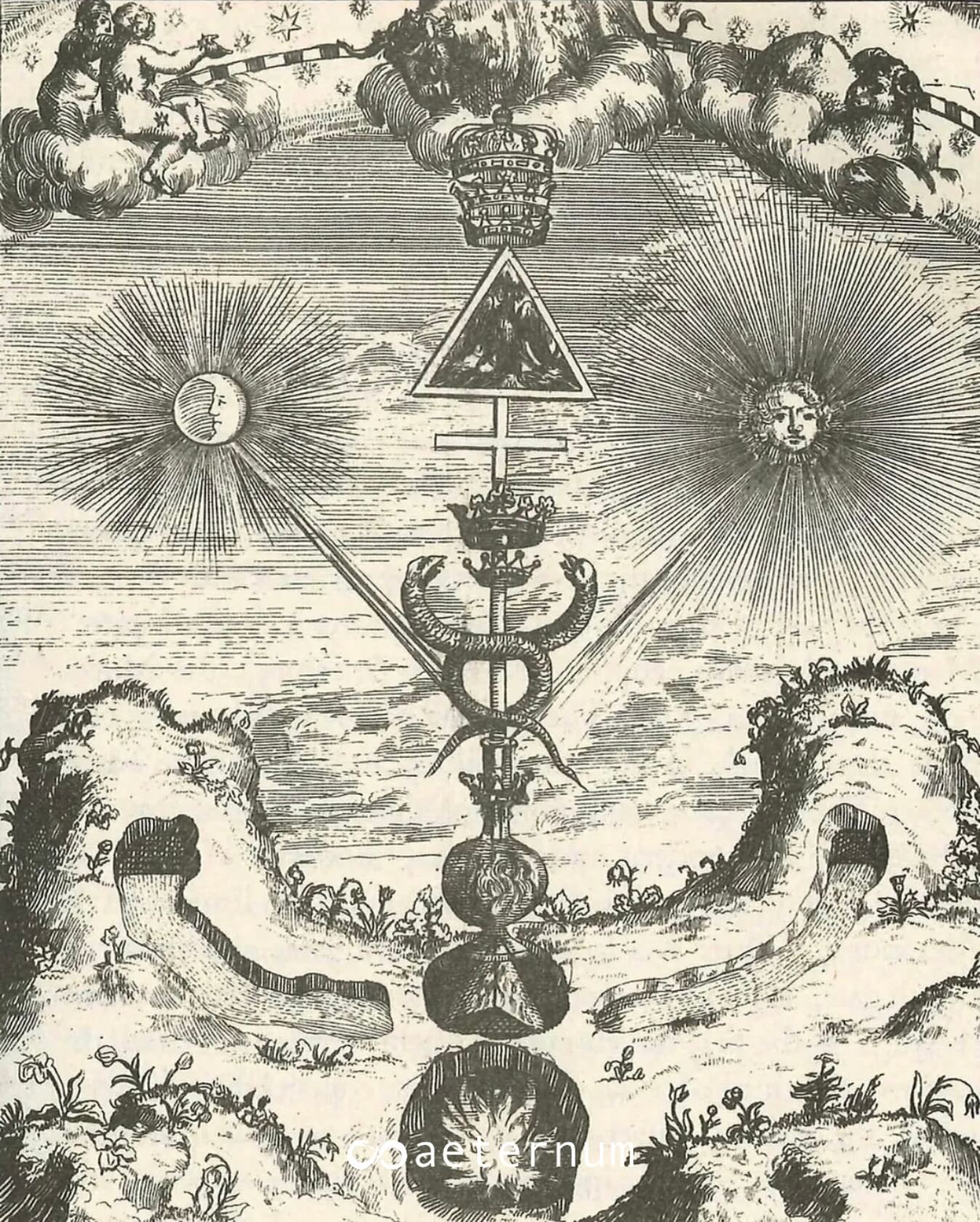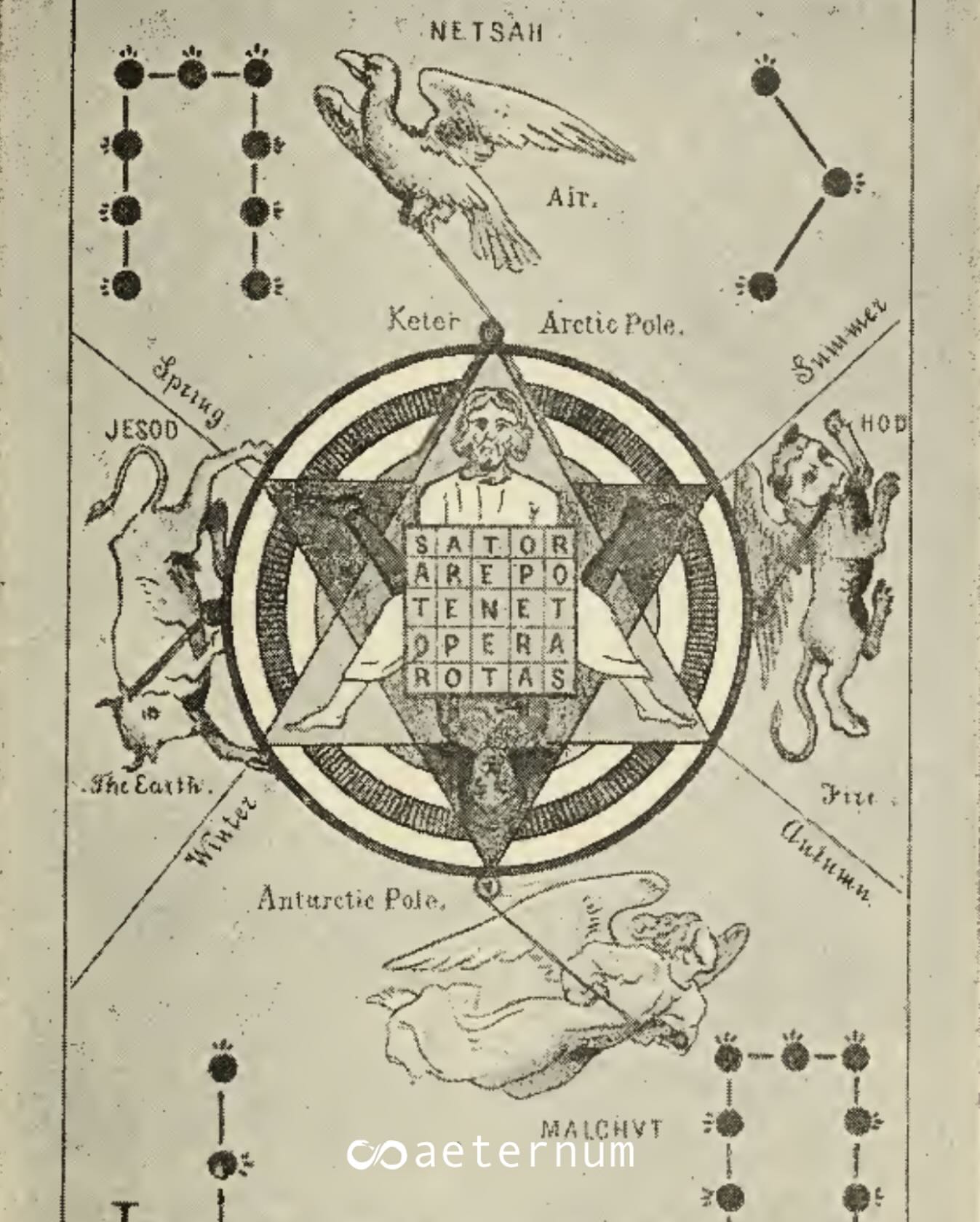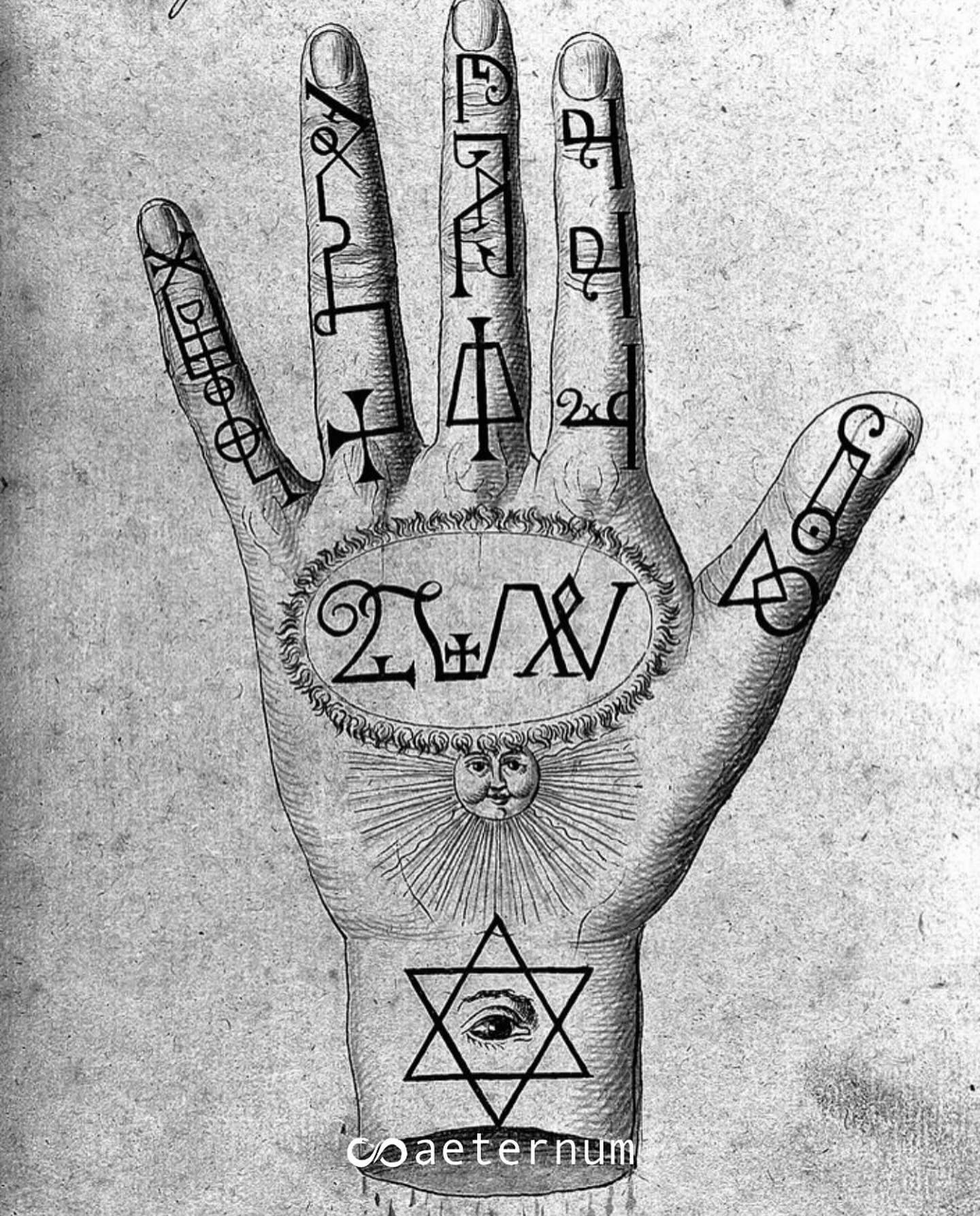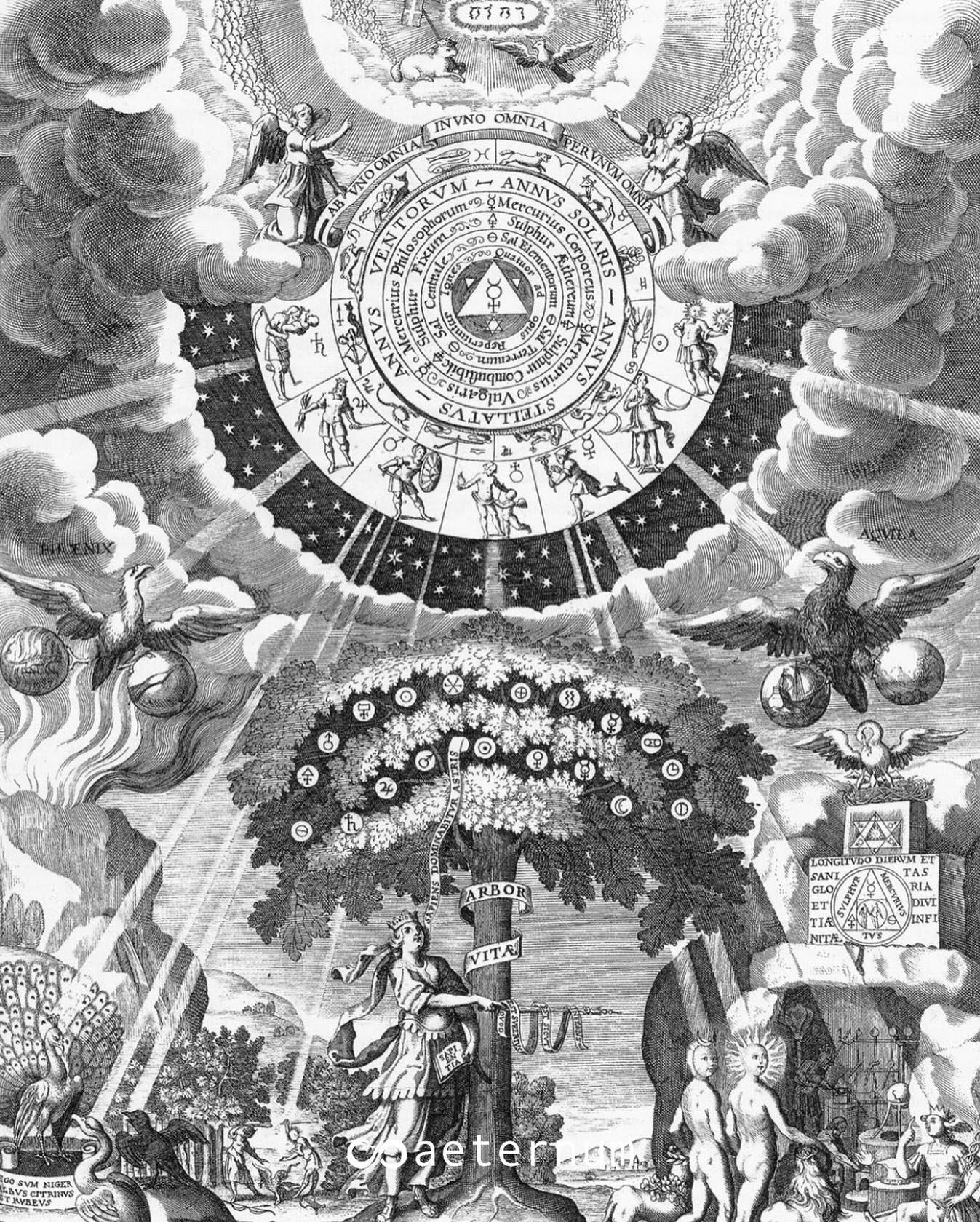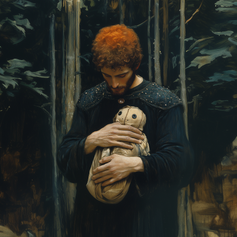







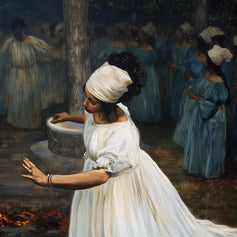
















































































































Alchemy, too often reduced to the chimera of manufacturing gold or perceived as an archaic and obscure science, is in reality one of the densest intellectual and spiritual traditions in human history.
From Alexandria to Greco-Egyptian Alchemy
To understand the origins of this “Royal Art,” we must go back to the craft workshops of ancient Egypt, where the transformation of metals and metallurgy were not perceived as mere secular activities, but as sacred and ritual operations. The blacksmith or smelter played the role of an initiated priest, working directly with the forces of nature to complete the maturation of minerals within the Earth, which was regarded as a living organism.
The true birth of alchemy as a theorized and structured discipline took place during the Hellenistic period, primarily in the cosmopolitan city of Alexandria. It was at this intellectual crossroads that Egyptian techniques for melting, coloring, and alloying metals merged with Greek natural philosophy, Chaldean astrology, and Mesopotamian theology. The Greco-Egyptian alchemists, who expressed themselves in Greek, moreover preferred to call themselves “philosophers” rather than artisans. They sought to unite manual practice, described as “sacred art” (tekhnê iera), with a comprehensive vision of the cosmos governed by the doctrine of universal sympathies. According to this Stoic and Neoplatonic vision, every realm of nature is interconnected, with the heavens giving what the earth receives in a perpetual cycle of exchanges and mutual influences.


Among the founding figures of this period, Zosimos of Panopolis, active around 300 CE, remains the indispensable theorist. Originally from Upper Egypt and having worked in Alexandria, Zosimos laid the conceptual foundations that would guide Arabic-language alchemy and medieval European alchemy for nearly fifteen centuries. He postulated that all material substances are composed of a soma (the physical body, the fixed and earthly part) and a pneuma (the volatile part, the spirit, or active essence). The alchemist must strive to separate these two components through physical operations in order to purify matter. To do so, Zosimos relied on remarkable technical rigor, documenting and drawing numerous laboratory devices, including complex stills and distillation instruments with one, two, or three spouts.
The oldest material evidence of this primitive alchemy has come down to us in the form of the Leyden and Stockholm papyri, dated to around 300 CE. These Greek manuscripts contain concrete recipes for artificial metallurgy, describing the manufacture of alloys imitating gold or silver, as well as dye recipes. Zosimos of Panopolis nevertheless enriched this purely practical dimension with a mystical and symbolic one, using spiritual allegories to describe physical transformations. Zosimos is also credited with formally introducing the Ouroboros into alchemical literature. This symbol of the serpent biting its own tail, originating in ancient Egypt, illustrates the eternal circularity of time, death, and the regeneration of matter, summarizing the famous maxim that everything mixes and everything recomposes according to a universal method. This tradition is closely connected to Hermeticism, a corpus of texts attributed to the mythical figure Hermes Trismegistus, regarded by devotees as the spiritual and absolute father of their art.
Of Sulfur and Mercury
With the decline of the Roman Empire and the closure of the great Hellenistic intellectual centers, the torch of alchemy was taken up by the Arab-Muslim world. From the 7th century onward, Islamic scholars translated Greek and Syriac manuscripts, appropriating Alexandrian theories and enriching them with experimental rigor without doctrinal or dogmatic preeminence. It is from this linguistic transition that the modern word “alchemy” derives, originating from the Arabic al-kīmiyā. The laboratories of the Islamic world became centers of major scientific innovation, where abstract concepts were tested by fire and exact measurement.
The Persian alchemist Jâbir ibn Hayyan, known in the West as Geber, emerged as the dominant figure of this transitional era. His genuine or attributed works revolutionized operative practice. He is credited with fundamental technical discoveries, such as the synthesis of nitric acid, also called aqua fortis, and the creation of the “Book of Balances,” which introduced the systematic quantification of reagents in transformation processes. Theoretically, Jâbir formulated the famous sulfur-and-mercury theory, postulating that all terrestrial metals arise from the combination of these two opposing yet complementary principles within the Earth’s crust. Sulfur embodies the hot, dry, fixed, masculine, and active principle, while mercury represents the cold, moist, volatile, feminine, and passive principle.
Other major Muslim scholars, such as Al-Razi (Rhazes), author of the foundational treatise The Secret of Secrets (Sirr al-asrar), and Avicenna, helped disseminate and structure this knowledge, which eventually reached the Latin West from the 12th century onward through intensive campaigns of translation from Arabic into Latin. In medieval Europe, alchemy first took root discreetly within monasteries, where monks experimented with the production of invisible inks, metallic pigments, and mineral-based therapeutic remedies.
Under the influence of scholasticism and Christian theology, European medieval alchemy underwent a profound philosophical and soteriological transformation. The physical operations of the laboratory began to be read as spiritual metaphors for human redemption and the salvation of the soul. Lead, a heavy, cold, and impure metal associated with Saturn, was perceived as an allegory of fallen humanity, marked by original sin. The transformation of this lead into pure, incorruptible, solar gold became the physical equivalent of the salvation of the human soul regenerated by divine grace. The alchemist’s crucible was thus equated with Christ’s tomb: matter had to undergo intense suffering there, die through putrefaction, and be cleansed of its impurities in order to rise again in a glorious and immortal form, embodied by the Philosopher’s Stone.
Mysteries of the Great Work
At the heart of alchemical philosophy lies the postulate of Materia Prima (prime matter). Devotees maintain that all substances in the universe originate from a single undifferentiated matter, a primordial chaos comparable to the unconscious, which manifests in a base form despised and rejected by ordinary people. The alchemist’s task is to extract from this raw matter the “metallic seed” or the “inner sulfur” imprisoned within corrupted bodies in order to restore it to a perfect structure. To guide this process of rectification, alchemical theory revolves around the three principles, or Tria Prima, definitively formalized on the threshold of the Renaissance: Mercury (the volatile, feminine, passive, and liquid principle), Sulfur (the fixed, masculine, active, and hot principle), and Salt (the principle of crystallization and corporeality, serving as the physical receptacle for their union).
Alchemy’s supreme quest, the attainment of the Philosopher’s Stone and the elixir of long life, is accomplished through the Great Work (Opus Magnum). This operative process, both physical and spiritual, is traditionally structured around four successive chromatic phases.
The Work in Black (Nigredo or Melanosis)
Placed under the astrological patronage of Saturn, this first stage is described as long, arduous, and discouraging. It requires the calcination and putrefaction of prime matter in the athanor. The metallic body must die and dissolve completely there, transforming into a dark liquid called the “raven’s wing.” Spiritually, the nigredo represents the painful confrontation with inner chaos, melancholy, and the destruction of the vulgar ego.
The Work in White (Albedo or Leukosis)
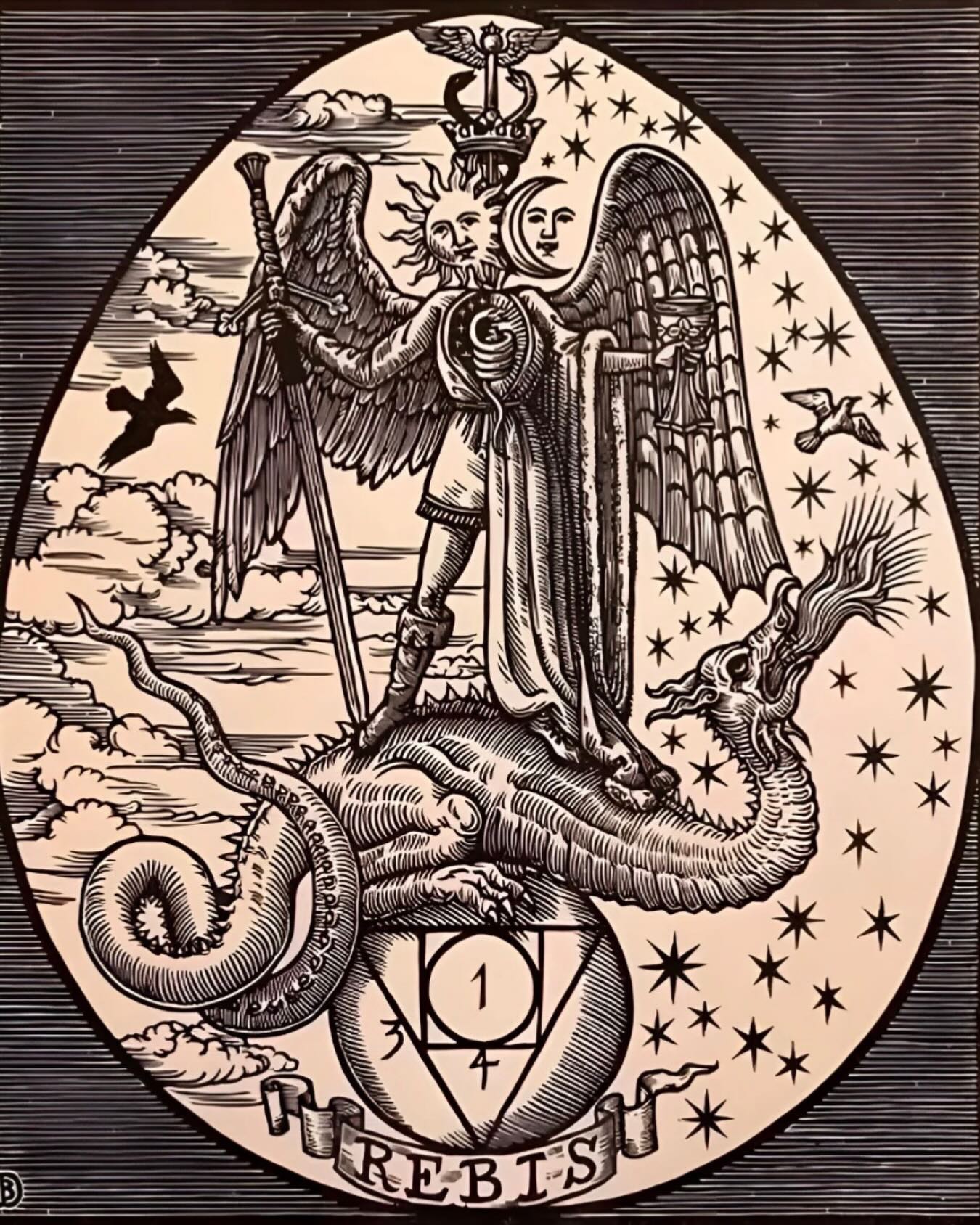
Symbolized by the Moon, this phase follows the decomposition of the nigredo. It relies on repeated processes of washing, purification, and distillation of matter with the aid of alkaest, the universal solvent. Impurities and dark dross are removed, making way for immaculate whiteness. This stage sees the birth of the Rebis, or “philosophical Mercury,” an androgynous embryo harmoniously uniting the masculine and feminine principles. Known as the “Lesser Medicine,” the albedo stage produces the White Stone, capable of transmuting metals into silver and spiritualizing the body.
The Work in Yellow (Citrinitas or Xanthosis)
Associated with Venus, this transitional stage marks the gradual warming of purified matter. Under the action of a gentle and constant fire, the whiteness of the matter begins to turn yellow, signaling that the inner light is beginning to change into gold. This is a phase of sublimation and ultimate purification of the vapors.
The Work in Red (Rubedo or Iosis)
The crowning of the Great Work, this phase is placed under the sign of the triumphant Sun. The alchemist drastically increases the temperature of the fire to evaporate the last traces of moisture and seal the absolute and indissoluble union of Sulfur and Mercury. The matter solidifies permanently in the form of an incandescent red powder or a translucent red stone: the Philosopher’s Stone, or “Greater Medicine.” This final substance possesses the power to instantly transmute base metals into perfect gold, cure all diseases of body and soul, and fully integrate the human being at the crossroads of macrocosmic forces.
Spagyrics, Humanism, and the Sola-Busca Tarot
The Renaissance marked an extraordinary revival of alchemical thought, fueled by the rediscovery of ancient texts and the rise of Christian humanism. Alchemy moved beyond monastic circles alone to enter European princely courts and artistic circles, becoming intertwined with Christian Kabbalah, Neoplatonism, and natural magic. In the medical field, this transition was embodied by the Swiss physician Paracelsus, who rejected Galenic dogma and developed spagyrics. This alchemical medicine consisted of extracting the active principles from a plant, purifying its components separately, and then recombining them to obtain a purified remedy acting on both body and soul.
At the same time, Renaissance visual culture became infused with Hermetic symbolism, using art as a means of encoding and transmitting complex esoteric truths. An extraordinary example of this convergence is the famous Sola-Busca Tarot, engraved on copper around 1491. This deck is the oldest complete 78-card tarot deck to have survived intact to the present day. In 2009, the Italian Ministry of Cultural Heritage and Activities purchased it for 800,000 euros to place it in the Brera Gallery in Milan, where it is carefully preserved. The work came from the Milanese noble Busca-Serbelloni family, entering the family heritage through the marriage of Luigia Serbelloni to Marquis Ludovico Busca, followed by the union of their daughter Antonietta with Count Andrea Sola-Cabiati, hence the name “Sola-Busca.”
The original Sola-Busca engravings are attributed to the painter Nicola di Maestro Antonio d’Ancona, trained in the school of Francesco Squarcione, while its complex iconographic program was designed by the humanist, poet, and Christian alchemist Ludovico Lazzarelli. The coats of arms of the Venetian noble families Venier and Sanudo, along with the monogram “M.S.,” indicate that the first owner and person responsible for its illumination in 1491 was the famous historian Marin Sanudo the Younger, renowned for his secret interests in alchemy. The Sola-Busca cards depart from the classical iconography of the Tarot de Marseille to offer a genuine Hermetic initiation journey:
-
The Three of Swords shows a heart (the classic symbol of alchemical fire) pierced by three swords representing the three essential metals or principles: gold, silver, and philosophical mercury. This image directly inspired the famous equivalent card drawn by Pamela Colman Smith for the Rider-Waite-Smith Tarot in 1909, after she had studied photographs of the Sola-Busca given by the family to the British Museum in 1907.
-
The Ten of Cups depicts Hermes Trismegistus himself, emphasizing the deck’s esoteric foundation.
-
The suit of Coins transparently alludes to the metallurgical art of coin production and the transmutation of prime matter into physical and spiritual gold.
-
The suit of Wands explicitly compares the work of the athanor to the natural cycles of agriculture and the fertility of the earth.
-
The legendary figures depicted on the major trumps, such as Alexander the Great (the King of Swords), identified with the “new sun” and a symbol of spiritual immortality, embody models of metamorphosis and inner sovereignty.
From Diaspora Medicines to the Alchemy of the Spirit
The impulse to transform matter and extract nature’s spiritual power was not limited to Europe or the Islamic world. From a global comparative perspective, the practices of spagyrics and plant alchemy find a fascinating parallel in the natural medicine and magical traditions of the African diaspora in the Americas, particularly Hoodoo (also called conjure or rootwork). Developed by enslaved populations in the southern United States, Hoodoo is a complex spiritual and therapeutic system that combines elements of the traditional religions of West and Central Africa (primarily Kongo, Ewe, and Fon culture) with Native American botanical knowledge and European esoteric influences.
Just as the alchemist manipulates metals and acids to rectify nature, the Hoodoo practitioner uses the power of roots (roots), plants, and mineral powders to heal, protect, or punish. A striking example is the use of goofer dust (goofer powder), a compound of cemetery earth, sulfur, bones, and peppers, whose etymology derives from the Kikongo word kufwa (“to die”), illustrating a rigorous manipulation of the energies of dissolution and elemental transformation to ensure justice and legitimate self-defense in the face of colonial oppression.
This global convergence of systems of thought is revealed with particular clarity in the use of sacred cosmograms to conceptualize the cycles of time and life. Where the Western alchemist uses the Ouroboros or the solar circle, Kongo spiritual culture uses the Kongo Cosmogram (or cross of Dikenga / Yowa). This fundamental symbol represents the physical world (Ku Nseke) and the spiritual world of the ancestors (Ku Mpémba), separated by a horizontal aquatic line called Kalûnga, which acts as a threshold or transitional barrier between the worlds. The four points of the cross represent the four moments of the sun and the four stages of existence: conception (musoni), birth (kala), maturity (tukula), and physical death leading to regeneration (luvemba). In Hoodoo, this cosmogram is physically embodied in the symbol and ritual of the crossroads (crossroads), the ultimate place of spiritual convergence where transformations of human destiny take place.
This eternal quest for transformation found its most brilliant continuation in the 20th century through the work of psychiatrist Carl Gustav Jung. By analyzing Hermetic texts, Jung demonstrated that operative alchemy was not a scientific methodological error, but an unconscious and structured projection of the development of the human psyche. The athanor’s crucible represents the human mind, and the Great Work is none other than the process of individuation: the laborious extraction of consciousness from the chaos of the unconscious, confrontation with the Shadow (nigredo), unification of the opposing masculine and feminine poles (albedo), and ultimate realization of the harmonized Self (rubedo).
Thus, humanity has never ceased to practice the same sacred Art: that of transmuting the lead of its earthly condition into the incorruptible gold of consciousness and freedom.