|
CONTENTS...
1. What is the concept of septenary? |
The Marseille Tarot and all the versions that exist today is an organized and structured deck. Nothing is left to chance and each card, each arcana, each combination has a precise meaning. Let’s focus this time more deeply on the structure of the tarot, especially its septenaries, these groups of 7 cards, and above all the spiritual journey they represent. If you want to feel the full spirit of the tarot, this article will interest you.
1. What is the concept of septenary?
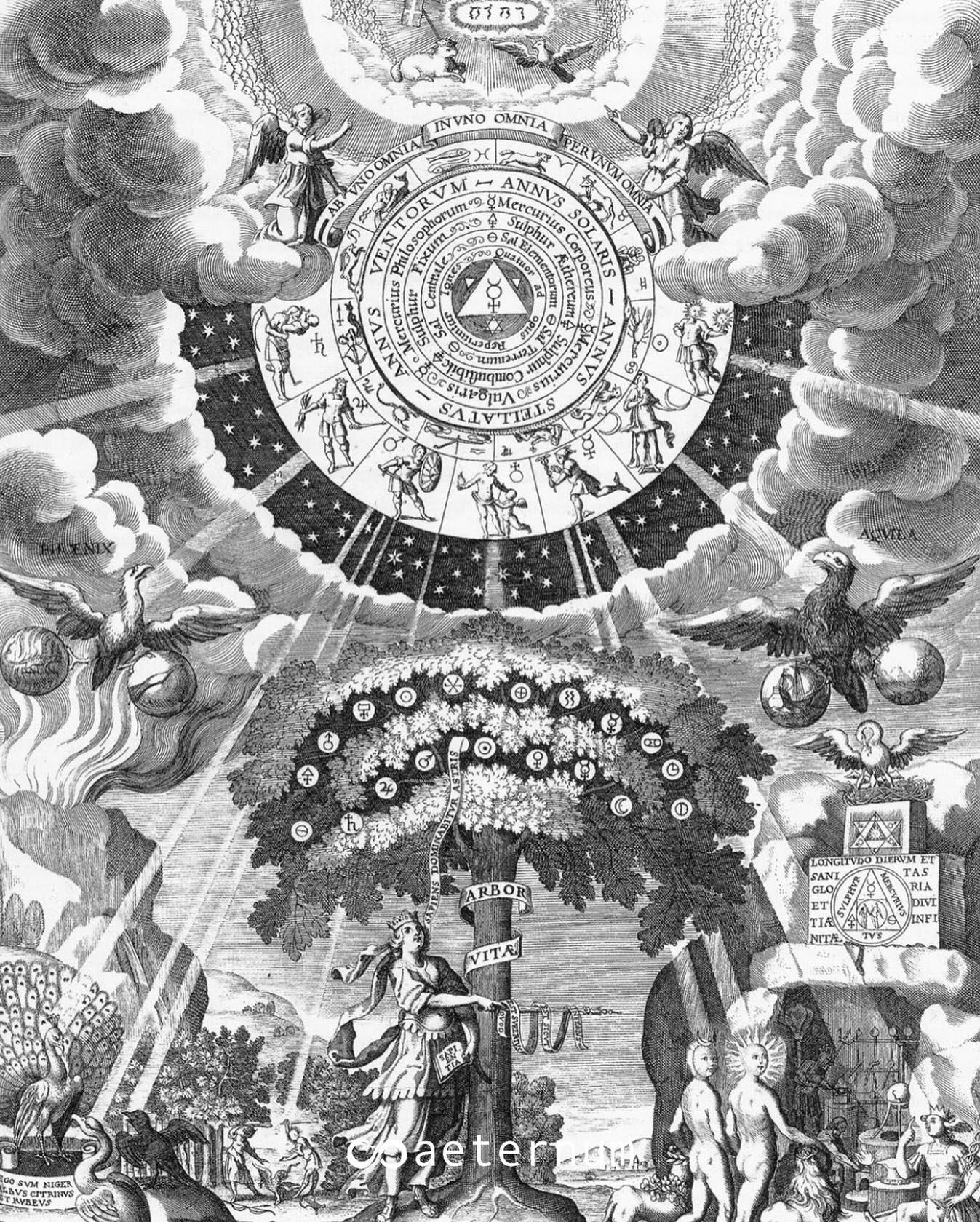
The concept of septenary, or the set of seven elements forming a coherent and meaningful whole, holds a symbolic place in many esoteric, philosophical, and spiritual systems around the world. This notion is particularly prominent in fields such as astrology, Kabbalah, Christianity, and other mystical traditions, where the number seven often symbolizes completeness, perfection, or spiritual evolution. We may not always realize it, but pause on certain symbols or scenes and you will notice the importance of the number seven.
In astrology, for example, the seven traditional planets (Sun, Moon, Mercury, Venus, Mars, Jupiter, Saturn) are considered the main regulators of cosmic energies. In Kabbalah, the number seven also resonates strongly, notably through the Tree of Life which includes divisions into seven lower emanations of the divine, representing the varied aspects of human and spiritual experience. Christianity is no exception, with references such as the seven days of creation, the seven deadly sins, and the seven virtues, which morally and spiritually structure the teachings of this faith.
Tarot also incorporates the septenary in its structure, particularly through the 21 Major Arcana. Traditionally, these are divided into three groups of seven cards, each group representing a level of consciousness or a stage of spiritual evolution: the first septenary can be seen as representing physical and material challenges, the second intellectual and ethical challenges, and the third spiritual and cosmic challenges.
This division into septenaries allows for a deeper understanding of the Major Arcana, offering a framework that goes beyond the individual meanings of the cards to touch on broader themes of personal and spiritual development. Indeed, by examining the cards through the lens of the septenary, one can perceive recurring patterns and advice suited to different phases of an individual's life.
2. The Tarot Septenaries and the Fool's Journey
If you look closely at the tarot deck, you will notice that one card is unlike the others: The Fool (or The Jester). This archetype represents potential, freedom, wandering, indecision. Thus, the tarot offers an initiatory journey, and through it, you explore your path.
2.1. The first septenary: the material world and personal challenges
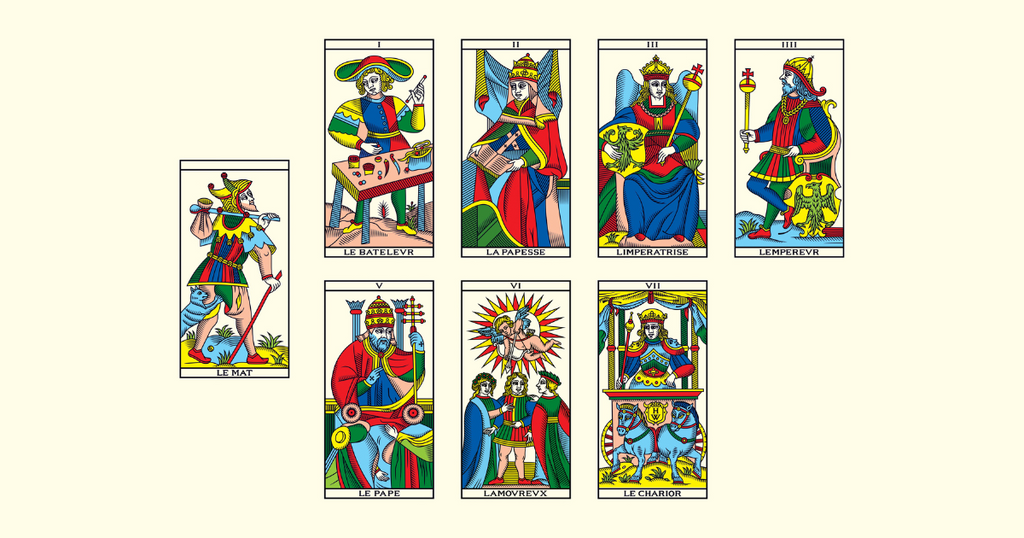
The Magician (I): awakening abilities
The Magician marks the true beginning of the visible journey. Standing at his table, he has all the tools of the four elements (cups, swords, wands, and pentacles), representing his inner and outer resources. This card symbolizes awareness of skills and personal potential. It is the moment of action and manifestation of personal will, illustrating the ability to transform ideas into reality.
The High Priestess (II) and The Empress (III): intuition and fertility
The High Priestess, seated between two pillars, embodies hidden wisdom and intuition. She represents silent knowledge waiting to be revealed, a reminder that listening to intuition is essential to move forward. The Empress, on the other hand, is abundance incarnate, symbolizing growth and fertility. These cards together encourage the seeker to embrace both inner knowledge and creativity, indispensable tools to nurture the early stages of their journey.
The Emperor (IV) and The Hierophant (V): structure and guidance
The Emperor brings structure and order. Seated on his throne, he imposes the authority and stability necessary for the foundations of the journey to be solid. Then, the Hierophant offers spiritual connection and guidance. This card represents learning laws, both universal and societal, and accepting advice and external wisdom, which are crucial for personal progress.
The Lovers (VI): life choices
The Lovers represent the challenge of moral choices and meaningful commitments. This card embodies the dilemmas often encountered in relationships and personal values. The choices made here will define the future path and are essential for personal maturity.
The Chariot (VII): conquering challenges
The Chariot symbolizes victory and self-mastery achieved through discipline and control. Representing success, it also shows the need to lead with determination and confidence through life's challenges. This card closes the first septenary by showing the result of commitment to the world with courage and resolve.
To learn more about the Arcana, click here!
2.2. The second septenary: intellect and relationships
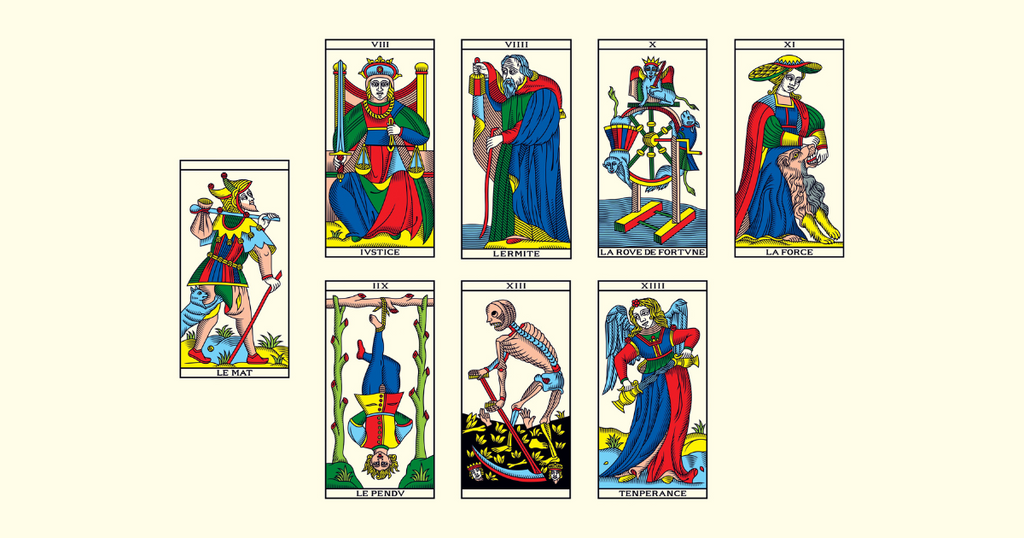
In the journey of the major arcana of the tarot, the second septenary illustrates a phase of development focused on deepening interpersonal relationships and the evolution of thought and ethical consciousness. This stage commits to exploring how interactions with others and with our own inner values shape our understanding of the world and our place within it.
Justice (VIII): fairness and truth
The second septenary opens with Justice, holding a sword and scales, symbols of balance and impartiality. This card embodies the search for truth and the need for clear, unbiased judgment. It highlights the importance of integrity and the consequences of our actions, shedding light on the cause-and-effect concept that governs both our relationships and personal choices.
The Hermit (IX): the quest for knowledge
Following Justice, the Hermit represents voluntary solitude and introspection. Carrying a lantern, he guides through darkness, symbolizing the search for wisdom and inner light. This card encourages deep reflection, suggesting that answers to life's big questions often come from calm and contemplation rather than external agitation.
The Wheel of Fortune (X): the cycles of life
The Wheel of Fortune marks the middle of this septenary, illustrating the inevitable ups and downs of life. This card reminds us that change is the only constant, and our ability to adapt to the turns of fate is crucial. It offers a perspective on the cyclical nature of life, teaching that every phase, whether of success or failure, is temporary and contributes to our growth.
Strength (XI): self-mastery
Strength depicts a figure calming a lion, a metaphor for mastering instincts and raw emotions. This card suggests that true courage lies in the ability to regulate our internal impulses and act with compassion and resilience, rather than brute force. It emphasizes the importance of inner endurance and perseverance.
The Hanged Man (XII): sacrifice and new perspective
The Hanged Man, often misunderstood, symbolizes voluntary sacrifice and acceptance of setbacks as a means to achieve greater wisdom. Suspended by one foot, he sees the world from a different angle, suggesting that sometimes, pausing or seeing things in a new way can be transformational.
Death (XIII): transformation and renewal
Death does not mean a physical end but rather represents a profound transformation, the end of one era and the beginning of another. This card is a powerful reminder that renewal often follows the end of situations or beliefs that no longer serve us, offering a chance for rebirth and growth.
Temperance (XIV): balance and synthesis
Temperance closes this septenary with an image of blending and moderation. It embodies harmony and balance between opposites, teaching the need to combine various aspects of our life to achieve stability. Temperance advises us to act with moderation and always seek to unify rather than divide.
To learn more about the Arcana, click here!
2.3. The third septenary: the spiritual quest
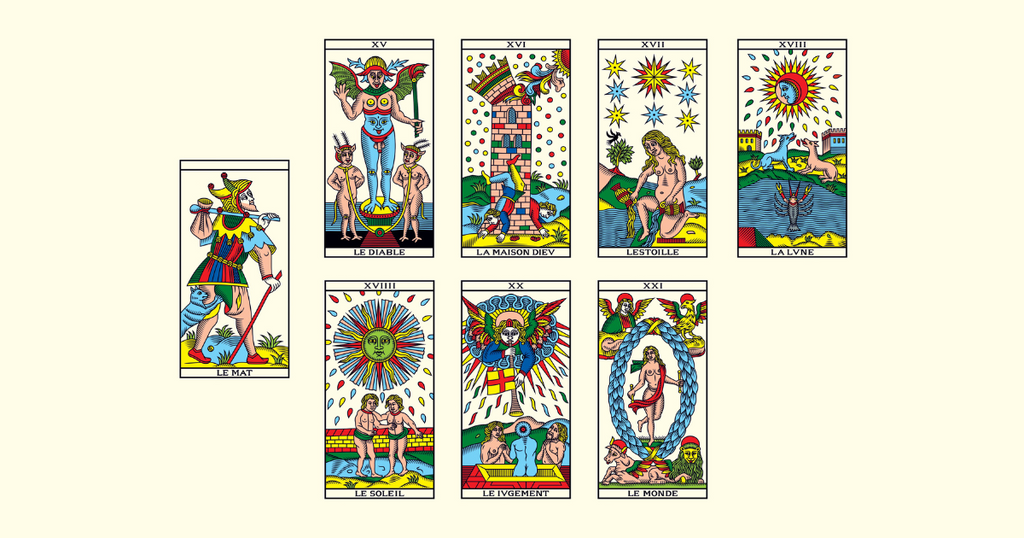
The third and final septenary of the Major Arcana in tarot guides the individual through the deepest and most transcendental stages of their spiritual development. These seven cards, from XV to XXI, are gateways to understanding the soul and its relationship with the universe, each card revealing an essential dimension of this inner quest.
The Devil (XV): inner shadows
The Devil represents the often avoided aspects of our existence: addictions, obsessions, and material attachments that hinder our spiritual growth. This card highlights the chains we forge ourselves, inviting us to recognize and overcome our own shadows to progress on the path of spiritual liberation.
The Tower (XVI): liberation through rupture
The Tower, often feared, symbolizes sudden breaks and revelations that shake the foundations of our life. These events, though disruptive, are necessary to destroy obsolete structures and allow new construction on more authentic foundations. The Tower teaches us that chaos can often be a necessary precursor to spiritual transformation.
The Star (XVII): hope and inspiration
After the upheavals of the Tower, the Star brings a message of renewal and hope. Representing clarity and spiritual inspiration, this card symbolizes a moment of calm and inner peace. It encourages following our guiding star, reminding us that even in darkness, the light of hope remains a source of healing and guidance.
The Moon (XVIII): introspection and illusions
The Moon plunges the soul into the depths of the unconscious, where illusions and fears can cloud our vision. This card evokes a journey through the mysterious and often deceptive aspects of the mind, prompting deep introspection to distinguish reality from illusions and uncover the hidden truths beneath the surface of our perceptions.
The Sun (XIX): joy and revelation
The Sun radiates a pure energy of joy and vitality, illuminating everything in its path. This card symbolizes enlightenment, success, and happiness that come after overcoming trials. It is a reminder that the light of consciousness and understanding illuminates the path to wholeness.
Judgment (XX): awakening and resurrection
Judgment represents a call to awakening, awareness, and reevaluation of life in light of new understanding. This card suggests a spiritual rebirth, a moment of judgment where past actions are assessed and new decisions are made to live more in alignment with our inner truth.
The World (XXI): fulfillment and unity
In conclusion to this journey through the tarot, The World represents fulfillment and total unity. This card symbolizes complete achievement and holistic integration of all life lessons. It marks the end of a major life cycle, but also the beginning of a new phase of existence, in perfect harmony with oneself and the universe.
To learn more about the Arcana, click here!
3. The septenaries in tarot readings
Integrating the concept of the septenary into tarot readings adds an extra dimension to the interpretation of the cards. This approach can help the querent see how different phases of their life connect to form a path of personal and spiritual development.
When the cards are interpreted through the prism of the septenary, each card is seen not only as an isolated element with its own meaning but also as part of a whole that reflects a specific phase of the querent's life. For example, if a card from the first septenary (I-VII) appears in a reading, it can be interpreted as relating to personal development issues or current material challenges. In contrast, a card from the third septenary (XV-XXI) might indicate that the querent is dealing with deeper, spiritual, or transcendental matters.
This approach enriches the interpretation and provides guidance that corresponds not only to the querent's current situation but also to their life path as a whole. It helps place current events in a broader context of personal growth and evolution.
Keep in mind the story and journey of the Fool to understand your own spiritual path. The message will become even clearer.