















































































































































































































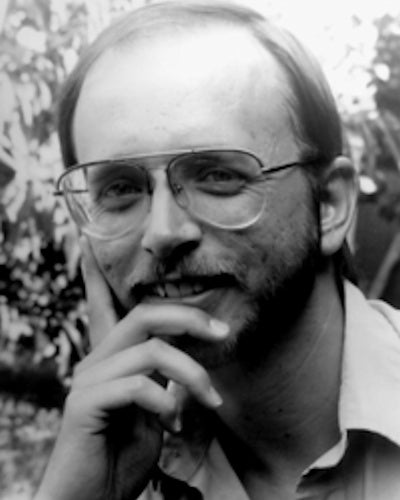
Scott Douglas Cunningham is one of the most influential figures in late-20th-century American Wicca. Born in 1956 and deceased in 1993, he neither founded modern Wicca nor introduced this religion to the United States. His contribution lies elsewhere: he helped make Wicca accessible to people who had no coven, initiatory lineage, or contact with British traditions. His 1988 book, Wicca: A Guide for the Solitary Practitioner, became one of the major entry points into individual Wicca.
His influence extends beyond solitary Wicca alone. Cunningham also wrote about plants, stones, incense, oils, household magic, the elements, and cooking. His encyclopedias profoundly shaped contemporary English-language magical culture. They continue to be reissued several decades after his death.
His biography was long less well known than his books. The 2023 publication of Scott Cunningham—The Path Taken, written by his sister Christine Cunningham Ashworth, renewed access to his personal life, while LGBTQ archives devoted to religious history situated his path within that of a gay author who was also seeking a way to practice Wicca outside frameworks in which male-female polarity held a very strong place.
Born in Michigan
Scott Douglas Cunningham was born on June 27, 1956, in Royal Oak, Michigan. His father, Chester Grant “Chet” Cunningham, was a professional writer who published a very large number of novels and popular works. His mother was named Rose Marie Cunningham.
Scott grew up with an older brother, Greg, and a younger sister, Christine. The family left Michigan for California when Scott was still a child. Biographies differ slightly on the exact year, but they all agree on one point: San Diego became the true setting of his life.
Scott spent most of his childhood, adolescence, and adult life in the San Diego area. Southern California in the 1960s and 1970s provided a favorable environment for new religious forms, esotericism, ecology, personal development, and counterculture movements.
The Cunningham family also enjoyed traveling. Time spent in nature and trips to Hawaii would play an important role in Scott’s religious imagination. The biography written by Christine Cunningham Ashworth emphasizes a family childhood strongly shaped by outings, landscapes, and contact with the outdoors. This closeness to nature would become one of the most consistent features of his books.
His father’s profession played a decisive role in shaping his career. Chet Cunningham treated writing as a daily job. Scott therefore grew up in a home where publishing books was not an abstraction, but a concrete activity involving discipline, deadlines, manuscripts, and editors.
This influence partly explains how quickly he moved from his religious interests to professional writing. Scott would not become only a Wiccan author: he would also write popular fiction, commissioned texts, and technical articles.
Early Occult Reading
In the early 1970s, Cunningham discovered books devoted to the paranormal, magic, and witchcraft. Biographical sources specifically cite The Supernatural by Douglas Hill and Pat Williams among the works that strongly awakened his interest.
He also met a classmate in high school who was already involved in a small occult study group. Cunningham would later say that this meeting opened a door for him to Wicca and magic.
In a text published by Llewellyn, he recalls receiving a genuine “invitation” around the age of fifteen to explore magic, thanks to a young woman named Dorothy. He mentions rituals on the beach, gathering plants, candles, divination, and observing the stars.
This early phase already explains what would distinguish Cunningham from many authors rooted in ceremonial magic. His entry into magic came through the landscape, plants, beaches, sky, and simple gestures.
He then read more widely, met other teachers, and discovered more structured traditions. But he would always retain this idea: magic can be experienced directly through a relationship with nature, without depending on an elaborate ritual apparatus.
Creative Writing Studies
Cunningham enrolled at San Diego State University to study creative writing in the mid-1970s. Sources give different dates for his enrollment, ranging from 1974 to 1978. The LGBTQ Religious Archives Network places it in fall 1974, while several older biographies indicate 1978. In the absence of a published university document that would easily settle the matter, the most prudent conclusion is that he studied creative writing at San Diego State during this period.
He left university without a degree to devote himself to writing. This decision was not an academic failure: by that point, he was already publishing enough to consider a professional career.
Before becoming known for his books on magic, Cunningham worked as a freelance writer. He wrote for commercial and technical publications, particularly in fields related to vehicles and mechanics.
This work developed a very direct style: clear explanations, practical organization, short instructions, and accessible vocabulary. This method can be found in his later esoteric books. Even when he discusses planetary correspondences, herbs, or rituals, he writes like someone who wants to be understood on the first reading.
His first known book is not Magical Herbalism. In 1980, The Cliffside Horrors, a work of fiction, was published. In the early 1980s, Cunningham wrote several novels in very different genres.
He also used pseudonyms. Novels were published under the names Cathy Cunningham and Dirk Fletcher, among others. This output explains the difference between the figures found in biographies: Llewellyn notes that he wrote more than fifty books when fiction, nonfiction, and works published under several names are counted, while around twenty books are directly associated with his magical and Wiccan work.
Donald Michael Kraig and the Californian magical milieu
In the early 1980s, Cunningham shared a home with Donald Michael Kraig, future author of Modern Magick. Kraig would later testify to their friendship and to Scott’s daily life.
The contrast between their works is instructive. Kraig specialized more in Western ceremonial magic, while Cunningham gradually favored Wicca, the elements, and natural magic. Yet both men belonged to the same Californian milieu, where tarot, magic, paganism, occultism, and alternative religions circulated.
Cunningham also spent time with Raymond Buckland, another major figure in American Wicca. Buckland had played an important role in spreading Gardnerian Wicca in the United States before publishing more accessible forms of witchcraft and individual practice himself.
The proximity between the two men is a reminder that solitary Wicca did not emerge from a single book in 1988. Before Cunningham, several American authors had already begun opening the practice beyond small initiatory lineages. Cunningham’s importance lies in the breadth of his work’s distribution and in the coherence of the model he proposed.
During the 1970s and early 1980s, Cunningham studied with several people and groups. Secondary biographies mention a period of training with Raven Grimassi around 1980. Cunningham appears to have worked with several currents before gradually moving away from the coven structure.
It is therefore false to present his solitary practice as the result of a man who had never encountered an initiatory tradition. He knew covens from the inside before concluding that a valid religious life could also be lived alone.
A widespread claim presents Cunningham as a third-degree initiate in the “Serpent Stone Family” or “Serpentstone.” This information circulates widely, but the exact initiatory chain remains difficult to reconstruct: the available sources do not clearly identify the initiator, date, and lineage. This obscurity corresponds fairly well to a period when many Wiccan transmissions still remained private.
Members of the Serpentstone family interviewed recently have themselves indicated that they do not have clear evidence of such a formal initiation. What can be stated with confidence is that Cunningham was familiar with several traditions and worked with covens before fully embracing a solitary path. His individual practice therefore did not arise from complete isolation, but from passing through initiatory circles that he would later choose to make more accessible.
Why does he choose solitary practice?
Cunningham's choice is based on several factors. First, he believes that religious experience should not depend on favorable geography. In the 1980s, someone interested in Wicca might live hundreds of miles from the nearest coven.
He also rejects the idea that a human authority must necessarily validate an individual's relationship with the gods. Finally, his own sexual orientation plays a role in this evolution. As a gay man, he feels uncomfortable in certain environments where ritual polarity between men and women is presented as absolutely normative.
LGBTQ archives devoted to religious traditions present Cunningham as a gay author whose experience contributed to his search for a more welcoming form of Wicca. Traditional British Wicca places great symbolic value on the Goddess-God pair and on the polarity between priestess and priest.
Cunningham does not remove this theology. His books still speak of the Goddess and the God. However, he detaches the validity of the practice from the obligation to enter into a ritual male-female relationship or receive initiation from a lineage.
This opening would have a particular impact on queer readers who did not identify with the most rigid forms of ritual polarity.
Magical Herbalism, first major occult book
In 1982, Llewellyn published Magical Herbalism: The Secret Craft of the Wise. It was his first major work devoted to natural magic. Cunningham presents plants as supports for correspondences, incense, baths, charms, and rituals. The book’s success firmly established him at Llewellyn and launched a series of publications devoted to natural materials.
To place this legacy within a more historical approach to plants, our Botanical Grimoire distinguishes modern occultist correspondences from uses documented in herbals and older traditions. In 1983, Earth Power: Techniques of Natural Magic was published.
Cunningham proposes practices using wind, sea, rain, trees, stones, sand, snow, and other elements of the landscape. This approach avoids large ceremonies and favors brief gestures, simple symbols, and observation of nature.
It would become one of the hallmarks of his work: magic should not depend on a perfectly equipped temple to be experienced. In 1985, Cunningham’s Encyclopedia of Magical Herbs was published. The book became one of his best-known works. It classifies hundreds of plants according to planetary, elemental, and magical correspondences. This encyclopedia exerted an immense influence on witchcraft books published afterward.
It should nevertheless be read for what it is: a modern occultist synthesis. Not all the correspondences it contains go back to a single ancient tradition, and several associations come from different currents brought together in one system. In 1987, Cunningham’s Encyclopedia of Crystal, Gem and Metal Magic was published.
The book applies the same classification method to minerals as its encyclopedia of plants: planet, element, attributed power, and ritual uses. This publication plays a major role in the contemporary dissemination of the magical correspondences of stones.
It should not be confused with scientific mineralogy or medicine. The properties presented belong to magical and symbolic tradition. Our article on the history and uses of stones helps distinguish esoteric correspondences, historical traditions, and modern therapeutic claims.
That same year, Cunningham published The Magical Household with David Harrington. The book brought magic into the domestic space: doors, windows, the kitchen, the bedroom, plants, objects, and everyday gestures.
This approach corresponds to a consistent idea in Cunningham’s work: magical life should not be artificially separated from everyday life. The home becomes a space of protection, hospitality, and simple ritual.
1988, Wicca: A Guide for the Solitary Practitioner
In 1988, Wicca: A Guide for the Solitary Practitioner was published. The book was immediately significant because it explicitly addressed people who practice alone. Before it, Wicca had primarily been described as an initiatory coven religion. Gerald Gardner, Doreen Valiente, and the British traditions generally transmitted their rites through initiation.
Cunningham does not deny the existence of covens. He argues, however, that a person can establish their own relationship with the Goddess, the God, and the natural cycles without waiting for a group’s authorization.
The terminology presents an important problem. In lineage Wiccan traditions, initiation generally means being received into a tradition by initiates who already possess that transmission.
Cunningham instead proposes a personal dedication rite through which individuals mark their commitment to Wicca. Many readers would later speak of “self-initiation,” while traditional British Wiccans would maintain that a lineage initiation cannot be self-conferred. The two uses therefore do not refer to exactly the same thing. Cunningham’s success contributed to a major transformation of the religion.
The first British covens placed great importance on keeping rituals, names, and internal teachings secret. American books of the 1980s made a growing amount of information accessible in bookstores.
Cunningham goes further: he develops a practice that no longer even needs to reproduce all the initiatory materials. Wicca thus becomes, for many readers, a religion one can begin through personal study.
The break is not total, however. Cunningham retains a Goddess and a God, seasonal sabbats, esbats, the circle, the four elements, ritual magic, and several tools derived from British Wicca.
His Guide for the Solitary Practitioner is therefore not an entirely new religion. It selects and simplifies elements already present in Wicca, then reorganizes them around the solitary practitioner.
Cunningham avoided turning Wicca into a rigid dogma. He emphasized personal experience, nature, and individual responsibility. He accepted that divine names, ritual forms, and certain symbols could vary. This flexibility would facilitate the emergence of what is now called eclectic Wicca, meaning forms that draw on different sources without necessarily claiming a specific initiatory lineage.
That same year, 1988, Cunningham published The Truth About Witchcraft Today. The book responded to sensationalist portrayals of witchcraft and presented Wicca as a contemporary pagan religion centered on nature.
It was published in a context where fear of Satanism and moral panics remained strong in the United States. Cunningham therefore sought to distinguish Wicca from Satanism, crime, and media caricatures.
Incense, Oils, and Preparations
In 1989, The Complete Book of Incense, Oils & Brews was published. Cunningham compiled recipes for incense, oils, baths, powders, and ritual preparations. The book would have an immense influence on contemporary folk magic in esoteric bookstores. These recipes must nevertheless be distinguished from older historical traditions. Cunningham compiles, adapts, and creates according to a personal system of correspondences.
Our article How to Choose Your Incense? places fumigation practices within a broader history than Cunningham’s system alone. Magical Aromatherapy was also published in 1989. In it, Cunningham examines fragrances and oils from a ritual perspective. He uses the term aromatherapy in a magical sense that should not be confused with a validated medical practice.
This distinction is important today, as his books remain widely used in contexts where magic, well-being, and health can easily become mixed together. In 1991, Earth, Air, Fire & Water was published as a continuation of Earth Power.
The book explores elemental rites and practices connected to the natural world. In it, Cunningham returns to what had marked his adolescence: direct contact with wind, sea, sun, plants, and landscape.
Our article on the history of the four elements places this language within a tradition much older than American Wicca. Cunningham also considers the meal as a ritual act.
The Magic in Food and Cunningham’s Encyclopedia of Wicca in the Kitchen connect foods, correspondences, and magical intentions. This approach reflects a strong trend in contemporary paganism: bringing religion back into everyday actions.
The kitchen, home, and garden become places as important as the ritual circle. Cunningham’s travels to Hawaii also inform several writings. A work devoted to Hawaiian religion and magic was published after his death. This part of his work must now be read critically. Cunningham writes as an American observer outside Indigenous Hawaiian traditions.
His books attest to his genuine interest, but they cannot replace sources produced by Hawaiian communities and researchers themselves. Cunningham’s success is also due to his way of writing.
His books avoid the tone of initiatory authority, dramatic secrets, and unnecessarily obscure vocabulary. He gives simple instructions, explains his choices, and invites the reader to adapt them. This writing creates a very different relationship with the public: Cunningham does not appear as a grand master, but as a guide.
Criticism of Solitary Wicca
His influence has also prompted criticism. Members of initiatory traditions believe that the word Wicca should remain attached to lineages stemming from Gardner and Sanders. They criticize Cunningham for simplifying rituals, removing the need for initiation, and encouraging eclectic forms that are difficult to connect to a specific tradition. Others, by contrast, regard this openness as one of the major transformations of modern paganism.
These two interpretations belong to the real history of its reception. It is not necessary to decide between them to acknowledge that his book shifted the boundary of what the public calls Wicca. No.
People practiced alone before 1988, and other authors had already published methods accessible outside covens. His importance lies in having given solitary practice a clear, positive, and widely disseminated formulation.
Llewellyn still considers Wicca: A Guide for the Solitary Practitioner one of the most important books in its Wiccan catalog. Cunningham’s biographical rediscovery in the 21st century gave greater prominence to his gay identity.
This aspect had been much less visible in the reception of his books during the 1980s and 1990s. The LGBTQ Religious Archives Network emphasizes that the possibility of practicing Wicca alone was particularly important for queer people who felt excluded from highly heterocentric ritual models.
His work does not, however, constitute a separate “gay Wicca.” Rather, it offers a framework that allows people with very different lives not to depend on an imposed ritual-couple model.
1983, lymphoma
Biographies devoted to Cunningham report that he was diagnosed with lymphoma in 1983. He received treatment and went into remission. This illness occurred as his career as a magical author was truly taking off. Nevertheless, he continued to write, travel, and publish throughout the following decade.
In 1990, while taking part in a lecture tour, Cunningham became seriously ill. The LGBTQ Religious Archives Network states that he was hospitalized and diagnosed with cryptococcal meningitis, a severe complication associated with HIV/AIDS. He survived this crisis and returned to writing, but his health remained severely compromised. The following years were marked by infections and periods of hospitalization.
Scott Cunningham died on March 28, 1993, at the age of thirty-six. Reliable biographical sources give this date, including Llewellyn and the LGBTQ Religious Archives Network. He died surrounded by his family after several years of illness related to HIV/AIDS. His death came just as his books were beginning to reach an increasingly broad audience.
Books published after his death
Several manuscripts were published after 1993. This posthumous publication explains why Cunningham's bibliography continued to grow after his death. Editors and people close to him worked from texts he had left unpublished or incomplete. His bibliography thus includes books he prepared himself and other volumes assembled after his death from unpublished or incomplete texts.
In 1996, David Harrington and deTraci Regula published Whispers of the Moon: The Life and Work of Scott Cunningham. For a long time, this biography became the main source devoted to his life. It also contains a detailed bibliography of his writings. The book helped preserve Cunningham's memory beyond his manuals.
In 2023, Christine Cunningham Ashworth published Scott Cunningham—The Path Taken: Honoring the Life and Legacy of a Wiccan Trailblazer. The book provides a family perspective absent from earlier biographies: childhood, parents, travels, habits, sibling relationships, and final years. It is particularly useful for distinguishing the public author from the private man. This publication also helps place Cunningham within the queer history of American witchcraft.
What place does Scott Cunningham occupy in the history of Wicca?
He was neither the founder of Wicca nor the first American Wiccan. Gardner developed the modern religion in Britain. Raymond Buckland helped establish Gardnerian Wicca in the United States. Doreen Valiente and Alex Sanders also contributed to its transformations.
Cunningham’s role comes next: he helped move Wicca from a religion primarily transmitted through small groups to a path that readers could discover on their own. This transformation profoundly changed the movement’s history.
They are accessible, organized, and immediately usable. A reader can open their plant encyclopedia, find a correspondence, understand the general framework, and begin working without having a specialized library.
This simplicity is also its historical limitation: his books bring together different traditions, simplify sources, and establish correspondences that would later be repeated as though they were timeless. Reading them today therefore requires a dual perspective: understanding their influence while verifying the history of the materials they transmit.
Sources and reference points
The LGBTQ Religious Archives Network provides a useful biographical summary: born on June 27, 1956, in Royal Oak, raised in San Diego, drawn to Wicca from high school onward, publication of Magical Herbalism in 1982, the importance of Wicca: A Guide for the Solitary Practitioner, his gay identity, and his death on March 28, 1993, after HIV/AIDS-related cryptococcal meningitis.
The publisher Llewellyn maintains Cunningham’s author page and presents Wicca: A Guide for the Solitary Practitioner as one of the most important books in its Wiccan catalog. Its publishing history also shows the place Cunningham occupied alongside Raymond Buckland in the 1980s.
For his literary and magical career, the entry in the Encyclopedia of Occultism and Parapsychology recalls his years writing fiction, his pseudonyms, his time in several covens, then his choice of a solitary practice and the chronology of his major works.
The most recent family biography is Christine Cunningham Ashworth’s Scott Cunningham—The Path Taken, Weiser Books, 2023. The publisher’s description highlights the importance of his family archives and his role in transforming American Wicca.
Finally, Whispers of the Moon: The Life and Work of Scott Cunningham, published in 1996 by David Harrington and deTraci Regula, remains a major biographical source on his formative years, his relationships within American paganism, and his bibliography.

Par Olivier of Aeternum
Passionate about esoteric traditions and the history of the occult from the earliest civilizations to the 18th century, I share some articles on these topics. I am also co-creator of the online esoteric shop Aeternum.













