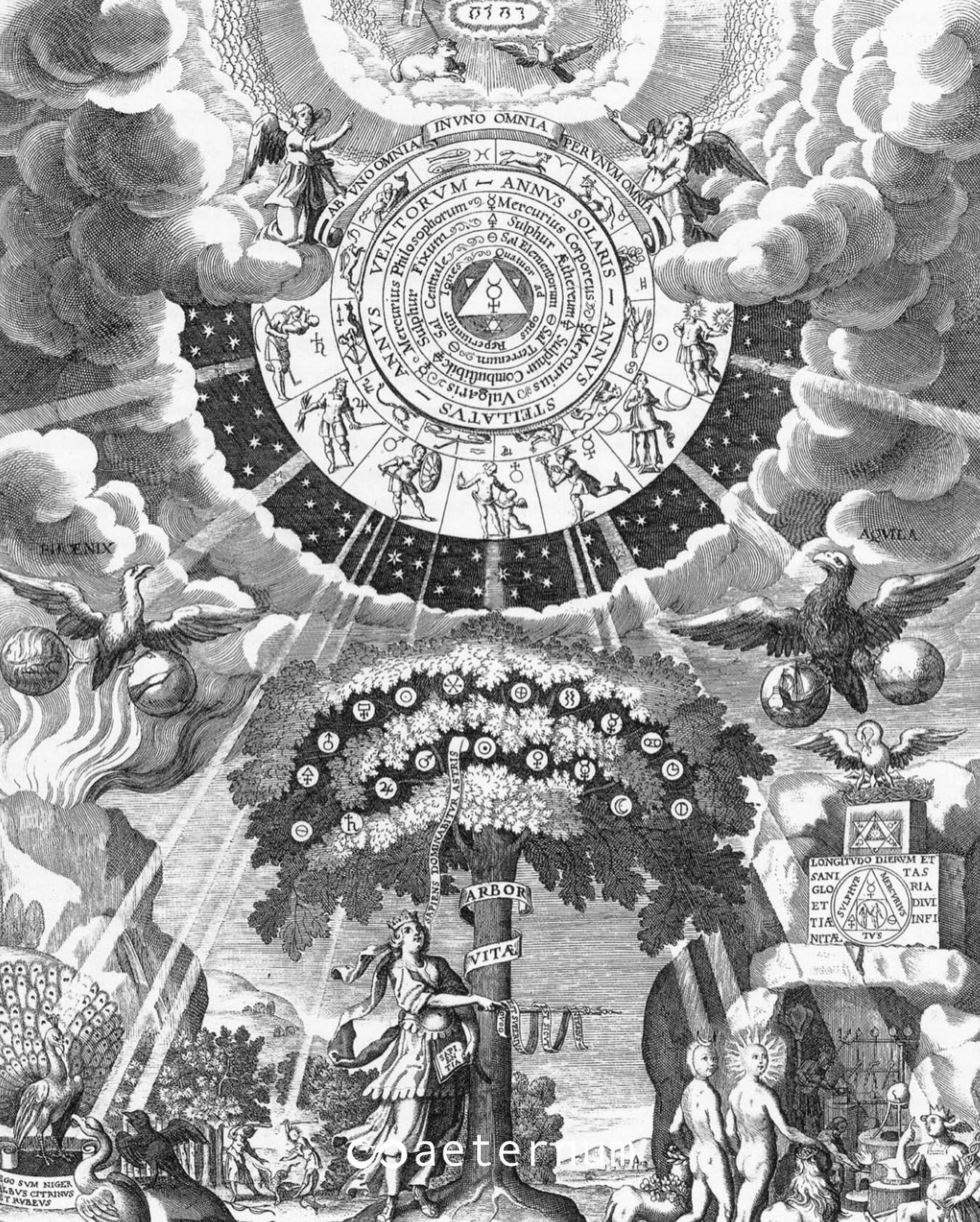
The Tree of the Sephiroth, frequently called the Tree of Life in Western occultism, organizes ten sefirot into a diagram intended to contemplate the modalities of divine manifestation. It belongs to the history of Jewish Kabbalah, whose texts developed complex systems around the ten sefirot long before their adoption by Christian Kabbalists and modern occultists. The drawing most familiar today — ten spheres connected by paths — is the result of a long history of schematization. To understand it, one must distinguish Kabbalistic concepts, manuscript diagrams, and later occult tables.
| Structure | Ten sefirot organized in relationships |
|---|---|
| Tradition | Medieval and modern Jewish Kabbalah |
| Major sources | Sefer Yetsirah, Zohar, Sha‘are Orah, and later traditions |
| Modern form | Ten spheres connected by paths in a vertical structure |
| Reception | Christian Kabbalah and then Hermetic occultism |
What are the ten sefirot?
The sefirot are ten modalities or powers through which divinity is understood in several Kabbalistic traditions. They should not be presented as ten separate gods or as ten “Jewish chakras”: they belong to a theological vocabulary specific to Kabbalah.
Major medieval texts, including Joseph Gikatilla’s Sha‘are Orah, organize the study of the divine names and the ten sefirot. The British Library preserves several manuscripts of this work and other treatises devoted entirely to the ten sefirot.
The best-known names are Keter, Hokhmah, Binah, Hesed, Gevurah, Tiferet, Netzah, Hod, Yesod, and Malkhut. Their translation varies between languages and schools, which makes it advisable to retain the Hebrew terms when maximum precision is sought.
When did tree representations appear?
Kabbalistic ideas predate the standardized diagram seen today on occult posters. Medieval and modern manuscripts use several ways of representing the sefirot: circles, lists, chains, anthropomorphic configurations, or branching diagrams.
For example, the British Library preserves manuscripts from the 15th, 16th, and 17th centuries containing treatises and diagrams of the ten sefirot. This diversity shows that the “Tree of Life” is not a single drawing transmitted without modification.
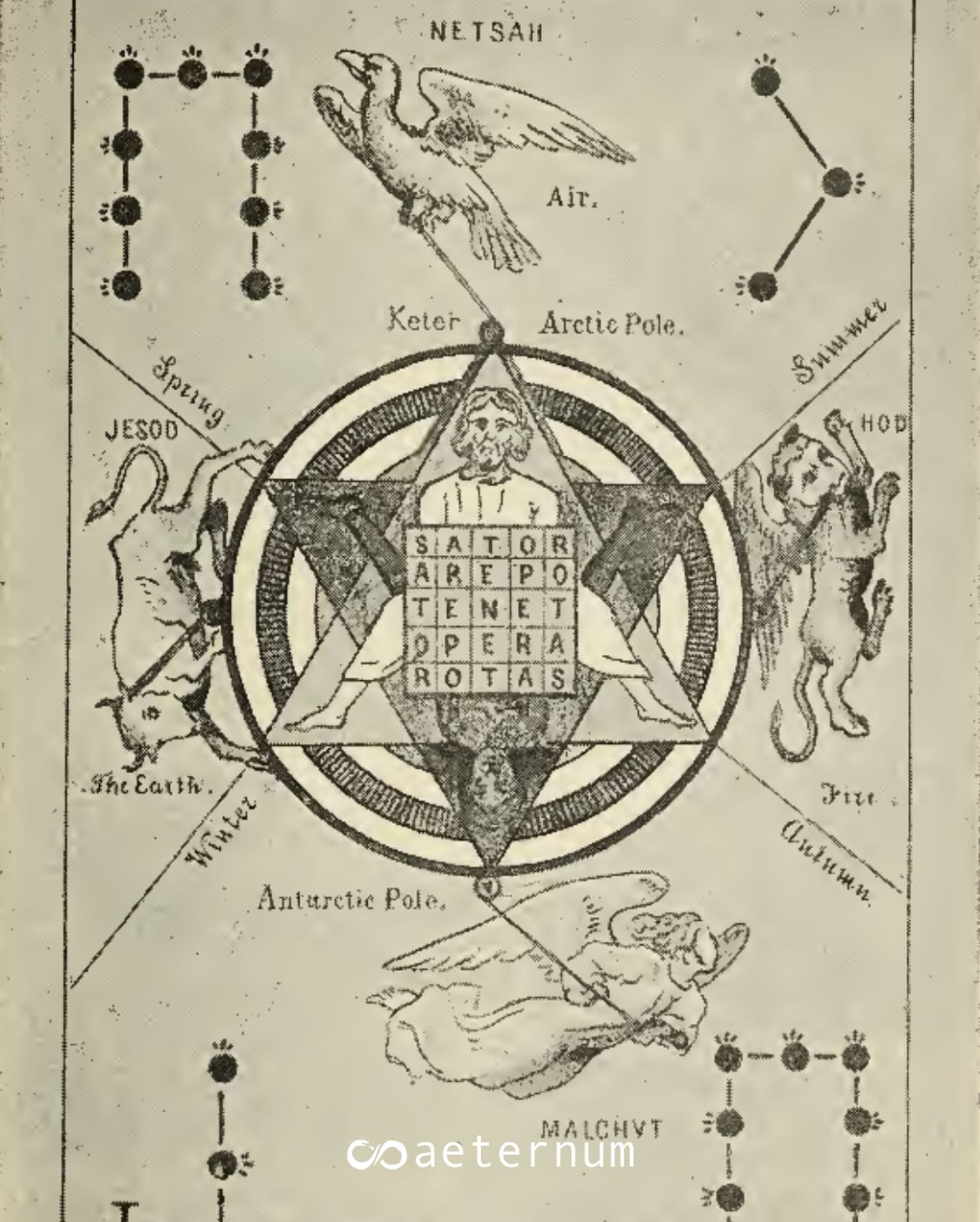
The modern form with three columns and fixed paths became particularly influential in later Kabbalistic circles, and then in Western hermetic systems. The diagram thus served as a synthetic map.
What do the links between the sefirot mean?
The sefirot are understood in relation to one another. The diagram expresses balances, polarities, and movements between power, judgment, beauty, foundation, and kingship.
In several systems, three axes structure the whole: a pillar of rigor, a pillar of mercy, and a middle axis. These terms help conceptualize balance rather than simple vertical hierarchy.
The paths drawn between the spheres receive varying interpretations depending on the tradition. Modern occultism often connects them to the twenty-two Hebrew letters and, in some systems, to the twenty-two Major Arcana of the Tarot. The latter association belongs to modern Hermeticism and should not be projected onto medieval Kabbalistic manuscripts.
How did the Tree enter Western esotericism?
During the Renaissance, Christian scholars took an interest in Kabbalah and incorporated it into their own theological projects. This “Christian Kabbalah” opened an important path toward Western occultist interpretations.
In the nineteenth and twentieth centuries, ceremonial magic societies used the Tree as a central structure of correspondences. Planets, elements, Tarot, colors, divine names, and grades could be assigned to the sefirot and the paths.
This development makes the Tree a kind of universal map in modern Hermeticism. It is essential to remember that this is a reworking. Jewish Kabbalah cannot be reduced to these tables of correspondences.
The connection with John Dee’s project is interesting: both traditions seek to organize numerous correspondences within a visual structure, but their sources and theologies remain distinct.
Why is there no single immutable version?
Kabbalah is not a system produced by a single author. It developed over several centuries, across multiple regions and schools. The names, positions, relationships, and commentaries may vary.
The diagrams reflect this plurality. Some manuscripts depict trees, while others show concentric circles or different configurations. The standardized form commonly disseminated today represents an important tradition, not the only possible historical representation.
For a reliable overview, it is therefore necessary to identify the context: medieval Jewish Kabbalah, Lurianic Kabbalah, Christian Kabbalah, or Hermetic occultism. The same term, “Tree of Life,” may encompass different intellectual structures.
Sources and historical context
The British Library holds the Sod ‘eser sefirot, a treatise devoted to the ten sefirot. It also holds a fifteenth-century manuscript of Joseph Gikatilla’s Sha‘are Orah and Kabbalistic diagrams explicitly devoted to the ten sefirot.