



It is not always known, but Spiritism is a field that originated in France and is highly structured. Properly known as “Spiritist philosophy,” the study of unexplained phenomena is the result of the work of Allan Kardec, whose influence has been—and remains—worldwide. Recognized as the father of Spiritism, he devoted his life to bringing science and life after death together. A portrait.


Hippolyte Léon Denizard Rivail before Allan Kardec
Hippolyte Léon Denizard Rivail, before adopting the pseudonym Allan Kardec, was born on October 3, 1804, in Lyon, at 76 rue Sala. Born into a family of lawyers, he was the third of four children. His two older siblings, Auguste and Marie, died in infancy, and his younger sister, Isaure, was born in 1806.
At the age of ten, to protect him from the unrest at the end of the Napoleonic Empire, his family sent him to Switzerland to continue his studies. He enrolled at Johann Heinrich Pestalozzi’s institute, located at Yverdon Castle on the shores of Lake Neuchâtel. At this school, which applied Rousseau’s educational principles, particularly those set out in Émile, Rivail absorbed innovative teaching methods. Education there was based on mutual learning, with students learning from one another under the teacher’s supervision.
During his time at Yverdon, Rivail socialized with young people from Europe’s upper classes, enabling him to master several modern languages, including English, German, and Dutch. This multilingual education and immersion in a progressive educational environment would influence his future career as an educator and his worldview.
A committed teaching career
After completing his training in Switzerland under Johann Heinrich Pestalozzi, Hippolyte Léon Denizard Rivail returned to France in 1824. Drawing on the experience he had gained, he settled in Paris and devoted himself to teaching, determined to apply Pestalozzi’s innovative educational methods.
In 1825, he founded a private school in the capital, where he put his mentor’s educational principles into practice. Emphasis was placed on mutual learning, student autonomy, and a student-centered approach aimed at fully developing each individual’s potential.
Alongside his teaching activities, Rivail devoted himself to writing educational works intended to improve the French education system. In 1828, he published Plan Proposed for the Improvement of Public Education, a work that earned him recognition from the Royal Academy of Arras. In this book, he proposed reforms designed to make education more accessible and effective, drawing inspiration from proven methods in Switzerland.
His commitment to education did not end there. Between 1835 and 1840, Rivail organized free classes at his home on rue de Sèvres, where he taught subjects such as chemistry, physics, comparative anatomy, and astronomy.
In 1832, he married Amélie Boudet, a schoolteacher who shared his educational convictions. Together, they collaborated on various educational projects, thereby strengthening the impact of their work in the field of teaching.
Rivail’s contributions to education, particularly his publications and educational initiatives, unfortunately did not lead to legislative changes or the widespread adoption of his methods in France.
The discovery of turning tables
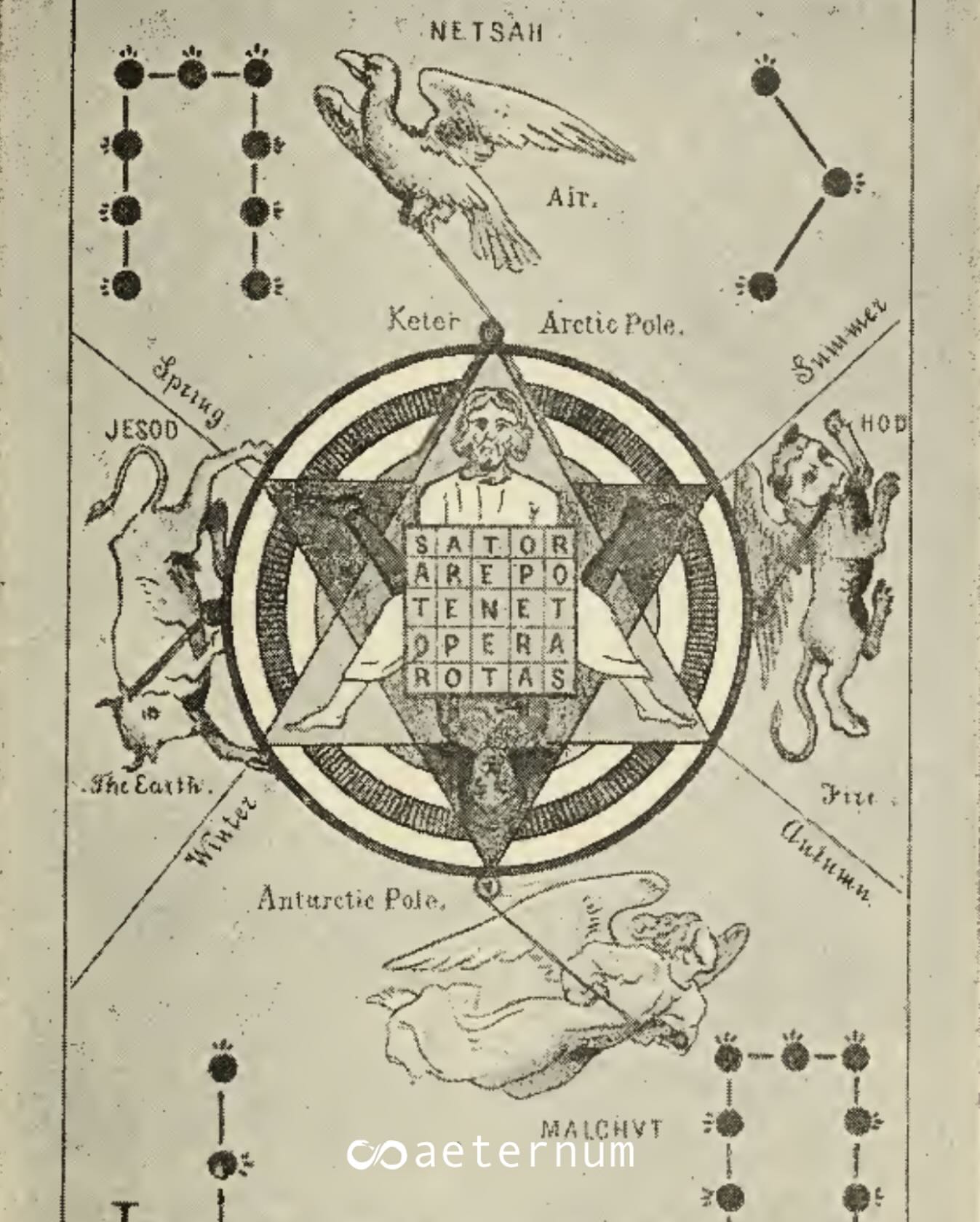
First and foremost, it is important to discuss a phenomenon that was very popular in 19th-century Paris: turning tables. Participants, seated around a lightweight table, placed their hands on its surface and asked questions of spirits or ancestors. The table, mounted on a circular disk engraved with possible answers, responded through movements or rotations interpreted according to a precise code.

Source: Wikipedia
In 1854, at the age of 51, Hippolyte Léon Denizard Rivail, then an accomplished educator and scientist, heard about this phenomenon for the first time. Intrigued by these manifestations, Rivail decided to attend séances to observe these phenomena with his own eyes.
During these séances, he observed, took notes, and compared his findings rigorously. His conclusion: the tables did not merely move, but also seemed to communicate intelligible messages. Participants claimed that these movements were caused by disembodied spirits seeking to make contact with the living. Naturally skeptical, Rivail undertook a methodical study of these manifestations, seeking to determine whether they were simple illusions, fraud, or as-yet-unexplained natural phenomena.
To deepen his understanding, he compiled a series of more than one thousand questions concerning the nature of spirits, life after death, reincarnation, and morality. He submitted these questions to various mediums, whose answers, according to him, came from higher spirits. After analyzing and comparing the answers, Rivail became convinced of their consistency and depth. More importantly, he managed to communicate with them.
In 1857, under the pseudonym Allan Kardec—which he adopted after discovering that he was the incarnation of an ancient druid of the same name—he published The Spirits’ Book, presenting the fundamental principles of Spiritism as revealed to him through these communications. This work marked the birth and beginning of the codification of Spiritism and established Kardec as the founder of this new doctrine. Even more remarkably, it is still regularly republished today.
He subsequently continued his research and published several other works, including The Mediums’ Book in 1861, which explores the practical and experimental aspects of Spiritism in greater depth, and The Gospel According to Spiritism in 1864, which interprets Jesus’ teachings in the light of Spiritist doctrine. He also wrote Heaven and Hell (1865) and The Genesis According to Spiritism (1868).
A worldwide influence...
In 1858, Allan Kardec founded the Parisian Society of Spiritist Studies, the first organization dedicated to the study and dissemination of Spiritism. This society became a center for research and discussion of spirit phenomena, attracting intellectuals and curious individuals eager to understand these manifestations.
That same year, he launched Spiritist Review, a monthly journal devoted to psychological studies and mediumistic communications. This publication served as a platform for sharing observations, teachings, and debates about Spiritism, helping to structure and legitimize Spiritist doctrine while responding to skeptics’ objections.
To promote and explain Spiritism, Allan Kardec traveled throughout France, Switzerland, and Belgium. He gave lectures, met with groups of followers, and took part in séances. These journeys allowed him to observe the growing interest in Spiritism and encourage the formation of new local Spiritist societies. Today, thousands of centers remain active.
...especially in Brazil
Introduced into the country as early as 1865, shortly after its codification in France, Spiritism spread through influential figures such as Bezerra de Menezes and Chico Xavier, a physician and a medium, respectively.

One of the main reasons for its success lies in its adaptation to the Brazilian religious context, characterized by great spiritual diversity and openness to supernatural beliefs. Spiritism offered answers to existential questions and insight into life after death, appealing to a broad population seeking spiritual understanding.
The Brazilian Spiritist movement is also distinguished by its social commitment. Spiritist followers there run institutions such as orphanages, schools, and aid centers for people in need, strengthening their role in the social fabric. This association between spirituality and charity has contributed to Spiritism’s positive and respected image in the country.
Kardec’s influence has also been strengthened by the massive distribution of his works. His books, along with those derived from his teachings, are among the best-selling works in Brazil, with more than 25 million copies sold. With over 4,000 titles related to Spiritism published, the movement occupies an important place in Brazil’s literary landscape.
Finally—and above all—Spiritism enjoys official recognition in Brazil, where it is one of the main religions, alongside Catholicism, Protestantism, candomblé, and Umbanda. According to the 2010 census, approximately 3.8 million Brazilians identify as Spiritists, and they often have higher levels of education and income than the national average.
The most flower-covered tomb in Père Lachaise
Allan Kardec died suddenly on March 31, 1869, at the age of 64, in Paris, from a ruptured aneurysm. At that time, he had already completed most of his work codifying Spiritism, although some texts remained unfinished.
He was buried in Père-Lachaise Cemetery, where his tomb, adorned with a sculpture depicting a Druidic dolmen, has become an iconic place of contemplation for Spiritists from around the world. Visitors regularly come to pay their respects and honor his work, particularly Brazilians.

Source: Paris la Douce
Yet this is not the original tomb: it was targeted in a bombing on July 2, 1989. The act was claimed by a group calling itself the “Movement for the Supremacy of Reason.” The monument was rebuilt identically.
It should also be noted that a legend surrounds his tomb. Allan Kardec is said to have predicted before his death that his tomb would grant all kinds of wishes to anyone who approached it respectfully: “After my death, if you come to visit me, place your hand on the back of the statue’s neck overlooking my tomb, then make a wish. If your wish comes true, come back with flowers. ”
Thus, his tomb became the most flower-covered in the cemetery, visited regularly by his followers, as well as mediums, philosophers, and simply people who feel connected to Spiritism.
In keeping with his vocation, the funerary monument is engraved with his motto: “ Every effect has a cause. Every intelligent effect has an intelligent cause. The power of the intelligent cause is proportional to the magnitude of the effect. ”
In addition, the doctrine that aptly summarizes his work is present: “ To be born, to die, to be reborn again, and to progress continually: such is the Law. ”
If you would like to learn more, a documentary was devoted to him in 2021: Allan Kardec: A Life with the Spirits.