Contents...
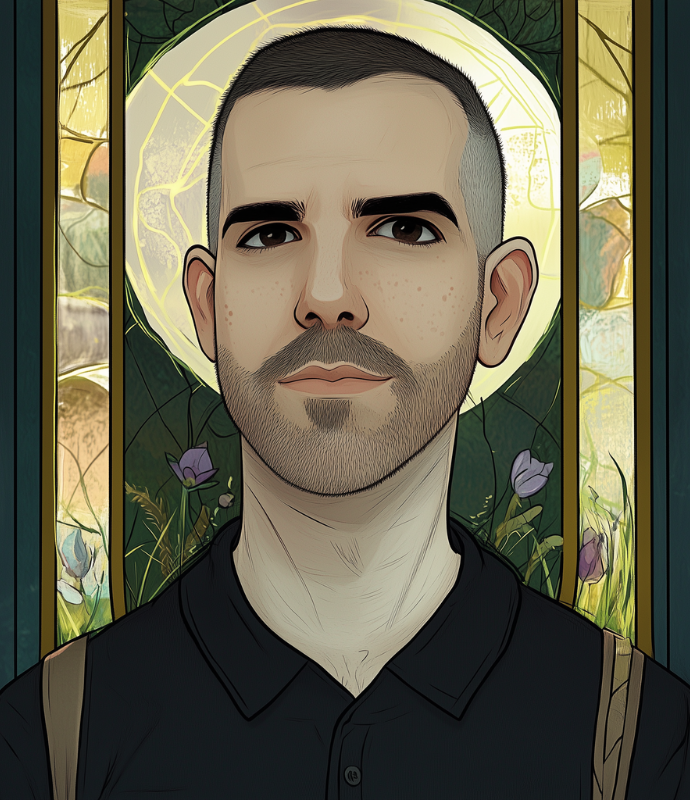
Alex Sanders is such an essential figure in the modern history of Wicca that he was nicknamed the "King of the Witches." Founder of the Alexandrian tradition in the 1960s, he shaped this path by integrating elements of ceremonial magic and making it accessible to a wider audience. His influence, both through his practices and media presence, marked a turning point for Wicca, propelling it to the forefront of the spiritual and esoteric scene of the time. Portrait.
1. The youth of Orrell Alexander Carter
Alex Sanders, born Orrell Alexander Carter on June 6, 1926, in Birkenhead, England, is the eldest of six siblings. His family, from a modest background, was deeply marked by spiritual and occult practices from an early age. Sanders' mother, Hannah Jane Bibby, and his grandmother played a crucial role in initiating Sanders into the esoteric arts. His grandmother, in particular, is often mentioned in accounts of his early magical beginnings, although some of these stories were later questioned.
During his childhood in Manchester, paranormal phenomena were common in their home, which sensitized him early on to occult experiences. In addition to family influence, Sanders showed a keen interest in spiritual practices and even worked for a time as a healer in spiritualist churches under the pseudonym Paul Dallas. This background helped develop his psychic abilities and attraction to magical arts, preparing him for his future career in Wicca and the founding of the Alexandrian tradition in the 1960s.
2. A descendant of a family of witches?
Stories about Alex Sanders' initiation into witchcraft vary and are sometimes contradictory, even in his own accounts. In one version, he claims to have been initiated at the age of seven by his Welsh grandmother, Mary Bibby, a witch supposedly descended from the lineage of Owain Glyndŵr. This initiation included permission to copy her Book of Shadows at age nine and learning rituals and magic, as well as divination techniques using black water and crystals. Sanders also mentioned that after the Blitz, shortly before his grandmother's death at 74, she passed on the second and third degree initiations to him, including particular ritual practices involving sacred unions.
3. Black magic, money, and sex

After the war, Sanders held several modest jobs and had relationships with men and women, reportedly using black magic to attract wealth and romantic success. However, when one of his mistresses committed suicide and his sister Joan was accidentally shot before being diagnosed with terminal cancer, he felt responsible for these tragedies. This awareness led him to renounce selfish use of magic and commit to teaching it, thus abandoning the path of black magic.
4. The (brief) meeting with Crowther
In the 1960s, Alex Sanders discovered Wicca and came into contact with influential figures such as Patricia Crowther, an important Gardnerian priestess. However, his relationship with her was tense: Crowther refused to initiate him, judging him too prone to publicity and sensationalism. Despite this rejection, Sanders persevered and managed to draw public attention to Wicca in 1962 through a front-page article in the Manchester Evening News, revealing rituals reserved for initiates. This act irritated many practitioners who accused him of compromising the tradition's discretion.
Despite these controversial beginnings, Sanders was initiated in 1962 by Pat Kopinski, an initiate of Crowther's coven. This initiation allowed him to start forming his own groups and spreading his teachings. He copied his initiator's Book of Shadows, a common practice at the time. Quickly, Sanders formed a network of covens in Manchester, consolidating his influence and attracting a growing number of people drawn by his charisma and practice combining ceremonial magic and Wiccan rituals.

By 1965, Sanders claimed to have initiated more than 1,600 people and founded over 100 covens, calling himself "the King of the Witches." This title and his practices sparked both admiration and criticism but helped establish his reputation in the neo-pagan landscape of the UK and beyond, while laying the foundations of the Alexandrian tradition, a distinct current that integrates ceremonial magic elements into the Gardnerian structure.
5. A family between rupture and continuity
In the 1960s, Alex Sanders met Maxine Morris, a young Catholic woman twenty years his junior, whom he initiated into witchcraft practices and raised to the rank of high priestess. In 1965, they celebrated a witches' marriage, according to the custom of handfasting, and in 1968, they formalized their union with a civil marriage. The couple settled in a basement apartment in west London, where they led their coven and taught witchcraft classes. Their daughter, Maya, was born in 1968. In 1971, Alex and Maxine separated, tensions related to Sanders' bisexuality making any agreement impossible. Despite this separation, their relationship continued sporadically and a son, Victor, was born in 1972. Until Sanders' death in 1988, their bond oscillated between periods of intimacy and distance. After their separation, Sanders moved to Sussex, while Maxine stayed in London, where she continued leading the coven and teaching witchcraft.
6. The foundation of the Alexandrian tradition
The Alexandrian tradition was thus founded in the 1960s by Alex Sanders and his wife Maxine. Inspired by Gardnerian Wicca, the Alexandrian tradition is distinguished by incorporating ceremonial magic and Kabbalah, adding a more complex and esoteric dimension to Wiccan practices, bringing it closer to High Magic. The rituals are often more elaborate, and the approach places strong emphasis on hierarchical training of initiates, including a system of three degrees through which members progress until becoming High Priest or High Priestess.

Maxine Sanders played a key role in the evolution of this tradition. As High Priestess, she not only collaborated with Alex to develop rituals and teach new members but also helped popularize Wicca through media appearances and classes. Together, the couple attracted many followers and formed several covens across the United Kingdom.
Alexandrian Wicca is particularly known for its organized structure and balanced veneration of the divine aspects of the God and the Goddess. Coven meetings generally take place during full moons, new moons, and the eight Sabbats. Also, respect for everyone was more emphasized, where ritual nudity was, for example, not mandatory.
7. A life between alleged miracles and sensationalism
Despite this, Alex Sanders' life was marked by a number of apparent miracles and magical feats. But his taste for fame mostly left a legacy of scandals and, unfortunately, lies.

Among the magical feats attributed to Alex Sanders is the creation of a "spiritual baby" named Michael, born from a "ritual act of masturbation" considered sacred involving himself and a male assistant. Michael was then said to be one of Sanders' familiars, sometimes taking control of his body during channeling sessions. During these moments, his behavior became exuberant, participating in wild parties, insulting participants, and adopting more than excessive conduct. Another familiar he regularly channeled was called Nick Demdike, who claimed to have been persecuted as a witch during the famous Pendle witch trials in the 17th century.
Another of Sanders' favorite practices was organizing a ritual at Alderley Edge, a site reputed for its magic. There he simulated the resurrection of a man: a figure wrapped in bandages was placed on a stone altar, and a colleague of Sanders, posing as a doctor, confirmed it was a corpse. Sanders then began an "ancient and strange" invocation, which later turned out to be... a simple bread recipe recited backwards. Although this story may seem implausible today, it was reported by newspapers, thus enhancing Sanders' fame and his reputation as a provocative esoteric figure.

Source: Alexandrian Witchcraft
But what propelled Alex Sanders to national notoriety was a sensational newspaper article published in 1969. This media interest quickly led to the publication of a fictionalized biography titled King of the Witches by June Johns the same year, followed by the film Legend of the Witches in 1970. These works allowed Sanders to gain greater visibility, leading to appearances on talk shows and public lectures. However, these efforts sparked criticism, many accusing him of commercializing his art and making it too accessible to the tabloid press, which, according to them, distorted the true essence of witchcraft.
8. The legacy of Alex Sanders
Alex Sanders died on April 30, 1988, in Sussex, from lung cancer. Despite his death, his figure continued to fuel debates and controversies. In a recorded message, he claimed that his son, Victor, who had moved to the United States and distanced himself from his father's aspirations, was to succeed him as "king of the witches" and lead the "Council of the Elders of Witchcraft," an entity Sanders claimed gathered about 100,000 members. In 1998, ten years after his death, a Wiccan coven in New England reportedly claimed to have communicated with Sanders' spirit. According to them, he transmitted messages urging all Wiccans to strengthen their devotion to the Goddess and cultivate unity and strength within the Wiccan community.

Source: Maxine Sanders
Today, Alexandrian Wicca still exists but has returned to the shadows, as a return to the roots of ceremonial magic desired by Maxine Sanders. She is still alive today.