






















































































































For millennia, the serpent has fascinated, frightened, and intrigued across cultures and spiritual traditions worldwide. This sinuous reptile, both revered and feared, is loaded with symbolism that makes it appear far more complex than its animal appearance. Symbol of regeneration, guardian of mysteries, or tempter, the serpent embodies a duality like a mirror of life: that of life and death, wisdom and danger. Introduction.
1. The Great Serpent
The serpent is such a powerful symbol that it is rarely actually called "serpent." In many mythologies around the world, the Great Serpent appears as a recurring figure, endowed with celestial and ambivalent power. This serpent can take many forms: sometimes linked to waters, sometimes winged, or even incarnated as creatures like dragons, hydras, chimeras, wyverns, or basilisks. Its role is twofold: both guardian and initiatory guide, it protects hidden treasures or occult knowledge while opening the doors to divine knowledge to those who dare approach. This symbolism is also linked to human emotions – fears, hopes, and desires – that the serpent embodies and crystallizes.

Among the known manifestations of this Great Serpent, we find mythical figures such as:
-
Leviathan, a sea monster symbolizing primordial chaos.
-
Ouroboros, the serpent biting its own tail, a figure present in many cultures. It symbolizes the infinite cycle of life, death, and rebirth, illustrating the continuity of time and existence.
-
Jörmungandr (Midgarsormr in Scandinavian mythology), the giant serpent encircling Midgard, the human world, whose death in the final battle with Thor signals Ragnarök, the end of the world.
-
Ananta, or Shesha in Indian mythology, the primordial serpent on which Vishnu rests, thus preserving the universe.
-
Quetzalcoatl, the feathered serpent among the Aztecs, and Kukulcan among the Mayas, deities symbolizing the link between the earthly and celestial worlds.
The Great Colored Serpent is another intriguing manifestation found in several cultures. In India, it is coiled around Vishnu's bow, while in Congo, it is known as Kongolo, literally meaning "rainbow." In Australian Aboriginal culture, the rainbow serpent is a primordial being associated with the creation of the world. This figure connects the earthly to the celestial, representing the bridge between Earth and the heavens, thus linking humans to the divine and symbolizing harmony between the two worlds.
2. Antagonist of the sun, associated with the elements
Just like the Sun, the serpent is a figure that cannot be looked at directly, but for opposite reasons. While the Sun embodies primordial light and life, the serpent, with its fused eyelids, never blinks, giving the impression of never sleeping. It thus positions itself as the antagonist of the Sun, associated with the Earth, due to its sinuous movement close to the ground. The serpent is linked to the realm of the dead and night, its cold body seeming detached from the warmth of life. This connection to the underworld and afterlife makes it the guardian of mysterious and unsettling secrets, a figure of patience and occult wisdom, often called to guide lost heroes, as in the myths of Sigurd or Marduk.
The serpent carries vital knowledge, capable of revealing both the past and the future, a form of deep gnosis. Its other association with Water is reinforced by the scaly nature of its body, reminiscent of fish, and by its undulating movements similar to waves. Its ability to navigate both land and water blurs elemental distinctions, and it is therefore not surprising that many myths have attributed wings to some of its forms.
3. The serpent, at the heart of rituals
In magic, the serpent is one of the most powerful and versatile creatures that can be invoked. Since ancient times, magical traditions worldwide have used different parts of the serpent for various rituals. It is used to cast curses, overcome obstacles, or create powders like Goofer Dust (curse powder) or poisons such as Live Things In You (voodoo preparations). Reflecting its ambivalence, serpent skins are used to calm the mind and promote regeneration. Bones are used in rituals invoking luck, cunning, or power.
4. The serpent and occult wisdom
Beyond its symbols of transformation and regeneration, the serpent is linked to hidden wisdom and occult mysteries (indeed, the Ouroboros serpent forms the logo of Aeternum). Its role as guardian of esoteric knowledge and intermediary between the physical and spiritual worlds is widely recognized.

Source: Grand Palais
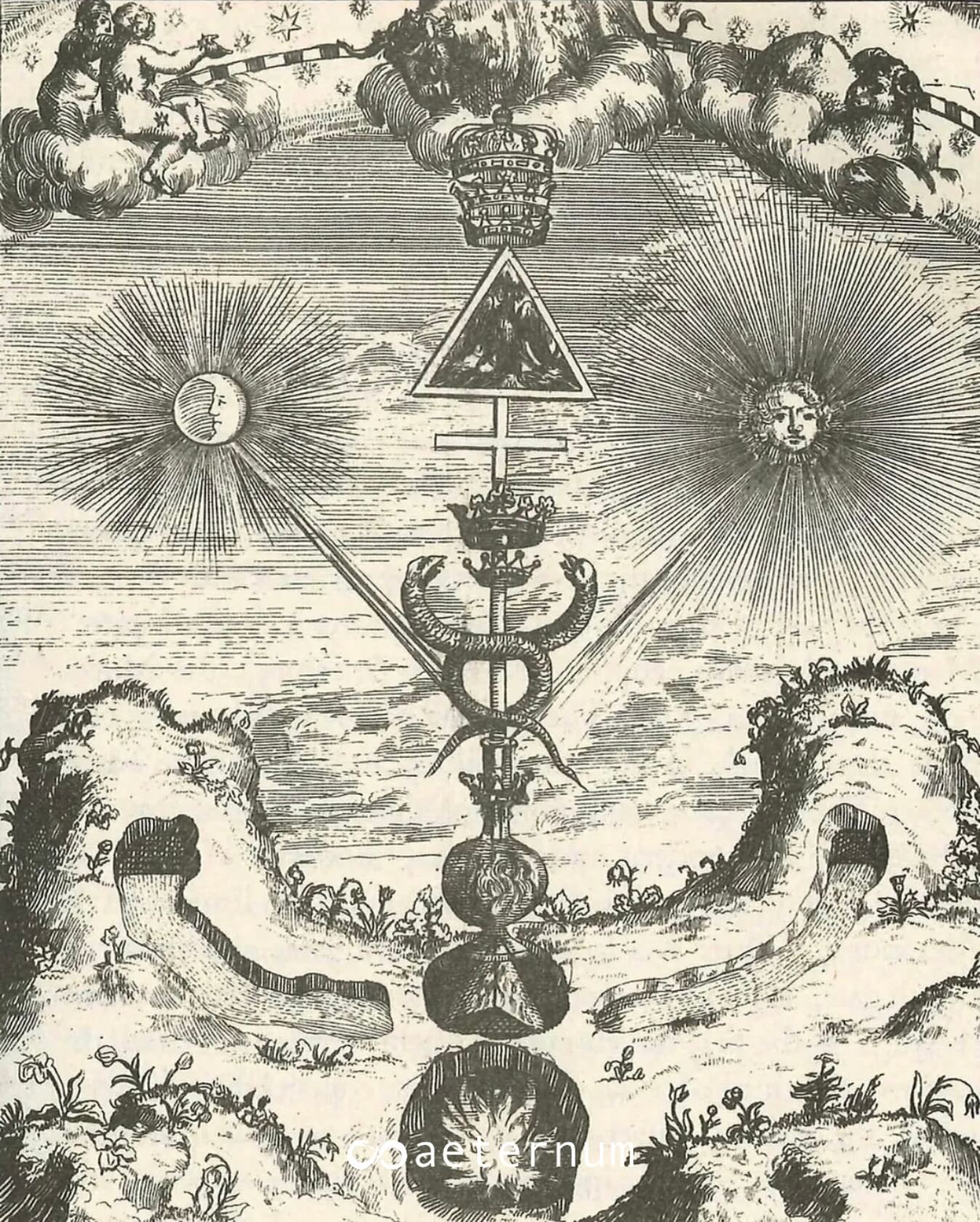
In ancient Greece, the serpent was associated with deities such as Asclepius, the god of medicine and healing. Asclepius' staff, around which a serpent coils, remains today a symbol of medicine, reflecting the deep link between the serpent and physical as well as spiritual healing. The serpent was seen as a mediator between the worlds of the living and the dead, a bridge between the visible and the invisible. This connection to occult wisdom is also present in other ancient cultures: in Egypt, for example, the Uraeus cobra represented both royal protection and divine knowledge, jealously guarding the secrets of the realm of the gods.

Source: ThoughtCo
In Greco-Roman mythology, the serpent was also linked to Hermes (or Mercury), the god of travelers and thieves, but also messengers between gods and humans. The caduceus, with its two intertwined serpents, symbolizes this ability to traverse worlds and access sacred knowledge. Due to its terrestrial and subterranean habitat, the serpent is seen as a chthonic creature, meaning one belonging to the earth, associated with death, rebirth, and immortality.
5. The serpent as tempter and symbol of danger
The serpent took on a very different symbolism through the story of Adam and Eve in the Book of Genesis. In this story, the serpent is the one who urges Eve to eat the forbidden fruit from the tree of knowledge of good and evil, thus causing the fall of humanity. This episode roots the image of the serpent as bearer of temptation, agent of sin, and initiator of disobedience. However, this temptation is linked to forbidden knowledge, which gives the serpent a role as intermediary to hidden and dangerous knowledge that disrupts the order established by God.

The serpent in the Bible is interpreted as a figure of Satan. It becomes a symbol of temptation, deception, and immorality, in opposition to purity and obedience.
6. The original form of the Philosopher's Stone?
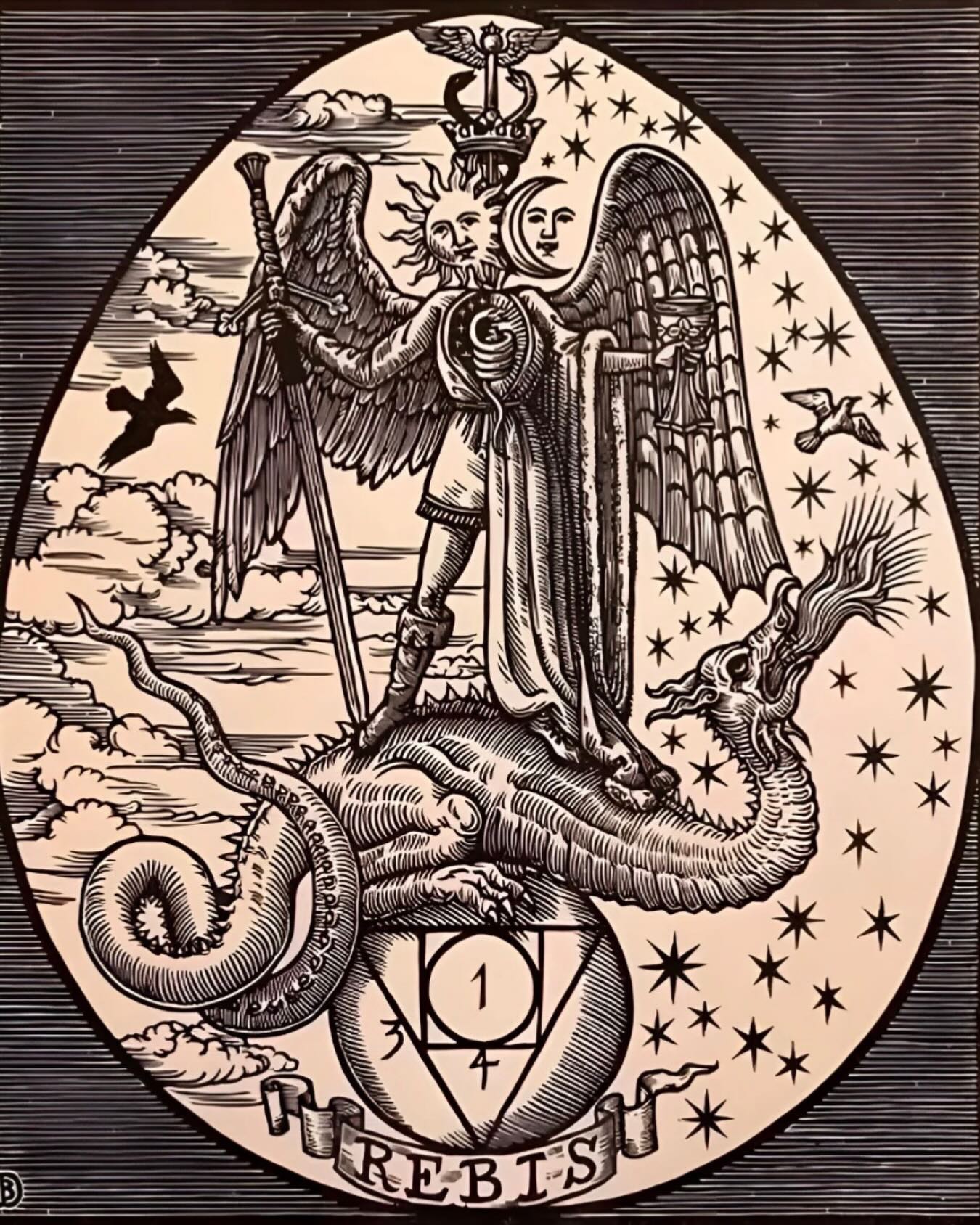
In alchemy, the serpent was seen as a mystical creature, associated with regeneration and hidden knowledge. The image of the serpent shedding its skin, regenerating, and continually being reborn was a powerful alchemical symbol of transformation and purification, central concepts in the creation of the philosopher's stone.

In some traditions, it was said that the very essence of the philosopher's stone was hidden in the head or brain of serpents. This idea is based on the symbolism of the serpent as guardian of mysteries and occult knowledge. Indeed, many alchemists believed that the serpent, notably the Ouroboros serpent biting its own tail, represented the unity of matter and spirit, the eternal cycle of destruction and rebirth, and the path to spiritual perfection.
7. Seeing or dreaming of a serpent: what meanings?
Dreaming of a serpent is a symbol that can take several meanings depending on the context and emotions felt in the dream. At first, the serpent is often seen as a symbol of transformation and healing, due to its ability to shed its skin. This type of dream could mean that you are going through a phase of change or renewal in your personal or emotional life.
However, the serpent can also represent fears or anxieties. If the serpent appears threatening, it indicates that you are facing tensions, potential betrayals, or stressful situations in your daily life.
In other contexts, the serpent embodies hidden wisdom. It can appear as a guide, indicating a spiritual awakening or a revelation to come. Moreover, in psychoanalysis, the serpent is sometimes linked to sexuality and unconscious desires, symbolizing repressed urges or temptations.