



There are creatures whose presence transcends the boundaries of myth. The Phoenix belongs to this lineage. It is not told as an ordinary beast. It crosses civilizations, changing name, form, setting, but never function. The Phoenix is born, dies, and is reborn. It starts over, again and again, with an elegance that escapes tragedy. Portrait.
1. The Phoenix, between memory and fire
Its name, derived from the Greek phoinix, originally refers to the reddish-purple color associated with the dye extracted from the murex, a shellfish that the Phoenicians exported throughout the Mediterranean. This linguistic link between color, people, and bird is no coincidence. The Phoenix immediately places itself in a tradition of passages, exchanges, and cultural recompositions.

It is not a local figure. It is not born from a national myth. It appears at the crossroads of ancient cultures, at the border between African cosmogonies, Greco-Roman mythological tales, Near Eastern beliefs, and late esoteric texts. It does not impose itself as a hero or a fabulous animal among others. It slowly establishes itself as a stable idea in an unstable world, a way to consider change, loss, and return.
The Phoenix does not resolve. It does not reassure. It forces us to see differently. Those who passed it down saw not just an extraordinary bird. They recognized a riddle. A way to speak of what dies without ceasing to exist. A form of wisdom that does not need miracles, but an inner fire that illuminates without consuming.
2. The Benu of Egypt: an ancient root
The oldest known figure that foreshadows the Phoenix appears in ancient Egypt, under the name Benu. This name comes from the Egyptian root wbn, which means "to shine" or "to rise," directly linked to the sun. The Benu is depicted as a gray heron, perched on a sacred column, in the city of Heliopolis. This place was not chosen at random: Heliopolis (in Greek), the "city of the sun", or Iounou (in Egyptian), meaning "the Column" or "the Pillar," symbolized the primordial mound on which Ra is said to have manifested at the moment of the world's creation, but it was also one of the oldest cultural centers of Egypt, dedicated to the god Ra.
The Benu does not embody rebirth in flames, but the return of the day, the cycle of time, cosmic continuity. It does not seek individual eternity. It belongs to a larger sacred order, where the regularity of the stars and the stability of cycles ensure the world's permanence. It does not die, it regenerates. It is linked to the Nile flood, moments of balance, and the beginnings of dynasties.
The Pyramid Texts already mention its regenerative function. Later, in the Book of the Dead, it appears as a guide of the soul, capable of crossing the realms of the night. The Benu is not an isolated myth. It fits into a worldview where death is not a break, but a change of state.
When the Greeks discover Egypt, they translate this Benu into phoînix, while transforming its symbolism. This shift from Benu to Phoenix marks a transition: from the solar order to individual metamorphosis, from the stability of the world to the trial of being.
3. The Phoenix of the Greeks and Romans
In the Greek tradition, the Phoenix appears as a unique creature. It does not mingle with gods or monsters. It lives far from humans, in a vague region identified as Arabia or Ethiopia. In Book II of the Histories, Herodotus recounts what the priests of Heliopolis told him about the Phoenix. He does not claim to have seen it, nor even to validate the story, but he reports it. According to them, the Phoenix would come from Arabia every 500 years, when its father dies. It would make an egg of myrrh, light enough to carry, then transport it to the temple of Ra in Heliopolis to deposit the remains of the parent.

The Phoenix does not have a complete genealogy. It is never described with a father and mother like ordinary creatures. When a "father" is mentioned, as here with Herodotus, it is symbolic, to signify a cyclical transmission from self to self. It is not a biological father, but the former self, the previous being in the cycle.
Hesiod, even earlier, notes the Phoenix’s lifespan as a marker in the measurement of time. He grants it several hundred years and includes it in a list of creatures whose longevity surpasses imagination. The Phoenix thus becomes an exceptional unit of time, a measure of eternity in a mortal world.
Later, Ovid, in the Metamorphoses, gives the Phoenix a clear place in the story of transformation. He speaks of a bird that is reborn from its ashes, leaving nothing behind except a fire that starts again. This fire does not destroy. It purifies. It brings back to the essential. In Pliny the Elder’s Natural History, the Phoenix is among the wonders of the world, an animal that defies the laws of reproduction and death.
In Rome, its image is associated with the Empire. It becomes a symbol of immortality, imperial renewal, continuity beyond human deaths. Coins are even struck with its effigy, at a time when emperors seek to assert political survival beyond chaos.
4. A noble and inimitable silhouette
The Phoenix is described with restraint, as its image changes over time. Yet it maintains a stable appearance: a large bird with golden, red, copper, and scarlet feathers. Its silhouette recalls that of an eagle or a peacock, with a look both majestic and simple. It does not parade. It does not seek to dazzle. Its beauty comes from a form of quiet radiance.
It has a long tail, broad wings, a curved beak, and bright eyes. Some stories attribute a luminous aura to it, others emphasize the fire contained in its feathers. It does not fly randomly. It does not follow the winds. It glides as if it knows invisible currents.
No tradition shows it hunting or crying out. It does not feed on flesh. It keeps its distance from the world of needs. It is sometimes said to feed on dew, light, or the scent of resins. Its body is not meant to survive. It expresses an unchanging nature, where form follows idea, not the other way around.
This nobility without display sets it apart. It does not need to be seen to exist. Those who encounter it know they are witnessing something that will not happen again, even if the bird itself will start over.
5. The ritual of death and rebirth
The death of the Phoenix is not experienced as a tragic end. It obeys a law older than time. When its body begins to lose its shine, when its feathers fade, it does not struggle. It listens to an inner call. It leaves the heights. It descends to a place only it knows. This place is never specified. It does not belong to any geography.

Life cycle of the Phoenix
The Phoenix gathers aromatic materials: myrrh, incense, benzoin, cinnamon. In some traditions, it builds a nest. In others, it raises a pyre. It is not a shelter but an altar. It does not prepare its end with distress. It settles there calmly. The fire does not come from outside. It is born from its heart.
This fire does not ravage. It transforms. It consumes the body without violence. The nest becomes a blaze. The bird surrenders to this passage. Then comes silence. From the ashes rises a new form. A seed, a worm, an egg according to the stories. Or a tiny bird, curled up, still covered in warm ashes. This new being carries within it the memory of what it was. It does not start over. It continues, in another form.
This cycle does not follow a calendar. It does not respond to any astronomical cycle. It returns when the time comes, and that time cannot be calculated. The Phoenix does not wait to die. It chooses to renew itself. And this choice makes it immortal without ceasing to be mortal.
6. The Phoenix in the Arab-Islamic world
In the Arab-Islamic tradition, the Phoenix takes other names and forms but retains its essential functions. It is known as ʿAnqāʾ, al-Fīnīq, or ʿAnqāʾ al-Mughrib, which can be translated as "the distant one" or "the invisible of the sunset." These names appear in works of zoology, cosmology, or literature, notably within the Abbasid Caliphate, where many Greek, Persian, and Indian knowledges were translated and adapted.
In al-Jāḥiẓ’s Kitāb al-Ḥayawān from the 9th century, the ʿAnqāʾ is described as a very ancient creature, born from the creation of the world. It possesses immense wisdom but eventually disappears because its knowledge becomes too great for the balance of the earth. It does not always rebirth, but remains associated with cycles of knowledge, the limits of the visible, and the order of the cosmos.
In other stories, the Arabic Phoenix returns to a form closer to the Greek model. It lives a thousand years, prepares to die in a fragrant nest, and is reborn from its own ashes. This nest is made of precious resins, especially cinnamon. This detail is not anecdotal: in these cultures, cinnamon is not a simple spice. It represents a scent of passage, a substance between the material world and the subtle world.
Some Sufi authors see in the Phoenix a metaphor for inner transformation, an image of the soul that must die to its illusions to be reborn to a higher reality. The fire here becomes a fire of knowledge, purification, and stripping away.
The Arabic Phoenix, however, does not oppose the Greek tradition. It shifts it toward a more spiritual, sometimes more ambivalent reading. It is not always a glorious return. It is a necessary passage, marked by forgetting, erasure, then an unexpected reappearance.
7. Symbol of the Red Work
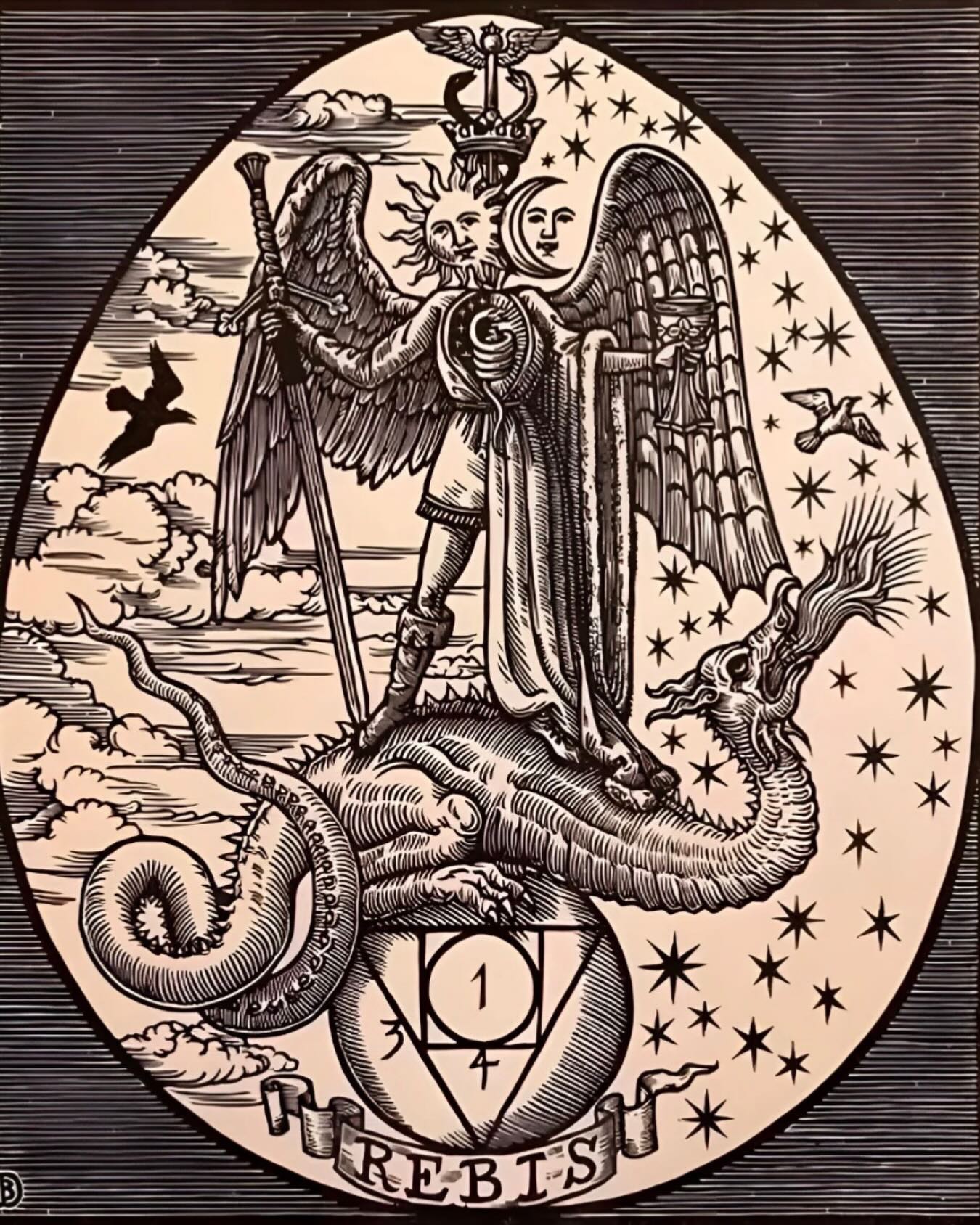
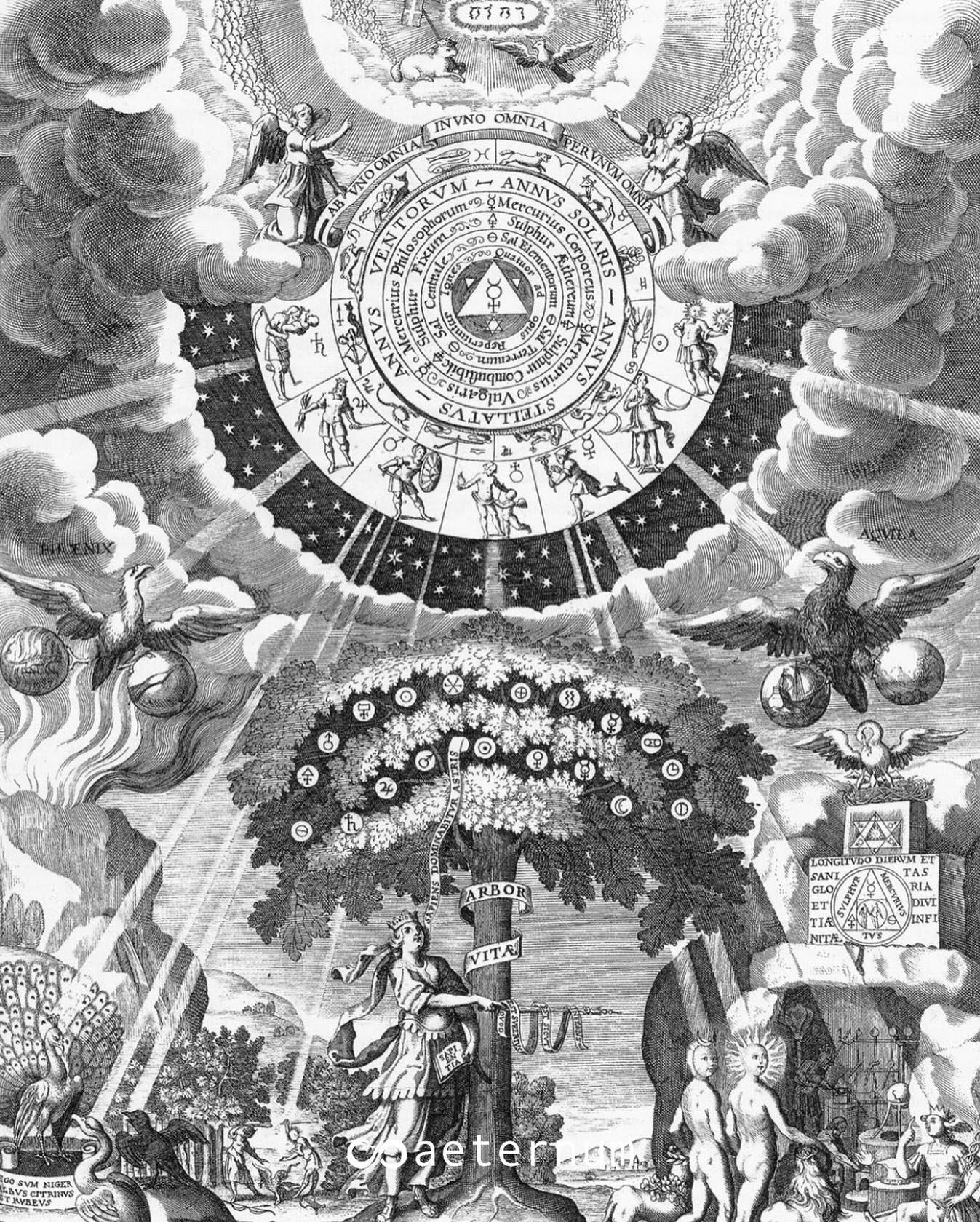
Medieval Europe and the Renaissance reinterpret the figure of the Phoenix through the lenses of alchemy, Christian theology, and hermetic arts. In Latin alchemical treatises, translated from Arabic authors like Jābir ibn Hayyān (Geber), the Phoenix appears as the symbol of the Red Work, the final stage of the Great Work, where matter transforms into pure essence.

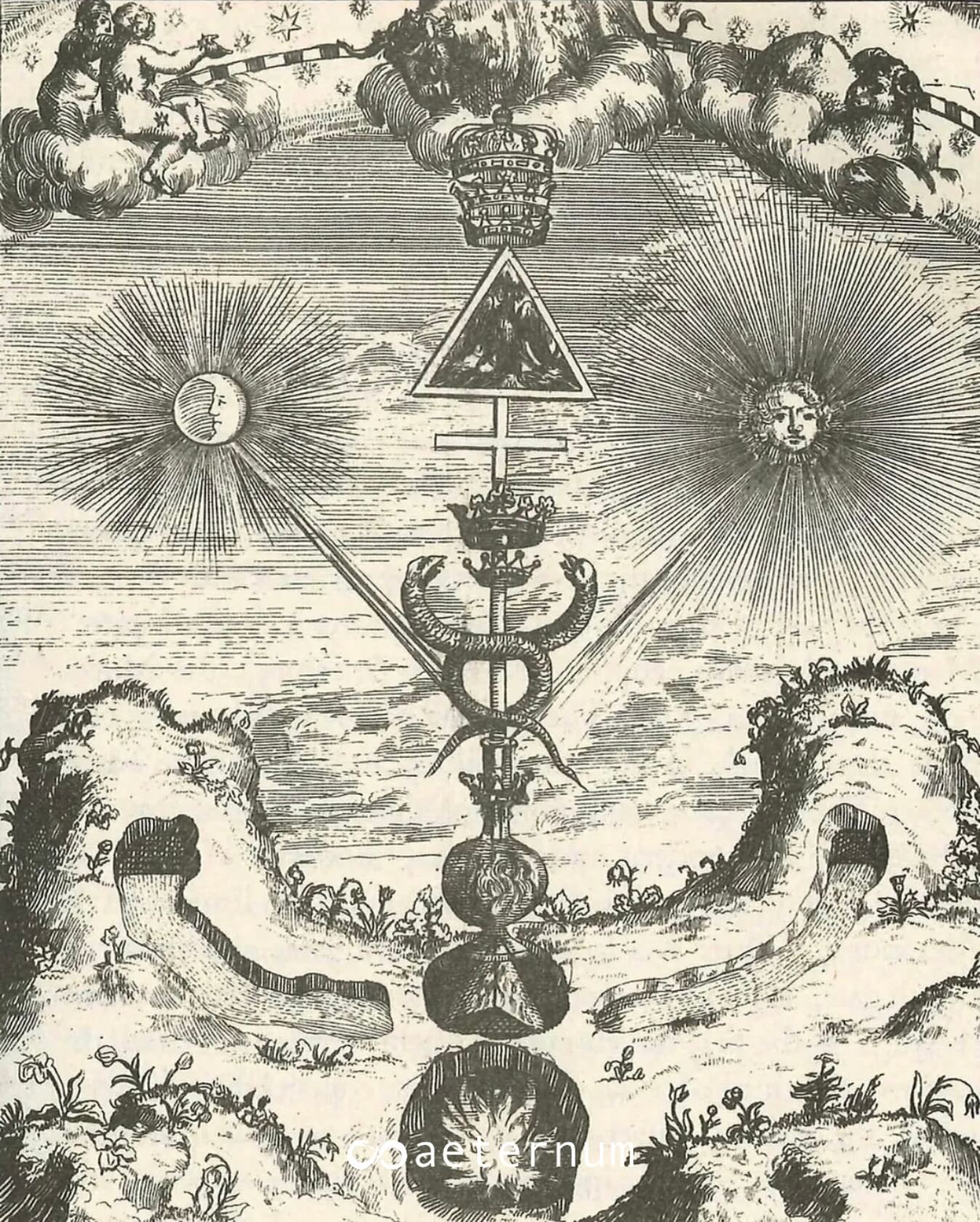
It appears on many alchemical engravings. It is seen reborn at the top of a terrestrial globe, or emerging from a skull, or springing from a fire surrounded by planetary symbols. It does not represent the real bird, but a state of matter that has passed through corruption, dissolution, then reached a stable and luminous form. In this context, fire is not destructive. It reveals what was hidden beneath appearances.
In the Christian tradition, the Phoenix becomes an image of resurrection. From the earliest centuries, Church Fathers like Tertullian, Lactantius, or Ambrose mention its cycle as proof that nature itself contains signs of life after death. On some early Christian mosaics, it is found perched on a stylized cross or associated with the Garden of Eden. It is not worshiped. It is seen as a discreet reminder that nothing truly ends, as long as the inner fire watches over.
The Renaissance grimoires associate it with other figures like the salamander or the ouroboros (the symbol of our online esoteric shop Aeternum). It becomes a symbol of endurance, purification, transformation from within. It is not a magical animal to summon. It represents a model of inner work, a way to go through trials without giving in to the fear of loss.
8. The character of the Phoenix
The Phoenix does not need language. It does not speak. It does not give advice. Its behavior is read in its way of being. It lives alone. This solitude is not exile. It is part of its nature. It does not seek company. It does not distance itself either. It stands apart, without arrogance.
It carries within it a memory that does not fade. With each rebirth, it keeps the traces of its past lives. It never starts over from zero. It continues, in another form. This memory gives its movements a particular slowness, a calm precision. It does not act hastily. It waits. It understands signs before they become visible. It moves forward when the moment is right.

The Phoenix does not seek to defend itself. In fact, it has no enemies. It does not need territory. It protects nothing. It transforms. It knows loss. It knows fire. It accepts. And this acceptance becomes a strength.
Its gaze does not judge. It observes. It changes nothing around it. It changes form. And this change is enough to trigger other movements. It does not set an example. It shows that transformation is possible, even when everything seems consumed.
The Phoenix does not reveal all its secrets. It leaves behind a trace, a gleam, a warm breath that floats in the air. It does not explain itself. It invites. Everyone can see in it a call to start over, to let oneself be crossed by this inner fire that consumes nothing but reveals what was sleeping. We encounter the Phoenix at turning points, when something inside us collapses to make way for a new form. It does not say how to do it. It shows that it is possible. And sometimes, that is enough. Perhaps its true power lies there: in this simple truth that every end already contains a beginning.