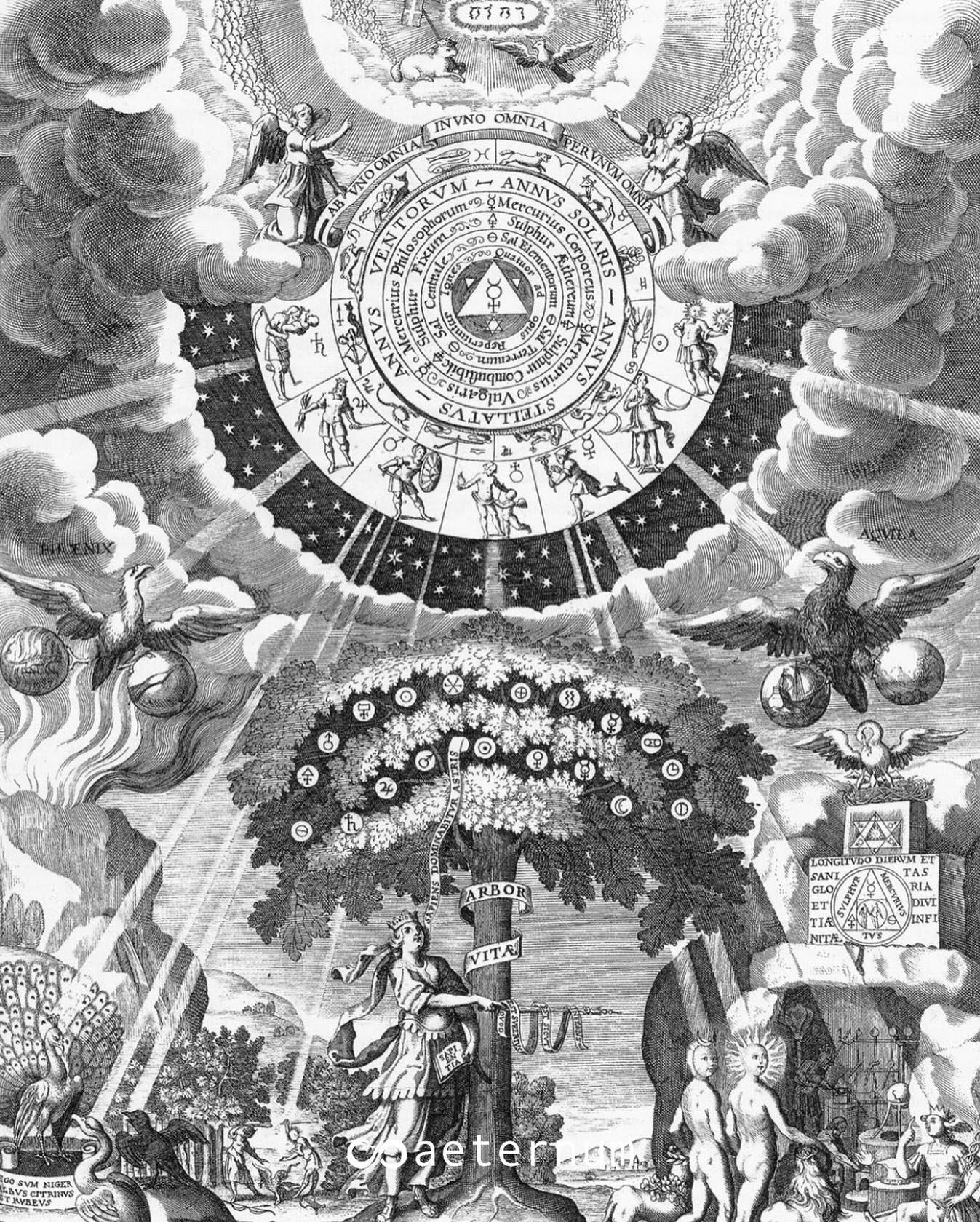
Summary...
The materia prima is an omnipresent but rather enigmatic concept in alchemy (although it also exists in several other fields). It is often described as the original source from which all elements were born and to which all creation can return or be brought back. It is considered purity and quintessence itself, with which all creation becomes possible. It is the nothing and the everything without which nothing could be. I warn you, the topic discussed belongs to alchemical philosophy, which can be a little difficult to grasp for beginners.
1. Origin and meaning of the materia prima
The term materia prima is often translated as "raw material" or "primordial substance." In alchemy, this concept refers to the undifferentiated and pure origin of all matter, a universal essence from which all forms of the physical world are supposed to be created.
Historically, the idea of materia prima can be traced back to Greek and medieval philosophies, where it is closely linked to Aristotle's notion of prima materia. Aristotle conceived prima materia as an indeterminate substrate, devoid of form or inherent qualities, which, combined with forma (form), leads to the manifestation of physical objects. This perspective was adapted and transformed by alchemists who saw in the materia prima not only a physical base but also a spiritual foundation for carrying out the alchemical works.
2. The materia prima and the Great Work
In alchemy, the materia prima is at the heart of the transformation process, known as the "Great Work" (or Magnum Opus), which aims at the transmutation of base metals into noble metals, such as lead into gold. This symbolic transformation also represents spiritual purification, where the materia prima acts as a catalyst in the quest for perfection, or the philosopher's stone.
Alchemists considered the materia prima as the starting point of all creation, containing within itself all the possibilities of the universe. It is often described as an original chaos or a confused mass, which, through alchemical work, is gradually purified and elevated to a state of perfection. This notion is also illustrated in the famous alchemical adage "Solve et Coagula", which means to dissolve (the impure matter) and coagulate (to form the perfect matter).
3. The forms of the materia prima

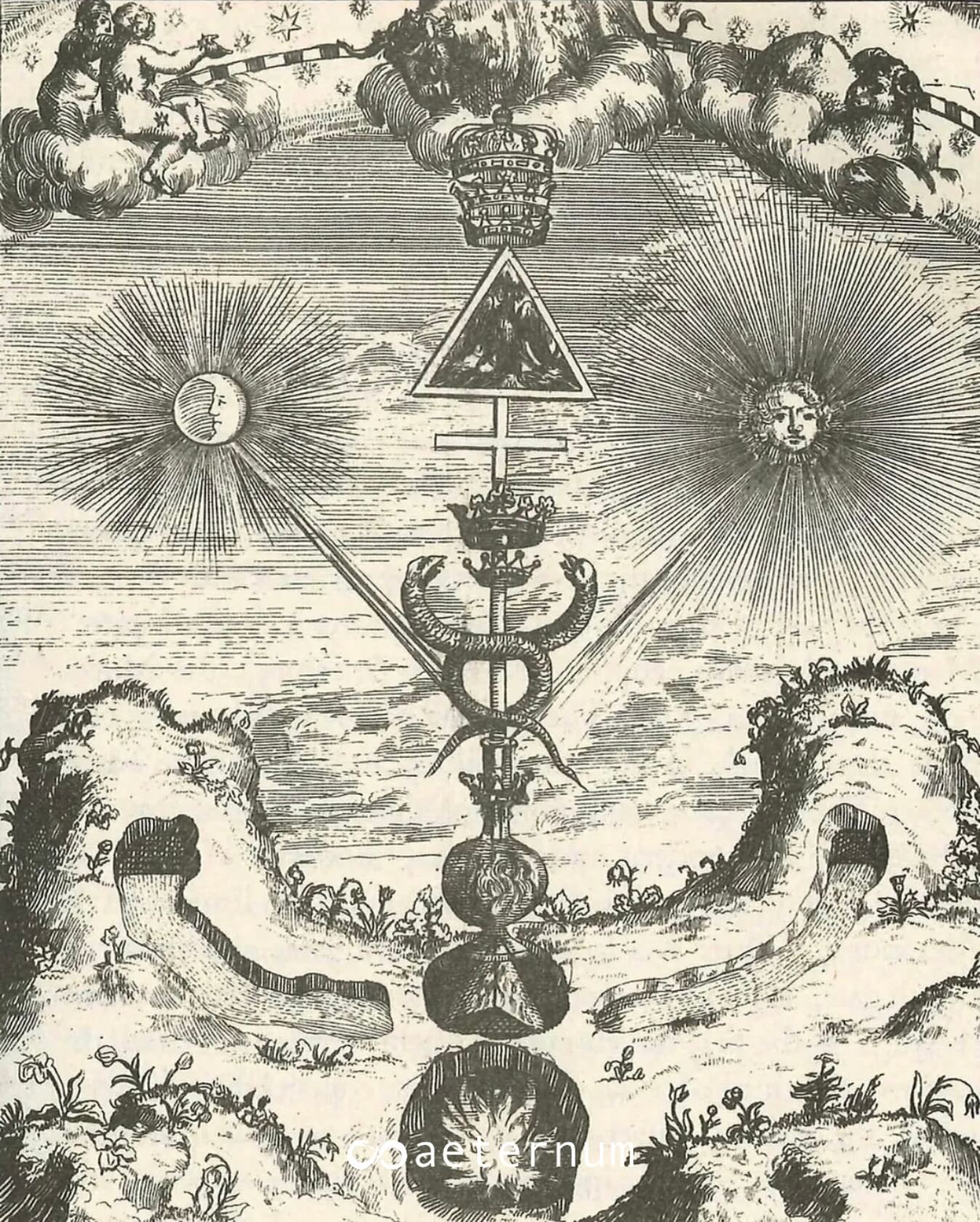
Let's be clear, the materia prima is an abstract and symbolic concept rather than a concrete substance with a specific appearance. It represents the original, pure, and undifferentiated state of all matter, and is therefore often described metaphorically or allegorically rather than visually. However, to illustrate its fundamental qualities, alchemists used various symbols and metaphors in their art and writings:
-
The Philosophical Egg represents the cosmos in its entirety, enclosing the materia prima in a shell that symbolizes both protection and limitation. This concept highlights the hermetic and self-contained nature of the materia prima.
-
The Philosopher's Mercury, different from ordinary mercury, is seen as the volatile and spiritual element that animates the materia prima. It is the principle of fluidity and transformation acting within matter.
-
Sulfur, for its part, is the principle of combustibility and heat. It is often perceived as the soul that permeates the materia prima, providing it with the qualities necessary for its transmutation.
-
The Ouroboros, this serpent or dragon biting its own tail, is a classic symbol of unity, the eternal cycle of nature, and rebirth. It is often used to represent the cyclical nature of the materia prima and the alchemical process itself, emphasizing the concept of constant rebirth and renewal.
-
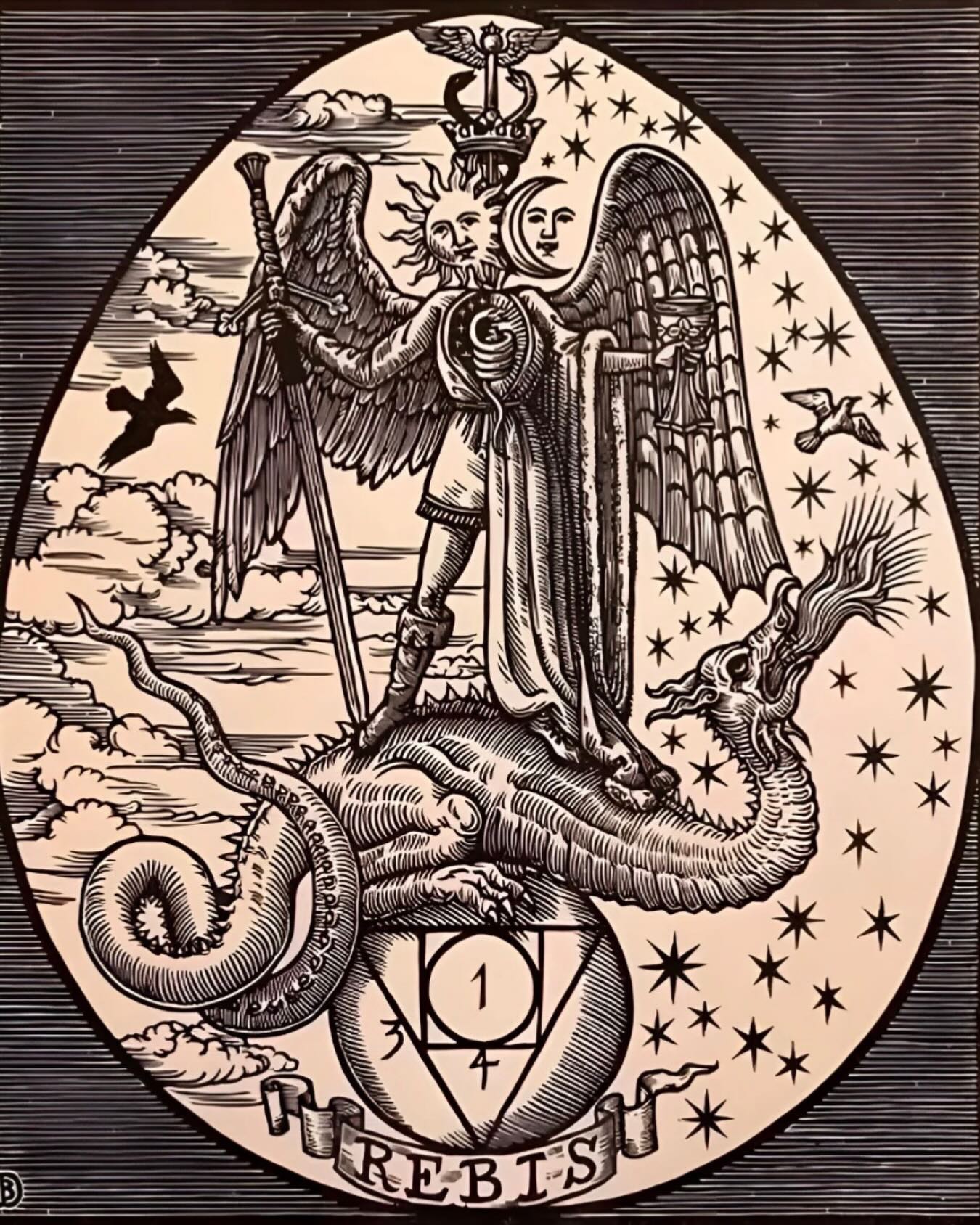
The Rebis, this hermaphroditic figure combines masculine and feminine attributes, symbolizing the union of opposites. The Rebis represents the fusion of dual elements (often sulfur and mercury in alchemy) that must be combined to create the materia prima.
-
Representations of chaos or confused and indistinct masses can also symbolize the materia prima, often illustrated as a tumultuous sea or a primordial "mash" from which order and distinction emerge through alchemical work.
4. The materia prima and alchemical transformation
As you know, at the heart of alchemy lies the idea of transformation, where purification plays a crucial role. This purification is not only physical but also spiritual, symbolizing an inner refinement as much as an outer one. For alchemists, the materia prima is the raw and original source that contains within it impurities as well as the potential to become something greater and purer.
Here is a diagram explaining this principle of transformation:

Thus, the materia prima allows, through the correspondence of elements, the use of sulfur (soul), mercury (spirit), and finally salt (balance and stability).
The purification of the materia prima is often compared to a metal refining process. In this analogy, just as raw ore must be melted and refined to extract a precious metal, the materia prima must undergo purification trials to reveal its true nature and hidden properties. This process is essential to achieve the ultimate goal of alchemy: the creation of the philosopher's stone, capable of transmuting base metals into gold and offering the elixir of long life.
The stages of this transformation are meticulously described in various alchemical writings, often in the form of complex operational sequences involving calcination, dissolution, separation, and coagulation. Each of these steps aims to reduce the matter to its purest form, eliminating superfluous elements and enhancing those that are essential.
5. The materia prima and its potential
Symbolically, the materia prima represents much more than a simple physical substance. It embodies unlimited potential, the state of pure possibility before form and distinction intervene. Within the alchemical framework, this conception of the materia prima as the source of all creation parallels the idea of a return to origin, to a state of perfection and unity before the corruption and degradation of material forms.
The process by which the materia prima is purified and transformed into a noble substance is seen as a path toward wisdom and enlightenment. For the alchemist, working with the materia prima is not only manipulating external substances but also engaging in an internal process of reflection and spiritual purification.
In this process, the materia prima, with its richness of meanings and symbolism, serves as a mirror to the alchemist, reflecting their own impurities to purify and their own transformations to accomplish. Thus, the alchemical work on the materia prima becomes an act of meditation and contemplation, where each step of the external process corresponds to an inner development, each material transformation evoking a spiritual transformation.
In other words, it is impossible to describe the materia prima precisely and in detail since it is a concept rather than a reality, but it is present in every stage of alchemical work because without it, this work would not be possible. I hope this note will help you better understand alchemical literature and the importance of this primordial matter.
[bloctwist]