When magic is mentioned, certain traditions immediately come to mind: European witchcraft, ceremonial magic, shamanic practices... But Tzigane magic, discreet, remains much less known. Yet, it spans generations, carried by a nomadic people who have preserved their knowledge away from outside eyes. Passed down orally, it naturally integrates into daily life without ever being written down, which is why this article is not meant to be a complete collection but rather an introduction. Presentation.
1. The occult heritage of the Tziganes
Tzigane magic takes place in a world where the visible and invisible intertwine daily. However, it is not a domain reserved for initiates, but knowledge that naturally circulates within families and communities. Nothing is learned from books; everything is passed down through gestures, words, and observation. A child does not receive formal teaching; they simply grow up surrounded by practices that shape their view of the world.

This tradition is based on an intuitive knowledge of the forces that govern life. The Tziganes give a central place to signs and premonitions, considering that everything that happens has a meaning. Magic is inseparable from religious practices, family rites, and customs. It is part of daily life, with no clear distinction between the sacred and the ordinary.
Before going any further, let's clarify what the term "Tzigane" covers. It does not refer to a single people, but several groups with common origins. Among them, the Gitans, the Manouches, and the Roms stand out by their languages, lifestyles, and migratory routes. The Gitans are linked to Spain and southern France, with a culture influenced by flamenco and Catholic fervor. The Manouches, mainly present in France and Germany, inherit rich musical traditions and a strong attachment to freedom of movement. The Roms, more dispersed in Central and Eastern Europe, have developed specific practices influenced by local cultures. Each of these groups has its own expressions of magic, but all share an instinctive and pragmatic relationship with the invisible.

In this context, the transmission of magical knowledge follows no rigid structure. Some members, men or women, develop more pronounced abilities, like a gift or a family inheritance. Others acquire knowledge by living close to those who practice. A grandmother shows how to prepare a protective talisman, a mother breathes words of blessing over a sick child, an elder interprets omens that arise during a journey. You understand: nothing is formalized, everything is lived.
Far from dogmas or so-called "structured" esoteric schools, Gypsy magic adapts to situations, encounters, and needs. It is not meant to be theorized but to be applied, as an essential tool to preserve balance and avoid harmful influences or distortions that many other magical currents unfortunately experience today.
2. Knowledge in motion
As we have seen, Gypsy magic is based on no sacred text or fixed doctrine. It crosses eras without ever being confined by immutable rules. Its origin is even lost in time, mixed with the routes of the peoples who carried it through India, the Middle East, and Europe. Each territory crossed left a mark, like a mosaic of magical traditions.

The first Gypsy groups left northwest India several centuries ago. Their route took them through Persia and the Byzantine Empire before reaching Europe. This long journey shaped their relationship with the invisible world. They encountered various magical traditions, assimilating some practices while preserving their own. Persian, Arab, and Balkan influences marked their way of interpreting signs, using plants, and practicing divination.
Upon arriving in the West, the Gypsies discovered an environment where magic was closely monitored by religious authorities. Thus, far from cities and power structures, they continued to practice their rituals discreetly. Persecutions pushed them to strengthen the oral and family nature of their knowledge. Nothing was to be written down; everything had to be passed on through speech and example. This adaptation allowed Gypsy magic to survive through the centuries without losing its strength or effectiveness.
Objects and methods may have varied according to times and places, but the principles have remained the same. Observing the world, reading signs, and the ability to influence events have always been at the heart of the practices.
Even today, this knowledge continues to evolve. The Gypsy communities, though scattered, maintain their connection to these ancient practices. Some methods are adapted to modern life, but the spirit remains the same: to use magic as support against the uncertainties of the world, never separating it from daily life. Its discretion is thus the guardian of these traditions.
3. Spells, charms, and well-kept secrets
Gypsy magic is not practiced in closed circles or at dedicated times. A word spoken at the right moment, an object slipped into a pocket, or a sign drawn on a door is enough to guide events. Everything rests on intention and the strength of transmitted traditions.

This explains why protection holds a vital place in these practices. Far from cities and established structures, the Gypsies have learned to shield themselves from outside influences. Certain gestures can deflect an evil eye, ward off a foreseen misfortune, or strengthen a wavering luck. It is not uncommon to see a child receive a talisman at birth or a traveler leave with an object charged with a protective intention.
Healing follows the same principle. Each family has its remedies, made from plants, whispered prayers, and precise gestures. A hand placed on a forehead, a carefully prepared infusion, or a formula repeated in a breath is enough to restore a disturbed balance. This approach relies as much on knowledge of the elements as on the strength of the one who acts. It is not just the object or the plant that heals, but the way they are used.
Amulets and talismans are an integral part of this everyday magic. Each object has a specific function and is charged with the energy attributed to it. A pierced coin worn around the neck attracts prosperity, a tied piece of fabric protects against misfortune, a shell picked up during a journey holds the memory of the roads traveled. Some of these objects are even passed down from generation to generation, invaluable not for their material worth, but for the energy infused by previous generations.
In fact, what matters is not so much the object or the formula used, but the relationship one has with them. Gypsy magic adapts to needs and situations.
4. Magic in the hands of women
In Gypsy communities, the transmission of magical knowledge largely relies on women. They are the ones who watch over traditions, teach the gestures, and perpetuate the practices that protect, heal, and guide. Their role goes beyond that of a simple guardian of family secrets: they are healers, advisors, and interpreters of invisible signs.
Women Gypsy women develop a sensitivity to magical practices very early. They observe their mother, grandmother, aunts, and assimilate without needing explanations. A look is enough to understand, a repeated gesture becomes a reflex. Nothing is learned in a fixed framework; everything is transmitted in the natural rhythm of life. It is through observation and repetition that the youngest appropriate this knowledge.
Some women acquire a special reputation, not only among their own but also beyond their community. Their knowledge of remedies, mastery of protection rituals, or ability to read the future grants them a unique place. People come to consult them to clear doubts, receive a blessing, or ward off an anticipated misfortune. They do not claim to be magicians or seers, but their influence is recognized.
Matrilineal transmission does not mean, however, that only members of the same family can practice. A woman who has developed particular skills can teach others, according to what she deems appropriate to reveal. Some knowledge remains reserved for those who have proven their commitment and understanding of the fundamental principles. It is not knowledge to be shared indiscriminately, but a heritage that must be preserved with caution. There are thus several levels of depth accessible or not to members of the community.
Far from the fantasized images of the witch or the seer, the magic of Gypsy women is expressed through simple gestures and practices rooted in daily life. They do not need pomp or spectacular rituals.
5. Invisible presences and shadow spirits
Gypsy magic is not limited, however, to daily gestures and rituals. It also relies on a close relationship with invisible forces, benevolent, protective, or threatening. Demons, fairies, wandering creatures, and sacred figures shape a universe where the material world never exists alone.
Demons hold a special place in Gypsy traditions. As in Voodoo magic, they are not seen as purely evil entities, but as forces capable of causing trouble, bringing illness, or provoking disorder in the lives of the living. Some attack careless travelers, others sneak into poorly protected homes. To guard against them, Gypsies use objects charged with protection, prayers, or even reversed spells intended to send these harmful influences back to their source.
As for them, the spirits of Nature are seen as ambivalent entities. Some offer their help to travelers, blow warnings, or bring luck. Others are capricious and can take revenge for disrespect or an unintentional offense. In some families, there are stories of encounters with these elusive beings, who leave behind discreet signs or objects whose presence cannot be explained. To avoid incurring their anger, it is customary to leave small offerings or pay attention to the signs they send.
The Black Virgin holds an important place in Gypsy spirituality. She is seen as a figure of protection and guidance, capable of bringing comfort and interceding on behalf of those who invoke her. Her worship is especially lively during the pilgrimage to the Saintes-Maries-de-la-Mer, a major event for the Gypsies. Every year, they come to pay tribute to Sara la Kali, considered their patron saint. Her name, which means "Sara the Black," evokes both an origin and a benevolent force that watches over them. Some place personal objects at her feet to ask for her protection, others send her wishes or thank her for a favor received. Her worship clearly demonstrates this fusion between Christianity and Gypsy traditions, where spirituality does not oppose magic.

Gypsy legends are also full of fantastic creatures whose roles vary according to the stories. Some embody wandering souls seeking rest, others are messengers announcing an upcoming event. The wolf holds a special place in Gypsy imagination, sometimes seen as a guide, sometimes as a predator linked to dark forces. Dragons and giant snakes are also mentioned as guardians of treasures, accessible only to those who know how to read the signs of destiny.
6. Gypsy dance as an expression of magic
Gypsy dance is a means of expression, an outlet, and sometimes a magical tool in its own right. Every movement, every rhythm, and every variation of the body carries an intention that goes far beyond simple gestures.
In Gypsy traditions, dance accompanies significant life events: celebrations, rites of passage, moments of collective joy, but also periods of mourning or transition. It is a way to release what cannot be said with words and to create a link between individuals and the energies around them. Some steps are performed to chase away misfortune, others to attract prosperity or encourage a union.
The relationship between dance and magic is seen in the attention paid to rhythm. The beating of feet on the ground, the undulation of arms, the movement of skirts create a dialogue between the dancer and the space she moves through. It is sometimes said that the Gypsy dancer "writes" messages in the air, like a charm or even like a sigil. Body percussion, hand claps, and playing with skirts amplify this connection with the elements.
The tambourine is used to mark a protective rhythm, to ward off harmful influences, and to accompany rituals related to luck. Similarly, the use of colorful scarves, coins sewn onto clothing, or candles in certain choreographies is linked to specific intentions known only to the dancer.
7. The divinatory art: gift or inheritance?
Divination is certainly the best-known part of Gypsy magic. Far from the clichés of Madame Irma, reading the future is not about predicting with certainty what will happen, but about interpreting the influences at play, detecting opportunities and warnings that the invisible world leaves for those who know how to observe (like traditional divinatory tarot).
Cartomancy is one of the most widespread practices among Gypsies. Unlike esoteric traditions that favor codified methods, Gypsy readings rely on a more intuitive approach. The cards are interpreted not only according to their symbolic meaning but also according to their arrangement, their interaction, and the reader’s feelings. The tarot deck, widely associated with Gypsy fortune tellers, does not have a strictly Gypsy origin, but it was adopted and adapted by certain families during the communities’ travels.

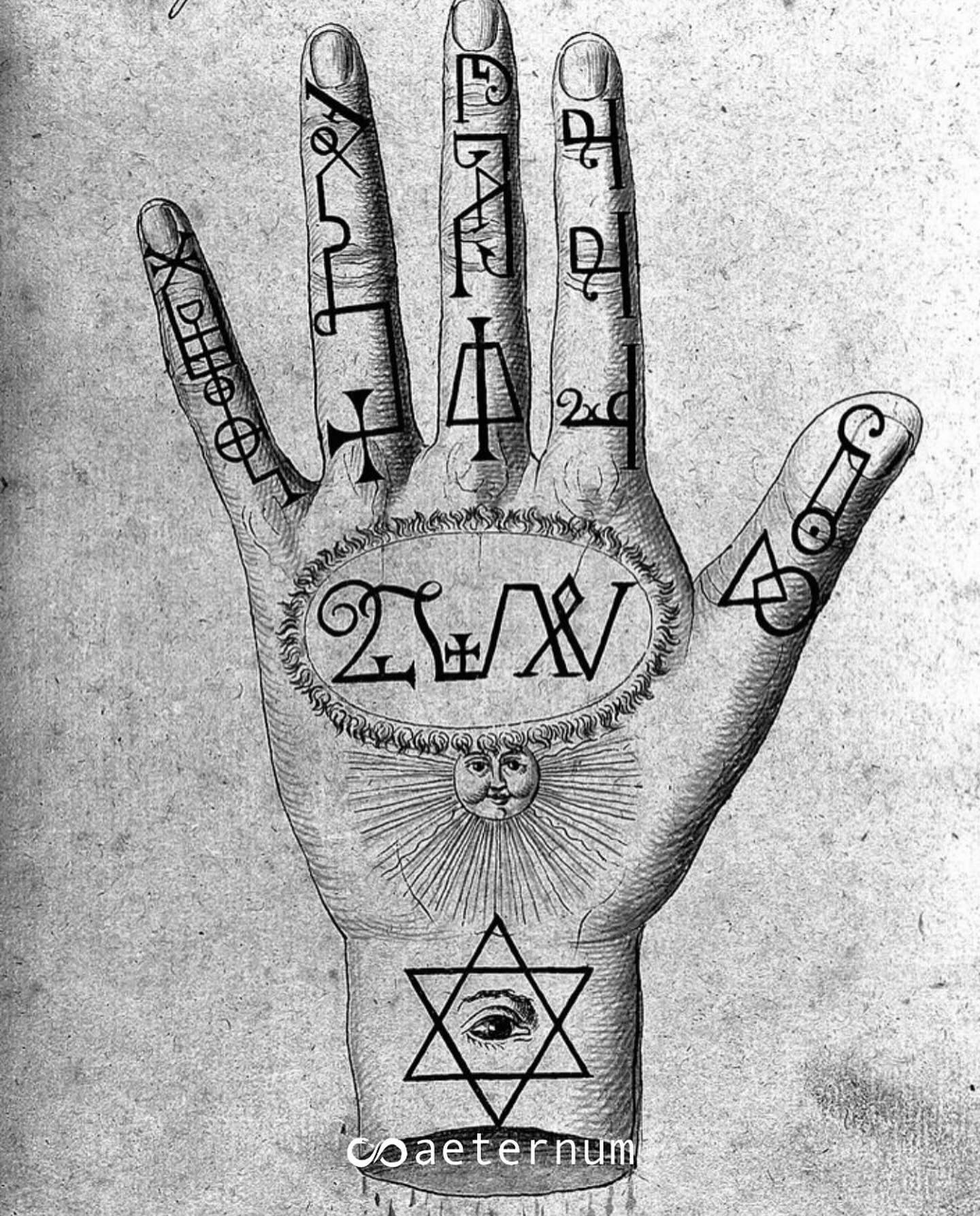
Chiromancy, or reading the lines of the hand, is another commonly practiced form of divination. Each hand carries the trace of a life’s journey, with lines that reveal personality traits, significant events, and external influences. Again, the interpretation does not follow a rigid pattern. A reading depends not only on the shape of the lines but also on the touch, the gaze, and the impression given by the person consulted.
Beyond these known practices, Gypsy divination also relies on observing signs. A bird flying in a particular direction, a candle flickering for no reason, an unexpected meeting at a precise moment are all clues that some know how to interpret. This knowledge is not learned; it develops over time, through experience and attention to the world surrounding the one seeking to understand.
The idea of an unchangeable destiny is rarely accepted in the Gypsy vision of divination. Reading the future is above all about understanding the forces at play and providing the keys to act accordingly. An omen is not a fatality, but a warning or an opportunity to seize. It is this fluid approach, where nothing is fixed, that distinguishes Gypsy divination from many other traditions and ultimately makes it closer to all of our lives.
8. Between shadows and lights of a misunderstood magic
Gypsy magic fascinates as much as it worries. It is perceived by outside societies as a dark, elusive practice, sometimes associated with superstition, sometimes with the manipulation of invisible forces. This ambiguous perception has helped fuel stories of fear and mistrust, where the Gypsy magician oscillates between the image of the feared sorcerer and that of a charlatan seeking gullibility.
8.1. Stigmatizing ignorance
One of the main causes of this stigmatization lies in the exclusively oral transmission of these practices. Where other magical traditions have left written traces, Gypsy magic relies on secrecy and discretion. This knowledge circulating through generations without being recorded has always made it difficult for outsiders to understand its foundations. Like many things in human nature, it is ultimately ignorance that breeds fear.
The image of the "Gypsy witch" has been widely exploited in culture, notably through the figure of the fortune teller. Caravaggio and Georges de La Tour, for example, illustrated scenes of divination linked to themes of deception or theft, which did not really help to give a good image to the practice.
8.2. Sect and persecutions
The persecutions suffered by the Gypsies over the centuries have reinforced this mistrust. In Christian Europe during the Middle Ages, they were assimilated to heretics or witches practicing occult rituals contrary to established dogmas.
To understand this, one must talk about another fact: the Atsinganos, or Athinganoi in Greek (Ἀθίγγανοι), were a heterodox Christian sect that appeared in Phrygia (region of present-day Turkey) in the 9th century. Their name means "untouchables" or "unapproachable" in Greek, reflecting their practice of avoiding physical contact with those outside their community. The Athinganoi adhered to monarchian doctrines, a form of early Christianity that emphasized the oneness of God, rejecting the doctrine of the Trinity. They were also known for their strict ascetic practices and their rejection of social interactions with non-members.
Note, however, that this origin is still open to debate (some claim that this term comes from a horse training practice, or from a distant people).
Over time, although the sect died out, the term Atsinganos was used by the Byzantines to designate groups perceived as foreign or heretical, including nomadic populations practicing divination and magic. This association contributed to the emergence of the term... Gypsy (or Tsigane).
As we have seen, the reality is much more complex: Gypsy magic is a set of living practices, shaped by time and the contexts experienced, which cannot be confined to a fixed or caricatured framework. But for those who practice it, it is nothing like folklore or legend. It continues to be a way to act on the world, to protect oneself, and to move forward in harmony with the forces that flow through it.