





























































































The alchemical symbol for earth is a downward-pointing triangle crossed by a horizontal bar. It occupies the cold and dry pole of the four-element system and is therefore opposed to air, which is hot and moist. In alchemical texts, earth may refer to the philosophical element, but also to a solid material, a powder, a residue, or what remains after an operation. This plurality makes it necessary to distinguish the glyph, elemental theory, and the technical vocabulary of the laboratory.
| Glyph | Downward-pointing crossed triangle — 🜃 |
|---|---|
| Element | Earth |
| Classical qualities | Cold and dry |
| Opposed element | Air, hot and moist |
| To distinguish | The element Earth, a material called “earth,” and the Paracelsian principle of Salt |
How can you recognize the crossed triangle of earth?
The earth glyph consists of a downward-pointing triangle crossed by a horizontal line. Unicode records it under the name “Alchemical Symbol for Earth.” The construction is deliberately similar to that of water, which uses the same triangle without a bar.
The visual relationship with air instead comes from the crossbar: the two crossed signs correspond to the elements that are not represented by a simple triangle. This small visual grammar makes it possible to memorize the entire quaternary system using two orientations and a single addition.
The theory of the four elements is much older than these glyphs. The crossed triangle belongs to a European chymical and alchemical notation that accompanies other characters for metals, salts, solvents, and operations. This drawing should therefore not be presented as the symbol used by the philosophers of ancient Greece.
Why is earth cold and dry?
In Aristotelian physics and its medieval developments, each element results from two qualities. Earth combines coldness and dryness. It shares coldness with water and dryness with fire, while air is opposed to it by both qualities.
This classification gives structure to transformations. Heating, cooling, moistening, or drying are not simple actions: in the language of natural philosophy, they alter the balance of qualities within a body. Arabic-language alchemy largely adopts this framework and incorporates it into its theories of the generation of minerals and metals.
Earth is therefore not identical to the ground beneath our feet. It represents an elemental condition characterized by coldness and dryness. A concrete substance may contain all four elements in different proportions while displaying dominant qualities.
Why do earth, ash, and fixation come close together in alchemy?
The laboratory produces residues. When a substance is heated, part of it may rise as vapor or smoke while another part remains in the vessel. Ash, powder, deposit, or calcined mass provide a very concrete experience of the separation between what volatilizes and what remains.
Terrestrial vocabulary naturally applies to this solid, residual pole. A text may refer to an “earth” obtained after an operation without thereby designating the Earth element in its cosmological sense. The reading must then follow the work sequence: what material is heated, what leaves, what remains, and how is the residue reused?
This relationship with fixity plays an important role in the language of the Work. To fix a substance is to bring it toward a state that offers greater resistance to volatilization. Earth then becomes a convenient image of stability, in opposition to vapors and substances that rise.
Nevertheless, it would be misleading to identify all fixity with the Earth element. The Paracelsian system introduces another concept, Salt, specifically linked to what remains stable and nonvolatile. The two notions may be brought closer together in certain interpretations without being interchangeable.
What is the difference between Earth and alchemical Salt?
Earth belongs to the system of the four elements; Salt belongs to Paracelsus's three principles, along with Sulfur and Mercury. These two systems address different questions. The first organizes the qualities of matter; the second seeks to account for behaviors observed during its separation and transformation.
In the Paracelsian formulation, Salt corresponds to what remains in the ashes and resists volatilization. This property brings it closer to the solidity and fixity associated with earth. But a functional resemblance does not allow the two concepts to be merged.
The same principle of distinction applies to Mercury and air, or to Sulfur and fire. Modern esoteric tables may establish correspondences between four elements and three principles; historical texts nevertheless retain their own structures.
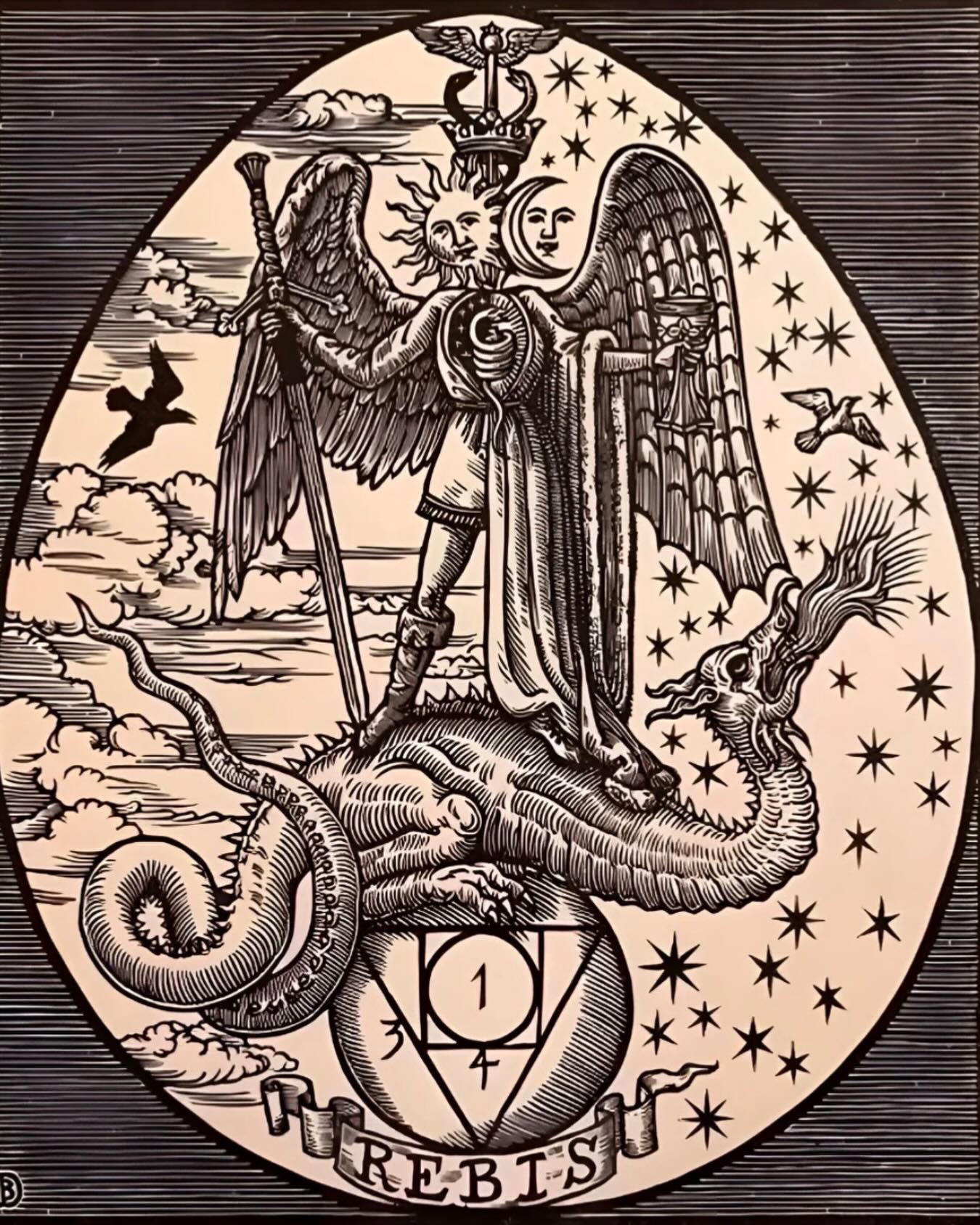
The symbol of the philosopher’s stone makes it possible to observe this overlap of systems: circle, square, and triangle provide a geometry of transformation without reducing all matter to a single vocabulary.
How does modern magic reinterpret the symbol of earth?
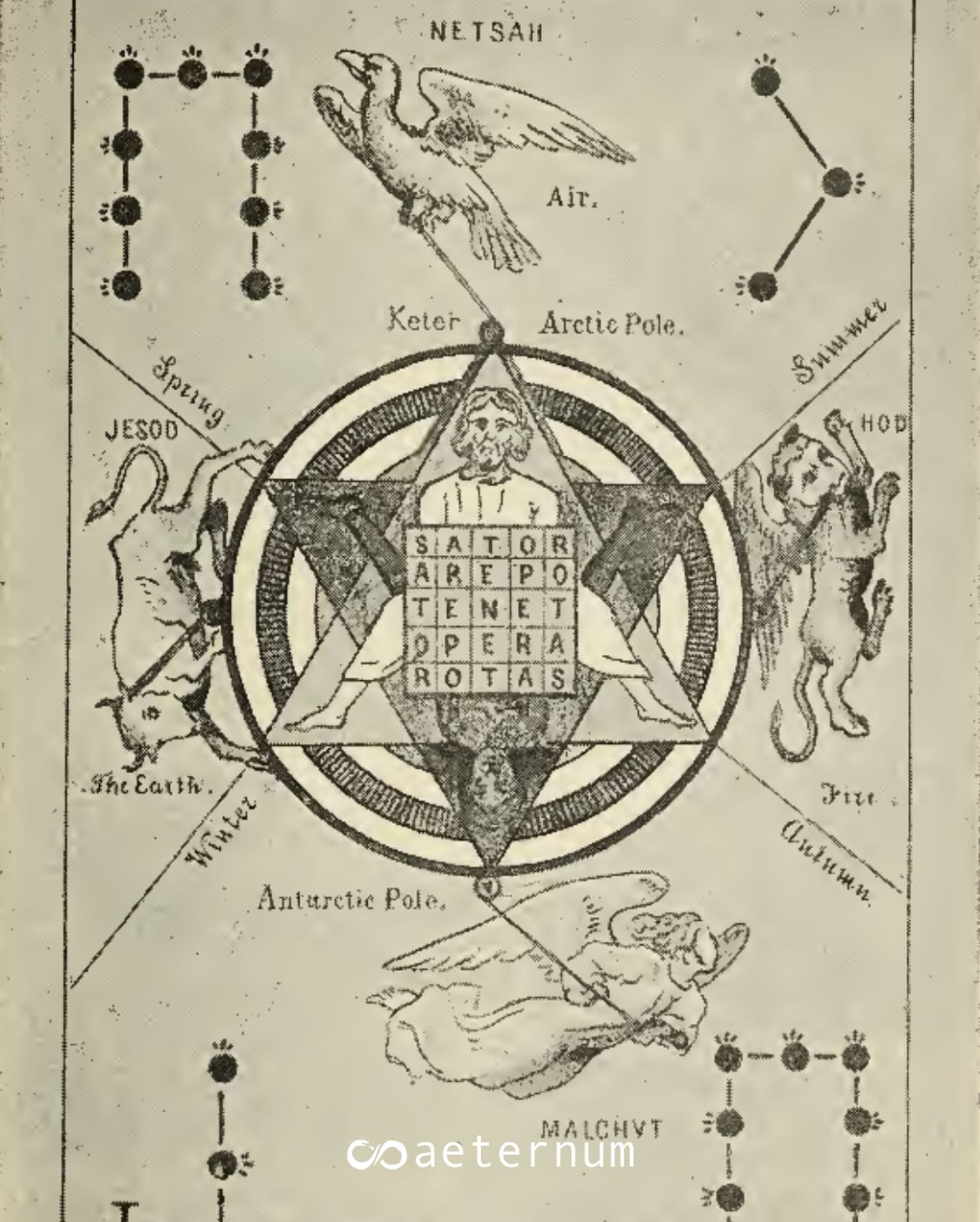
Modern ceremonial occultism preserves the crossed triangle and incorporates it into tables of correspondences. Earth then takes on themes of stability, materiality, limitation, growth, and manifestation. Some schools assign it a direction, a color, a ritual tool, and elemental spirits.
These associations logically extend the qualities of density and fixity associated with earth, but they belong to a more recent development. A 19th-century ritual diagram and a 17th-century chymical treatise do not assign exactly the same function to the sign.
To interpret 🜃 accurately, it is therefore necessary to examine the medium. In a character table, it names the element Earth. In an occult composition, it may be surrounded by a network of correspondences. In a recipe, the word “earth” may still refer to a material residue. The symbol only becomes clear once its context has been identified.
Historical sources and reference points
The character 🜃 is listed in the Unicode block devoted to alchemical symbols. For the cold + dry system and the theory of the four elements in Arabic-language alchemy, see Gabriele Ferrario, “Al-Kimiya: Notes on Arabic Alchemy”, Science History Institute.