





























































































The alchemical symbol for water is a downward-pointing triangle. Its simplicity conceals an essential distinction: water as a philosophical element is not always the material water contained in a vessel. In the Aristotelian tradition transmitted to alchemy, it corresponds to the pair cold and moist; in laboratory texts, the word “water” may also designate solvents, distillates, or preparations bearing technical names far removed from ordinary water.
| Glyph | Downward-pointing triangle — 🜄 |
|---|---|
| Element | Water |
| Classical qualities | Cold and moist |
| Opposite element | Fire, hot and dry |
| To distinguish | The Water element, ordinary water, and the technical “waters” of alchemical vocabulary |
How can you recognize the water triangle?
The water glyph is the simplest of the four elemental signs, along with fire: a triangle without a bar, pointing downward. Unicode classifies it among the “alchemical symbols of the Aristotelian elements” under the character 🜄. Its current form provides a clear reference for reading alchemical charts and the occult systems that inherit from them.
The descending triangle graphically corresponds to the ascending triangle of fire. This opposition makes it easier to read through polarities: below and above, cold and hot, moist and dry. But the geometry of the glyphs should not be confused with the origin of the theory of the elements. The Water element belongs to a philosophy much older than this notation.
In manuscripts and printed works, the proportions of the triangle may vary. The sign may be narrow, wide, slightly tilted, or drawn with a quick hand. What identifies it remains its orientation and the absence of a bar, in contrast to the symbol of earth.
Why is water cold and moist?
Ancient and later medieval natural philosophy organizes matter around four fundamental qualities: hot, cold, dry, and moist. Two combined qualities define each of the four elements. Water unites cold and moist; earth, cold and dryness; air, heat and moistness; fire, heat and dryness.
This structure is central to Arabic-language alchemy. The Science History Institute explains that bodies are understood as assemblages in which these qualities dominate to varying degrees. A transformation can be understood as a rebalancing: increasing heat, removing moisture, producing dryness, or changing a proportion.
Water is therefore not defined solely by its liquid state. It occupies a precise position on a map of qualities. It shares cold with earth and moisture with air. Its opposition to fire comes from the fact that their two qualities are reversed.
Why is alchemical “water” not always water?
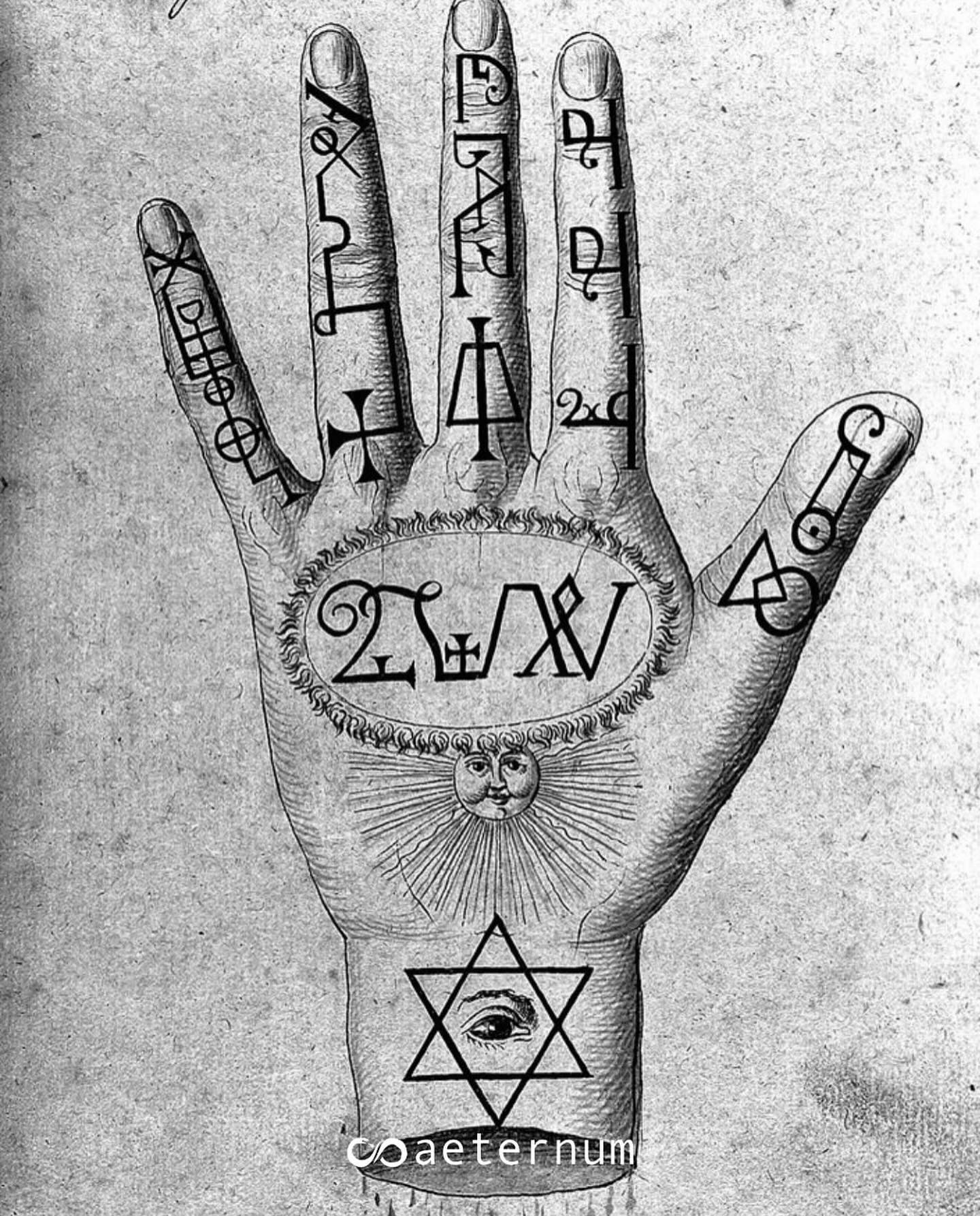
Alchemical vocabulary uses the word aqua for a broad family of liquids and preparations. Aqua vitae refers to an alcoholic distillate; aqua fortis refers to nitric acid in historical terminology; aqua regia to a mixture capable of attacking gold. Alchemical character charts also contain glyphs specific to several of these “waters.”
Alongside these technical names, texts use expressions such as “mercurial water” or “philosophical water.” Their meaning cannot be determined from the word alone. The recipe, context, and author must be examined. “Water” may designate a solvent, a distillate, a substance made fluid, or a concept within the Work.
This lexical richness explains the errors caused by overly hasty modern readings. Seeing the word “water” in a treatise does not automatically identify the triangle 🜄, and seeing the triangle does not mean that the author is asking for ordinary water to be poured. The glyph primarily designates the element within the system of the four.
Alchemical Mercury adds another difficulty: its fluidity and volatility may bring it close to the vocabulary of waters, while it also belongs to the theory of metals and, in Paracelsus, to the three principles.
What happens when water and fire meet?
In elemental theory, water and fire occupy the most opposed poles: cold and moist against hot and dry. Their coming together therefore becomes an effective way to represent the union of contrary qualities. This idea appears in several alchemical diagrams and, later, in ceremonial occultism.
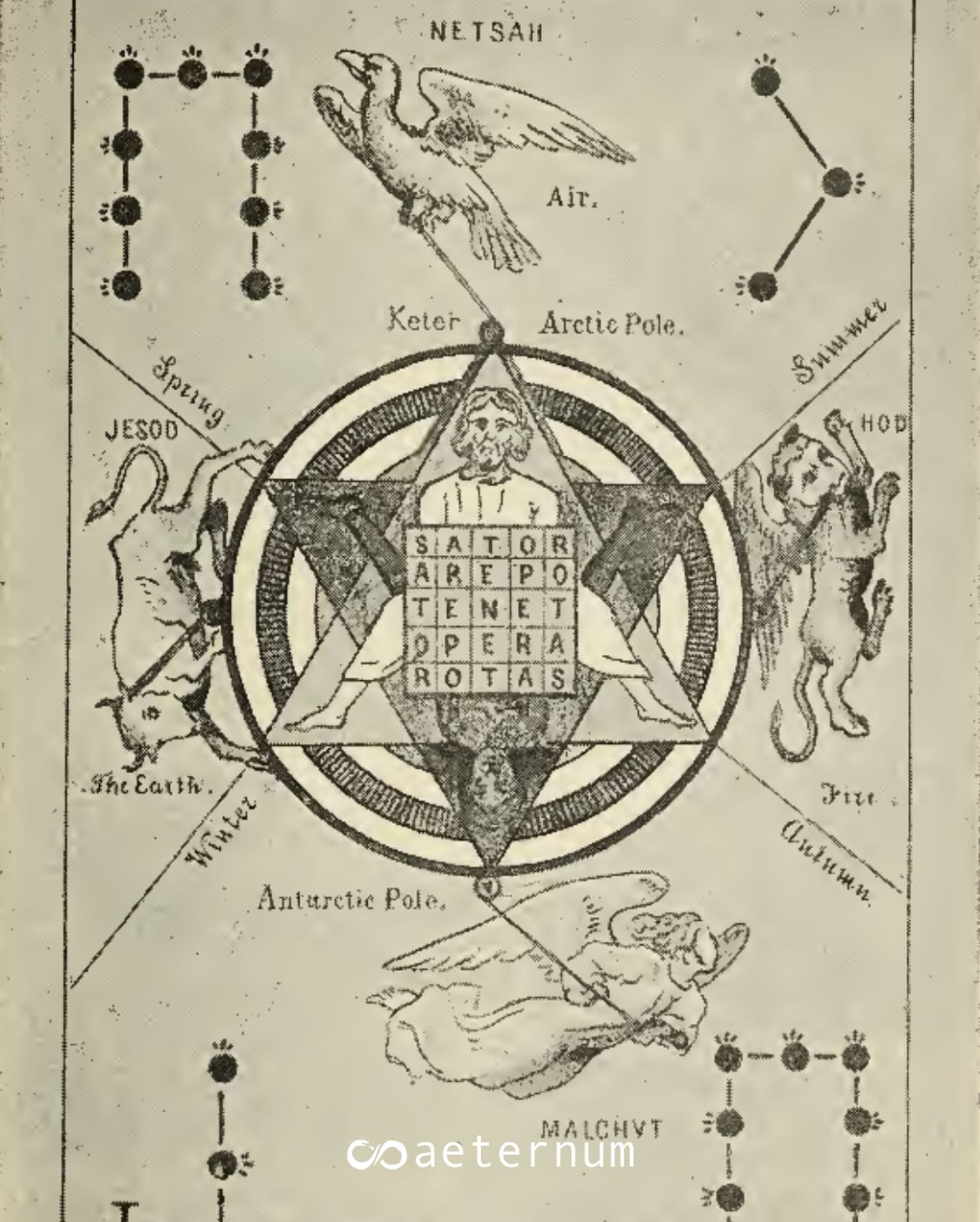
The hexagram offers the best-known example of this reinterpretation: an ascending triangle and a descending triangle superimposed may be interpreted as fire and water united. This explanation belongs to specific traditions and is not the universal origin of every six-pointed star.
In the laboratory, the relationship is also concrete. Heat sets a liquid in motion, produces vapor, and enables distillation followed by condensation. The fire-water pair then takes on experimental reality: heating and cooling become ways to separate, purify, and collect.
This connection between theory and operation explains why alchemy rejects a purely decorative reading of the elements. Qualities serve to conceptualize matter, while instruments make it possible to transform it in reality.
How is the sign used in modern occultism?
Modern ceremonial systems take up the descending triangle and integrate it into ritual correspondences. Water is associated there with receptivity, purification, dissolution, emotion, or intuition. Some schools also assign it a direction, a color, a ritual tool, and categories of elemental spirits.
These meanings may be coherent within a system, but they should not be presented as the direct translation of all medieval or Renaissance alchemical texts. The same glyph passes through several periods and changes function.
The soundest approach is therefore to follow a clear order: recognize the triangle 🜄, understand the cold-moist pair, distinguish the element from technical liquids, and then study the more recent occult correspondences. This progression preserves both historical precision and the sign’s symbolic richness.
Sources and historical references
The character 🜄 appears in the official Unicode alchemical symbols directory. For the system of qualities and the transmission of the theory of the four elements in Arabic-language alchemy, see Gabriele Ferrario, “Al-Kimiya: Notes on Arabic Alchemy”, Science History Institute.