



















































































































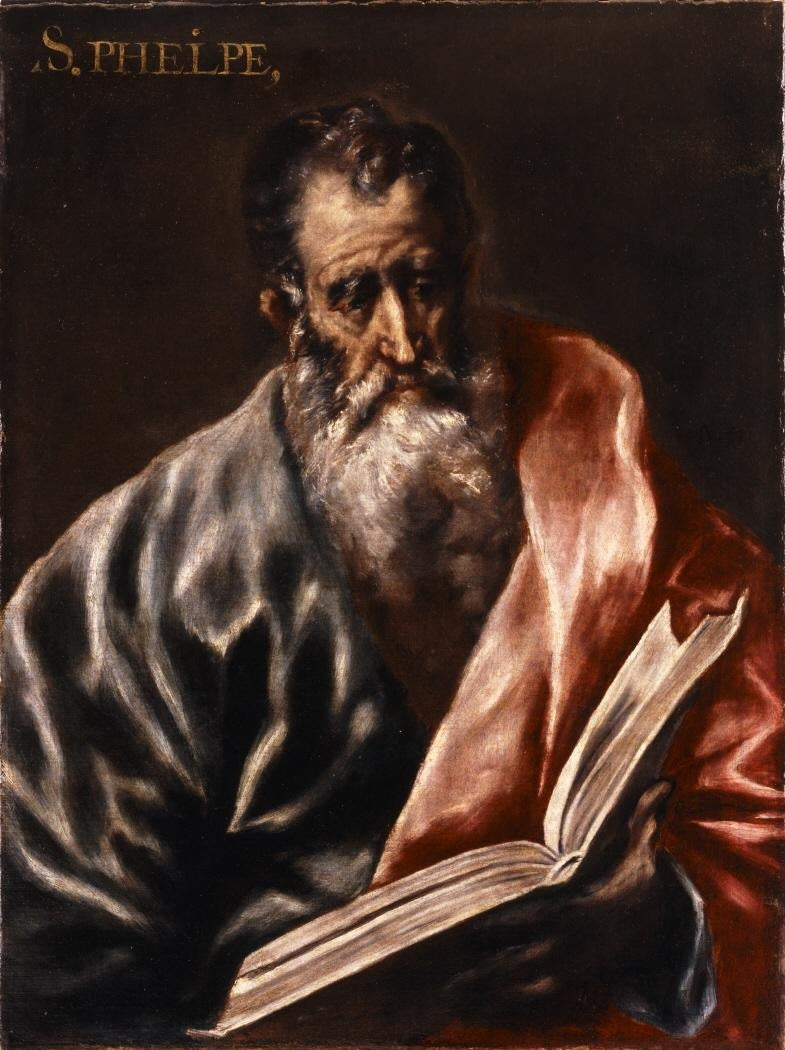
The apostle Matthew is associated with one of the most striking callings in the Gospels: Jesus encounters a man seated at a tax office and asks him to follow him. The disciple leaves his occupation, and the story continues with a meal shared with people whose company is criticized. Matthew’s calling places mercy and the possibility of a changed life at the center. Christian tradition has also associated his name with the first Gospel of the New Testament, a text whose organization and major teaching sections have shaped the transmission of the faith. Matthew’s story therefore requires distinguishing the calling of the tax collector, the apostle’s place among the Twelve, and the questions surrounding the composition of the book that bears his name.
| Background | Tax collection in Capernaum |
|---|---|
| Associated name | Matthew; Levi in the parallel accounts |
| Sources for the calling | Matthew 9, Mark 2, and Luke 5 |
| Traditionally attributed text | Gospel according to Matthew |
| Evangelist’s symbol | Winged man |
| Feast day | September 21 |
The tax collector Jesus encounters in Capernaum
Matthew 9 recounts that Jesus sees a man sitting at his tax office and gives him a direct call. The account is very brief: Matthew rises and follows him. This simplicity gives the scene its force. The evangelist does not describe a long period of preparation, but the moment when a life oriented toward a professional activity receives a new direction.
The economic setting is worth recalling. Capernaum lies near the Sea of Galilee, close to routes used for trade. Tax collectors worked within an administrative system that was poorly accepted by part of the population, particularly because levies could be heavy and their practices disputed. The Gospels regularly place them alongside people excluded from respectable religious circles.
Jesus’ choice therefore challenges the boundaries of the group of disciples. Matthew does not belong to a universally admired profession. His calling shows that Christ welcomes a man whose social position already arouses the judgment of his contemporaries.
Matthew, Levi, and the names transmitted by the Gospels
Mark 2 and Luke 5 recount a calling analogous to the one in Matthew 9, but they name the tax collector Levi. Mark presents him as the son of Alphaeus. Christian tradition identified Levi and Matthew, but the texts do not explicitly explain the change of name. This difference should be preserved when comparing the accounts.
The identification is supported by the episode’s place: the calling of a tax collector, the departure from the office, and the meal that follows appear in all three Gospels. The connection has narrative coherence, without any need to invent a name-changing ceremony that appears in none of the passages.
The lists of the Twelve mention Matthew, and the first Gospel even gives him the designation of tax collector. This designation places his calling within the memory of the apostolic group. It does not exhaust his identity: the man responsible for collecting taxes becomes a member of a community called to bear a message that transcends ordinary social criteria.
The meal with the tax collectors
After the calling, the Gospels recount a meal at which Jesus sits at table with tax collectors and other people criticized by certain religious interlocutors. They object to his association with such guests. Christ responds by presenting himself as the one who comes to call sinners and recalls the priority of mercy. The meal becomes a scene of theological significance as important as the calling itself.
Sharing a table had strong social significance in first-century Judaism. It expressed a close relationship and could raise questions concerning identity, purity, and belonging to a community. By sitting with these men, Jesus shows that the proclamation of the Kingdom also reaches those who are viewed with suspicion.
Matthew’s calling should therefore not be reduced to a formula about abandoning money. It is understood within a story in which human relationship comes before outward judgment and in which a disciple discovers the possibility of living differently.
The first Gospel and the organization of Jesus’ teachings
The book known as the Gospel according to Matthew has a particularly carefully developed literary structure. It opens with a genealogy placing Jesus within the history of Israel, then recounts his birth, the arrival of the Magi, and the flight into Egypt. Several passages explicitly relate Christ’s life to the ancient Scriptures, especially the prophets.
The work devotes considerable space to teaching. The Sermon on the Mount, in chapters 5 to 7, brings together the Beatitudes, the Lord’s Prayer, and sayings about how to live before God and others. Other major discourses concern mission, parables, community life, and awaiting judgment. This organization gives the book a strong pedagogical character.
The narrative episodes and the discourses respond to one another. This is not a disordered collection of sayings. The reader follows a journey in which the proclamation of the Kingdom transforms human relationships, religious life, and the way of understanding the Law of Israel.
The attribution to Matthew and the book’s Greek composition
Ancient ecclesial tradition associates the first Gospel with the apostle Matthew. Papias of Hierapolis, quoted by Eusebius of Caesarea, mentions sayings collected in a Hebrew language or style. Irenaeus of Lyon also transmits an attribution to Matthew. These testimonies played a central role in the way the Church recognized the four Gospels.
The canonical text that has been preserved, however, is written in Greek and has important literary links with the Gospel of Mark and other traditions. Scholars study these relationships and the composition of the book, which leads them to distinguish the traditional apostolic attribution from the exact identity of its final redactor. The Gospel does not present itself as an autobiographical account signed by Matthew.
This question of authorship does not diminish the book’s religious place. It helps explain how Christian communities transmitted traditions about Jesus and gave them a lasting literary form. The Saint Matthew page
The winged man and Caravaggio’s Calling
The most characteristic attribute of Matthew the evangelist is the winged man, sometimes represented as an angel. This symbol belongs to the four figures associated with the evangelists in the Christian interpretation of the visions of Ezekiel and Revelation. It particularly recalls that the Gospel according to Matthew begins with a human genealogy of Jesus.
Caravaggio’s painting devoted to the calling of Matthew, in the Church of Saint-Louis-des-Français in Rome, has become one of the best-known representations of this calling. Christ points toward a group of men gathered around a table on which money lies. The light and gestures reveal the moment when a decision becomes possible.
The work does not seek to reproduce in meticulous detail a first-century tax office in Galilee. It transposes the story into a pictorial language understandable to the spectators of its time. This interpretation demonstrates the enduring influence of an evangelical scene throughout the history of art.
September 21 and the apostle’s testimony
Saint Matthew is celebrated on September 21. Tradition attributes preaching after Easter to him, along with martyrdom accounts whose locations and details are not established by the New Testament. Reliable information about his personal life after the calling remains scarce, and devotional memory must be distinguished from canonical testimony.
His name nevertheless remains associated with two major realities: a man called from within a disputed profession and a Gospel that gave important form to Jesus’ teaching. The figure of the tax collector invites us to consider mercy in concrete relationships; the book attributed to Matthew unfolds a vision of Christian life founded on the words of Christ.
Reading Matthew 9 and then chapters 5 to 7 makes it possible to understand this continuity. The account of a man who rises to follow Jesus finds an echo in the demand addressed to the entire community to live according to a renewed justice and charity.
Sources and references
Gospels: Matthew 9, 9–13; Mark 2, 13–17; Luke 5, 27–32, calling and meal.
Gospel according to Matthew, chapters 5 to 7, Sermon on the Mount.
Benedict XVI, general audience of August 30, 2006, devoted to Matthew.
Eusebius of Caesarea, Ecclesiastical History, III, 39 and III, 24, traditions concerning the attribution of the first Gospel.
Historical illustration: El Greco, portrait of the apostle, circa 1590, Oviedo cycle, Museum of Fine Arts of Asturias, public-domain work.










