

















































































































Christian religious orders have developed different ways of living out the Gospel. Some emphasize the stability of a community and daily prayer, while others focus on preaching, study, educating young people, caring for the sick, or missions. Benedictines, Franciscans, Dominicans, Carmelites, and Jesuits belong to distinct periods and histories, but their founders referred to the same demand for Christian living. The vows of poverty, chastity, and obedience play a central role in many consecrated communities. To understand them, it is necessary to distinguish monastic rules, mendicant communities, apostolic congregations, and the sacrament of Holy Orders: a religious person is not necessarily a priest, and holiness is not measured by the prestige of a habit.
| Origins | Monastic Traditions of the East, Then of the West |
|---|---|
| Common Commitments | Poverty, Chastity, and Obedience According to the Constitutions |
| Historical Families | Benedictines, Franciscans, Dominicans, Carmelites, Jesuits |
| Other Forms | Congregations, Secular Institutes, Eremitic Life |
| Doctrinal Reference | Lumen gentium and Perfectae caritatis, Vatican II |
| Distinction | Religious Consecration and Priestly Ordination Are Not Identical |
The First Hermits and Desert Communities
The earliest forms of Christian ascetic life developed in antiquity, particularly in the regions of Egypt and Syria. Men and women chose withdrawal, prayer, and an austere material existence to devote themselves to God. Anthony of Egypt became a major figure in eremitic life, known especially through a biography written by Athanasius of Alexandria.
In the 4th century, Pachomius helped organize a form of community life called cenobitism. Religious people shared a framework of prayer, work, and responsibility rather than each remaining in complete solitude. Comparable traditions also developed in Palestine, Cappadocia, and other regions of the Christian East, according to various rules and practices.
Monks do not necessarily belong to an ordained clergy. Their vocation is primarily linked to a way of life organized around prayer and shared commitments. This origin is essential for understanding the religious families that would later develop in the Latin West.
Benedict of Nursia and Monastic Stability
In the 6th century, Benedict of Nursia became associated with a Rule that would become one of the great references of Western monasticism. It organizes liturgical prayer, reading, work, hospitality, and the governance of the monastery. The abbot receives an authority that he must exercise with discernment, while the members of the community commit themselves to a stable life.
Stability plays an important role: the monk is not called to constantly seek a better place or a more impressive master. He learns to live with real people and to build a fidelity that endures ordinary difficulties. The Liturgy of the Hours structures daily life, while welcoming visitors expresses the community’s openness.
Benedictine monasteries contributed for centuries to the preservation of manuscripts, education, and the development of territories. Their history cannot, however, be reduced to a cultural or agricultural role: prayer remains at the center of the way of life described by the Rule.
Cluny, Cîteaux, and reforms of Benedictine life
Western monastic history has been marked by reforms. Cluny Abbey, founded in 910, developed a network of communities and gave remarkable importance to the liturgy and relationships between monasteries. Its influence extended far beyond Burgundy and contributed to the religious life of medieval Europe.
The founding of Cîteaux in 1098 marked another stage. The Cistercians sought to recover a form of simplicity and fidelity to the Rule of Benedict, with a particular organization of their community life. Bernard of Clairvaux, who became abbot in 1115, gave this tradition a European reach through his foundations, letters, and sermons.
These reforms do not represent a series of different religions. They show that monastic life underwent renewal to address the problems specific to each era. Prayer, work, and community remain the main themes around which these projects are built.
Francis and Clare of Assisi choose poverty
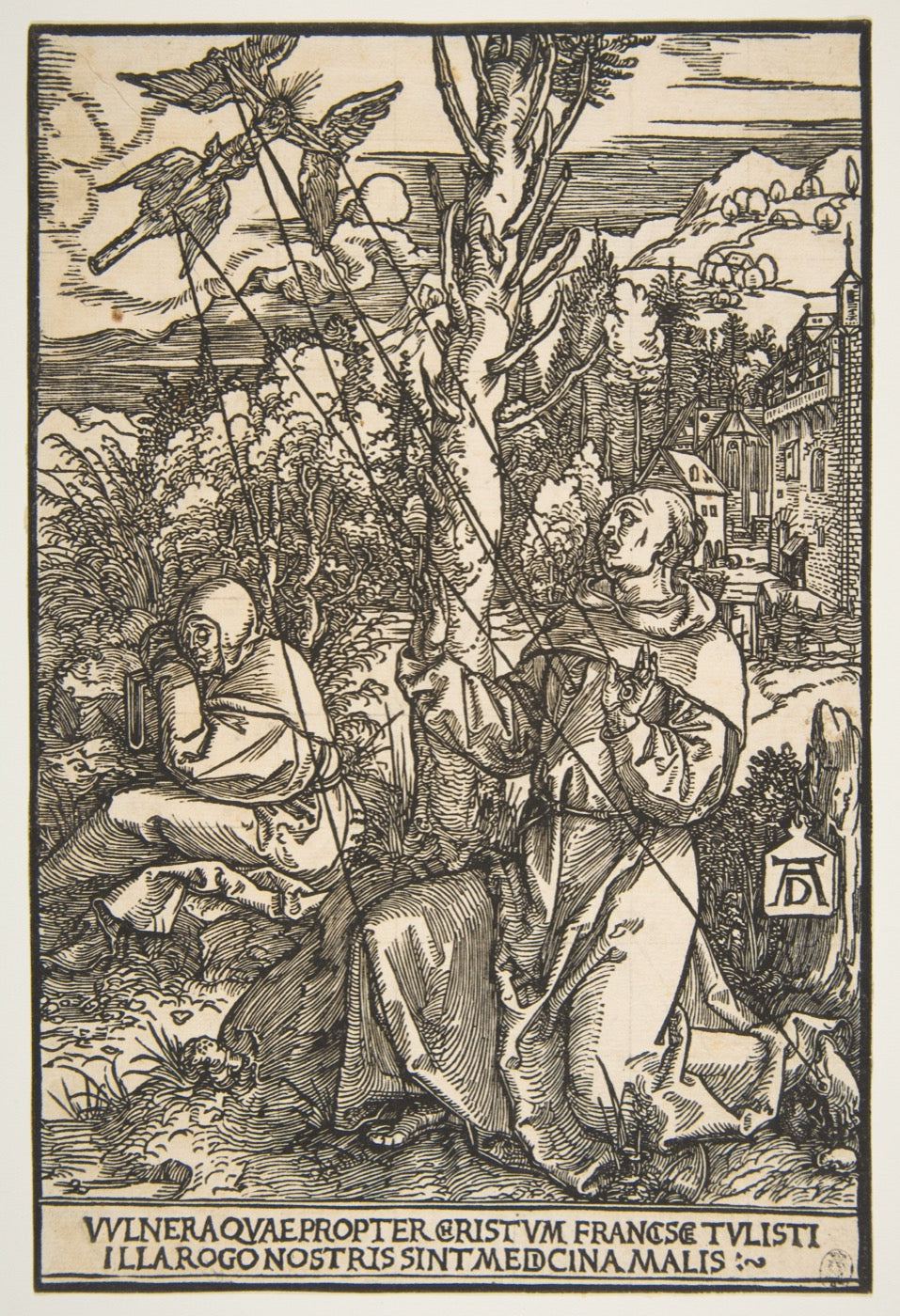
At the beginning of the 13th century, Francis of Assisi gathered companions seeking to live the Gospel in poverty and fraternity. Their way of traveling, preaching, and serving contrasted with large monastic establishments. The Friars Minor were part of the development of the mendicant orders, which were particularly present in medieval cities.
Clare of Assisi founded a women’s community whose way of life drew on the same inspiration. Her history, letters, and rule testify to a demanding determination to preserve poverty and the contemplative life. The Poor Clares are therefore not merely an auxiliary group of the friars: they have their own religious history.
The Franciscan tradition later developed several branches and reforms. Debates over the use of possessions and forms of poverty show that this ideal required organizational work as well as spiritual commitment.
Dominic and the brothers trained for preaching
The foundation of the Order of Preachers by Dominic de Guzmán at the beginning of the 13th century responded to a need for proclamation and dialogue. In southern France, Dominic observed that preaching required an intellectual formation capable of responding to people familiar with religious texts. He gathered a community founded on prayer, poverty, study, and mission.
The Dominican order developed rapidly in university cities. Its houses of formation played an important role in the history of medieval theology. Thomas Aquinas belonged to this tradition, as did preaching leaders and communities of women devoted to contemplation and service.
The link between study and spiritual life is a distinctive feature of this legacy. Knowing the Scriptures makes it possible to transmit teaching without merely repeating assertions; intellectual work becomes a way of serving the people to whom the word is addressed.
Carmel, prayer, and the reforms of the 16th century
The Carmelite family traces its roots to hermits established on Mount Carmel in the Holy Land at the end of the 12th and beginning of the 13th century. Their rule places prayer, community life, and meditation on the Word at the center. When political circumstances led the order to expand in Europe, its members adapted their establishments to city life and new forms of ministry.
In the 16th century, Teresa of Ávila undertook a reform of Carmel. Her foundations and works on prayer earned her a remarkable place among the spiritual authors of the West. John of the Cross contributed to this renewal and left a body of poetry and theology devoted to the inner path toward God.
The patronage of Our Lady of Mount Carmel and the history of the scapular are part of this tradition. They should be understood in relation to contemplation and religious commitments, rather than as practices separate from Christian life.
Ignatius of Loyola and the Society of Jesus
The Society of Jesus was recognized by Paul III in 1540. Ignatius of Loyola and his companions developed a form of consecrated life strongly oriented toward mission, education, and service to the Church. The Spiritual Exercises offer a path of prayer and discernment intended to help a person direct their choices before God.
The Jesuits do not follow the same daily organization as Benedictine monasteries. Their mission leads them to open colleges, engage in intellectual work, and travel to very distant regions. Their history includes preaching, the sciences, missions, and the debates characteristic of the modern period.
Discernment is an important emphasis of this spirituality. It involves reflecting on decisions, motivations, and responsibilities, without reducing prayer to a technique intended to produce a predetermined result.
Don Bosco and congregations dedicated to service
The 18th and 19th centuries saw the development of numerous congregations dedicated to education, healthcare, and supporting communities. Some were founded by women and organized communities capable of responding to the practical difficulties of their time. They differed from contemplative monasteries in the importance they gave to apostolic action in their daily lives.
John Bosco, in the 19th century, founded a religious family dedicated to educating young people in Turin. The Salesians developed schools, vocational training programs, and reception centers. Together with Mary Mazzarello, Don Bosco also helped found the Daughters of Mary Help of Christians, who continued this commitment to young women.
The history of congregations shows that consecrated life has continually changed in response to social needs. Communities have had to organize institutions, train their members, and define their missions, while maintaining a connection to prayer and fraternal life.
Religious vows, priesthood, and other forms of consecrated life
Religious men and women generally profess the evangelical counsels of poverty, chastity, and obedience according to the constitutions of their institute. The conditions of their commitment and their forms of life vary. Some orders live in enclosure, while others work in education or charity. Religious dress may be retained or take a different form according to the rules and the requirements of their activities.
Consecrated life must not be confused with the sacrament of holy orders. A religious brother may not be a priest, while a nun has not received sacramental ordination. Secular institutes also allow consecration to be lived amid the ordinary circumstances of work and society; the eremitic life has another recognized framework.
The Perfectae caritatis decree of the Second Vatican Council calls on institutes to return to the inspiration of their founders while responding to the needs of their time. It recalls that consecrated life is not a ranking of the faithful according to degrees of merit, but a plurality of vocations in service to the Church and neighbor.
Historical sources and references
Second Vatican Council, Perfectae caritatis, October 28, 1965, religious life, contemplative communities, and apostolic institutes.
Second Vatican Council, Lumen gentium, chapter VI, consecrated life and the vocation of the baptized.
Benedict XVI, address of February 2, 2008, traditions of Benedict, Dominic, and Clare.
Founders' texts: the Rule of Saint Benedict, the Rule of Saint Clare, The Way of Perfection by Teresa of Ávila, and Spiritual Exercises by Ignatius of Loyola, sources of their spiritual orientations.
Catechism of the Catholic Church, paragraphs 914–933, consecrated life, vocations, and ministries.
Illustration: Fra Angelico, Meeting of Saint Francis and Saint Dominic (15th century), historical public-domain reproduction.










