




























































































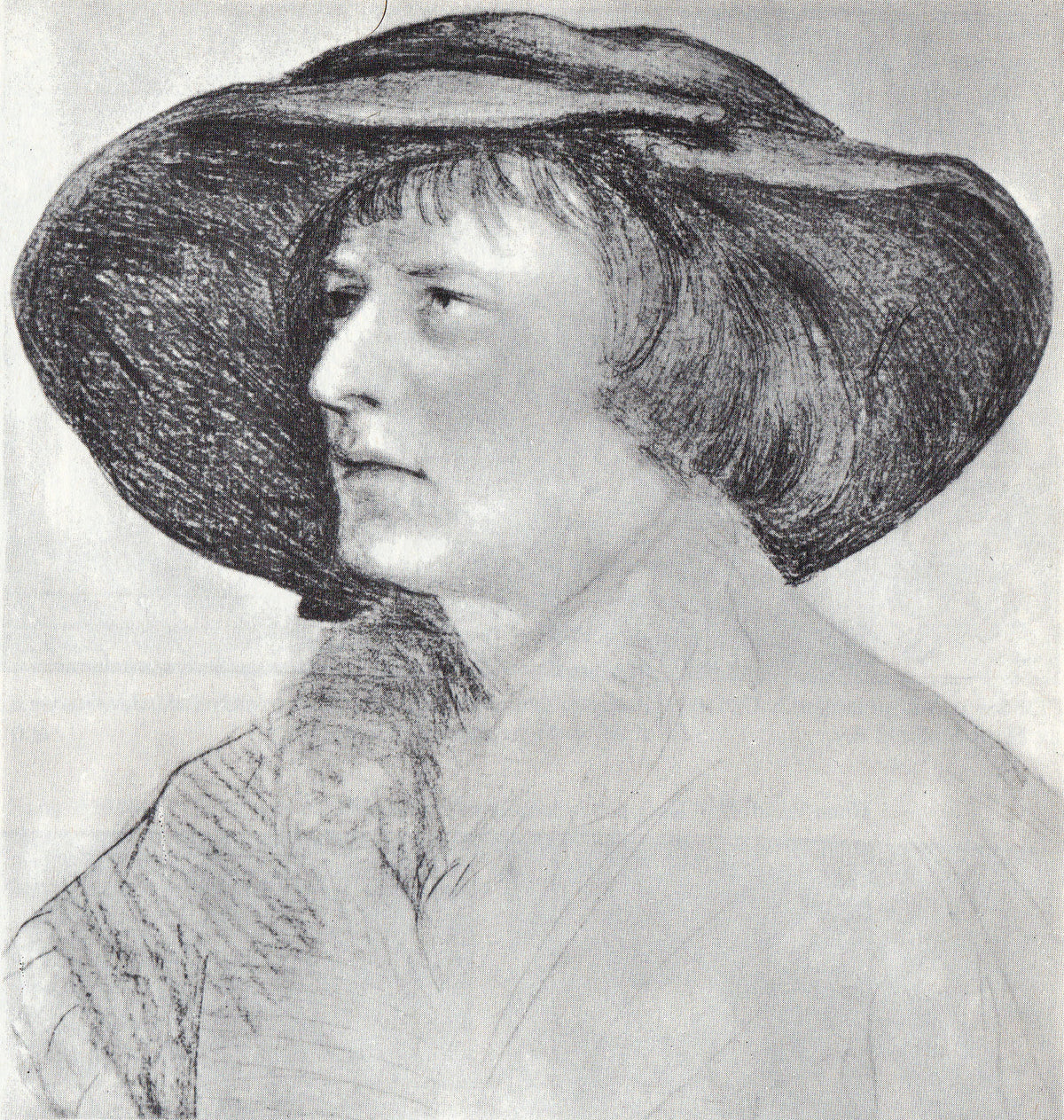
Paracelsus, whose birth name was Philipp Theophrast Bombast von Hohenheim, was one of the major figures in Renaissance medicine, alchemy, and natural philosophy. Born near Einsiedeln around 1493 or 1494 and dying in Salzburg in 1541, he challenged the medical authorities of his time, advocated direct experience, introduced mineral preparations into therapy, and developed a vision of the human body in which medicine, alchemy, astrology, and theology remained closely connected.
His name is now associated with a formula that has become emblematic of toxicology: a substance cannot be judged solely by its nature, because its effect also depends on the quantity administered. This idea played a major role in the history of pharmacology and toxicology. But reducing Paracelsus to “the dose makes the poison” would erase a large part of his intellectual world: he viewed the body as a microcosm embedded in the macrocosm, saw alchemy as a technique of separation and purification, considered diseases to be realities with specific causes, and also wrote many religious texts.
His biography is surrounded by legends that almost naturally extend the story of a man who was already extraordinary. After his death, his travels were extended to regions that are difficult to document, his doctorate from Ferrara remains disputed, the exact meaning of the name “Paracelsus” has not been fully established, and several magical or alchemical texts circulate under his name. The Paracelsus of the archives and the Paracelsus of tradition have thus overlapped for four centuries.
Paracelsus was born near Einsiedeln, in what is now the canton of Schwyz, around 1493 or 1494. The Historical Dictionary of Switzerland also gives no precise day and retains this range.
His father, Wilhelm Bombast von Hohenheim, was a physician. He belonged to a family from the Swabian lesser nobility. His mother is much less well documented; she is thought to have been connected with the environment of Einsiedeln Abbey.
The full name “Philippus Aureolus Theophrastus Bombastus Paracelsus” that appears in the literature should not be read as an exact birth name. The forms of his name vary according to the texts and editions. Contemporary scholars generally use Theophrastus Bombast von Hohenheim to refer to the man before he adopted the name Paracelsus.
Villach, His Father, and the Mining World
Around 1502, Wilhelm von Hohenheim settled in Villach, Carinthia, where he practised medicine. The young Theophrastus received part of his early education there. The region was heavily shaped by mining and metalworking. This environment would have a lasting influence on his thinking. Paracelsus took an interest in minerals, metals, processing methods, and illnesses linked to mining work.
Earlier biographies repeatedly portray him as a child trained directly in the Fugger laboratories or as a methodical observer of occupational diseases from adolescence onward. The sources are less clear. What is certain is that his career unfolded in a region where medicine, metallurgy, and mining were closely intertwined.
Later, he would write about miners’ diseases and the effects of mineral substances. This attention contributes to his place in the history of occupational medicine and toxicology, even though the explanations he offers remain those of the 16th century.
Paracelsus’s university education is less certain than many biographies suggest. He claims to have been taught by his father and by several learned men. Later traditions attribute studies in Vienna and Basel to him, or studies with Abbot Johannes Trithemius. Some of these encounters are possible, but the documentation is fragmentary.
The Historical Dictionary of Switzerland places a doctorate in medicine and surgery at Ferrara around 1515. The Neue Deutsche Biographie is more cautious: a degree at Ferrara is plausible but is not attested by a surviving university document.
This uncertainty is important. Paracelsus left no academic record that would make it possible to reconstruct every year of his training. Part of his reputation rests precisely on his later opposition to academic medicine.
The “great wandering” across Europe
After his training, Paracelsus led a life of travel. His own writings present travel as a method of learning: the physician must see diseases, meet healers, observe practices, and learn beyond the universities alone.
Later itineraries have him travel through almost all of Europe, the Balkans, and even parts of the Near East. Contemporary specialists distinguish plausible journeys from fictionalized lists compiled after his death.
The important point is not to draw a spectacular map. Paracelsus constructs his identity in opposition to the physician who would remain shut away in books. He claims to have learned from soldiers, surgeons, women familiar with remedies, alchemists, artisans, miners, and other people outside the academic world. Bruce T. Moran emphasizes this dimension in his modern biography: Paracelsus combines scholarly knowledge, artisanal practices, and experiences gathered on the road.
Paracelsus gained extensive experience with injuries and surgery. He served as a military surgeon in several contexts, although not all the episodes recounted later can be located with certainty.
At the time, surgery had a lower social status than university medicine. University-trained physicians worked mainly on diagnosis and prescriptions, while surgeons directly treated wounds and fractures and performed operations.
Paracelsus rejected this rigid separation. He sought to unite internal medicine and surgery and emphasized observing the patient. This experience would lead to one of the few major books published during his lifetime, the Grosse Wundartzney, or Great Surgery, in 1536.
Around 1524-1525, Paracelsus stayed in Salzburg. The city and the German territories were then experiencing strong social tensions linked to peasant uprisings. The Historical Dictionary of Switzerland indicates that he had to leave Salzburg after becoming involved in these disturbances. The exact nature of his involvement is still debated, but his writings reveal strong criticism of the authorities, religious institutions, and the social order.
Paracelsus was not merely a rebellious physician. He also wrote about religion, poverty, justice, and Christian duty. In the 1520s, the texts known as the Archidoxes appeared. In them, Paracelsus developed a medicine based on the preparation and purification of substances.
Alchemy was not, for him, merely the art of making gold. It became a means of separating, purifying, and making usable the powers contained in matter. This approach is central to understanding his importance. The chapter on Paracelsus in The Alchemy Reader, published by Cambridge University Press, emphasizes that his major contribution was to direct alchemy toward the preparation of mineral and chemical remedies. Our article on alchemical works places this conception within the broader history of European alchemy.
Strasbourg and the Arrival in Basel
In December 1526, Paracelsus obtained citizenship in Strasbourg. A few months later, an exceptional opportunity arose. The Basel printer Johannes Froben fell seriously ill. Paracelsus took part in his treatment and gained a sufficient reputation to be summoned to Basel.
In 1527, he becomes the city's physician and teaches medicine. German sources indicate that his appointment appears to have been supported by the success of his treatment of Froben. Basel was then a major humanist and publishing center. Erasmus frequented Froben's circle. Paracelsus therefore arrives at the heart of a particularly active intellectual milieu.
In Basel, Paracelsus shocks people through his behavior as much as through his ideas. University medical instruction is normally conducted in Latin. Paracelsus also uses German in his lectures. This choice allows him to address the students differently but constitutes a break with academic customs.
He announces a general reform of medicine. Instead of systematically starting from the commentaries of Hippocrates, Galen, and Avicenna, he wants to start from the disease, the patient, experience, and nature.
This opposition to ancient authorities does not mean that he never read ancient texts. His work is filled with scholarly references. His provocation primarily targets the use of authority as a sufficient argument.
On June 24, 1527, Saint John's Day, Paracelsus performed the act that would become the emblem of his academic rebellion. He publicly burned a work belonging to the medical canon taught at universities. Later accounts readily speak of an auto-da-fé of the works of Galen and Avicenna; the sources chiefly allow us to retain the deliberately symbolic nature of the act.
The message is clear: the authority of the ancients must not take precedence over observation. The act nevertheless helped isolate Paracelsus. His relationships with physicians, apothecaries, and part of the academic world quickly deteriorated.
European medicine in his time still relied largely on Hippocratic and Galenic traditions transmitted by Arab and Latin authors. Humoral theory explained health through the balance of blood, phlegm, yellow bile, and black bile. Treatments aimed in particular to correct imbalances through diet, bloodletting, purges, and compound medicines.
Paracelsus rejects the idea that a single humoral model can account for all diseases. He advocates more specific causes and remedies adapted to each one. This does not mean he discovered modern medicine as we know it. His explanations involve the stars, alchemical principles, invisible influences, and religious concepts.
In Basel, Paracelsus also opposed apothecaries and the pharmaceutical practices he considered routine. He criticized remedies composed of very many ingredients and in several cases preferred substances prepared through alchemical processes.
This opposition also had an economic and professional dimension. Physicians, professors, apothecaries, and municipal authorities defended their prerogatives. The conflict therefore cannot be summarized as that of a scientific genius against an ignorant society. It was also a struggle between medical conceptions, professional statuses, and personal temperaments.
By the end of 1527, tensions reached their peak. Paracelsus became involved in a legal dispute after treating an important patient and publicly attacked city officials. Fearing the consequences, he left Basel at the beginning of 1528.
This period brought an end to the only major university experience of his career. He then resumed an itinerant life that would last almost until his death.
The physician's four pillars
In the Paragranum, Paracelsus presents four foundations of medicine: philosophy, astronomy, alchemy, and the physician's virtue. “Philosophy” refers to knowledge of nature. “Astronomy” includes the study of celestial influences on human beings. “Alchemy” makes it possible to prepare remedies. “Virtue” concerns the physician's conduct, calling, and responsibility.
This framework shows that his medicine cannot be separated from his spiritual universe. It is not modern pharmacology accidentally surrounded by astrology. For Paracelsus, the four dimensions belong to the same system.
In his works known as the Paramirum, Paracelsus also attempts to classify the causes of disease. He distinguishes several entia, that is, categories of causes: astral influences, poisons or external substances, the body's own constitution, spiritual causes, and divine intervention.
This classification moves away from reducing all diseases to a humoral imbalance. It also reveals the limits of a purely modern reading of his work. Natural and spiritual causes coexist without contradiction in his thought.
The tria prima: sulfur, mercury, and salt
Paracelsus develops a theory of the three principles, or tria prima: sulfur, mercury, and salt. These terms should not be understood solely as the chemical substances that bear these names today. They also describe properties of matter.
Sulfur is associated with combustibility, mercury with volatility, and salt with stability or fixed residue. Paracelsus does not simply replace the four ancient elements with three "new elements." He uses the tria prima as tools for thinking about transformations, the constitution of bodies, and certain pathological processes.
For Paracelsus, the alchemist accomplishes in the laboratory what nature carries out slowly. The work consists of separating the pure from the impure, extracting active principles, and preparing suitable medicines.
This approach would later contribute to the development of what historians call chemical medicine or iatrochemistry. The word iatrochemistry is useful for describing this tradition, but one should not imagine Paracelsus officially founding a discipline under that name. Modern spagyrics also claims this heritage. However, its contemporary practices must be distinguished from the exact texts and techniques of the 16th century.
"The dose makes the poison"
Paracelsus is regularly presented as the father of toxicology. This formula is a modern historiographical attribution, but it rests on a genuine contribution. In a defense of his medical practice, he explains that no substance is entirely free of toxic properties and that quantity plays a decisive role in the effect produced.
This reflection later became one of the fundamental principles of modern toxicology: a substance must be evaluated according to its dose, route of exposure, and the characteristics of the organism.
Contemporary articles on the history of toxicology continue to present Paracelsus as a major precursor of the dose-response relationship. Nevertheless, it would be wrong to conclude that he already possessed all the toxicological knowledge of today.
Paracelsus advocates the medical use of mineral substances that several physicians of his time considered dangerous. Mercury occupies an important place, particularly in the treatment of syphilis. He also works with arsenic, antimony, salts, and other metallic preparations.
Some of these treatments would today be considered dangerous. Their historical significance lies in the principle they illustrate: a toxic substance can become a medicine when it is prepared and dosed according to a specific indication. This concept permanently changes the European pharmacopoeia and contributes to the development of chemical medicine after his death. His experience in mining regions also informs his texts on workers' diseases. He describes coughing, breathing difficulties, and wasting observed among miners.
His interpretations combine physical observation, astral theory, and conceptions specific to his era. He did not yet formulate the modern relationship between inhaled dust and lung disease as it would later be established by occupational medicine. Nevertheless, he remains one of the important authors in the early history of occupational diseases.
Macrocosm and microcosm
Paracelsus's medicine is based on a constant relationship between humans and the world. Human beings are a microcosm that reflects the macrocosm. The stars, elements, minerals, and forces of nature have correspondences in the body.
This conception belongs to the natural philosophy of the Renaissance and should not automatically be translated into the modern vocabulary of “energies.” It brings Paracelsus closer to an intellectual world found in several Renaissance authors, without making their systems identical. Our article on magia naturalis places this way of thinking in its historical context.
Paracelsus's astronomy includes what we would call astrology today. The stars do not mechanically determine every human event, but they participate in the order of nature and in the conditions of certain diseases.
Medicine must therefore know the heavens as well as the body. This role of astrology shows that his criticism of Galen was not a linear march toward modern medicine. Paracelsus replaced certain ancient theories with another system that combined observation, alchemy, and cosmology.
Paracelsus's name is frequently associated with the doctrine of signatures, according to which the appearance of a natural thing would indicate its properties or uses. He did indeed reflect on the signs of nature and on how invisible properties manifest themselves outwardly.
It is important, however, not to attribute the doctrine of signatures solely to him in the systematic form later given to it by Paracelsian authors, notably Oswald Croll. The concept has older roots and continued to develop after him. Paracelsus represents a major stage in this history, not its isolated inventor.
Magic, imagination, and invisible forces
Paracelsus also wrote about magic. For him, the word did not mean merely an art of producing extraordinary phenomena. True magic rests on knowledge of the hidden forces of nature and on the relationship between human beings and the cosmos.
Imagination possesses real power in his system. He attributed effects to it on the body, illness, and relationships between human beings. This conception would later be taken up and transformed by several esoteric movements.
Paracelsus is regularly classified among the Hermetic authors of the Renaissance. The connection is relevant, provided that he is not reduced to a mere disciple of the Corpus Hermeticum. His system also draws on Christian theology, Neoplatonism, alchemy, folk medicine, and artisanal knowledge.
He belonged to the same intellectual Renaissance that produced Cornelius Agrippa, but their projects differed greatly. Our article Everything You Need to Know About Hermeticism makes it possible to distinguish the ancient corpus from its Renaissance receptions.
A Profoundly Christian Thought
The modern image of the alchemist physician easily obscures the importance of religion in his work. Paracelsus wrote extensively about Christ, the sacraments, the Church, charity, poverty, and the end times.
He criticized institutional Catholicism and certain aspects of the Reformation, without becoming permanently part of an organized Protestant denomination. Charles Webster showed that medicine, magic, and religious mission formed an integrated whole for him. The reform of medicine was part of a much broader project of Christian reform.
In 1536, Paracelsus published the Grosse Wundartzney, the Great Surgery, in Augsburg. The book was one of the most important published during his lifetime and greatly contributed to his reputation. In it, he discusses wounds, their healing, and surgical practices, drawing on his experience. The success of this work contrasts with the situation of most of his texts, which would remain in manuscript form until after his death.
Paracelsus wrote an enormous amount, but published relatively little. Several reasons came together: his itinerant life, his conflicts with the authorities, editorial difficulties, and the very form of his manuscripts.
Some of his texts circulated in copies. After his death, demand increased, and publishers began assembling works bearing his name. This complicated transmission explains why the Paracelsian corpus contains authentic texts, revised works, compilations, and doubtful attributions.
The Problem of the False Paracelsuses
Paracelsus’s posthumous fame led to a proliferation of texts published under his name. Authors used his authority to legitimize their own works. Historians refer to some of these writings as pseudo-Paracelsian.
The case of the De natura rerum is particularly instructive. A study by Urs Leo Gantenbein published in 2020 shows that the text transmitted under this title is composite and involves several authors. Some parts appear authentic, while others are clearly forgeries. This issue makes it necessary to remain cautious about popular quotations attributed to Paracelsus.
The famous account of an artificially created homunculus is generally linked to the De natura rerum. Since the authenticity of several parts of this work is disputed, it is imprudent to present every passage concerning the homunculus as a certain doctrine of Paracelsus.
The legend nevertheless played an immense role in the cultural history of alchemy and the artificial creation of life. Our article Discovering Homunculi allows readers to follow this history without confusing Paracelsian literature, attributed texts, and later imagination.
Death in Salzburg
Paracelsus returned to Salzburg in 1541 under the protection of Prince-Archbishop Ernst of Bavaria. He died on September 24, 1541, at approximately forty-seven or forty-eight years of age. Later accounts of an assassination carried out by hostile physicians or of a fall caused during a banquet contributed to his legend. Contemporary sources do not establish a violent death with certainty. It is therefore preferable to retain the fact that he died in Salzburg without turning hypotheses into facts.
Paracelsus is buried in Salzburg. His remains and monument have been moved and rearranged several times over the centuries. The city still preserves a strong Paracelsian memory today. The tomb contributes to the construction of a genuine cultural cult around the reforming physician, particularly in German-speaking countries. The etymology of the name remains debated.
An old explanation translates it as “beyond Celsus” or “superior to Celsus,” in reference to the Roman physician Aulus Cornelius Celsus. The Neue Deutsche Biographie, however, indicates that it could also be a Latinization or scholarly play on the name Hohenheim, and considers the interpretation “superior to Celsus” less certain. The polemical etymology should therefore not be turned into psychological certainty about Paracelsus’s character. Paracelsus’s major reception truly began after his death.
Between 1589 and 1591, Johannes Huser published ten volumes of his medical and philosophical works in Basel, seeking out manuscripts and autographs. The Wellcome Collection preserves this monumental edition. It remains a fundamental source for Paracelsian studies. The current work of the THEO project, developed notably by Didier Kahn and Urs Leo Gantenbein, is digitizing the historical editions of Huser and Karl Sudhoff and making them searchable.
The birth of Paracelsianism
From the second half of the 16th century onward, Paracelsus became the center of an intellectual movement that went far beyond his own writings. Physicians, alchemists, and philosophers took up his ideas, modified them, and combined them with other traditions.
Oswald Croll, Joseph Du Chesne, and then Jean-Baptiste van Helmont belong to this history of chemical medicine and European Paracelsianism. Some disciples emphasize the medical aspects, while others focus on cosmology, magic, alchemy, or theology.
When the Rosicrucian manifestos appeared at the beginning of the 17th century, Paracelsus had already been dead for several decades. He therefore was never a member of a historical Rosicrucian order organized around these manifestos.
However, his intellectual influence on the Rosicrucian milieu is real. Rosicrucian and Paracelsian authors share several interests: universal reform, medicine, alchemy, religion, and knowledge of nature. Our article on the Rosicrucians places this relationship in the correct chronology.
No, if this formula means that he alone replaced medieval medicine with contemporary science. He remains a 16th-century man whose medicine combines alchemy, astrology, theology, and observation.
But his role in medical history is considerable. He challenges bookish authority, insists on specific causes of disease, develops chemical medicines, reflects on dosage, and values experience.
Modern medicine was not born from a single man. Paracelsus represents one of its major turning points, but also one of the best examples of how medicine, alchemy, and religion could still form a single system during the Renaissance.
Reading Paracelsus requires resisting two caricatures. The first portrays him as a modern scientist accidentally surrounded by magic. It erases the astrology, theology, cosmology, and alchemy that actually structure his thought.
The second turns him into an esoteric mage whose medicine would be merely a backdrop. It ignores his observations, his work on medicines, his surgical experience, and his importance in the history of pharmacology. Paracelsus is interesting precisely because these fields are not yet separate in his work.
Sources and reference points
The Historical Dictionary of Switzerland, an entry written by Urs Leo Gantenbein, provides a critical biography: birth in 1493/1494 near Einsiedeln, his father’s move to Villach, his medical career, his time in Basel, the publication of the Great Surgery in 1536, and his death in Salzburg on September 24, 1541.
The Neue Deutsche Biographie complements this chronology and provides several major nuances: the doctorate from Ferrara remains undocumented, the etymology of the name Paracelsus is debated, and his appointment in Basel seems to have been linked to the treatment of the printer Johannes Froben.
For his work, Andrew Weeks edited and translated Paracelsus: Essential Theoretical Writings, Brill, 2008. The Wellcome Collection preserves this edition, which has become a reference for reading medical, philosophical, and religious texts in their context.
Bruce T. Moran’s recent biography, Paracelsus: An Alchemical Life, 2019, places the physician within the artisanal, religious, and alchemical worlds of the Renaissance. The notice from the Wellcome Collection summarizes this career and emphasizes the encounter between scholarly knowledge, folk medicine, and alchemy.
For toxicology, the historical article “Theophrastus Bombastus Von Hohenheim (Paracelsus) (1493–1541): The eminent physician and pioneer of toxicology,” published in 2021, revisits his use of mineral substances and the role of dosage. It is accessible on PubMed Central.
Finally, textual transmission requires particular attention. Urs Leo Gantenbein’s study of De natura rerum, published in Ambix in 2020, shows that this treatise combines probably authentic parts with passages forged after Paracelsus. The notice is available on PubMed. To consult the historical editions of the corpus, the university database THEO – The Paracelsus Database provides the editions of Johannes Huser and Karl Sudhoff.

Par Olivier of Aeternum
Passionate about esoteric traditions and the history of the occult from the earliest civilizations to the 18th century, I share some articles on these topics. I am also co-creator of the online esoteric shop Aeternum.