



















































































































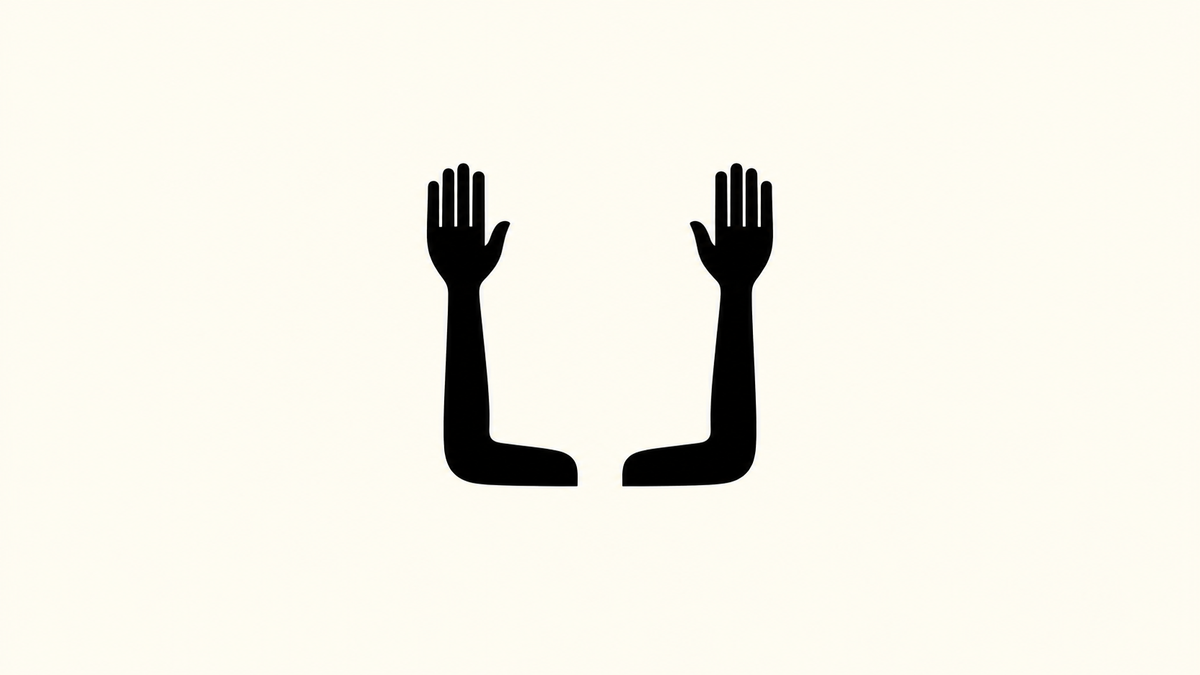
The Ka is one of the major components of the person in Egyptian thought. Its hieroglyph shows two arms raised and bent at the elbows. The word is difficult to render with a single English equivalent: life force, vital power, or double are among the translations proposed depending on the context. The Ka receives offerings and contributes to the deceased’s continuity after death.
| Hieroglyph | Two raised, bent arms |
|---|---|
| Nature | Vital component of the person |
| Funerary function | Receiving offerings and maintaining continuity |
| Royal use | The king’s Ka and sacred standards |
| To distinguish | Ba, represented as a human-headed bird |
Why is the Ka represented by two arms?
The hieroglyph of the Ka shows two bent, raised arms. The Metropolitan Museum houses a libation bowl from the First Dynasty whose entire shape reproduces these arms.
The sign is therefore attested from the earliest periods of Egyptian writing.
The arms may evoke welcome, power, or a gesture of transmission, but their exact origin should not be reduced to a single modern explanation.
What does this component of the person refer to?
The Ka belongs to the elements that make up a human being in Egyptian thought. It represents a life force that continues to exist after death.
The word “soul” is not enough to translate it, because the Egyptians distinguished several non-physical components.
The page on the Ba illustrates another of these dimensions.
Why does the Ka need to be fed?
Food offerings placed in tombs and temples are intended for the deceased and their Ka.
The continuity of the person therefore depends on a link between the world of the living, ritual food, and funerary presence.
Tomb chapels are designed as places where this relationship can be maintained.
What does the royal Ka mean?
The king’s Ka is given particular importance and can be represented by sacred standards.
The Met explains that a standard carried by Ramesses II could represent royal life force or serve as a portable image of a deity.
The concept therefore extends beyond the private funerary sphere alone and plays a role in the theology of kingship.
What is the difference between Ka and Ba?
The Ka represents vital power and receives offerings. The Ba has greater mobility and can leave the tomb before returning to it.
Both contribute to the survival of the person, but they do not express the same function.
Translating both of them as “soul” erases the richness of the Egyptian vocabulary.
Historical sources and reference points
The Metropolitan Museum of Art houses a libation bowl from the First Dynasty formed by the hieroglyph for the Ka and explains its meaning as “spirit” or life force. A royal standard of Ramesses II also demonstrates the importance of the Ka in kingship.










