



















































































































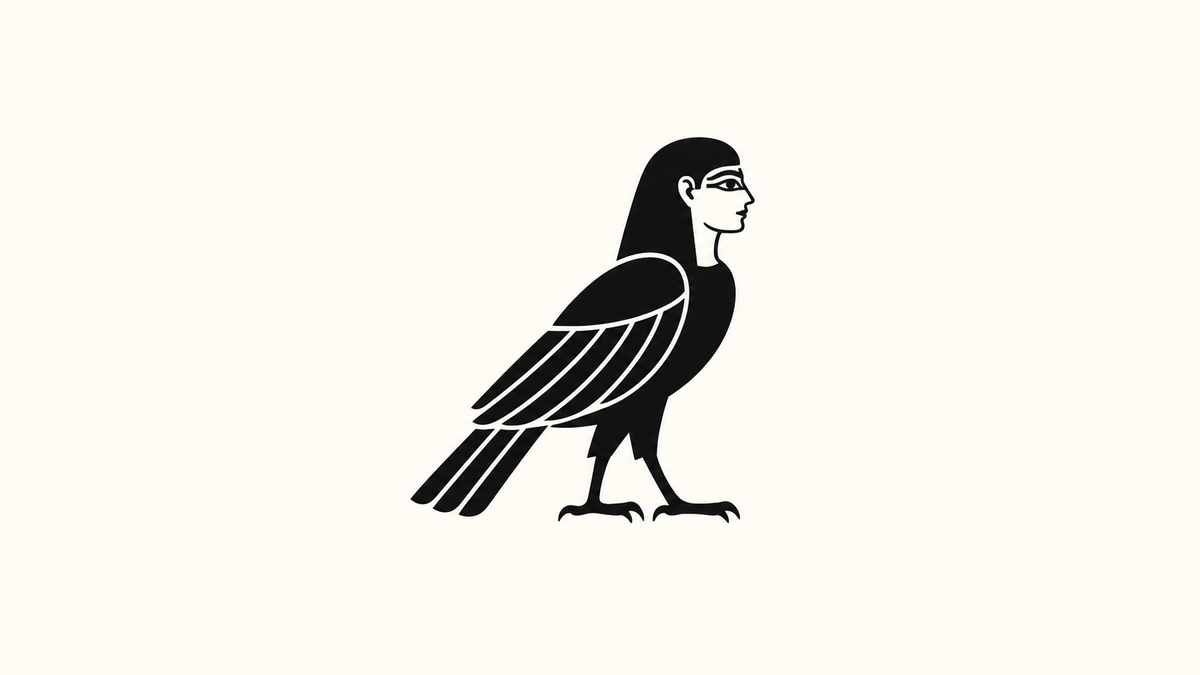
The Ba is a component of the person in Egyptian funerary thought. It is represented as a human-headed bird, sometimes with arms. After death, the Ba can leave the tomb, move about, and return to rejoin the mummy. This mobility distinguishes it from the Ka and explains the power of the image: a human face preserves identity while the bird’s body expresses the ability to travel.
| Form | Human-headed bird |
|---|---|
| Nature | Mobile component of the being |
| After death | Leaves the tomb and then returns to rejoin the body |
| Supports | Coffins, stelae, statuettes, papyri, amulets |
| To distinguish | Ka, vital force linked to offerings |
Why does the Ba have a bird’s body?
The winged body makes the Ba’s ability to move beyond the tomb visible.
The Metropolitan Museum explains that this component can travel through the outside world before returning to the deceased.
The choice of a bird therefore transforms an abstract idea of mobility into an immediately understandable image.
Why does it retain a human head?
The human head preserves the deceased’s individuality.
The Ba is not a generic bird: it belongs to a person and can bear their features.
This combination of human and animal simultaneously expresses identity and the ability to move.
Why must it return to the mummy?
The Ba can leave the tomb, but it must periodically rejoin the body so that the deceased’s existence remains complete.
This relationship explains the importance of preserving the mummy and maintaining an accessible funerary place for the person’s components.
Survival is therefore not conceived as the definitive abandonment of the body.
How does it appear in funerary texts?
The Book of the Dead shows Ba spirits rejoining the mummies and contains formulas intended to ensure their freedom of movement.
The Met preserves a shabti in which the human-headed Ba spreads its wings over the deceased’s chest.
The image and the text pursue the same goal: ensuring circulation and then reunion.
What is the difference from the Ka?
The Ka is a vital force linked to offerings; the Ba is characterized by its mobility.
Both belong to the person and continue after death, but they are not interchangeable.
Egyptian funerary vocabulary works precisely because it distinguishes several dimensions of existence.
Sources and historical context
The Metropolitan Museum of Art describes the Ba as a non-corporeal component capable of leaving the tomb and then returning to the mummy. A New Kingdom shabti shows the human-headed Ba spreading its wings over the deceased.










