



















































































































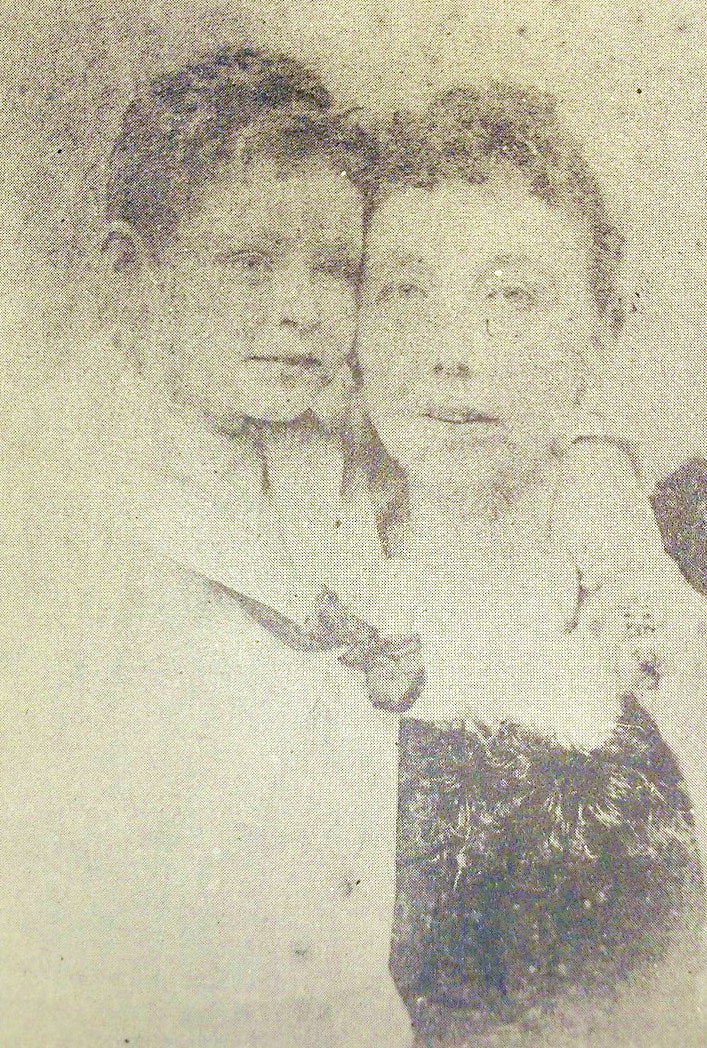
Gerald Brosseau Gardner occupies a central place in the history of modern Pagan witchcraft. Born in 1884 and dying in 1964, this former official of the British Empire, antiquarian, collector, amateur folklorist, and occultist became, after the Second World War, the principal architect of what would soon be called Wicca. For a long time, the most widespread account largely repeated his own version of events: Gardner was supposedly initiated in the late 1930s into a clandestine coven preserving the remnants of an ancient pre-Christian religion, and he subsequently revealed to the public a tradition threatened with extinction.
The story is now more complex and much more interesting. The existence of an active esoteric milieu around Gardner in southern England is well documented, as are his contacts with people he later identified as a “New Forest Coven.” The archives do not make it possible to trace, step by step, an initiatory chain leading from this group back to pre-Christian Europe. Gardner himself was convinced that he had encountered the survivals of a much older tradition, and it was this conviction that would give his project its religious force. For Gardner, however, the encounter with the New Forest Coven was experienced as entry into a far older tradition. The research of Ronald Hutton, followed by the more recent work of John Callow, places Gardner at the center of a process of modern religious creation: he brought together folklore, ceremonial magic, Freemasonry, naturism, literature, Margaret Murray’s theories, materials borrowed from Aleister Crowley, and experiences acquired in Asia to form a new synthesis.
This conclusion does not diminish his importance. It increases it. Gerald Gardner was not merely the supposed custodian of an ancient tradition: he was one of the principal builders of a new religion that would spread across several continents and permanently transform the way witchcraft could be understood as a religious path.
An English childhood largely spent abroad
Gerald Brosseau Gardner was born on June 13, 1884, in Blundellsands, near Liverpool, into a prosperous family involved in the timber trade. During his childhood, he suffered from respiratory problems, generally described as asthma. To improve his health, he traveled with his nurse, Josephine McCombie, known as “Com,” to regions with milder climates. He thus spent a significant part of his youth away from the traditional British school system.
This itinerant childhood helped make Gardner a self-taught man. He read extensively, collected objects, and developed an early fondness for foreign objects, weapons, and customs. At sixteen, he left for Ceylon, now Sri Lanka, where he worked in the plantation world. He would then spend several decades in Southeast Asia, especially British Malaya.
This period must be placed within its colonial context. Gardner was not an independent traveler operating outside any political structure: he belonged to the world of the British Empire and worked in a deeply hierarchical colonial economy. Recent research by John Callow has emphasized this context, which was long downplayed in biographies produced within Wicca. Understanding this framework also makes it possible to read Gardner’s descriptions of local religions and practices more carefully: they reflect genuine curiosity, but they remain those of a Briton of his time.
Plantations, colonial administration, and the study of Malaya
Gardner first worked on tea and then rubber plantations. He later joined the colonial administration, holding positions related in particular to customs. This career gradually provided him with a comfortable situation and left him time to pursue his personal research.
His interest in the cultures of the region was not limited to a general taste for exoticism. He collected weapons, studied numismatics, took an interest in folklore, and participated in archaeological research. In particular, he became a specialist in the keris, the iconic dagger of the Malay Archipelago, to which he devoted Keris and Other Malay Weapons. His work on Malay material culture and weapons earned him a genuine reputation as an antiquarian and amateur scholar.
Gardner also observed local religious and magical practices. He was interested in talismans, protective rites, possession, healing techniques, and the relationships between objects, spirits, and ritual power. His interpretations remained shaped by the Western categories of his time, but these decades spent in Asia would play an important role in his conviction that a religion could be experienced through ritual, the body, the community, and experience rather than through adherence to a written dogma.
Ronald Hutton highlighted the unusual breadth of the experiences Gardner accumulated before his final return to Britain: Freemasonry, spiritualism, Buddhism, folklore, religious customs, and magical practices encountered in Asia. Wicca therefore did not emerge solely from English occultist libraries. Its founder arrived in the late 1930s with several decades of observations, reading, and collecting behind him.
Freemasonry, spiritualism, and naturism
Gardner joined Freemasonry during his years in Asia. This experience was important because the lodges gave him direct knowledge of initiatory structure: degrees, oaths, recognition signs, gradual transmission, ritual staging, and symbolism. Some of these forms would later reappear in Gardnerian Wicca, although it cannot be reduced to a simple imitation of Freemasonry.
He was also interested in spiritualism and psychic research. On his return to Great Britain, he frequented several circles where researchers of unusual phenomena, occultists, Theosophists, Freemasons, and people drawn to alternative religions came together.
Naturism was another decisive element of his world. Gardner enjoyed communal nudity in a naturist setting long before defending it as a ritual practice. This helps explain skyclad, that is, ritual nudity associated with the first Gardnerian covens. There is therefore no need to imagine a medieval survival to explain this practice: it also corresponded perfectly to one of Gardner’s major personal interests.
In 1927, he married Donna Rosedale. Their marriage lasted until Donna’s death in 1960. She does not seem to have shared his religious commitment to witchcraft, but she accompanied him through much of his adult life and travels.
Gardner retired from the colonial administration in 1936 and returned to Great Britain. He then continued his activities as a collector, amateur researcher, and author. He traveled again, particularly to Cyprus and the Near East, and published a novel, A Goddess Arrives, in which several themes that would become important in his religious thought already appeared. In the late 1930s, Gerald and Donna Gardner settled in the New Forest region of southern England. This is where the most debated episode of his biography began.
Gardner came into contact with the Rosicrucian Order Crotona Fellowship, a group founded by George Alexander Sullivan. The society combined several influences characteristic of British esotericism between the two world wars: Rosicrucianism, Theosophy, Freemasonry, and teachings specific to Sullivan. The group also had a theater in Christchurch where philosophical and esoteric plays were performed.
It was in this setting that Gardner claimed to have met people who were different from the other members. He later described them as individuals who recognized a certain intellectual kinship with him and who gradually revealed that they belonged to a secret religion of witches.
According to his account, these people formed or knew of a coven based in the New Forest. Gardner said that he had been initiated in 1939. This initiation became the cornerstone of his account of the origins: he had not created the witchcraft he practiced, but received the remnants of a much older tradition.
Did the New Forest Coven really exist?
The answer requires distinguishing several questions. It is plausible that a small circle of people interested in occultism, witchcraft, folklore, and initiation rites existed around Gardner in the late 1930s. Biographical research has identified several people who may have belonged to this milieu. Doreen Valiente notably identified “Old Dorothy,” the figure mentioned by Gardner, as Dorothy Clutterbuck, a wealthy woman living in the area.
What these discoveries do not prove is the existence of an underground witch religion dating back several centuries. The sources available for reconstructing the group’s exact activities are extremely limited, and much of the account comes from Gardner himself, long after the events.
Ronald Hutton made this question one of the central problems in Wiccan history: the possible existence of a real New Forest Coven does not settle the question of what its members believed they were passing on. For Gardner, the initiation he received was part of a much deeper religious antiquity than the group’s administrative history. It could perfectly well have been a recent occultist circle that had itself adopted contemporary theories about an ancient witch religion.
This distinction makes it possible to move beyond an overly simple opposition between “Gardner was entirely truthful” and “Gardner invented everything on his own.” The formation of Wicca appears instead to have been a collective and gradual process, in which Gardner played the decisive role of bringing people together, organizing, and disseminating.
Margaret Murray and the idea of a surviving witch cult
To understand why Gardner interpreted his experience in this way, we must return to a theory that was much more respected then than it is today. In 1921, Egyptologist Margaret Alice Murray published The Witch-Cult in Western Europe. She argued that people accused of witchcraft in the early modern period had belonged, at least in part, to an ancient pre-Christian fertility religion organized in groups.
This theory of the “witch-cult” exerted immense influence on early 20th-century British culture. It made its way into encyclopedias, popular works, and scholarly discussions. Gardner therefore did not invent it: he inherited an already available interpretive framework and used it to understand the people he claimed to have met.
The historiography of witchcraft has since largely abandoned Murray’s model. European witch trials do not constitute evidence of a single organized clandestine religion that survived through the Middle Ages and into the modern era. Accusations, popular beliefs, social conflicts, magical practices, and demonological constructs varied considerably across periods and regions. Wicca loses none of its reality as a modern religion when this ancient genealogy is abandoned. What changes is the way its origins are told.
Before publishing openly about witchcraft, Gardner chose fiction. In 1949, under the pseudonym Scire, he published High Magic’s Aid. The novel depicts witches and magical operations in a pseudo-historical setting. Several elements that would become associated with Gardnerian Wicca already appear there in literary form.
The choice of a novel was not incidental. British legislation still made any public assertion of magical powers or mediumship problematic. Fiction allowed Gardner to present certain ideas without openly declaring that he was revealing the practices of a real group.
High Magic’s Aid also shows that Wicca was already being developed before Witchcraft Today. The rituals, the morality of reciprocity, the roles of the priest and priestess, and the imagery of witchcraft did not suddenly emerge in 1954.
The meeting with Aleister Crowley
On May 1, 1947, Gardner met Aleister Crowley through Arnold Crowther. The two men met several times during the same month. Crowley, then elderly and ill, was still officially directing the Ordo Templi Orientis. Gardner was admitted to the O.T.O. and received a charter authorizing him to organize a camp and initiate candidates into the first degree.
This relationship gave rise to a persistent legend that Gardner paid Crowley to write Wicca in his place. The known documents paint a subtler picture: Crowley and Gardner did have contacts, Gardner possessed O.T.O. texts, and some Crowleyan wording found its way into the earliest Wiccan materials. This does not make Crowley the secret author of all Wicca, but his presence in this magical genealogy is very real.
Its literary influence, however, is undeniable. Passages in the earliest Gardnerian texts use or adapt Crowleyan wording. Ronald Hutton has shown that this influence is particularly strong during the early stages of Wicca’s formation, then diminishes as the texts are revised.
This process is important: Gardner did not copy a single source. He extracted, assembled, and transformed material. Elements of ceremonial magic, Freemasonry, folklore, and Thelema were integrated into a religion whose structure and purpose became its own.
The Book of Shadows, or Book of Shadows, is today one of the objects most closely associated with Wicca. In initiatory traditions, it refers to the body of rituals and instructions transmitted and recopied by members of the coven.
It should not be imagined as a medieval grimoire discovered by Gardner. The early versions studied by historians show an evolving text. Different layers appear within it, with borrowings from identifiable sources and successive revisions. The formation of the Book of Shadows therefore accompanied that of Wicca itself.
Among the discernible influences are the ceremonial magic of the Golden Dawn and its successors, Crowley's writings, folkloric motifs, poetic texts, and various initiatory rites. The religious value of the Book of Shadows for the communities that transmit it does not depend on a medieval origin; historically, it is a major document of 20th-century religious creation.
The year 1951 marked an important legal turning point. The Fraudulent Mediums Act repealed the old British legislation known as the Witchcraft Act and replaced the previous framework with provisions targeting fraud committed by people claiming to act as mediums, telepaths, or clairvoyants.
The reform was not designed to legalize Wicca specifically. It resulted mainly from campaigns connected with spiritualism and the limitations of the previous legislation. For Gardner, however, it changed the situation: speaking publicly about a witches' religion became much less risky.
John Callow's research also shows that Gardner took an active interest in this legislative development and very quickly understood the new possibilities it opened up. The 1950s thus became the period during which a practice previously presented as secret began to be discussed in books and newspapers and on radio and television.
At the beginning of the 1950s, Gardner partnered with folklorist and collector Cecil Williamson around a museum dedicated to magic and witchcraft in Castletown, on the Isle of Man. Relations between the two men deteriorated, and Gardner subsequently took control of the establishment, which became one of the main material centers of his public activity.
The museum plays several roles. It allows him to display his collection of objects, place Wicca within a much broader history of European magic, and attract journalists and people interested in witchcraft. It also becomes an extremely effective showcase.
Gardner understood the workings of the media better than many of his contemporaries. He readily agreed to interviews, allowed himself to be photographed, and presented witchcraft in a manner spectacular enough to attract attention, yet sufficiently distant from Satanism to claim religious legitimacy.
In 1954, Witchcraft Today was published, the work that truly brought Gardner into the history of modern religions. In it, he asserted that the witchcraft described by Margaret Murray had not completely disappeared and that he himself had met its last representatives.
The book presents elements of cosmology, ritual, and organization while preserving a significant degree of initiatory secrecy. Gardner notably uses the term “Wica,” with a single c, to refer to initiates. Ronald Hutton has shown that the form “Wicca,” which has now become standard for referring to the religion, gradually became established over the following years.
Witchcraft Today is therefore not the neutral account of an ethnographer observing an external religion. It is at once a defense of witchcraft, a manifesto, a historical reconstruction, and an indirect recruiting tool. Interested readers contact Gardner, and the initiatory network expands.
The Bricket Wood coven
Gardner had connections with the Fiveacres naturist club, near Bricket Wood in Hertfordshire. It was in this environment that the coven that would become the main center of Gardnerian Wicca in the 1950s operated.
The group practices an initiatory religion structured into degrees. Rituals take place within a circle, under the direction of a high priestess accompanied by a high priest. Ritual nudity is common. The tools, gestures, formulas, oaths, and transitions from one degree to the next form a system that resembles ceremonial magic and Western initiatory rites, while developing a religious language centered on the Goddess, the Horned God, nature, and the seasonal cycles.
The high priestess holds a particularly important place in the Gardnerian structure. This does not mean that Gardner himself exercises no authority: his prestige as founder, his control over contacts, and his role in initiations give him considerable influence. The tensions between the founder’s masculine authority and feminine ritual centrality would remain one of the most interesting aspects of the history of British Wicca. In 1953, Gardner initiates Doreen Valiente. Their collaboration constitutes one of the decisive moments in the formation of Wicca.
Valiente possessed considerable writing talent and identified several passages in Gardner’s ritual texts that came from Aleister Crowley. She undertook a revision process with him that reduced some of these borrowings and gave the corpus a language more specifically associated with modern pagan witchcraft.
She wrote or revised several texts that became foundational, including versions of the Charge of the Goddess and the Witches’ Rune. Her role makes it impossible to describe the birth of Wicca as the work of a single man. Gardner provided the impetus, network, structure, and much of the initial material; Valiente made a major contribution to the liturgical language that would give the tradition its voice.
Their collaboration ended in conflict in 1957. Valiente and several members reproached Gardner for his constant pursuit of publicity. Gardner, for his part, considered interviews and media exposure necessary for the survival and expansion of witchcraft. The rupture reveals two different conceptions: an initiatory religion that protects its secrets and a movement that must emerge from the shadows to exist publicly.
The Goddess and the Horned God
Gardnerian Wicca is structured around a divine couple, generally described as a Goddess and a Horned God. It would be misleading to portray it as the simple continuation of a single ancient European pantheon. This theology is also the result of a modern synthesis.
The image of the Horned God draws on ancient representations, folklore, literature, and the theories of Margaret Murray. The Goddess borrows from several religious and literary traditions, as well as from the modern development of an encompassing divine female figure. Together, the two poles give the rites a symbolic structure in which birth, desire, fertility, death, and renewal are interwoven.
In traditional British Wicca, the God is not simply a secondary figure in relation to the Goddess. The two constitute complementary principles. Later developments in paganism, particularly the feminist movements that emerged from the 1960s and 1970s onward, would sometimes place far greater emphasis on the Goddess than the original Gardnerian system did.
Contemporary Wicca is strongly associated with eight seasonal festivals: Samhain, Yule, Imbolc, Ostara, Beltane, Litha, Lughnasadh, and Mabon in the classifications most widely used today. It would nevertheless be anachronistic to imagine that this complete “Wheel of the Year” has been transmitted intact since Antiquity.
The Wiccan calendar gradually became standardized. Gardner’s early texts pay particular attention to the four festivals at the beginning of February, May, August, and November, interpreted through contemporary theories about ancient Celtic calendars. The solstices and equinoxes subsequently take their place in an eight-festival cycle that becomes characteristic of modern British Paganism.
The exchanges between Gardner and figures in the Druid revival, particularly Ross Nichols, contributed to the context in which this seasonal structure took shape. Our Sabbats calendar now details this cycle, while our article on Neopaganism places Wicca among the other modern Pagan religions.
The old narrative of Wicca readily attributes to Gardner a series of rules that do not all have the same history. This is the case with the “Threefold Law,” according to which whatever is sent magically returns threefold to its sender.
Gardner’s High Magic’s Aid contains a prototype of threefold reciprocity. This does not mean that he proclaimed a universal moral law in the form that became popular several decades later from the very beginnings of Wicca. The formulation and dissemination of the “Threefold Law” as a general rule mainly belong to the later development of English-speaking Wicca.
The same applies to the Wiccan Rede. Gardner expressed principles of conduct and, in 1959, quoted a maxim by Pierre Louÿs that linked freedom with the absence of harm. The famous formula “An it harm none, do what ye will” became publicly associated with the movement in the 1960s, particularly through Doreen Valiente. Presenting the entire contemporary ethical framework as an ancient corpus passed down by Gardner therefore erases several decades of development.
The place of the body in early Wicca contributed to its scandalous image. Gardner defended ritual nudity and gave an important place to sexual polarity between priestess and priest. Some higher-degree rites also use explicit sexual symbolism.
These elements came under criticism as early as the 1950s. Hugh Urban notably showed that early Wicca forms part of a broader history of modern sex magic and changing attitudes toward the body. It opens up new spaces of religious authority for women while retaining highly binary representations strongly shaped by the sexual conceptions of its time.
The debate therefore cannot be reduced to the idea that Gardner merely "liberated" sexuality or, conversely, that he used religion only to obtain women's nudity. The sources show a committed naturist, a man deeply interested in sexual energy in magic, and a founder whose system simultaneously placed women in a highly respected ritual position.
In 1959, Gardner published The Meaning of Witchcraft. The book developed his historical argument, responded to his critics, and attempted to show that the witchcraft described by European sources formed a coherent whole with the religion he practiced.
This is precisely the part of his legacy that has withstood historical research the least. Modern history of witchcraft prosecutions has profoundly renewed the study of trials, testimony, folklore, and demonology. It is no longer necessary to accept the hypothesis of a uniform clandestine cult to understand these documents.
By contrast, The Meaning of Witchcraft remains a crucial source for understanding how Gardner saw himself. The book shows his desire to build continuity between the witchcraft of the past and a contemporary religion capable of existing publicly.
Why did Gardner seek the media so intensely?
Gardner's relationship with the press was one of the main causes of tension with his initiates. Yet he understood something fundamental: without visibility, a very small religion based on initiation risked disappearing.
His interviews were not merely a matter of personal vanity. They also functioned as a recruitment system. Someone would read an article, hear Gardner on the radio, or discover his museum, then seek to contact him. At a time when no large organized pagan community yet existed in the United Kingdom, this media exposure literally created a network.
She also created a character. The bearded old man, collector of witchcraft objects, naturist, and self-declared "witch" became an instantly recognizable figure. Some initiates feared that this spectacle would distort their religion; Gardner believed it ensured its survival.
Wicca did not remain under Gardner's control for long. Initiates formed their own groups, and transmission produced lineages. Other personalities adapted the rites, modified the teachings, or created related traditions.
Alex Sanders thus became in the 1960s the most famous figure in what would be called Alexandrian Wicca. Gardnerians and Alexandrians share much of their initiatory and ritual structure, even though their histories and lineages differ.
Other forms of Wicca subsequently appeared, followed by solitary practices that moved far away from the initiatory coven model. Scott Cunningham would later play a major role in spreading a form of Wicca accessible outside traditional British lineages.
It is therefore useful to distinguish between "Wicca" in the broad sense used today and "Gardnerian Wicca," a specific initiatory tradition that emerged from the groups formed around Gardner. In the early 1960s, Raymond and Rosemary Buckland, living in the United States, made contact with the Gardnerian network. They received initiation through Monique Wilson in Scotland and then established a coven in the United States.
This transmission marks a major stage. North America soon becomes one of the main areas for the development of contemporary paganism. Wicca encounters the counterculture, the feminist movement, new forms of spiritual ecology, and a much larger publishing market there.
The movement that later returns to Europe is no longer exactly the one Gardner had known. This is a characteristic feature of his legacy: he founded an initiatory structure, but that structure quickly generated a plurality that no central authority could control.
Donna Gardner dies in 1960. Gerald, already elderly and still suffering from fragile bronchial health, nevertheless continues to travel, meet initiates, and follow Wicca's development. On February 12, 1964, while returning to Europe aboard the Scottish Prince, he dies at sea at the age of 79. Maritime records indicate that he died in the port of Tunis. He is buried in Tunisia. His grave is later moved when the original cemetery is threatened by construction work.
His death does not cause the movement to collapse. On the contrary, it shows that Wicca has already ceased to depend on a single person. Several high priestesses and several lineages continue the transmission.
Did Gardner invent Wicca?
The word "invented" can be misleading if it means "arbitrarily fabricated from scratch." New religions almost never arise that way. They emerge through the combination, transformation, and reinterpretation of older materials.
Gardner worked with elements that existed before him: European folklore, ceremonial magic, Freemasonry, naturism, witch-cult theory, poetry, seasonal traditions, Victorian and Edwardian occultism, Crowley's texts, and initiatory practices. He also encountered collaborators who modified his work, foremost among them Doreen Valiente.
But the religious structure that resulted from this combination clearly belongs to the mid-20th century. The study by John Callow published by Cambridge in 2025 emphasizes precisely Gardner’s ability to produce a new synthesis from Eastern and Western sources. The Oxford Research Encyclopedia of Religion, for its part, classifies Gardner’s Wicca among the modern Pagan religions that emerged in Great Britain in the 1950s.
The best formulation, therefore, is to see Gardner as the principal founder of modern Wicca while recognizing that his creation was collective, evolving, and nourished by many inheritances.
Gardner proposes something that responds very precisely to the transformations of the postwar period. His religion does not require belief in a creed imposed by a central institution. It values direct experience, the small group, the body, nature, sexuality, the cyclical nature of time, and religious authority broadly shared between priestess and priest.
It also rehabilitates an extremely loaded word: “witch.” Instead of accepting the Christian definition of the witch as a worshipper of the Devil or the rationalist definition as the imagined victim of superstition, Gardner turns it into the positive identity of an adherent of a modern Pagan religion.
This may be his most important change. He does not demonstrate that the witches in the European trials belonged to his religion. He creates the conditions in which people in the 20th century can voluntarily present themselves as witches without defining themselves through Satanism or judicial caricature.
Contemporary Wicca is much broader than the Gardnerian tradition. Some people practice alone, others belong to non-initiatory traditions, and still others claim a specific Gardnerian lineage. Views of divinity, gender, magic, and ritual have also changed.
Despite this diversity, Gardner’s traces are everywhere: the initiatory coven, the degrees, the Book of Shadows, the High Priestess and the High Priest, the circle, the Goddess and the Horned God, the seasonal festivals, certain ritual tools, and much of the vocabulary of modern Pagan witchcraft.
His legacy must therefore be studied without accepting his own mythology as literal history, but also without reducing his work to a simple collage. Gardner had a remarkable ability to make heterogeneous materials come alive within a system structured enough to be transmitted and flexible enough to evolve.
It is this tension that explains its importance: he wanted to save an ancient religion that he believed was threatened with extinction, but what he actually bequeathed to the world became one of the most influential modern Pagan religions.
Sources and reference points
The most recent study devoted to Gardner is John Callow, Gerald Gardner and the Creation of Wicca, published by Cambridge University Press in the Elements in Magic series in 2025. Callow reexamines Gardner's colonial youth, his sources, and his role in the formation of a new religious synthesis. The academic presentation of the book is available on Cambridge Core.
The fundamental reference for the history of Wicca remains Ronald Hutton, The Triumph of the Moon: A History of Modern Pagan Witchcraft, Oxford University Press, 1999. Hutton devotes several chapters to Gardner, his circle, and the question of the New Forest Coven. The biographical chapter devoted to Gardner is presented on Oxford Academic.
Regarding Aleister Crowley's influence, Ronald Hutton also published “Crowley and Wicca” in Aleister Crowley and Western Esotericism, Oxford University Press, 2012. This study shows that borrowings from Crowley were significant in the early phases of Wicca before gradually being reduced. The chapter information is available on Oxford Academic.
Philip Heselton's works, particularly Witchfather: A Life of Gerald Gardner, two volumes published in 2012, remain important for biographical reconstruction and identifying the people surrounding Gardner. They must be compared with the scholarly works of Hutton and Callow when assessing the New Forest Coven's claims of antiquity.
Regarding the collaboration with Doreen Valiente, her own memoirs in The Rebirth of Witchcraft constitute an indispensable primary source, as does Philip Heselton's biography, Doreen Valiente: Witch. Valiente's testimony makes it possible to follow from the inside the rewriting of ritual material and the conflicts caused by Gardner's media policy.
Finally, the legal context is documented directly by the British Parliament. The Fraudulent Mediums Act of 1951 repealed the earlier legislation relating to witchcraft and created specific provisions against fraudulent mediumistic practices. The history is presented by UK Parliament.

Par Olivier of Aeternum
Passionate about esoteric traditions and the history of the occult from the earliest civilizations to the 18th century, I share some articles on these topics. I am also co-creator of the online esoteric shop Aeternum.













